
Public procurement to local realities

European Union - News

CEMR Releases New Position Paper on Public Procurement: A Call for More Flexibility and Less Bureaucracy


CEMR has officially released its position paper on public procurement, outlining key changes needed to ensure a procurement system that truly works for local and regional governments.

As the largest public investors and contracting authorities in the EU, local and regional governments (LRGs) play a crucial role in delivering essential public services. However, the current public procurement framework remains too complex, rigid, and burdensome, limiting their ability to act efficiently and effectively.

CEMR’s position paper highlights three key areas for reform:

  • Greater flexibility to adapt procurement to local needs
  • Simplified rules to reduce administrative burdens
  • Stronger support for SMEs to foster local economic growth

The document serves as a clear call to action for EU policymakers, urging them to shape a procurement framework that respects the autonomy of local governments while ensuring efficient public service delivery.

For more information, contact:

EU’s Green Agenda 2025

Green City - News Section

Why It Matters for Local and Regional Governments (LRGs) and What to Watch Next


From new climate targets to updated waste regulations, the European Union is rolling out policies that will shape the future of cities and municipalities. While these decisions may seem distant from everyday life, they have a direct impact on local governments—affecting everything from energy bills to public transport, water management, and waste collection.

Local and regional authorities are on the front lines of the green transition. They are the ones turning EU policies into real-life projects: renovating buildings to be more energy-efficient, upgrading public transport, and ensuring clean air and water for their citizens. But with so many new EU initiatives in the pipeline, what should local governments pay attention to in the coming months?

1. Climate and Energy: New Targets, Local Impact

The European Commission’s Competitiveness Compass outlines key climate and energy measures for 2025, including a revised Climate Law and a Clean Industrial Deal. These will influence energy prices, local renewable energy projects, and even funding for green infrastructure.

Meanwhile, the EU is tackling energy poverty, with plans to better protect vulnerable households from rising costs. Local governments, which often manage social housing and community energy programs, will need to be prepared for these changes.

2. Water and Waste: Tighter Rules, Bigger Responsibilities

Water management is rising on the EU agenda, with the European Parliament’s Water Resilience Strategy pushing for stronger action on pollution, efficiency, and climate adaptation. This means cities may need to invest in better infrastructure to secure water supply and prevent flooding.

At the same time, the revised Urban Wastewater Treatment Directive introduces stricter water quality standards and a stronger application of the polluter-pays principle, ensuring that industries—not taxpayers—shoulder the costs of wastewater treatment.

On waste, new EU packaging rules taking effect this month will require cities to adjust collection programs to meet higher standards. Additionally, Extended Producer Responsibility (EPR) rules for textiles will require businesses to take more responsibility for the waste they create, easing some of the burden on local waste services.

3. Mobility: Changes Coming for Public Transport and Urban Planning

The EU’s Sustainable Transport Investment Plan and High-Speed Rail Plan will influence urban mobility strategies. Meanwhile, CEMR is ensuring that local governments have a say in the EU Expert Group on Urban Mobility, particularly on topics like city access for businesses and cycling infrastructure.

4. Green Finance: How Cities Can Access More EU Funding

One of the biggest challenges for local governments in the green transition is funding. The European Commission’s new Project Group on Affordable Housing will prioritise unlocking financing for energy-efficient renovations, including through the Social Climate Fund.

What’s Next? Stay Informed and Get Involved

With so many EU policies evolving, local governments need to stay ahead of the changes. The coming months will be crucial in determining how these policies are implemented—and how they affect cities and regions across Europe.

Want to know more about how CEMR advocates for local and regional governments in the green transition?

Contact Axelle Griffon (axelle.griffon@ccre-cemr.org) and Edoardo Bodo (edoardo.bodo@ccre-cemr.org)

Competitiveness Compass

Europe of the regions is dead,
long live Europe of the industries


If you were still a “Europe of the regions” believer in spite of all the signs in the direction of re-nationalisation of European policies; the latest communication from the European Commission “A Competitiveness Compass for the EU” could leave the impression that it is the final blow to the idea that the European project also takes place at the local level, closer to the citizens.

There had been many warning signals: in the last years, the EU has changed the “delivery model” of its funds towards a de facto recentralisation. After the National CAP Strategic Plans, the National Social Climate Plans and the National Recovery and Resilience Plans, there was not much doubt anymore that the European Commission is looking to simplify the life of its own administration, with a single contact point in Member States, preferably budget Ministries. Then, however the Member States decide to organise and draft the national plans, in consultation or not with the subnational government levels and the most relevant stakeholders, this is outside of the Commission’s remit.

Mayors, counties or regions’ local leaders know the best their local ecosystem and the development opportunities in their territories. The Competitiveness framework should rely on them and suggest not another centralised national plan, but territorial competitiveness plans, ensuring a broad territorial coherence of investments for growth and competitiveness.  Yet, the few mentions of local and regional governments in the communication are to say that they should play their part in the simplification efforts and acceleration of administrative procedures at the service of the private sector.

With the new Competitiveness Compass, the Union at least reaffirms a common European objective that governments, at all levels, should follow. And there is a broad consensus that industrial renewal, research and innovation, transitioning to low carbon economies are all very important priorities that could contribute to improving life of Europeans – because that is the end goal, right? But there is one element critically missing for this vision to become true: a territorial vision.

Start-ups, universities, research labs, factories, all still need to be physically located somewhere: in a municipality, city, region. Somewhere with access to a fast broadband, somewhere with efficient mobility and transport solutions for employees commuting, receiving or shipping products, somewhere with good public services, ensuring a quality of life that would attract or retain the skilled workforce needed, and somewhere the taxes on these economic activities may contribute to a municipality’s revenues and therefore effectively benefit the entire local community[1].

And while the communication clearly identifies the need for public investments to de-risk and unlock private investments, it is completely overlooking the major role of local and regional governments to drive public investments. Subnational governments are responsible for 53% of the total public investment in the EU[2], and yet they are increasingly required to contribute to the fiscal consolidation efforts of Member States, steadily reducing their investment capacities.

One of the major risks with a complete lack of territorial vision, is the major downside of the Single Market: the concentration of capital, wealth and work forces in a few already attractive places, leaving entire regions behind the competitiveness run. The Cohesion Policy was created especially to prevent this type of concentration and channel EU public investments in places that would otherwise fail to attract businesses, investments or researchers.

And the Competitiveness Compass is probably just a foretaste of what the Commission is preparing for the entire architecture of EU funds in its next multi-annual financial framework. Writing in the communication “The Multiannual Financial Framework (MFF) proposal will be the opportunity to further streamline access to and simplify EU funding instruments – currently fragmented over too many programmes – across the board”, the Commission is confirming the leak and rumours in the direction of having a single national plan (yes, another one) for all currently shared management fund (i.e. all Cohesion Policy funds, and the Common Agricultural Policy). This could be a worst-case scenario: investments and reforms priorities decided at top European level that make no sense for the people and the places where the funds are spent. This is already happening with the European Semester[3].

The only solution to reconcile the overarching European goal of competitiveness, and the actual needs and priorities of Europeans wherever they want to live, is to enshrine multi-level governance in the competitiveness agenda and the upcoming long-term budget of the EU.


[1] European Joint Research Centre, Local taxes on economic activity in municipalities in EU Member States, European Joint Research Centre, https://publications.jrc.ec.europa.eu/repository/handle/JRC129095

[2] OECD (2024) Subnational governments structure and finance, OECD, Paris, https://www.oecd.org/content/dam/oecd/en/topics/policy-issues/subnational-finance-and-investment/subnational-governments-infrastructure-finance-2024.pdf/_jcr_content/renditions/original./subnational-governments-infrastructure-finance-2024.pdf

[3] CEMR, Top level decision – local consequences: The European Semester explained, 2024 https://ccre-cemr.org/wp-content/uploads/2024/11/EU-Semester-Study-2024.pdf

For more information, contact:

FOSTER Local Training

Foster Training News 2025

Building Future-Oriented Governance for Climate Resilience


How can Local and Regional Governments prepare for the environmental challenges of tomorrow? On January 23, 2025, CEMR hosted a FOSTER Local Training, bringing together experts, policymakers, and local leaders to explore innovative governance approaches for a climate-resilient future.

FOSTER—Future Oriented Solutions Towards Environmental Resilience—is a two-year EU-funded initiative that strengthens local and regional authorities’ ability to anticipate and respond to climate challenges. Through participatory governance, strategic foresight, and inclusive capacity-building, the project empowers local actors to shape policies that reflect the needs of their communities.

Key Takeaways from the Training

During the event, participants delved into:

Inclusive Communication – How local governments can make their messages accessible and representative of diverse communities.

Participatory Democracy – Strengthening civic engagement and fostering trust between governments and citizens.

Women in Politics – A CEMR study revealing the barriers women face in leadership and strategies to promote gender equality.

Strategic Foresight & Scenario Planning – Equipping local governments with tools to anticipate future risks and opportunities.

Greening Cities – Exploring sustainable urban solutions through foresight discussions.

The training was not just about knowledge-sharing but about action. It provided local actors with practical tools to co-design policies that anticipate climate risks, engage communities, and ensure long-term environmental resilience.

📥 Download the training materials here

Subscribe to Resonance to stay tuned for more activities on climate resilience and join us in shaping the future of local governments!

For more information, contact:

Hosting CEMR Congress in 2026

Deadline Extended for Hosting CEMR 2026 Congress


CEMR has extended the deadline for submitting applications to host the CEMR 2026 Congress to March 5th. Interested cities and municipalities now have additional time to submit their proposals and be part of this major gathering of local and regional leaders from across Europe.

For full details, please refer to the Terms of Reference document. If you have any questions, contact:

EU water resilience strategy

Recommendations for the EU water resilience strategy


As Europe faces increasing water challenges—ranging from severe droughts to devastating floods—CEMR is calling for action. In its recommendations for the upcoming European Water Resilience Strategy, CEMR outlines how local governments can lead the way in protecting water as a public good, addressing regional needs, and strengthening collaboration across all levels of governance. 

Access to water is a fundamental right, yet climate change and urbanisation pose increasing challenges to this vital resource. The drought that hit Europe in 2022, one of the worst in 500 years, left rivers like the Rhine and Po at record-low levels, disrupting ecosystems, agriculture, and transport. Meanwhile, frequent and severe flooding in Northern Europe has highlighted the urgent need for better water management systems. CEMR is taking a stand with its recommendations for the upcoming European Water Resilience Strategy.  

A bridge over the Po River completely dry due to the drought that has been affecting Piedmont for more than a year. Revello, Italy – April 2023 – MikeDotta/Shutterstock

In fact, the European Commission has announced its plan to develop a comprehensive Water Resilience Strategy as part of the 2024–2029 guidelines. This initiative aims to map risks, identify preparedness needs, and align with the ongoing revision of EU water directives. These discussions highlight the urgency of ensuring sustainable water management across urban and rural areas, addressing both immediate climate risks and long-term infrastructure needs. 

But water is not just a resource—it is a public good. This is why CEMR and its member associations emphasize the need for robust legal frameworks to ensure it is not treated as a commercial product and to guarantee universal access, calling for public sector-led water management to provide transparency and prioritize community welfare. 

But a one-size-fits-all approach will not work. Across Europe, water challenges range from droughts in the south to flooding in the north. That is why CEMR advocates for place-based solutions tailored to local realities, underpinned by nature-based strategies like wetland restoration and innovative urban planning. 

Achieving water resilience also requires financial investment. CEMR urges the EU to increase funding for ageing water infrastructure, climate adaptation measures, and innovative technologies, while streamlining access to emergency funds for regions affected by water-related crises. 

Finally, achieving water resilience requires stronger involvement from local and regional governments. As the level of governance closest to citizens, they are best positioned to design and implement water management strategies tailored to local realities. Whether it’s cities like Paris and Berlin successfully remunicipalising their water services to improve quality and affordability, or regions in the Netherlands pioneering flood prevention through integrated urban planning, local governments have proven their ability to manage water efficiently when given the right tools and resources. 

Ensuring that municipalities and regions have the necessary funding, decision-making power, and support to lead on water resilience is crucial for tackling interconnected challenges across urban and rural areas. CEMR calls for a governance framework that empowers local authorities to take proactive action, secure long-term investments, and foster cooperation with civil society and the private sector. Strengthening their role will be key to building a Europe where water systems are robust, adaptive, and sustainable. 

Ready to dive deeper? Explore the full CEMR policy paper for detailed insights and actionable recommendations. 

For more information, contact:

Public Procurement directive

Schengen Space - News

Empowering Local and Regional Governments: A Call for a Public Procurement Directive that Reflects their Realities


On Monday 27 January, Tanja Struve, Chair of CEMR’s Expert Group on Public Services, participated in the IMCO Committee’s exchange of views on public procurement. This session was organised as part of the European Parliament’s own initiative report on public procurement and brought together experts and policymakers to address key challenges and opportunities in this policy field. 

During her intervention, Ms. Struve presented the CEMR Expert Group’s positions, stressing the urgent need for a public procurement directive that better reflects the realities of local and regional governments (LRGs). She highlighted the significant role LRGs play as the largest public investors and contracting authorities in the European Union and the challenges they face under the current directives. 

Tanja Struve, Chair of CEMR’s Expert Group on Public Services

Why Public Procurement Matters 

Public procurement is a cornerstone of the European economy, accounting for around 14% of the EU’s GDP. It is a critical tool for governments to deliver public services, promote innovation, and drive sustainability. The existing EU Public Procurement Directives, adopted in 2014, aim to modernise procurement practices by fostering transparency, competition, and efficiency. 

While the EU’s procurement framework has brought some improvements, there is a growing consensus among local governments that reforms are needed to better align the directives with the realities on the ground. Indeed LRGs—the largest contracting authorities in the EU—face significant challenges in navigating the current framework because of the overly complex procedures, rigid rules, and heavy administrative burdens that limit flexibility and make it difficult for local authorities to adapt procurement practices to their specific needs. 

Public procurement is vital, and LRGs are the largest public investors and contracting authorities in the EU,” Ms. Struve stated. “However, they face several challenges with the current public procurement directives. They need simplification, flexibility, and the ability to adapt procurement practices to local needs without overloading procedures.” said Tanja Struve, Chair of CEMR’s Expert Group on Public Services.

Ms. Struve emphasised three critical areas for reform: 

  • Greater flexibility to adapt procurement practices to local circumstances. 
  • Simplified rules to streamline processes and improve procedures. 
  • Reduced administrative burdens to ensure more efficient and effective procurement practices. 

These changes, she explained, are essential to empower local governments to deliver high-quality public services while safeguarding their right to self-governance. 

Next Steps for the Expert Group 

CEMR’s Expert Group on Public Services is finalising its position paper on public procurement. The document, which consolidates the group’s recommendations and insights, is currently under review by the Secretary Generals of CEMR. It is set to be adopted and published in the coming days. 

This position paper will serve as a cornerstone for CEMR’s advocacy efforts, providing clear and actionable guidance to EU policymakers on creating a public procurement framework that truly supports local and regional governments. 

For more information, contact:

FOSTER Training on Foresight Strategy

Building Local Resilience: FOSTER Training on Foresight Strategy, Governance, and Gender 


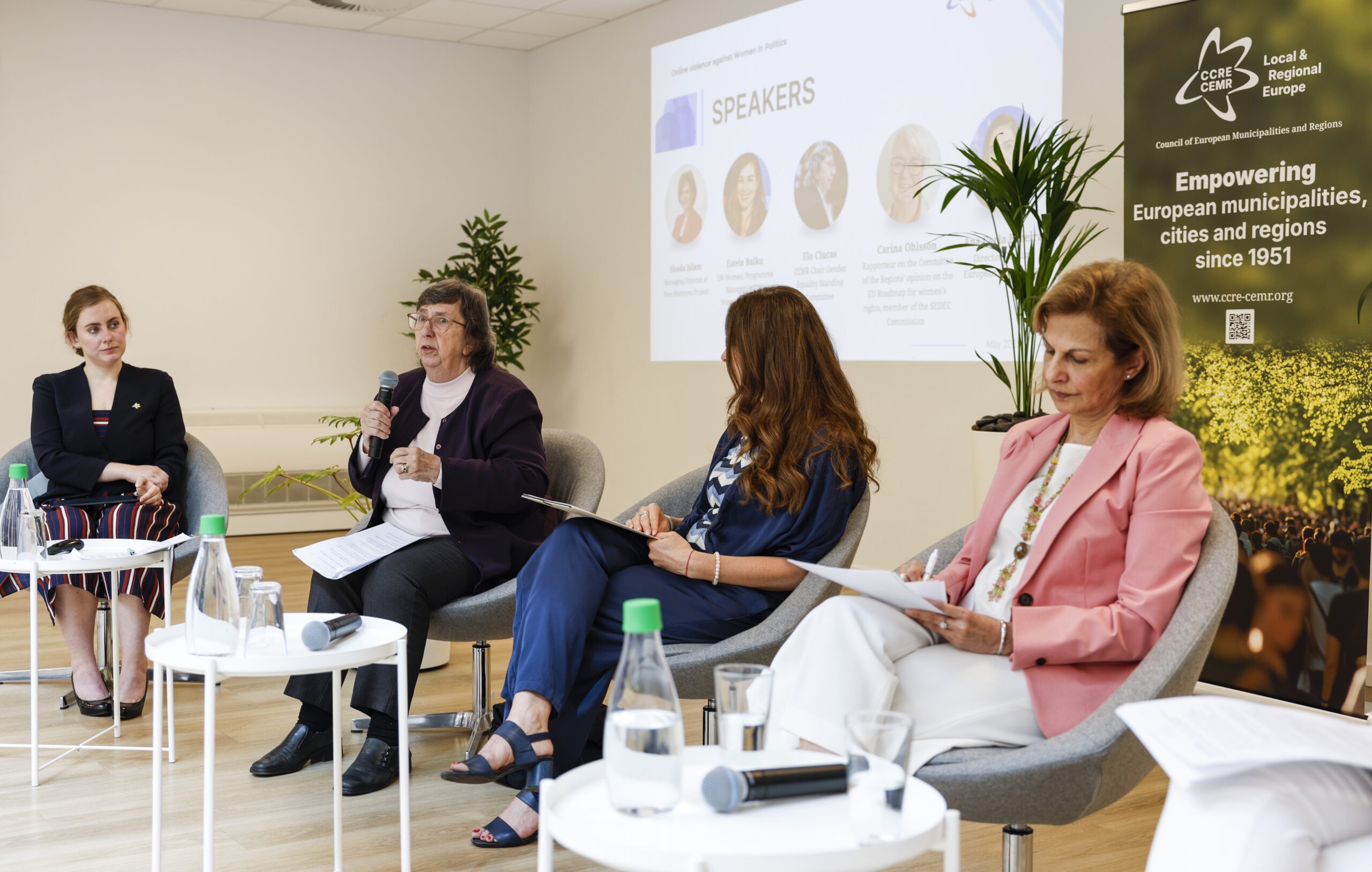
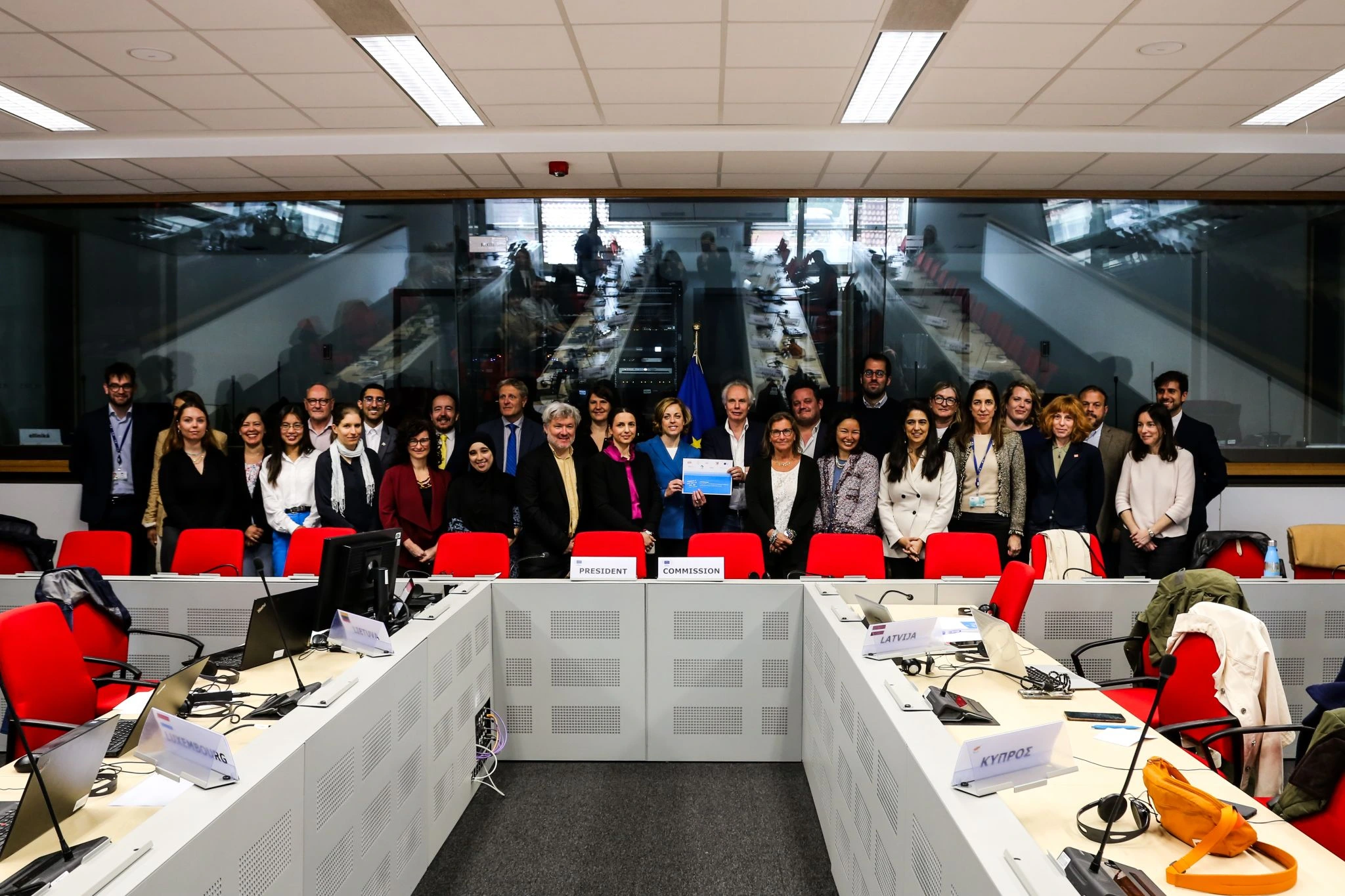
Yesterday, the Council of European Municipalities and Regions (CEMR) hosted a training session for the FOSTER – Future Oriented Solutions Toward Environmental Resilience project.  

Funded by the European Union’s CERV – Citizens, Equality, Rights, and Values programme, FOSTER aims to strengthen local governance frameworks to address environmental challenges through strategic foresight and inclusive management practices. 

This interactive training brought together local stakeholders, representatives from national associations of local governments, and municipal leaders. Its goal was to equip participants with practical tools to address key issues, such as climate resilience, participatory democracy, gender equality, and inclusive communication strategies. 

Key Highlights 

The event featured a series of workshops and discussions led by CEMR experts: 

  • Inclusive Communications for Local Governments 

Presented by Léa Hetz and Meritxell Parramon Vilè, this session explored ways to communicate effectively while embracing diversity and inclusion. 

  • Participatory Democracy and Local Governance 

Carol Thomas led this module, focusing on how participatory approaches can empower citizens and strengthen governance at the local level. 

  • Interactive Foresight Game 

The training concluded with a collaborative game, where participants applied foresight techniques to urban development scenarios, fostering innovative thinking and practical solutions for future challenges. 

Building Capacity for a Sustainable Future 

The FOSTER training provided participants with a unique opportunity to gain practical knowledge, share insights, and network with peers across Europe. The hands-on approach ensured that attendees were left with actionable strategies to implement within their communities, particularly in advancing climate resilience, gender equality, and participatory governance. 

This initiative is part of CEMR’s ongoing efforts to empower local and regional governments, enabling them to address global challenges while fostering inclusive and sustainable transitions at the local level. 

For more information on the FOSTER project, contact our Project Officer below: 

The Local Alliance on the next MFF

The Local Alliance presents its new Position Paper on the next EU Multiannual Financial Framework 2028-2035


The Council of European Municipalities and Regions (CEMR) as a member of the Local Alliance, a coalition of Europe’s eight leading local and regional networks, launches a position paper on the next EU Multiannual Financial Framework (MFF 2028–2034).

The document outlines the urgent need for a strong, future-proof EU budget to create a just, climate-neutral, and competitive Europe. It places a spotlight on the indispensable role of local and regional governments in delivering key EU priorities such as the European Green Deal, digital transformation, and territorial cohesion.

Why the next MFF matters:

  • Unmatched Local Impact: Local governments are already implementing 70% of European Green Deal legislation and account for 69% of climate-related public spending.
  • Better Quality of Life for Citizens: The MFF enables Local and Regional Governments to build greener cities, stronger economies, and more inclusive communities.
  • Resilience in Challenging Times: Amid an evolving and less secure political landscape, the next EU budget must prioritise support for local resilience and ensure no region is left behind.

A vision for a resilient and united Europe

Local and regional governments are not just implementers but vital partners in shaping a sustainable, competitive, and cohesive future for Europe. Investments at the local level drive real change, ensuring that the EU’s goals translate into tangible benefits for communities and citizens.

For more information, contact: