Future of Europe

Democracy - News

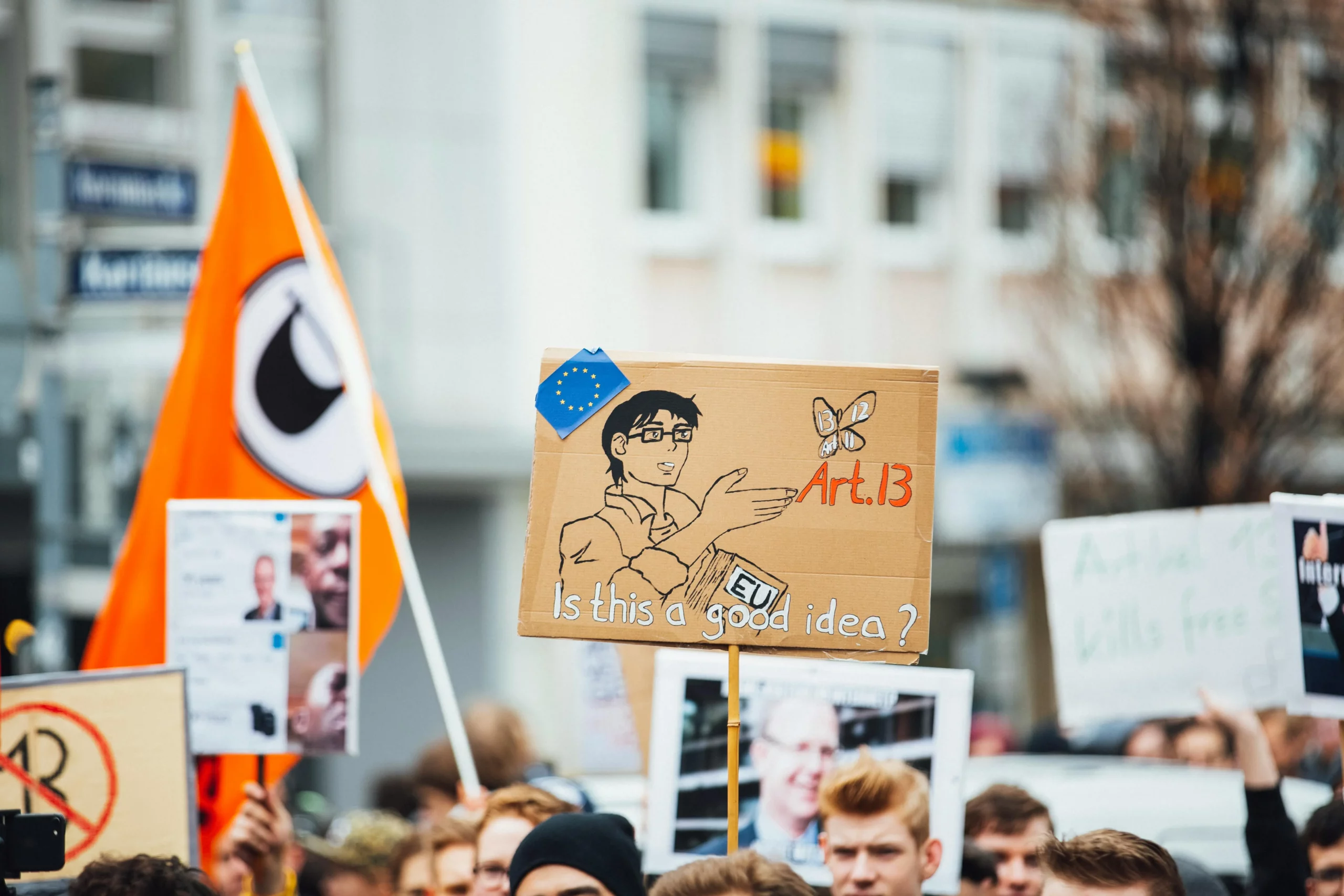
Local and EU leaders’ debate: time to strengthen European democracy from the bottom-up!


With the Conference on the Future of Europe, citizens across the continent have a unique opportunity to organise local events and make their voice heard to shape the direction of our Union. But how can we foster citizens’ participation? And what visions do we have for municipalities and regions in the future of Europe?

Last week, ahead of our Policy Committee meeting, local and regional leaders, senior EU official and representatives of civil society took part in a debate to discuss precisely these questions.

Dubravka Šuica, Vice-President of the European Commission in charge of Democracy and Demography, emphasised that European democracy must not be a top-down process. “Once a mayor, always a mayor,” she said. “As a former mayor, I know all politics is local.”

Mayors and regional leaders must make their voices heard at the Conference. The Croatian commissioner said it was impossible to know what the Conference’s outcome would be but that it was important to already look for ways to embed citizens’ participation in decision-making.

Taking local action to involve citizens

Involving ordinary citizens in European debates and decisions is not always easy however. Developments in Brussels and Strasbourg too often seems remote and abstract. That is why the French city of Rennes has invited local citizens to participate through municipal projects.

Flavie Boukhenoufa, Deputy Mayor of Rennes, presented Labo Europe, an organisation helping citizen get involved in and better understand the EU. This year the “Lab” launched a campaign to develop a European Citizens’ Initiative (ECI) for Rennes. Citizens are able to send in their ideas and participate in online debates to create the city’s proposal for a European action.

The final choice will be presented on Europe Day on 9 May. “We aim to speak not with experts but with citizens, even those who have no knowledge about the EU”, said Boukhenoufa. Get inspired by checking out this video and website on Rennes’ citizen initiative

People across Europe can provide their input to the Conference by organising local events and registering these with the official online platformServane Metzger, part of the Cabinet of the French Secretary of State for European Affairs, highlighted the importance of these local events in terms of engaging people and reflecting the sensibilities of different regions.

Metzger raised the possibility of maintaining the platform into the future: “The platform is an extremely powerful tool to map events. It’s really easy to see events that are nearby, that way we reach local people, not only EU specialists.”

What future for Europe?

The health of European democracy is also affected by the state of national and local democracy.  Mayor of Gdansk and CEMR Executive President Aleksandra Dulkiewicz stressed that we cannot take democracy for granted and urged protecting the next European elections from digital threats and outside interference.

Vibrant local democracy can also be a bulwark against negative developments at national level. Dulkiewicz called on the Conference to support NGOs and local and regional governments to counter rising authoritarianism. “These two pillars should be strengthened because threats to democracy, rule of law, human rights and transparency in one EU country can affect the whole community”, she said.

Jordanka Fandakova, the Mayor of Sofia and CEMR Executive President, highlighted the importance of the digital divide, with rural areas in particular often lacking connectivity. She called for making equal Internet access a priority. “Digital strategies should not only be focused on big cities, but also take into consideration the needs of small towns and communities”, she said.

No one can say what will result from the Conference. Eva Maydell, a Bulgarian MEP and President of the European Movement International (EMI), argued that pandemic showed the power of European solidarity, but also the need to strengthen our continent’s autonomy. She stressed that the EU can only maintain trust if the Conference delivers results: “Like every political project, the EU is based on a story and its ability to meet the promises it makes to its citizens.”

CEMR and CoR investigation

Take our survey on recovery plansThis article will soon be translated into French.


A year ago, CEMR and the Committee of the Regions joined forces to run a survey to determine the extent to which municipalities, regions and their associations have been involved in preparing national post-COVID Recovery and Resilience Plans. Each national plan must be approved by Brussels in order to access EU recovery funds. The results showed that, with a few exceptions, the disappointing extent to which local governments were able to shape their national recovery plans.

rnCEMR and the Committee of the Regions are now running a second survey to determine municipalities, regions and their associations’ involvement in the implementation of the recovery plans. The survey can already be completed in English and other languages will become available by 1 February. Completion should only take 5-10 minutes. The deadline for response is 1 March 2022.

TERRI – mapping territorial reforms

Terri - News 2022

Discover “TERRI”: a new online tool mapping territorial reforms and powers in Europe


How is Europe’s complex patchwork of local and regional governments evolving? How have the responsibilities of municipalities, counties and regions changed in recent years, marked by environmental and health crises? What examples of successful territorial reforms can inspire others?

To answer these questions, we present to you a new digital report entitled, ‘Territorial Governance, Powers and Reforms in Europe’, or TERRI Report for short. This online tool highlights territorial reforms and decentralisation trends over the past decade in 40 countries. It also analyses the changing nature of relationships between central and subnational governments.

In light of the pandemic, this edition zooms in on local health responsibilities in different countries and evaluates the impact of COVID-19 on local health systems. TERRI visualises trends with numerous charts. In just a few clicks, you have access to individual country profiles, an interactive map and recommendations to policymakers for undertaking successful territorial reforms. There is also a unique tool for side-by-side comparisons of different countries’ systems of local government.

The TERRI Report is based on research by the Council of European Municipalities and Regions (CEMR), gathering data from its member associations on the state of local and regional governments across Europe.

The trends reshaping local Europe

While the situation in different European nations is necessarily diverse, the TERRI Report has identified several common trends.

Europe today is made up of 114,534 towns and cities, 1058 provinces and counties, and 353 regions. There have been reforms reducing the number of municipalities or regions in several countries. These typically aimed to consolidate the territories concerned into larger entities. Portugal, Albania, Estonia, Latvia, Ukraine and Turkey for example, all saw drastic reductions in the number of municipalities, while Norway and France considerably reduced the number of regions.

National associations of local and regional governments emerge as central players in both territorial reforms and healthcare systems. As regards healthcare, associations play a key role through activities such as sharing expert information and best practices amongst their members and in negotiating healthcare roles and budgets with national governments.

In many countries, there has been a decentralisation of healthcare responsibilities. This typically takes the form of increased healthcare responsibilities for subnational governments and/or more healthcare coordination between levels of government.

These are just a few of the changes that are affecting local life in our municipalities and regions. To find out more, explore the TERRI Report at: terri.cemr.eu

For more information, contact:

Boosting public investment for recovery

Cohesion Policy Alliance - News 2021

CEMR calls for investment-friendly EU economic governance reform


The COVID-19 crisis exposed vulnerabilities in Europe’s economic governance and the need to rethink how EU rules support long-term, sustainable investment at all levels of government. In its 2022 position, the Council of European Municipalities and Regions (CEMR) argues that the reform of the EU’s economic governance framework is a vital opportunity to unlock local and regional investment capacity.

Local and regional governments, which account for 45% of public investment in the EU, were heavily impacted by the crisis. While they expanded essential services and supported communities, they also faced falling revenues and limited fiscal space. CEMR warns that without urgent reform, municipalities risk being held back from investing in vital green, digital, and social transitions.

CEMR proposes several key changes:

  • Strengthen multi-level governance: Local and regional voices must be involved in economic coordination, including through a reformed European Semester with mandatory application of the partnership principle.
  • Recognise investment as a priority: The new framework must distinguish between current spending and long-term, sustainable investment to avoid penalising municipalities for future-oriented projects.
  • Grant borrowing flexibility: Local and regional borrowing for structural investments should not be constrained by national debt calculations under the Stability and Growth Pact.
  • Establish a European municipal and regional bank: This new facility within the EIB would support local investment, particularly through pooled resources and tailored green or social bonds.
  • Support local capacity building: Municipalities need the tools and skills to plan and deliver strategic investments, especially in health, care, and infrastructure.

CEMR also highlights the importance of maintaining local leadership in the implementation of National Recovery and Resilience Plans. Without adequate autonomy, funding, and engagement, the EU’s sustainable recovery goals, particularly those of the Green Deal, risk being delayed or derailed.

Ultimately, CEMR calls for a governance framework that enables, not restricts, local ambition, empowering municipalities and regions to invest in the future of Europe’s communities.

Read the position paper here

For more information, contact:

In memoriam

In memoriam - News

The passing away of David Sassoli leaves a “terrible void” in Europe


It is with great sadness that we have learned of the passing away of David Sassoli, president of the European Parliament, at the age of 65.

David Sassoli was first a journalist, and then an excellent politician and a man of the institutions, but he was above all an outstanding human being acting with commitment and passion for a Europe of and for the people, rights and openness”, said Stefano Bonaccini, president of CEMR and of the Emilia-Romagna Region. “His death leaves a terrible void in both national and international politics.

In addition to his deep European commitment and strong support for territorial development, PresidentSassoli will be remembered as the man who steered the Parliament through the worst of the COVID crisis, enabling MEPs to work effectively against and despite the pandemic”, said CEMR Secretary General Frédéric Vallier. “In the name of Europe’s municipalities and regions, CEMRexpresses its condolences to his family, friends and his colleagues in the European Parliament.

After a three-decade career as an Italian journalist, starting out in newspapers then moving to television and becoming a nationally known anchor, David Sassoli became a member of the European Parliament in 2009 as part of the centre-left Progressive Alliance of Socialists and Democrats group. Ten years later, he was elected President of the European legislative body.

Sassoli’s mandate was coming to an end this January. MEPs are expected to hold the first round of voting for his successor on Tuesday next week in Strasbourg.

Green Capital

Green City - News Section

Grenoble was chosen to be the European Green Capital 2022


Grenoble was chosen by the European Commission to be the European Green Capital of the year 2022. Since 2010 and every year, this prestigious title rewards cities strongly committed to transitions and pioneers of an environmentally-friendly urban ecosystem.

The official launch of this European Green Capital year, which is organised by the City of Grenoble and the European Commission, in partnership with the Département de l’Isère and Grenoble-Alpes Métropole, and with the support of the French government, will take place on Saturday 15th January.

Access the event page here: https://greengrenoble2022.eu

International Migrants Day

Migration - News Section

How cities are shifting the narrative on migration


Mechelen, Belgium. A middle-aged woman dressed in light colours sits in a public library. It seems like someone interrupted her while she was reading a book, but she doesn’t mind. She looks straight, and you immediately feel there is a story to tell behind those warm brown eyes.

This is Farida, a woman, a mother of three children, a grandmother of five, an accountant. She speaks five languages, likes to cook and loves to read. She lives in Mechelen, but fled from Syria five years ago: she is a refugee. This picture, placed on a window near the public library in Mechelen was part of the ‘People Make the City’ exhibition and Farida’s story is just one of many in the series.

‘People Make the City’ is a storytelling project that translates residents’ stories into public content such as street art, podcasts, exhibitions, images and texts, building a more nuanced narrative of migrants and refugees’ impact on their local neighbourhoods. These features show the diversity and the rich multi-layered identities of people living in the local community.

The people concerned can co-create the way they want to be presented because it’s up to them how they want their story to be told and where. “Listening to a story is the first step to connect with someone you don’t know”, explains Sara Lanoye, the project’s coordinator. Storytelling is a powerful way of strengthening social cohesion by promoting mutual understanding.

Tackling rumours

We tend to make up stories about people we don’t know well. An animated story, ‘It all started accidentally’, sets a mirror to people who spread assumptions about other people without checking the facts first. Such rumours can spread like wildfire and thus contribute to exclusion and discrimination.

This animated video has been made for children and adults alike as part of the Antirumours Project in Fuenlabrada, Spain. It aims to raise awareness about the negative impact of rumours. “If we don’t stop the rumours, they grow into more dangerous forms, which are used to spread fear and misinformation”, warns Juan Carlos Hernandez of the City of Fuenlabrada.

The Spanish city has experienced rapid population growth due to migration over the past 40 years. Therefore, the municipality put social participation and inclusion programmes in place that helped the city become multicultural.

‘Antirumours’ is one such project, bringing together 25 cities to discredit false rumours through the collection of data and the creation of a network of local civil society actors. The project has been running since 2013 as part of the Council of Europe’s Intercultural Cities initiative.

It Takes a Community to shift the narrative

Nowadays, media narratives tend to be reactive, related to specific events or tragedies, and frame migration with negative words such as waves, crisis, invasion. In addition, migrants are portrayed either as dangerous or helpless victims. Personal stories, messages that evoke emotions work better. This is one of the lessons learned from the ‘It Takes a Community’ campaign.

This multilevel campaign showcases how migration enriches our lives by sharing concrete stories of families, friends, neighbours, co-workers or classmates from around the world who are making our local communities a better place. ‘It Takes a Community’ is a collaborative effort of national and local governments, civil society, the private sector, and the International Organization for Migration (IOM).

The international level tries to build upon the richness coming from the local level”, says  Sophie van Haasen of the GFMD Mayors Mechanism.“Engaging with national governments is sometimes difficult. The problem is, the national levels usually don’t have a lot of communication campaigns fostering inclusion and integration of migrants.

Migrants in Europe are sometimes are portrayed as a threat to national identity and economic prosperity, and this is even the predominant political discourse in some countries. However, local and regional governments are taking the lead with campaigns and projects promoting integration and inclusion. These initiatives often achieve better outcomes than overly centralised ones.

Tackling rumours and prejudice, letting newcomers tell their stories, fostering an environment where locals can engage with newcomers and their stories: all these actions can change attitudes towards migration in the local community. However, connecting the dots between different levels of government remains the main challenge in changing the way we frame and shape migration.

European Semester

European Parliament - News

A conversation with MEP Schuster on the future of the European Semester


While EU member states enjoy financial support from the Union’s largest ever package of economic support, the so-called the “EU’s Recovery and Resilience Facility”, we spoke to MEP Joachim Schuster about his views on the reform of the “European Semester” formulating economic policy recommendations for all EU Member States.

The implementation of Member States’ recovery and resilience plans will drive their reform and investment agenda for the years ahead. For its part, the European Semester, with its broader scope and multilateral surveillance, will usefully complement the implementation of the recovery and resilience plans.

The European Semester process has been overturned by the Recovery and Resilience Facility (RRF). Why is the debate around the European Semester so important now and what is at stake? 

The Commission has allotted a strong role to the European Semester in the Recovery Plan and therefore strengthened its importance for policy coordination at EU level. However, I am convinced that the effectiveness and success of the alignment of Member States’ investment and reform programmes will depend on the reform and simplification of the Semester as well as the increased ownership by the Member States when it comes to the implementation of the Country Specific Recommendations (CSRs). 

According to you, how should the future European Semester look like to become the main tool to relaunch growth and to allow strategic investments in the EU?

A reformed European Semester should build on the lessons learned from the Recovery and Resilience Facility (RRF) exercise and improve the existing mechanisms to establish a more transparent and democratic coordination process. This applies in particular to the definition of policy objectives in the European Semester and the CSRs, which needs the full involvement of the European Parliament and the Member States. A reform should also improve the cooperation between Commission and Member States in developing the needed reforms and investments on national level to achieve those policy objectives.

In the report “The European Semester for economic policy coordination: Annual Sustainable Growth Strategy 2021” you called for a more democratic European Semester in line with the principles of subsidiarity and proportionality. How could local and regional governments be better involved in the elaboration of the country specific recommendations? What role could the European Parliament play to ensure a more democratic process?

The involvement of local and regional authorities, as well as social partners and civil society would enhance the ownership of Member States but also foster tailor-made solutions for their reforms and investments. The Member States should therefore put in place arrangements for the participation of local and regional authorities during the whole Semester process. Moreover, the European Parliament should be stronger involved in setting economic policy priorities and economic governance decisions, and ensure social dialogue.

How can the European Semester ensure a clearer and increased role of local and regional governments in the use of the recovery funds, and especially in reaching the SDGs?

The RRF gives a bigger role to local and regional authorities in the preparation and implementation of the national plans. We need to safeguard that the Commission is ensuring their involvement according to the Regulation and establishes adequate mechanisms in the future economic policy coordination. The upcoming reform must transform the Semester into a governance tool that implements the EU´s social and environmental ambitions. It must also ensure that economic and budgetary targets are on equal footing with social and environmental targets.

Now that the Commission has re-launched the discussion around the reform of the EU economic governance system, which role do you think could the European Semester play in the coordination and management of the recovery funds? 

To recover from the pandemic and finance the climate-neutral and digital transformation, the Member States will need more fiscal flexibility even beyond the pandemic. I strongly welcome greater flexibility in the economic governance framework. However, it will only be accepted by all Member States and succeed if we come to a stronger binding economic policy coordination in Europe. Here, too, it is worth looking at the incentive-driven ratio behind the RRF, which could be a successful model for a reformed EU Semester: democratically set guidelines at EU level and involvement of the Member States in the elaboration of country-specific reforms. 

The European Semester, initially established as a pure instrument for fiscal surveillance has now included other policy areas, such as cohesion, green and social policies. Would you favour a reform of the Semester to ensure that the Green Deal or the results of the Social Scoreboard are duly taken into consideration?

Since the introduction of the EU governance system, we learned that it is not possible to pursue a successful economic policy based on fiscal surveillance alone. Therefore, I strongly support the Commission’s announcement to reform the European Semester and to convert it further into a tool to coordinate economic, social and environmental policies. The economic and fiscal policy should serve the Union objectives and principles such as the Green Deal, the SDGs or the European Pillar of Social Rights while ensuring financial stability in Europe.

As a German MEP, could you provide us more information on the state of play of the cooperation at subnational level in your country? How can a federal state such as Germany truly ensure the application of subsidiarity already in the design phase of national reforms?

In Germany, the principle of subsidiarity and the division of tasks and competences is enshrined in the constitution and is generally respected even in times of crisis. In political practice, this requires close cooperation between the federal government, the federal states and also the municipalities. The federal states and municipalities have a variety of formal and informal opportunities to participate in the process of shaping national reforms at early stage. In many areas, such as for the adoption of the RRF, the approval of the Bundestag and the Bundesrat (representative chamber of the Länder) is required for legislative projects to enter into force.

Smart cities

City - News

Just out: UCLG’s new study on the impact of COVID-19 on cities’ Smart resilience


Discover “Smart Cities Study 2021“, a new study published by our world organisation, United Cities and Local Governments (UCLG), shedding light on the impact of COVID-19 on cities’ Smart resilience. 

This new study provides an overview of the pre-pandemic situation of 35 cities in 20 countries from Europe, Latin America, Africa and Asia. It identifies their level of digitisation and the “Smart” resources and tools they had. Participating cities in Europe include Brno, Ostend, Utrecht, Santander, Barcelona, Villanueva de la Serena, Gavà, Bilbao, Lappeenranta, Alba Lulia and Lasi.

It also analyses what impact the pandemic had on the different areas of local governance and what new “Smart” measures or tools were used to combat the negative consequences that were generated.
Finally, the study determines to what extent these types of actions have served to increase the resilience of cities, and to assess the usefulness of the new measures and tools for combating future crises. It also seeks to promote the exchange of knowledge including best practices developed by the cities.

The study is available in English and Spanish.

Decentralised cooperation

Ukraine flag - News section

Bridges of Trust online Forum: strengthening ties between Ukrainian and EU municipalities


Over 100 representatives of local government from Ukraine and the EU gathered virtually on 10 December 2021 to discuss how to create and revitalise partnerships between Ukrainian and EU municipalities. This unique online forum was the scene of both lively discussions and the exchange of practical recommendations and best practices.

The event was moderated from both Brussels and Kyiv and was organised by the Council of European Municipalities and Regions (CEMR), PLATFORMA and the U-LEAD with Europe Programme.

Municipal partnerships: a driver of democratisation and reform

In the morning, the participants were greeted by four speakers. Viacheslav Nehoda, Ukrainian Deputy Minister for Communities and Territories Development, emphasised the importance of learning and applying the best practices of EU municipalities. He cited in particular the areas of education, healthcare, land management, community involvement and investments.

Xavier Camus, Head of Co-operation Section 1 — Good Governance and Rule of Law of the EU Delegation to Ukraine, argued that municipal cooperation is an important component of EU-Ukraine relations.

This was echoed by CEMR Secretary General Frédéric Vallier, who noted that local and regional governments are well positioned to drive Ukraine’s democratisation and reform processes, and to bring EU policies and projects in the country closer to the people. 

Bastian Veigel, GIZ Director of U-LEAD with Europe, stressed that EU-Ukraine municipal partnerships are important for the implementation of decentralisation reform.

During the forum, participants learned about the objectives and planned activities in the framework of the “Bridges of Trust” initiative. Virtual meetings between partner-municipalities have already started to take place. The main focus of these meetings is on identifying mutual interests, outlining the scope of joint actions and agreeing on the goals and modalities of the study trips and internships to the EU municipalities to be held in 2022. 

study of existing EU-Ukraine municipal partnerships, which was carried out within the initiative, was also presented to the participants. The study contains key success and failure factors of international municipal cooperation and many useful recommendations to those municipalities who would like to start or improve an existing partnership, as well as to the third actors who support EU-Ukraine municipal cooperation.

Lively online discussions

There were lively debates during a a panel discussion on how to build successful partnerships, with numerous exchanges both between the panelists and the participants via an online chat. Yuliia Noskova, Director of Shyroke Municipality’s Development Agency (Ukraine), and Olena Ovcharenko, Project manager at Engagement Global, shared practical tips and examples.

Roma Žakaitienė, Director of the Association of Local Authorities in Lithuania (ALAL) and Lyudmyla Damentsova, Deputy Executive Director of the Association of Ukrainian Cities (AUC), provided examples of how national associations support municipalities in their international cooperation efforts. 

During the afternoon, the 20 municipalities of the Bridges of Trust initiative were presented through an original and memorable “Eurovision of municipalities” presentation. They are:

1. Kakhovka municipality (Ukraine) and Narva (Estonia)

2. Novohuivynske municipality (Ukraine) and Lazdijai district municipality (Lithuania)

3. Fastiv municipality (Ukraine) and Druskininkai municipality (Lithuania)

4. Chuhuyiv municipality (Ukraine) and Kuldīga municipality (Latvia)

5. Zboriv municipality (Ukraine) and Joniškis district municipality (Lithuania)

6. Henichesk municipality (Ukraine) and Wieliczka (Poland)

7. Korosten municipality (Ukraine) and Ukmergė district municipality (Lithuania)

8. Solotvyno municipality (Ukraine) and Sol’ village (Slovakia)

9. Dolyna municipality (Ukraine) and Šiauliai district municipality (Lithuania)

10. Polyanytsya municipality (Ukraine) and Polanica-Zdroj (Poland)

Partnerships for people

Local leaders also shared their motivations for joining the partnerships. Mayor of Ukmergė Rolandas Janickas said in a video: “I have no doubt that by developing a friendship with Korosten, we will become stronger together.” For her part, Mayor of Chuhuiv Halyna Minaevaaffirmed that “The initiative will help the municipality find new opportunities to grow, learn and apply the best practices of European colleagues in their own work.”

In his closing remarks, Durmish Guri, Director of External Resources and Knowledge Strategy at CEMR, expressed his hope that the 20 municipalities would make the most of their upcoming exchanges and study visits.

We hope that Ukrainian municipalities will use the knowledge that they will receive during these activities and will apply it in their communities, to improve a specific service or a general organisation and management of the municipality”, Guri said. “And let’s not forget that the ultimate beneficiaries of all of these activities and of your international partnership should be the citizens of your communities.

For more highlights from the Forum, consult the exchanges on Twitter under the hashtag #BridgesofTrust.

———————–

«Мости довіри»: Посилення муніципальної співпраці між громадами України та Європейського Союзу

Понад 100 представників органів місцевого самоврядування з України та ЄС зібралися минулого тижня (10 грудня 2021), щоб обговорити, як створити та покращити партнерські відносини між громадами України та ЄС. Цей унікальний онлайн-форум cтав платформою для дискусій, обміну практичними рекомендаціями та найкращими практиками.

Захід був організований Радою європейських муніципалітетів та регіонів (CEMR),  PLATFORMA  та Програмою  «U-LEAD з Європою», а спільна модерація була проведена з Брюсселя та Києва.

Муніципальні партнерства: драйвер демократизації та реформ

У першій половині дня, учасників вітали чотири доповідачі. В’ячеслав Негода, заступник Міністра розвитку громад та територій України, наголосив на важливості  навчання  та застосування кращих практик муніципалітетів ЄС, особливо в таких сферах як: освіта, охорона здоров’я, землеустрій, залучення громад’ян та інвестицій.

Ксав’є Камю, керівник Програм співробітництва щодо належного урядування та верховенства права Представництва ЄС в Україні, відзначив, що муніципальне співробітництво є важливою складовою відносин між Україною та ЄС. Це повторив генеральний секретар CEMR, Фредерік Вал’є, який підкреслив, що місцеві та регіональні органи влади мають всі можливості для стимулювання процесів демократизації та реформ в Україні, а також для наближення політики та проєктів ЄС у країні ближче до людей. Бастін Файгель, директор Програми «U-LEAD з Європою» від GIZ, наголосив,  що  муніципальне партнерство Україна-ЄС є також важливим для реалізації реформи місцевого самоврядування.

Під час форуму учасники дізналися про цілі та заплановані заходи в рамках ініціативи «Мости довіри». На разі, в рамках ініціативи вже проходять віртуальні зустрічі між партнерами.  Основна увага під час цих зустрічей зосереджена на визначенні взаємних інтересів, окресленні обсягів спільних дій та узгодженні цілей навчальних поїздок до муніципалітетів ЄС та стажувань, які пройдуть у 2022 році.

Учасникам також було представлено дослідження існуючих муніципальних партнерств Україна-ЄС, яке проводилося в рамках ініціативи. Дослідження містить ключові фактори успіху та невдач міжнародного муніципального співробітництва та багато корисних рекомендацій для тих громад, які хотіли б розпочати чи покращити існуюче партнерство, а також для третіх учасників, які підтримують муніципальну співпрацю між Україною та ЄС.

Жваві онлайн-дискусії

Під час панельної дискусії, відбулися жваві дебати про те, як побудувати успішні партнерські відносини, з численними обмінами як між доповідачами, так і між учасниками через онлайн-чат. Юлія Носкова,  директорка КУ “Агенція розвитку Широківської ТГ” (Україна), та Олена Овчаренко, керівниця проєкту, «Муніципальні партнерства з Україною», Engagement Global, поділилися практичними порадами та  прикладами.

Рома Жакайтієне, директорка Асоціації місцевих органів влади Литви, та Людмила Даменцова, заступниця Виконавчого директора Асоціації міст України (АМУ), навели приклади того, як національні асоціації підтримують громади в їх зусиллях з міжнародного співробітництва.

У другій половині дня 20 громад  учасниць ініціативи «Мости довіри» були представлені у динамічному форматі-презентації «Євробачення громад». Серед них:

1. Каховська громада, Херсонська область – Нарва, Естонія
2. Новогуйвинська громада, Житомирська область – Лаздійський район, Литва
3. Фастівська громада, Київська область – Друскінінкай, Литва
4. Чугуївська громада, Харківська область – Кульдізький край, Латвія
5. Зборівська громада, Тернопільська область – Йонішкіський район, Литва
6. Генічеська громада, Херсонська область – Величка, Польща
7. Коростенська громада, Житомирська область – Укмергський район, Литва
8. Солотвинська громада, Закарпатська область – Соль, Словаччина
9. Долинська громада, Івано-Франківська область – Шяуляйський район, Литва
10. Поляницька громада, Івано-Франківська область – Поляни́ця-Здруй, Польща

Партнерство для людей

Мери муніципалітетів та голови громад також поділилися мотивами участі в ініціативі та налагодженні партнерських відносин. Мер Укмергського району,  Роландас Яніцкас, наголосив у відеозверненні:  «Я не сумніваюся, що розвиваючи дружбу з Коростeнем, ми разом станемо сильнішими».  Міська голова Чугуївської громади,  Галина Мінаєва переконана,  що  «Інітіатива допоможе громаді знайти нові можливості для зростання, навчання та застосування кращих практик європейських колег у власній роботі».

У своєму заключному  слові,  Дурміш Гурі, директор з питань проєктів та стратегії управління знаннями (CEMR), висловив надію, що 20 муніципалітетів візьмуть максимум найкращих практик з майбутніх обмінів та навчальних візитів.

«Ми сподіваємося, що українські громади використають знання, які вони отримають під час цих заходів, і будуть застосовувати їх у своїх громадах, щоб поліпшити конкретну муніципальну послугу або загальну організацію та управління громадою»,- сказав пан Гурі. І давайте не будемо забувати, що кінцевими бенефіціарами всіх цих заходів і вашого міжнародного партнерства повинні бути громадяни ваших громад».

Ця публікація була підготовлена за підтримки Європейського Союзу і його держав-членів Німеччини, Швеції, Польщі, Данії, Естонії та Словенії. Зміст цієї публікації є виключною відповідальністю її авторів та не може жодним чином сприйматися як такий, що відображає погляди Програми «U-LEAD з Європою», уряду України, Європейського Союзу і його держав-членів Німеччини, Швеції, Польщі, Данії, Естонії та Словенії