Towns leading global change  

Sustainable Development Goals - News

How Europe’s towns and regions are turning global sustainability goals into everyday reality 


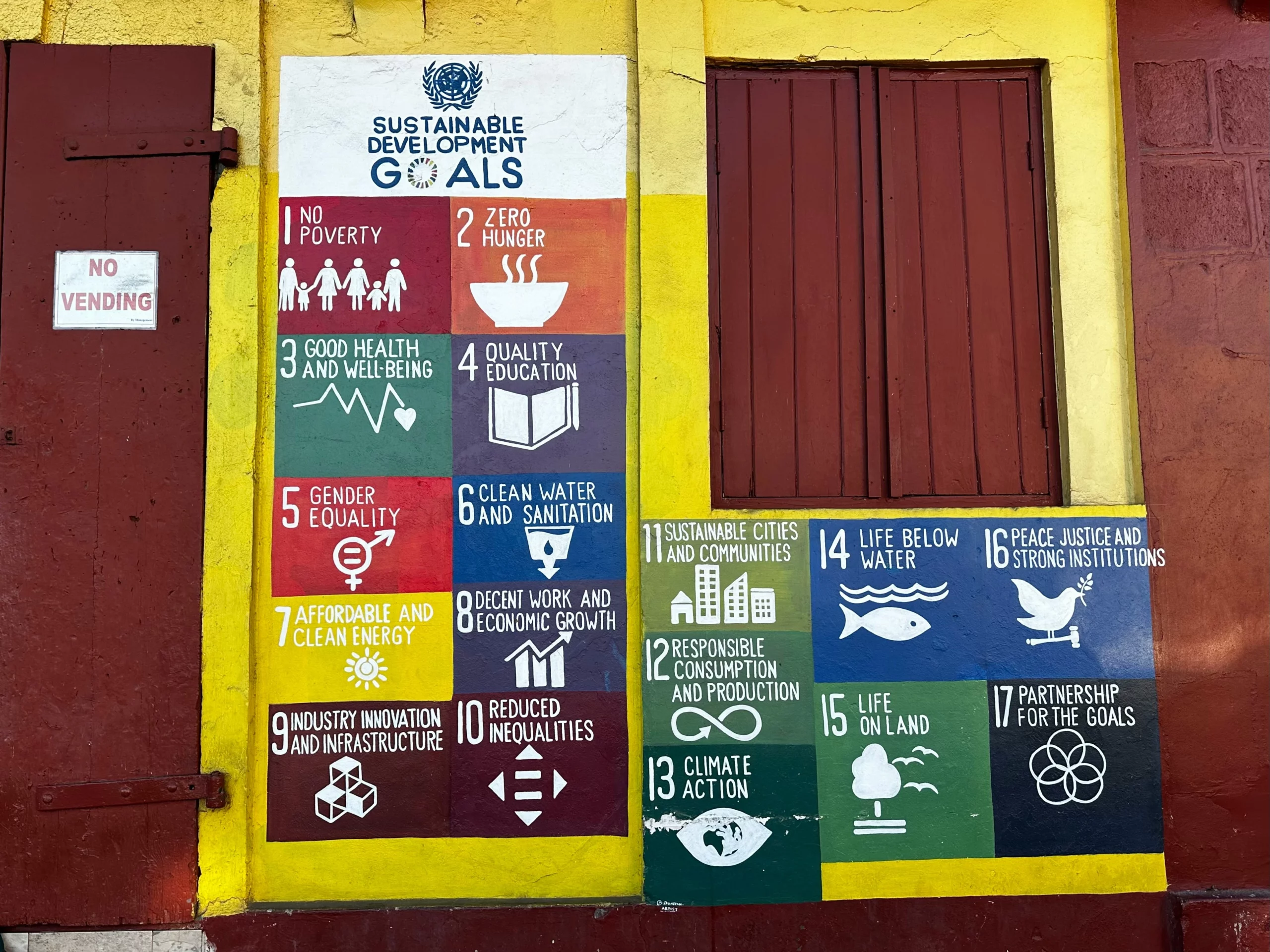
Since the adoption of the 2030 Agenda for Sustainable Development, it has become increasingly clear that towns and regions are at the forefront of making the global goals a reality. Local and regional governments are responsible for many of the services that directly affect citizens’ lives, education, housing, transport, waste management, and health. Their actions, often taken without reference to international frameworks, already contribute to creating more sustainable communities. 

The Council of European Municipalities and Regions (CEMR) and PLATFORMA highlight the central role of local governments not just as service providers but also as policy shapers, awareness raisers, and partnership builders. By engaging citizens and other stakeholders, municipalities are uniquely placed to embed sustainability principles in everyday governance. 

To support and strengthen this work, four clear recommendations emerge: 

  1. Increase participation – raise awareness among citizens and encourage greater involvement in sustainability initiatives. 
  1. Ensure coherence – integrate local governments into national strategies to avoid fragmented approaches. 
  1. Build capacity – provide technical tools and knowledge so municipalities can implement goals effectively. 
  1. Support partnerships – back international cooperation and exchange between towns and regions to reinforce solidarity. 

Progress is visible, but challenges remain: insufficient resources, difficulties in collecting local data, and the need for stronger national frameworks. Despite these obstacles, municipalities are proving to be powerful drivers of sustainable change. From inclusive policies to decentralised cooperation, they are demonstrating that building a sustainable future must begin at the local level. 

The global goals are not about imposing new tasks on towns and regions, but about offering a common framework and shared language. Europe’s municipalities are showing that sustainability is not abstract: it is local, practical, and essential for the well-being of communities today and tomorrow. 

Read the study here 

For more information, contact: 

How Europe is taking the lead on SDGs

Localising SDGs - News

Just out: New study on how to assess the UN Global Goals on the ground


Towns and regions still lack the financial resources to monitor the implementation of the Sustainable Development Goals (SDGs). This is one of the problems identified by associations of local and regional governments in a ground-breaking study carried out by PLATFORMA and the Council of European Municipalities and Regions (CEMR) on the evaluation of the actions taken to localise the UN Global Goals.

This study, entitled “Sustainable Development Goals – How Europe’s town and regions are taking the lead”, highlights the main challenges identified by associations of towns and regions, the top three being the lack of financial resources, the lack of data available at the local level and the lack of training.

But this fresh study is not only about identifying obstacles, it also collects good practices taken by associations and makes concrete recommendations on how to monitor the local implementation of the SDGs at domestic and international level. This includes the nomination of local SDG ambassadors, the setting of indicators or awareness raising campaigns.

The study was presented today in New York, at the 2018 UN High-Level Political Forum on Sustainable Development, an 8-day meeting with a central role in the follow-up and review of the 2030 Agenda for Sustainable Development.

Representing CEMR and PLATFORMA, the Mayor of Soria (Spain), Carlos Martínez Mínguez, explains: “Today, cities represent the global leadership which allows people to be at the core of the 2030 Agenda.”

He adds: “There is no doubt that towns and regions, national governments, the European Union and international institutions can overcome obstacles together to achieve the localisation of the SDGs. However, local and regional governments need support, both financially and technically. This is the role that associations of towns and regions are playing, but they can’t achieve this alone.”

For Carlos Martínez, the study shows that by working closer together, everybody wins: on the design, implementation and monitoring of national SDG strategies. He also also called on all EU Member States to follow the Spanish example and include next year a chapter on local governments’ actions to localise SDGs in their Voluntary National Reviews to the UN.

This publication is also available in French.

Background

Based on a survey sent out to national associations of local and regional governments, this study complements the Global Task Force’s 2nd Report to the High-Level Political Forum 2018, to which CEMR and PLATFORMA have also contributed.

This study was developed in the framework of the Strategic Partnership Agreement signed between CEMR-PLATFORMA and the European Commission.

For more information, contact:

Review of clean vehicles directive

Mobility - News section

Rethinking EU Clean Vehicles Rules: Why CEMR Calls for Flexibility, Funding, and Local Autonomy 


With road transport accounting for nearly a quarter of Europe’s greenhouse gas emissions, the EU is pushing for cleaner mobility solutions across all sectors. But in its current form, the proposed revision of the Clean Vehicles Directive could undermine the very public transport systems it aims to green. The Council of European Municipalities and Regions (CEMR) raises serious concerns about the directive’s scope, rigid procurement quotas, and potential to impose disproportionate costs on local and regional governments. 

Rather than empowering local authorities, the directive risks creating new financial burdens, administrative complexity, and counterproductive outcomes, such as reduced services or higher fares that could drive citizens away from public transport. 

Key messages include: 

  • Public authorities are not the problem. Local public transport is already among the cleanest transport modes. Efforts must focus more on vehicle manufacturers and private transport operators, not just municipalities. 
  • Procurement must remain flexible. While green public procurement should be encouraged, mandatory environmental or social criteria for public contracts would conflict with the subsidiarity principle and public procurement law. Local governments must retain the freedom to balance cost, service needs, and environmental goals. 
  • Technology neutrality is essential. The directive should avoid favouring specific technologies. Instead, a life-cycle emissions approach should guide definitions of “clean vehicles,” including real-driving emissions and biofuels. Special-purpose vehicles such as snow ploughs and waste trucks should be excluded. 
  • Quotas may backfire. Mandatory targets for clean vehicle procurement risk creating a vicious cycle: higher costs for local authorities may lead to service cuts, higher fares, and reduced public transport use, ultimately undermining climate goals. 
  • Funding must follow ambition. The transition to cleaner fleets requires substantial investment. CEMR calls for EU support, including a “golden rule” exempting public transport investment from Maastricht deficit rules, and more targeted funding. 
  • Reporting must be simplified. New national-level monitoring and reporting rules must not overload the over 100,000 local authorities across the EU. CEMR urges a streamlined, risk-based approach to limit bureaucracy. 

Ultimately, CEMR opposes the directive in its current form and urges amendments that respect local autonomy, enable cost-effective transition, and support sustainable transport without penalising the public sector already leading the way. 

Read position paper here

For more information, contact:

EU strategy on climate change

Climate Change - News

Why Local Governments Must Be Central to the EU’s Climate Resilience Strategy


As the EU evaluates its 2013 Adaptation Strategy, the Council of European Municipalities and Regions (CEMR) highlights a critical gap: climate resilience cannot succeed without fully involving local and regional governments. In its response to the Commission’s consultation, CEMR stresses that municipalities are already adapting to the effects of climate change, but current EU and national frameworks fail to empower them with the resources, recognition, and flexibility they need.

From floods and droughts to infrastructure strain, local authorities are on the frontlines of climate impacts. Yet too often, policies are shaped top-down, with insufficient consultation and support for those who must implement solutions on the ground. CEMR calls for a strengthened multi-level governance model, dedicated funding streams, and enhanced city-to-city cooperation to ensure the EU’s adaptation ambitions translate into effective, community-driven action.

Read the position paper here

For more information, contact:

Permanent platforms for energy dialogue 

Energy - News

Integrating local governments into national climate and energy planning through multilevel dialogue 


The transition towards a sustainable, decentralised and decarbonised energy system is a collective endeavour. Local and regional governments across Europe are already demonstrating leadership, delivering a significant share of the EU’s climate objectives. Yet, despite their strong track record and growing involvement, their role in shaping national climate and energy strategies remains fragmented. Ongoing negotiations on Energy Union Governance open the door to correcting this imbalance by establishing permanent Multilevel Climate and Energy Dialogue Platforms

Building on local experience 
Cities and regions have proven to be persistent drivers of Europe’s energy transition, with research showing they contribute to more than a third of the EU’s 2020 climate target. Initiatives like the Covenant of Mayors have showcased how local ambition can exceed European targets, but without a formal structure, their contributions risk being underutilised. The European Parliament’s proposal for dialogue platforms would ensure local authorities, alongside civil society and business stakeholders, are systematically involved in drafting, monitoring, and reviewing National Energy and Climate Plans (NECPs) and Long-Term Strategies. 

Such platforms would offer multiple benefits: continuous political support, feedback loops between delivery agents and policymakers, shared responsibility across sectors, stronger policy implementation, and the spread of best practices across Member States. 

National examples to inspire Europe 

Several countries already provide valuable models. In the Netherlands, municipalities and provinces negotiate national energy strategies with the government and social partners, resulting in formal agreements and regional climate plans. France has institutionalised citizen and stakeholder involvement through its Public Debate Commission, engaging the public directly in shaping energy programmes. Sweden demonstrates the value of capacity-building, with national agencies supporting local governments in setting and implementing climate objectives aligned with national goals. 

These examples show that permanent platforms for dialogue are both feasible and effective. Institutionalising multilevel dialogue under the Energy Union Governance would not only ensure that the EU benefits from the proven ambition of local authorities but also strengthen the democratic legitimacy and efficiency of Europe’s energy transition. Local governments are ready to contribute, what is needed now is a framework that guarantees their voice is heard at every stage. 

Read the position paper here 

For more information, contact: 

Local and regional leaders at COP23

Green City - COP News

Driving decarbonisation through cooperation, finance and multilevel governance


At COP23, European towns and regions reaffirm their commitment to building decarbonised and sustainable societies. Local and regional governments are already on the frontlines of the climate transition, implementing concrete measures that bring global climate goals to life at the community level. As Mayor Juan Espadas of Seville and Mayor Furio Honsell of Udine underline: 

Towns, regions and countries should all stand side by side to reach a sustainable planet. At COP23, let’s work together to achieve a decarbonised and sustainable future for everyone.

Key Messages from Local and Regional Governments 

  1. Global climate agendas are only achieved with local action 
    Cities and regions are essential for turning international commitments into reality. Localising the Agenda 2030 and strengthening multilevel alliances ensures that national and international targets translate into measurable change on the ground. 
  1. Appropriate financial and political frameworks are crucial 
    Ambitious local climate action depends on strong frameworks that provide resources and recognition. National governments must formally acknowledge local authorities as legitimate partners and equip them with the means to lead mitigation and adaptation efforts. 
  1. Governing together for a stronger impact 
    Tackling climate change requires collaboration at all levels. Early involvement of towns, cities and regions in national and international policymaking strengthens implementation and creates unity of purpose. Global initiatives such as the Covenant of Mayors demonstrate the power of collective local action. 
  1. Europe’s global responsibility 
    Europe must reinforce its role as a leader in protecting the planet by working hand in hand with local and regional governments. Their active participation in shaping climate policy will ensure effective, democratic and sustainable results at both the EU and global levels. 
  1. Decentralised cooperation accelerates decarbonisation 
    Cities have already developed extensive expertise in sustainable planning and international partnerships. Through decentralised cooperation, European towns and regions support their peers worldwide to implement climate projects, strengthening the global movement towards decarbonised societies. 

The withdrawal of the US from the Paris Agreement highlights the need for all other actors to step up. Local and regional governments across Europe are ready to intensify their cooperation, within Europe and globally, to keep the world on track towards a sustainable, decarbonised future. 

Read the position paper here 

For more information, contact: 

Regions driving climate action

Environment - News

Municipalities and regions as catalysts for COP22 progress 


COP22 in Marrakesh marked a crucial moment in translating the Paris Agreement into concrete action. For Europe’s municipalities and regions, this summit was an opportunity to showcase their role as catalysts in building sustainable and decarbonised societies. Represented by CEMR and PLATFORMA, local and regional governments brought forward five key messages to ensure that climate policies are inclusive, effective, and grounded in local realities: 

  1. Embedding the subnational level in global climate governance 
    Since COP15, the EU has acknowledged the role of municipalities and regions in combating climate change. At COP22, local leaders urged the EU to formalise a permanent, structured dialogue, allowing subnational governments to join EU delegations in climate negotiations. This would not only strengthen governance but also ensure that national commitments reflect local realities. 
  1. Linking COP outcomes with global agendas 
    COP22 should not stand alone but connect to broader frameworks such as the Sustainable Development Goals, particularly SDG 11, and the Habitat III Urban Agenda. Local financial capacities and legal competences must be assessed early to avoid unrealistic policies or burdensome costs for municipalities. 
  1. Mobilising financial and political resources 
    Successful climate action requires adequate resources. CEMR and PLATFORMA highlighted the importance of EU Structural and Investment Funds, access to global climate financing, and innovative tools like sustainable public procurement. Local politicians’ direct engagement and citizen ownership are vital to building resilient and low-carbon communities. 
  1. Mainstreaming local action into EU and national policies 
    Climate legislation must fully integrate the local dimension. Early recognition of local authorities as legitimate actors is essential. Initiatives such as the EU Urban Agenda, Territorial Agenda 2020, and the Covenant of Mayors show how climate policies can work when municipalities are treated as true partners. 
  1. Encouraging cooperation and knowledge exchange 
    Sharing practices, tools, and joint initiatives among cities and regions is key to accelerating progress. Decentralised cooperation, particularly through the Covenant of Mayors in Sub-Saharan Africa and the Global Covenant of Mayors, demonstrates how European municipalities can support global peers in their transition to sustainable development. 
     

CEMR and PLATFORMA reaffirmed their commitment to climate action by promoting multi-level governance, showcasing local best practices, and strengthening decentralised cooperation worldwide. Their message at COP22 was clear: local and regional governments are not bystanders but central actors in achieving a sustainable, low-carbon future. Climate action is an opportunity for green jobs, growth, and resilience, and municipalities and regions are ready to lead. 

Read the position paper here 

For more information, contact: 

State ofplay – energy union

Energy Transition - News

Becoming More Energy Efficient: CEMR’s Key Messages for the EU’s Legislative Review on Energy


As the European Union prepares to revise its energy legislation, the Council of European Municipalities and Regions (CEMR) is calling on the EU and national governments to place local and regional authorities at the heart of the energy transition.

Cities and regions across Europe are already taking bold steps to become more energy-efficient, reduce emissions, and build climate-resilient communities. But to succeed, they need enabling legislation, access to funding, and recognition of their existing efforts. The forthcoming reviews of the Energy Efficiency Directive, the Energy Performance of Buildings Directive, and the Renewable Energy Directive are key opportunities to strengthen local involvement and accelerate the green transition.

Four Key Messages from CEMR

1. Governance: Empower Local and Regional Authorities

CEMR urges EU institutions to embrace a shift towards inclusive, multi-level governance. Local and regional governments are no longer just implementers, they are now co-drivers of the energy transition. The EU must ensure that subnational authorities are directly involved in preparing and implementing national energy and climate plans. A bottom-up approach is not only more democratic but also more effective in engaging citizens and delivering tangible results on the ground.

Many local governments have already developed Sustainable Energy and Climate Action Plans through initiatives like the Covenant of Mayors. These efforts show that local leadership is essential to reaching EU targets for 2030, including a 40% reduction in greenhouse gas emissions and a 27% share of renewable energy.

2. Regulation: Promote Flexibility and Policy Integration

CEMR advocates for flexible regulations that acknowledge the diverse realities across Europe. While energy efficiency goals are shared, the path to achieving them must be adaptable to local contexts. The principle of subsidiarity must guide legislation, allowing local governments to balance economic, social, and environmental priorities.

Local authorities must also retain discretion in public procurement, especially when it comes to energy performance requirements. Instead of imposing rigid obligations, the EU should provide guidance and incentives, for instance, by supporting the use of life-cycle costing and encouraging innovation in decentralised energy systems.

3. Financing: Ensure Access to Funding

Ambitious targets demand robust financial support. Cities and regions need accessible and flexible financing tools to renovate public buildings, deploy renewables, and invest in low-carbon infrastructure. CEMR stresses the importance of tailored financial mechanisms, such as off-balance sheet financing and favourable loans supported by the European Investment Bank or Member States.

The EU must also address legal and procedural barriers to joint procurement and bundled investments across municipalities. Initiatives like the CITYnvest project show how collaboration can unlock innovative financing and accelerate energy-efficient renovation.

4. International Cooperation: Strengthen Global Partnerships

CEMR, together with its PLATFORMA partners, champions international cooperation among local and regional authorities. Building on the legacy of strong local governance, these partnerships support low-carbon development worldwide.

CEMR also plays an active role in global advocacy through forums like the UNFCCC COPs and Habitat summits. The international community is increasingly recognising the value of local action, and European cities are leading the way.

Conclusion

CEMR stands ready to support the EU’s energy transition, but success hinges on empowering local and regional governments. With the right governance, flexible regulation, accessible financing, and global collaboration, the EU can deliver a just, effective, and locally driven pathway to a sustainable energy future.

Read the position paper here

For more information, contact:

Circular economy starts locally

Waste - News Section

CEMR’s Priorities for Revising EU Waste Rules and Advancing the Circular Economy 


With the EU revising its Waste Framework Directive as part of the broader Circular Economy Package, the Council of European Municipalities and Regions (CEMR) is calling for an approach that respects local realities and builds true governance partnerships

Local and regional governments are central to delivering Europe’s circular economy goals. From waste collection and recycling to raising citizen awareness, they are closest to the daily operations that make sustainability a reality. 

In its 2016 position, CEMR welcomes the Commission’s shift toward a more balanced approach. It supports clearer definitions for municipal waste, realistic recycling targets, and the inclusion of Extended Producer Responsibility (EPR) rules. However, CEMR also warns against overregulation through delegated acts and stresses the importance of flexibility in areas like separate collection and biowaste. 

Key recommendations include: 

  • Respecting subsidiarity: Leave room for national and local adaptation. 
  • Ensuring fair cost-sharing: Producers should fully cover the costs of waste linked to their products. 
  • Supporting public investment: EU funds must clearly back local waste infrastructure. 
  • Promoting green public procurement: Encourage but avoid overlap with procurement rules. 
  • Looking beyond municipal waste: Industrial and commercial sectors must also be addressed. 

Ultimately, CEMR sees municipalities as essential partners, not just implementers, in shaping a sustainable and job-creating circular economy. Without their full involvement and adequate resources, Europe risks missing the mark on both ambition and delivery. 

Read the position paper here 

For more information, contact: 

Local voices for climate at COP21 

Environment - News section

Municipalities and regions shaping COP21 success 


In December 2015, the Paris Summit (COP21) became a milestone in global climate governance. For Europe’s municipalities and regions, represented by CEMR and PLATFORMA, it was the moment to demonstrate that climate action succeeds only when local and regional governments are part of the solution. By presenting clear demands, affirming shared values, and committing to concrete actions, local leaders positioned themselves as indispensable actors in the transition to low-carbon societies. 

Developing the Demands and Values 

Local and regional governments brought forward a set of concrete demands to ensure their recognition in climate governance. They called for: 

  • A structured EU dialogue to integrate the subnational dimension into the UNFCCC process. 
  • A formal seat at the COP negotiation table for municipalities, regions, and their associations. 
  • Stronger support for networks, enabling them to deliver unified positions and assist EU institutions. 
  • Mainstreaming climate across all EU and national policies, ensuring local perspectives are embedded from the outset. 
  • Recognition of green public procurement as a driver for innovation and CO₂ reduction. 
  • Links between COP outcomes, the SDGs, and Habitat III, ensuring consistency across global agendas. 
  • Adequate financing and research tools, including access to EU Structural and Investment Funds and international climate funds. 
  • Better EU regulation, with early recognition of local authorities in decision-making. 
  • Support for knowledge exchange at the subnational level in Europe and globally. 

Underlying these demands are shared values: confidence in local governments’ ability to deliver, support for the EU’s climate objectives, and the conviction that climate action is also an opportunity for green jobs and sustainable growth. 

Actions on the Ground 

Municipalities and regions also highlighted how they are already leading by example: 

  • Multi-actor governance: championing bottom-up approaches, engaging with all levels of government and stakeholders to tackle climate change collectively. 
  • Local leadership: through initiatives like the Covenant of Mayors and Mayors Adapt, thousands of cities have set ambitious emission-reduction goals. 
  • Networking for impact: collaborating across European and global networks to amplify messages and coordinate strategies. 
  • Tools for sustainable planning: promoting the Reference Framework for Sustainable Cities (RFSC) to benchmark and guide local sustainable development. 
  • Decentralised cooperation: supporting international partnerships where European municipalities work hand in hand with peers worldwide to advance sustainable urban development. 

At COP21, local and regional governments made clear that the Paris Agreement could only succeed with their full participation. Their message was simple but powerful: municipalities and regions are closest to citizens, already delivering results, and ready to scale up climate ambition. Recognising and empowering them is not optional, it is essential to building a sustainable, low-carbon future. 

Read the position paper here 

For more information, contact: