Call for proposals – external auditors (2026-2028)
The Council of European Municipalities and Regions (CEMR) is launching a call for proposals for the appointment of external auditors for the period 2026–2028.
CEMR is the largest organisation of local and regional authorities in Europe, representing over 130,000 local and regional governments through more than 50 national associations from 41 European countries.
The selected auditor will be responsible for carrying out the statutory audit of CEMR’s accounts in accordance with Belgian law and applicable ISA standards. The assignment includes, among other tasks, the annual certification of accounts, the preparation of statutory audit reports in English and French, the verification of expenditure related to external grants (European Commission, GIZ, etc.), participation in statutory meetings, and ad-hoc advisory support in accounting, legal, fiscal and financial matters.
Interested candidates are invited to submit an offer including a presentation of the firm, proposed audit methodology, team composition, planning, a detailed financial offer, and a declaration of independence.
The EU’s place-based approach to policymaking — which recognises territorial diversity and builds on the role of local and regional governments — is under critical pressure. The European Commission’s proposal for the next Multiannual Financial Framework risks weakening this approach by centralising investment decisions and blurring the distinct objectives of EU policies with very different territorial logics.
CEMR has therefore developed targeted amendment proposals to the regulation establishing the National and Regional Partnership Plans. These proposals aim to preserve place-based policymaking across EU investments, strengthen democratic and territorial governance, and ensure that policies designed in Brussels and capitals continue to deliver concrete, long-term benefits in cities, towns and regions.
The main messages driving CEMR amendments
1. Safeguarding cohesion as a core EU priority CEMR calls for a stronger budgetary commitment to economic, social and territorial cohesion. Reducing the relative weight of cohesion policy — while expanding access to funds to all private actors — risks undermining public services, increasing competition for limited resources, and weakening Europe’s capacity to deliver resilient territories and communities.
2. Putting territories and people back at the centre Cohesion policy must work across all regions and respond to territorial diversity. Our amendments reinforce the territorial dimension of EU investments, ensuring that no region or community is left behind and that the objectives of the EU Treaties are fully respected.
3. Making partnership and multilevel governance real While the Commission proposal refers to partnership and multilevel governance, it lacks strong guarantees. CEMR proposes clear obligations, monitoring mechanisms and consequences to ensure that local and regional governments are genuinely involved in the design, implementation and monitoring of national plans — not merely consulted in name.
4. Preventing over-centralisation of EU investments Recent experiences with the Recovery and Resilience Facility and other national plans have shown the risks of centralised approaches. CEMR therefore calls for mandatory regional and territorial chapters in national plans, ensuring place-based strategies and meaningful involvement of subnational governments throughout the programming period.
5. Strengthening integrated territorial development Integrated territorial approaches — in urban and non-urban areas — bring Europe closer to citizens and have proven their value on the ground. CEMR proposes a minimum 30% earmarking of national allocations for integrated territorial development, supported by higher EU co-financing and increased pre-financing to enable local authorities to participate fully.
6. Supporting rural areas, cities and functional territories Our amendments reinforce support for rural development, sustainable urban development, urban-rural linkages and functional areas. These approaches are essential to tackling demographic change, climate challenges and social inequalities in a coherent and coordinated way.
A call for a stronger, fairer cohesion policy
CEMR’s amendment proposals are guided by a clear conviction: Europe’s resilience, prosperity and democratic strength depend on strong local and regional governments and on cohesion policy that is ambitious, inclusive and place-based.
We call on the European Parliament and Member States to take these proposals seriously and ensure that the future EU cohesion policy delivers for all territories and all citizens.
👇 We invite you to consult the full set of CEMR amendment proposals for a detailed overview of our recommendations and legal changes to the Commission’s proposal.
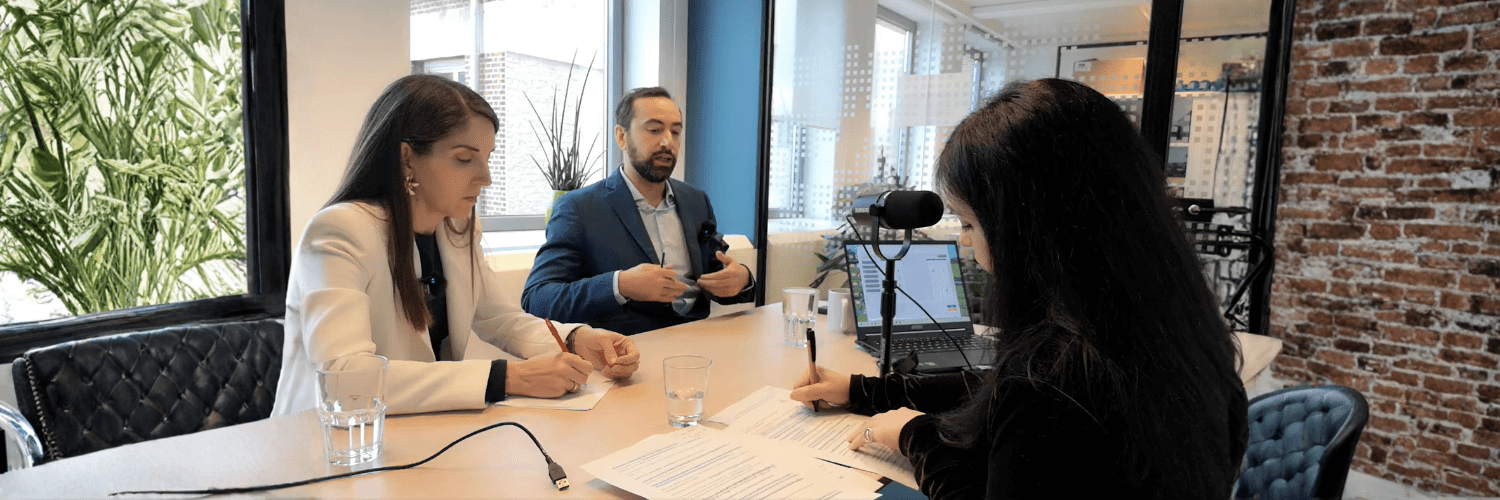
Local democracy is often described as the closest level of government to people’s everyday lives. But across Europe, that closeness is increasingly being tested.
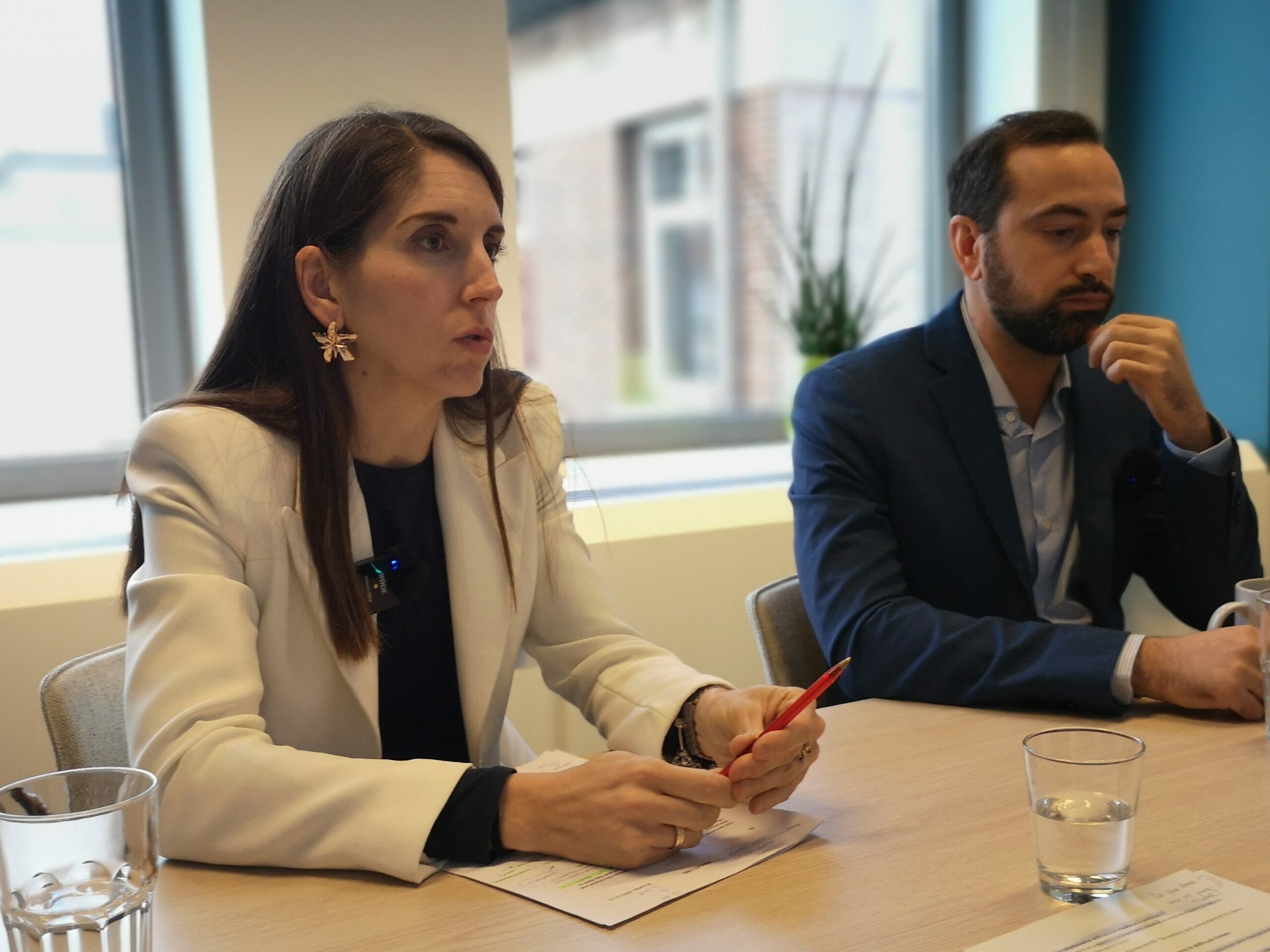
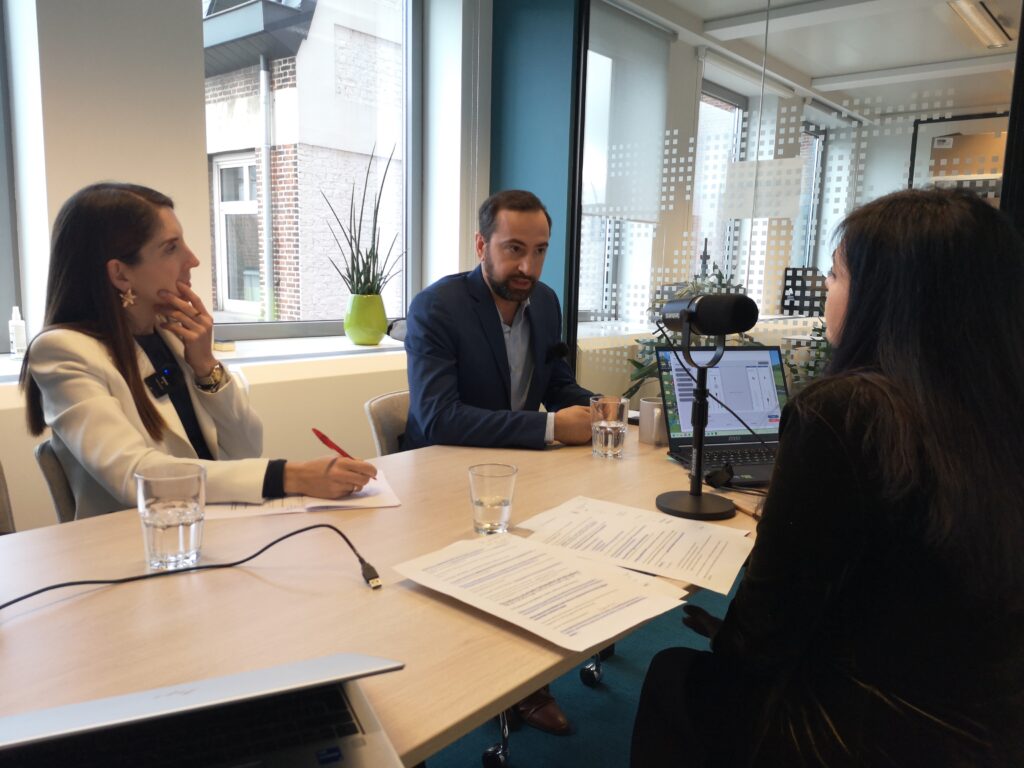
In the latest episode of Call Simone, we explore how power and democratic pressure are playing out at the local level — where politics is most visible, most accessible, and, increasingly, most exposed. Harassment, intimidation, disinformation campaigns, and threats are becoming part of the reality for many local elected representatives. The consequences go well beyond individual cases: when intimidation shapes who speak, who run, and who stay, representation shrinks and democracy weakens.
This episode brings together two voices who connect political experience with rigorous research:
Eider Inunciaga, City Councillor in Bilbao, Spain
Gianmarco Daniele, Executive Director of the CLEAN Unit, Bocconi University, Italy
Together, they unpack what harassment looks like in practice, why it is rising, who is most affected, and what local leaders — and European institutions — can do to respond with policies grounded in evidence.
When intimidation becomes a political filter
Harassment against local elected representatives is not only “bad behaviour” online — and the way humans respond to these attacks has little to do with personal resilience. As the episode shows, intimidation can work as a political filter: it discourages participation, pushes people out, and narrows the diversity of voices in local councils.
For Eider Inunciaga, the change became more tangible when she entered a public mandate in 2023. Local politics means proximity: you can be approached in the street, at community events, at school gates — and anger is often directed at local representatives precisely because they are the most reachable. As she puts it: “Local governments are the face of democracy.” And that visibility comes with exposure.
“Local governments are the face of democracy — and that makes us the most exposed.” – Eider Inunciaga, City Councillor Bilbao, Spain.
Who pays the highest price?
One recurring theme in the conversation is that harassment does not hit everyone equally. Those seen as “different” — women, minority representatives, LGBTQIA+ politicians — are often targeted more aggressively, with the implicit message: you don’t belong here.
Gianmarco Daniele shares research findings from Italy that put numbers to what many already sense. Using a carefully matched dataset to compare women and men in similar contexts, his work finds women are three times more likely to be targeted — and that almost one-quarter of female mayors experience an attack during their mandate. Importantly, these are offline attacks: assaults, burned cars, arson against property, threatening letters — not simply online hostility.
The timing is also revealing: attacks concentrate in the first year after election, consistent with a backlash against women’s visibility in power — and not explained by performance differences in office. The democratic cost is direct: women who are attacked are less likely to run again, turning progress on representation into a revolving door.
As Daniele notes, we often focus on how to get more diverse candidates into politics — and too rarely on why people leave.
“Without data, we’re fighting blind. Europe needs comparable evidence to spot risks early and respond.” – Gianmarco Daniele, Executive Director Clean Unit, Bocconi University, Italy.
Bilbao’s lesson: rebuild trust through participation and shared values
The episode also looks at the other side of the equation: how local governments can maintain trust and stay close to citizens in a polarised environment.
For Eider Inunciaga, the starting point is closeness and participation: democracy is not only elections and voting day. In Bilbao, she highlights the “Bilbao City of Values” process, where citizens helped define a set of shared values to create a common framework for community life. In her view, shared values and participation are also part of the response to misinformation: they strengthen belonging and reduce the space in which false narratives thrive.
Bilbao’s longer history adds perspective. The city’s transformation — shaped by industrial crisis, social hardship, terrorism and the 1983 floods — was driven by cooperation across institutions, partnerships with society, and long-term vision. The lesson is simple and demanding: coexistence is not inherited; it is cultivated — and democratic stability requires sustained investment.
From stories to evidence — and from evidence to action
This episode connects directly to the launch of the European Observatory for the Defence of Democracy at the Local Level: a new partnership bringing together local and regional governments (including Bilbao and Basque municipalities represented by EUDEL) and the research community at Bocconi, with the support of the Basque Country and CEMR.
The Observatory’s goal is to help Europe move from scattered stories to coordinated action by connecting the dots between:
what local elected leaders experience on the ground
what research and data can show about patterns, drivers and impact
what public authorities and institutions can do to prevent, protect and respond more effectively
A central message from the conversation is the data gap. Today, there is no comparable European-level dataset even on local politicians, let alone on attacks and threats. Without common data infrastructure, risks are harder to detect early and policy responses are harder to evaluate.
As Daniele explains, better data brings not only understanding — but visibility. In Italy, there is evidence of more than one attack per day on average, yet the issue often remains local news and rarely reaches broader political attention. Data can help turn a hidden pattern into a shared European priority.
About Call Simone
Call Simone is CEMR’s podcast on power and democracy in Europe — told through the lens of the local level. Each episode brings together local leaders, insiders and researchers to explore who gets to sit at the table, who is pushed out, and why it matters for Europe’s future.
Establishing municipal partnerships between Ukraine and a European partner country in the context of the project “Towards a Bridges of Trust (BoT) Community”
The Council of European Municipalities and Regions (CEMR) wishes to establish new partnerships between municipalities in Ukraine and municipalities in different European countries.
CEMR is looking for a service provider as an implementer to perform certain activities under this phase andprovide dedicated expertise and support in the respective country. The service provider will work closely with CEMR, the Association of Ukrainian Cities (AUC) and if required, with other partners of the Bridges of Trust Community.
The call is divided into the following lots:
Lot 1: Belgium
Lot 2: Cyprus
Lot 3: Finland
Lot 4: France
Lot 5: Italy
Lot 6: Latvia
Lot 7: Malta
Lot 8: Netherlands
Lot 9: Norway
Lot 10: Portugal
Lot 11: Spain
Applicants can apply for one or several lots. All documents need to be submitted for each lot separately. The terms of reference describe the services per lot.
Deadline for submissions: 3 February 2026, 2 pm (CET)
Contract period: February 2026 – June 2026
Budget: Financial offer for the services up to 14.000 Euro without VAT. The costs of activities (e.g. interpretation costs for events, travel costs related to internship and events) will be covered directly by the BoT project.
Interested organisations or experts are invited to submit their application by email to application@ccre-cemr.org with the subject line: “Establishing Municipal Partnerships between Ukraine and Name European Country”. Please specify the lot(s) you are applying for.
The country profiles offer a short overview of national models of (decentralised) development cooperation frameworks in selected EU Member States. The aim is to provide insights into specific mechanisms and modalities of analysed national frameworks and identify enabling factors as well as challenges related to practical implementation, focusing on the role and opportunities for local and regional governments and their associations.
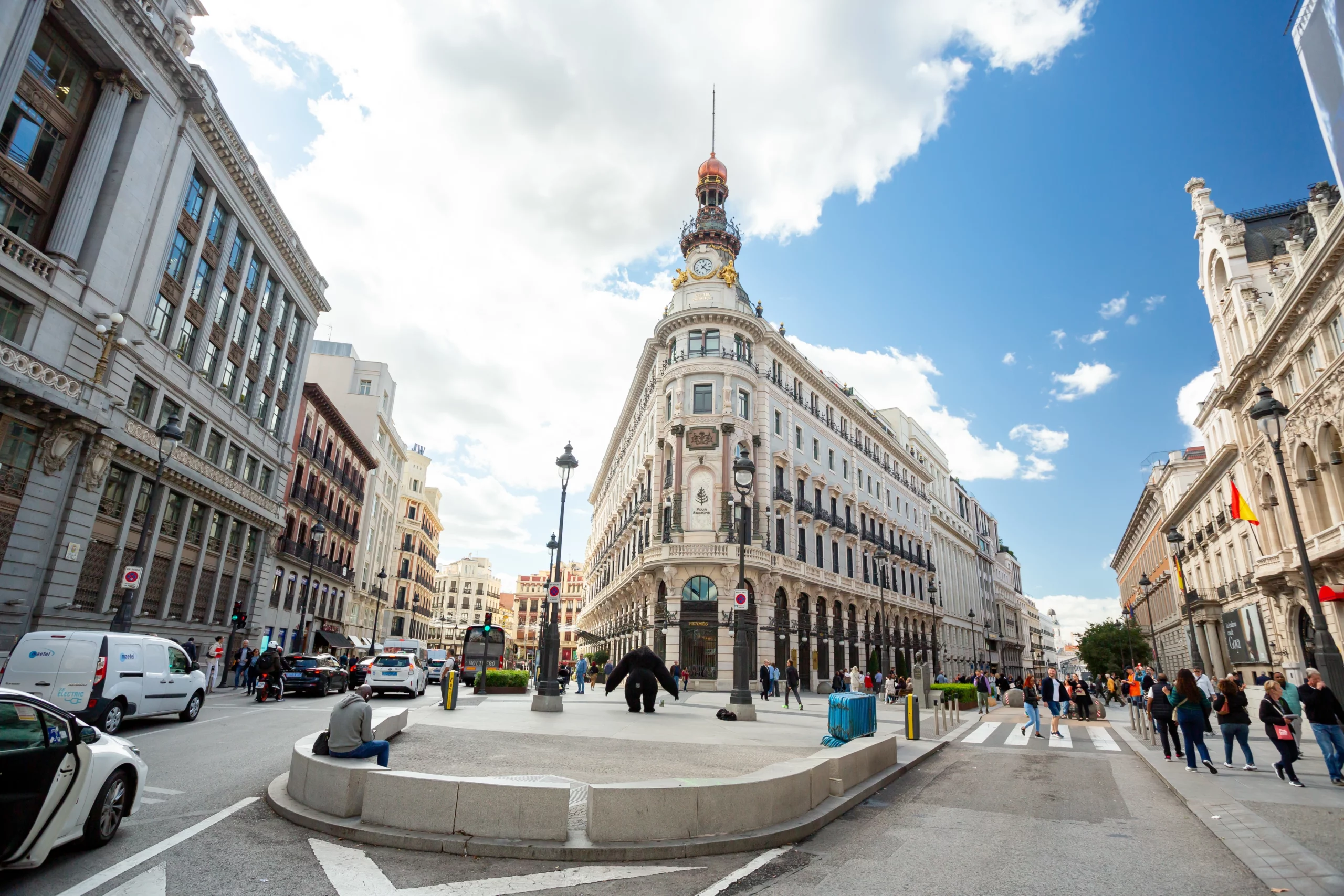
Based on the study, the Spanish framework for Decentralised Development Cooperation (DDC) is characterised by:
Highly decentralised system – enables actors across levels to be active in DDC. The new Law 1/2023 recognises Local and Regional Governments as actors of development and DDC as a modality.
Strong commitment to achieve 0.7% of Gross National Income (GNI) to Official Development Assistance (ODA) across levels – keeping the development cooperation as a priority.
Funds for development cooperation – gathering municipal and supra-municipal actors who pool their resources to implement impactful projects.
This article is part of a series of 7 Country Profiles examining DDC frameworks across Europe. The fourth edition, focusing on Belgium, will be published in March. Stay tuned!
Read the Country Profile of Spain, available in four languages:
You can find the rest of Mindcraft’s publications here.
CEMR encourages Spanish authorities to strengthen the role of LRGs in development policy, not only as implementers, but also as strategic partners helping shape a more resilient, inclusive and effective development agenda.
This publication is produced within the Bridging and Mapping Knowledge Gaps in Decentralised Cooperation (Mindcraft), funded by the German Federal Ministry for Economic Cooperation and Development (BMZ) and supported by the Deutsche Gesellschaft für Internationale Zusammenarbeit (GIZ).
Sakharov Prize 2025: standing with those who defend freedom of thought
The Sakharov Prize for Freedom of Thought is the European Parliament’s most prestigious award for human rights. Established in 1988, it honours individuals and organisations who demonstrate extraordinary courage in defending democracy, freedom of expression and fundamental freedoms, often under severe repression.
Awarded annually, the Prize is both a recognition and a call to action: a reminder that freedom of thought is not guaranteed and must be actively defended.
The 2025 Laureates
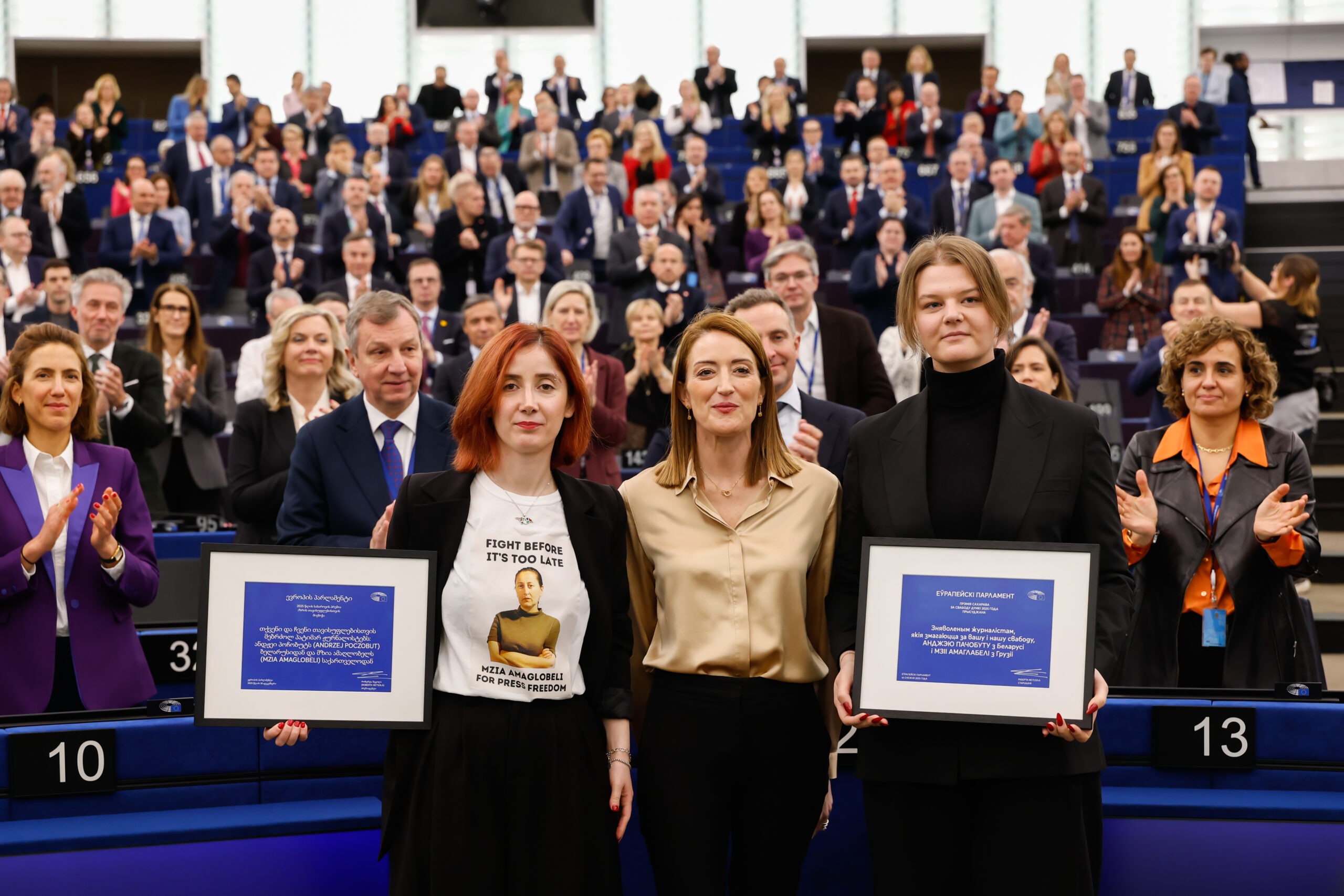
On December 16 2025, the European Parliament awarded the Sakharov Prize to Mzia Amaglobeli of Georgia and Andrzej Poczobut of Belarus, two journalists imprisoned for their commitment to truth, democracy and human rights.
Andrzej Poczobut, a journalist, essayist and activist from the Polish minority in Belarus, has long criticised the Lukashenka regime. Detained since 2021, he was sentenced to eight years in a penal colony on politically motivated charges. His health has deteriorated, his family is denied access, and yet he remains a symbol of resistance against authoritarian repression.
Mzia Amaglobeli, a Georgian journalist and director of the independent media outlets Batumelebi and Netgazeti, was arrested in January 2025 after joining pro-democracy protests. Sentenced to two years in prison, she became Georgia’s first female political prisoner since independence and a powerful symbol of the country’s democratic aspirations.
Announcing the laureates, European Parliament President Roberta Metsola stated that “both have paid a heavy price for speaking truth to power, becoming symbols of the struggle for freedom and democracy. The Parliament stands with them, and with all those who continue to demand freedom.”
Democracy, EU values and enlargement
The Sakharov Prize reflects the European Union’s commitment to defending democracy beyond its borders. In both Belarus and Georgia, democratic backsliding, repression of independent media and attacks on civil society threaten not only national freedoms but also the countries’ European paths.
The European Parliament has repeatedly called for the immediate and unconditional release of both journalists and has adopted resolutions condemning repression, political imprisonment and the erosion of democratic institutions.
Defending democracy from the ground up
At CEMR and PLATFORMA, defending democratic values is central to our work, and we have a specific focus in the context of EU enlargement and the Eastern Partnership. Through cooperation with local and regional governments, national associations of local governments (such as NALAG in the case of Georgia), and civil society, we support democratic governance, freedom of expression and institutional resilience.
Local democracy is often the first target of authoritarian pressure and the first line of defence. By empowering local and regional actors, supporting peer exchange and promoting EU values, CEMR and PLATFORMA contribute to a democratic Europe that is inclusive, resilient and anchored in fundamental rights.
The Sakharov Prize is a reminder that democracy depends on courage but also on solidarity.
As the EU prepares its next long-term budget, the Multiannual Financial Framework (MFF) 2028–2034, CEMR calls for a clear message to EU institutions and Member States: Europe’s future strength depends on empowering its towns, cities and regions.
CEMR’s new position paper, A stronger Europe is built locally, sets out how the next EU budget can effectively support territorial cohesion, competitiveness, democracy, and resilience. In the paper, CEMR warns that while the Commission’s proposal slightly increases overall resources, it reorients priorities toward defence, security, and industrial competitiveness—often at the expense of cohesion and local development, the very pillars that bring the EU closest to its citizens.
Multilevel governance must be non-negotiable
The paper highlights a major risk of recentralisation: by granting Member States and the European Commission broader discretion in defining funding priorities, the proposal could marginalise local governments, particularly in countries with weaker multilevel governance structures.
CEMR urges the EU to reinforce partnership mechanisms across all programmes—especially within the National and Regional Partnership Plans (NRPP), the European Semester, the European Competitiveness Fund (ECF) and the Global Gateway. Stable, well-resourced local and regional governments platforms are essential to tailor EU investments to realities on the ground.
Cohesion at the heart of Europe’s transformation
CEMR stresses that cohesion is a treaty-based objective and must remain central. The paper calls for:
Mandatory regional and territorial chapters in all Partnership Plans
Increased budget allocation for the single integrated funding instrument proposed by the EU Commission, “The Fund”
A mandatory 30% earmark for sustainable territorial development, including 15% for urban development
A safeguarding mechanism to protect local governments’ access to funds when national governments fail to meet conditionalities
Strengthening ESF+ (European Social Fund) for cohesion, youth and inclusion
Without these guarantees, Europe’s green, digital, and social transitions risk leaving entire territories behind.
Competitiveness and connectivity must acknowledge territorial reality
While competitiveness is a top EU priority, CEMR notes that the Commission’s budget proposal overlooks the territorial dimension. Cohesion and competitiveness are two sides of the same coin, and local and regional governments’ role in driving local and regional economic development should be recognised.
CEMR paper also calls for biodiversity and nature restoration to become explicit priorities in the European Competitiveness Fund (ECF) and urges simpler access to ECF, Horizon Europe, and the Connecting Europe Facility (CEF)—especially for smaller municipalities. It also stresses the need to include urban mobility as a strategic CEF priority.
Democracy and enlargement: supporting the foundations of Europe
With rising polarisation, disinformation, and harassment of local politicians, the position paper urges the EU to strengthen local democracy, support civic participation, and fund democratic resilience—including Global Citizenship Education and support for local media.
On enlargement, CEMR calls for local and regional governments to play a central role in the accession process of candidate countries, backed by stronger capacity-building and dedicated resources.
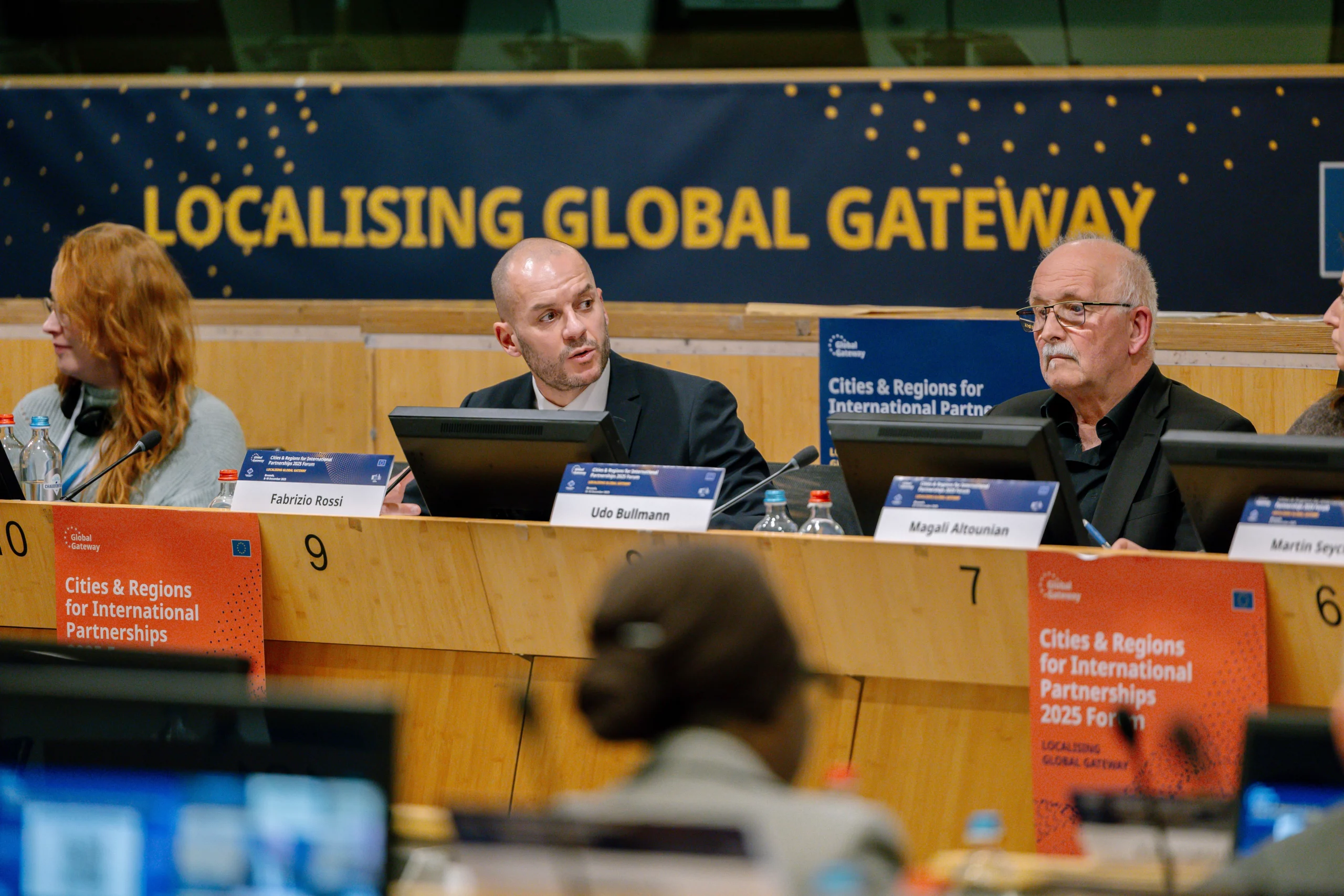
Towns, cities and regions call for a stronger partnership in advancing the Global Gateway
International networks of towns, cities and regions have issued a joint Declaration yesterday [10 December 2025] in Brussels, calling for a stronger and more structured involvement of local governments in the implementation of the European Union’s Global Gateway strategy. Representing thousands of towns, cities, regions, and local government associations worldwide, the signatories stress that partnering with local and regional governments (LRGs) is essential to ensure the legitimacy, sustainability, and long-term impact of Global Gateway investments.
This Declaration was handed over on behalf of the signatories by Joseph Bernard Wagner, Mayor of Belize City (Belize) and Chairperson of the Commonwealth Local Government Forum (CLGF), to Koen Doens, Director-General at the European Commission Directorate-General for International Partnerships (DG INTPA), during the Plenary Session of the Committee of the Regions, marking the end of the 3-day “Cities and Regions for International Partnerships” 2025 Forum.
Local and regional governments are recognised by the EU as distinct development actors and play a central role in shaping inclusive economic growth, delivering public services, and connecting communities to global opportunities. Their leaders warn that without systematic engagement of towns, cities and regions, Global Gateway projects risk missing their full development potential.
A joint call for a more inclusive Global Gateway
The declaration is signed by the leaders of four major global networks of local and regional governments:
Fabrizio Rossi, Secretary General, Council of European Municipalities and Regions (CEMR) – PLATFORMA
Lucy Slack, Secretary General, Commonwealth Local Government Forum (CLGF)
Emilia Saiz, Secretary General, United Cities and Local Governments (UCLG)
Frédéric Vallier, General Delegate, International Association of Francophone Mayors (AIMF)
Together, they call on EU institutions, partner countries, and development actors to recognise towns, cities and regions as co-creators of the enabling environment needed for sustainable, inclusive and democratic investment.
Quotes
“It is critical that local governments are around the table in the context of investments being made through Global Gateway. After all, we are responsible for all development in our territories, and should be recognised as partners in planning and delivery,” Joseph Bernard Wagner, Mayor of Belize City (Belize) and Chairperson of the Commonwealth Local Government Forum (CLGF) stressed in his speech.
“Local and regional governments should be involved in the designing phase of the Global Gateway. As CEMR and PLATFORMA, we see ourselves as the enabling institutions, and we are there to harvest learning and data, to monitor and evaluate the actions,” CEMR Secretary General Fabrizio Rossi earlier said during the Forum.
“Decentralised cooperation is a real lever for solidarity and development that serves the interests of local communities. However, it can only be effective if decentralisation itself is effective and if our local authorities have secure financial and human resources. The Global Gateway is an important opportunity to support us in this regard,” Dieudonné Bantsimba, Mayor of Brazzaville, Vice-President of the AIMF.
“The mobilisation of our members at the Forum of Cities and Regions shows the strong commitment of local and regional governments to cooperation and city diplomacy. Yet the localisation of the Global Gateway will only be possible if local governments are fully recognised as strategic partners,” Emilia Saiz, UCLG Secretary General
“Towns, cities and regions are the link between investments and citizens. As first ports of call to citizens, they bring legitimacy, ownership and long-term sustainability to Global Gateway projects,” the signatories emphasise.
“Local and regional governments are indispensable partners for making the Global Gateway a strategy that truly works for people,” the signatories stress.
Towns and regions: Essential partners for sustainable impact
In their declaration, associations of local and regional governments highlight that LRGs hold wide-ranging mandates across Global Gateway priority sectors, including digitalisation, climate and energy, transport, health, education and research. By grounding investments in local realities, they ensure projects respond to the needs and priorities of communities, reinforce policy coherence, and foster inclusive economic ecosystems involving SMEs, investors, CSOs, academic institutions and citizens.
The declaration also underscores the decisive role of local governments in fragile and conflict-affected contexts, where they are often the only functioning public institutions capable of coordinating local stakeholders and delivering basic services.
Key recommendations to strengthen the Global Gateway
To unlock the full potential of local authorities as partners for sustainable investment, the signatories put forward three main recommendations:
Engage directly with local governments and give them direct access to funding within Global Gateway investments. This includes dedicated calls for proposals, tailored evaluation criteria, specific funding streams similar to the former “Partnerships for Sustainable Cities” programme, and country-level mechanisms to ensure structured dialogue between EU Delegations, Teams Europe and LRGs.
Ensure systematic involvement of governments in all phases of Global Gateway projects. Clear guidance should be provided to EU Delegations and Teams Europe to meaningfully include local authorities in planning, implementation, monitoring and evaluation processes.
Support national associations and international networks of local governments. These organisations—signatories of Framework Partnership Agreements with the EU since 2015—are crucial in coordinating LRG participation, sharing knowledge, and scaling innovations across borders.
New Observatory launched to protect local democracy in Europe
Europe’s first Observatory to track threats against mayors and local councillors, from online harassment to intimidation and disinformation.
Joint initiative of CEMR, Bilbao City Council, EUDEL, Bocconi University and the Basque Government to strengthen the quality of local democracy and support elected representatives.
The Observatory responds to a sharp rise in online harassment, intimidation, disinformation and organised hate campaigns targeting mayors, councillors and regional leaders across Europe.
“Local democracy is Europe’s first line of defence”, stressed CEMR President Gunn Marit Helgesen. “When mayors and councillors are threatened, harassed or silenced, it is not only individuals who are targeted — it is the democratic fabric of our societies. With this Observatory, we are taking a united step to protect those who serve their communities and to ensure that democracy remains strong”.
On the opening of the launch event, Commissioner Michael McGrath responsible for democracy, justice, the rule of law and consumer protection in the European Commission, stated that “I am delighted to launch the European Observatory for the Defence of Democracy at the Local Level (the Observatory). Local democracy is not just a concept; it is the cornerstone of political life. It shapes decisions that affect citizens directly and gives everyone a tangible role in the choices that impact their communities. Today, our democracies face increasing threats, and these challenges are often felt at the local level. These threats don’t always arrive as overt attacks on institutions. Often, they creep quietly into our communities, directly affecting elected representatives and the everyday functioning of local democracy. And this is why the work of the Observatory is so important – we all need to work to protect and promote the democracies of tomorrow”.
The initiative — a partnership between the Council of Municipalities and Regions (CEMR), the City Council of Bilbao, the Association of Basque Municipalities (EUDEL), with the scientific expertise of Bocconi University and the support of the Basque Government — will generate data, analyse trends, and strengthen institutional responses at all levels.
Bilbao Mayor Juan Mari Aburto stressed the urgency of coordinated action: “Bilbao is a city of values because we have collectively chosen to build it that way. As the founding city of this Observatory, we share a clear conviction with Europe: democracy is safeguarded not only through laws, but through civic culture, respect and active listening. Defending democracy also means nurturing everyday coexistence in our neighbourhoods, where diversity enriches our communities rather than threatens them”.
EUDEL President Esther Apraiz highlighted the Basque contribution and experience: “In the Basque Country and across Europe, local democracy is embodied by the elected representatives who serve their communities every day. The Observatory must protect those who uphold democracy and help attract new talent to local politics, because when a mayor or councillor steps away, democracy weakens. Hosting the Observatory also in the Basque Country allows us to share our experience in collaborative local governance internationally”.
The Secretary General for External Action of the Basque Government, Ander Caballero, emphasised: “In the Basque Country, we work every day to build a territory grounded in cutting-edge democracy. That is how we build trust and satisfaction among citizens, and spark motivation and enthusiasm for taking part in political life. It is also a way to reinforce the foundations of our shared home against those who seek to weaken or undermine democracy. We have a tool to move forward: collaborative governance. The Observatory supports and promotes this approach, fostering cooperation between local institutions—both in the Basque Country and across Europe”.
Representing the scientific partnership, Bocconi University Rector Francesco Billari underlined the importance of evidence-based data: “When local leaders face intimidation, it is not only their safety that is compromised—it is the trust and participation on which democratic life depends. Studying this violence with state-of-the-art methods and data is essential if we are to safeguard those foundations.”
The Observatory will track threats, share solutions, build solidarity, and advise national and EU institutions.
For media inquiries, interviews or accreditation requests, please contact:
CEMR local leaders reaffirm political leadership and confront Europe’s demographic turning point
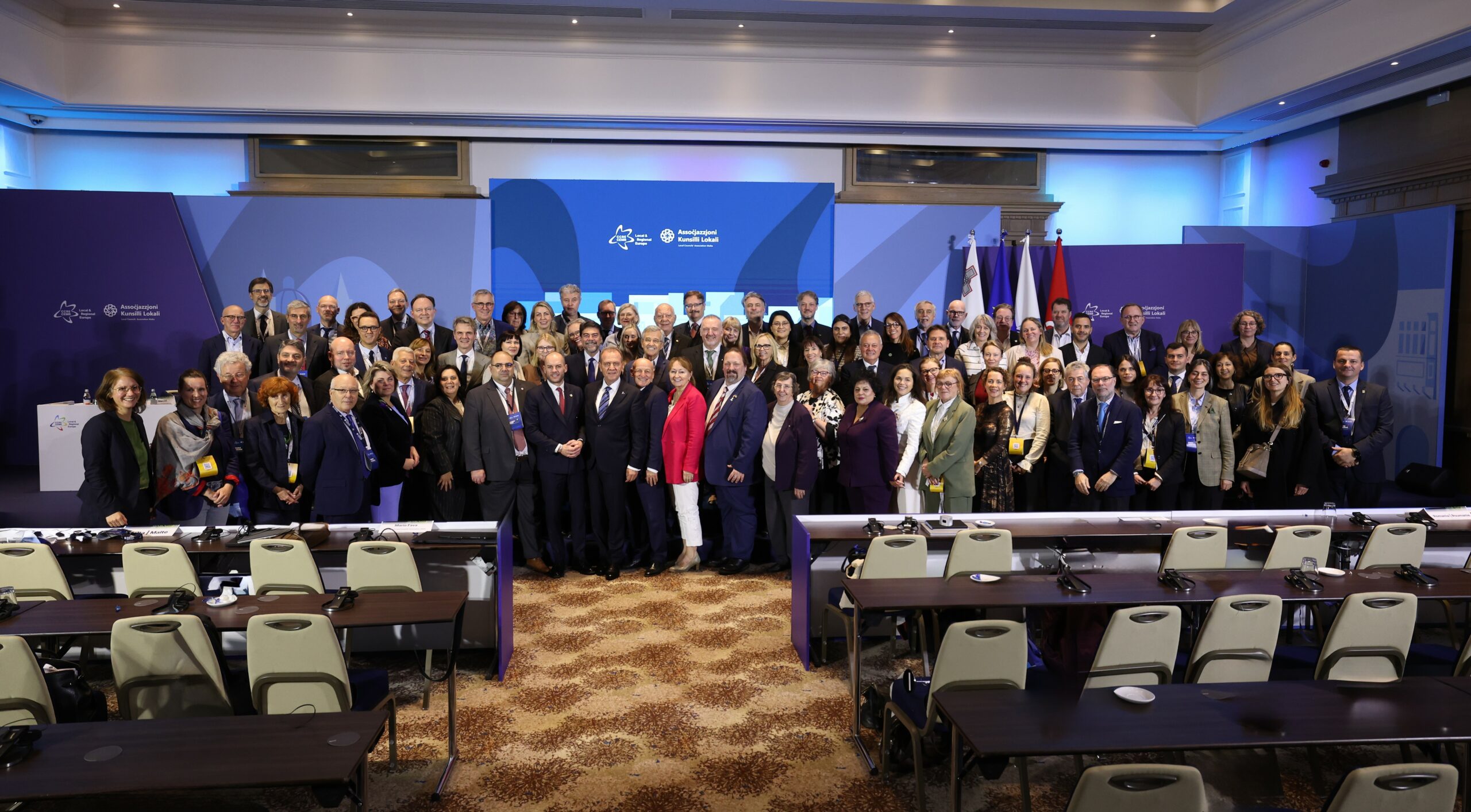
St. Julian’s, Malta, 5 December 2025 – Over 160 European mayors, councillors and representatives of national associations of local and regional governments gathered in Malta for the Council of European Municipalities and Regions (CEMR) Leaders’ Summit 2025, hosted by the Maltese Association of Local Councils. During the event, CEMR confirmed its political leadership for the 2026–2028 mandate.
The confirmed leadership reflects a strong commitment to stability, continuity and collective action at a time when Europe’s territories face accelerating demographic change, geopolitical instability and shifting investment priorities.
CEMR Leadership for the 2026–2028 mandate
Gunn Marit Helgesen, President of CEMR; President of the Norwegian Association of Local and Regional Authorities (KS); Member of Telemark County Council
Philippe Laurent, CEMR Co-President; President of AFCCRE; Mayor of Sceaux; Vice-President of Territoire Vallée Sud – Grand Paris; Member of the Ile-de-France Regional Council
Christoph Schnaudigel, CEMR Co-President; President of the German Section of CEMR (RGRE); President of the County of Karlsruhe
Vince Maple, Chair of the CEMR Financial Management Committee; Councillor of Medway; Vice-President of CEMR (Local Government Association, UK)
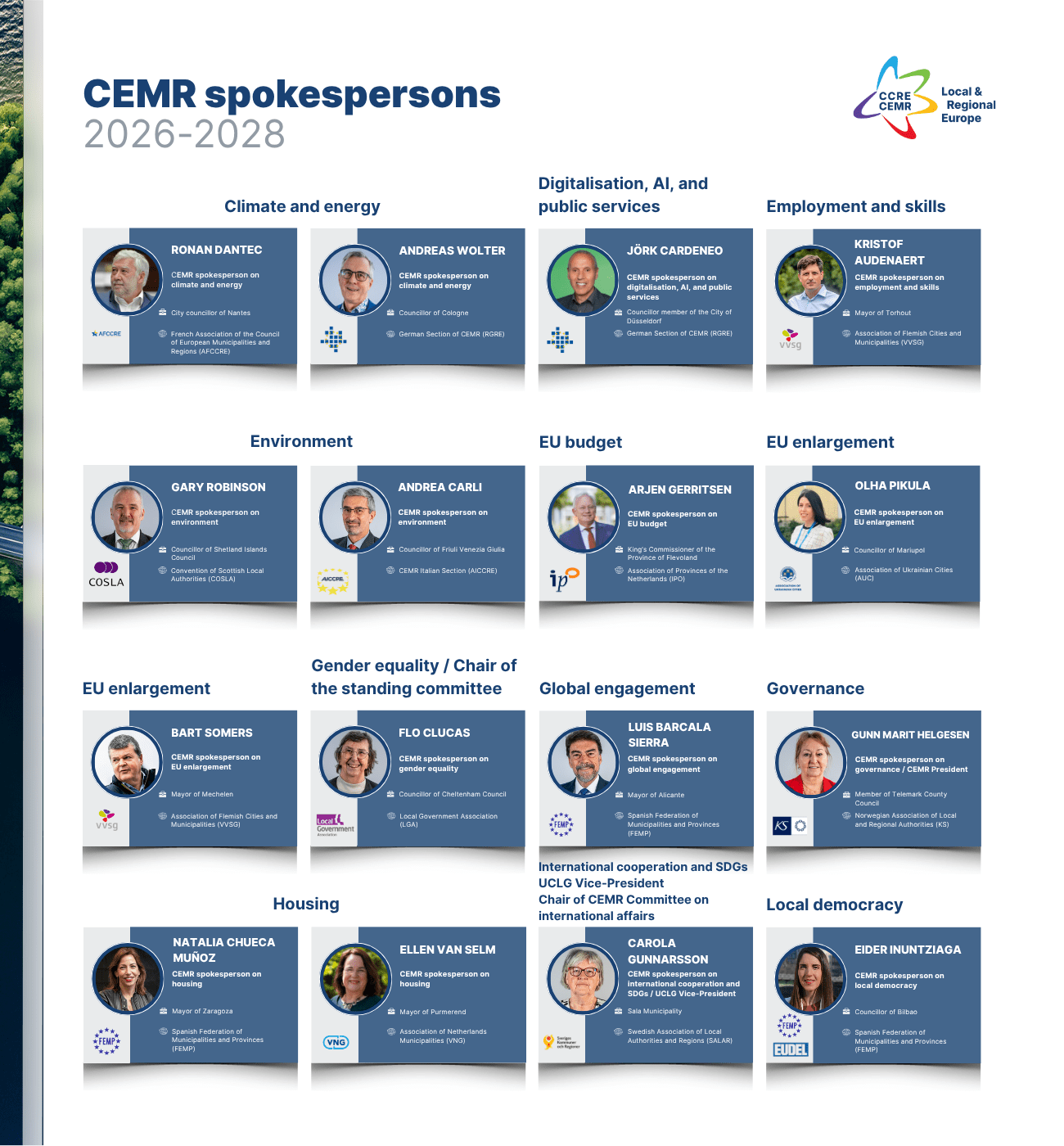
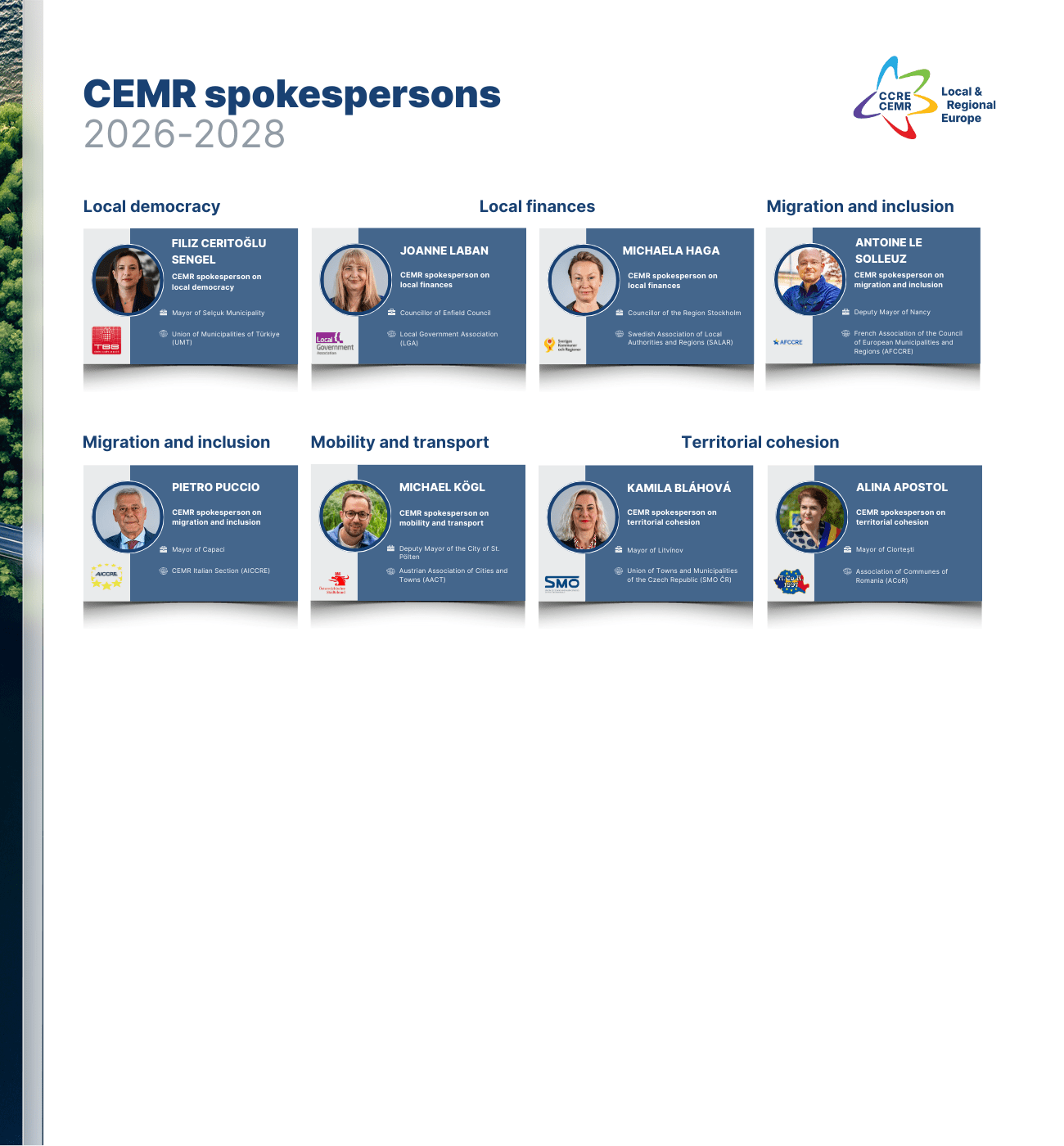
CEMR also announced the appointment of 24 new spokespersons, who will serve as political voices for Europe’s local and regional governments on key issues such as the EU Budget, cohesion policy, democracy, the green and digital transitions, territorial development and international cooperation.
2026_2028 CEMR spokespkerson (ENG) page 1
“This Summit marks the beginning of a renewed direction for CEMR. Europe is transforming at a pace we have not seen in decades, and our communities feel the pressure every day. We need stronger partnerships, deeper territorial cooperation and long-term investment. Local and regional governments are not secondary actors — we are essential partners in shaping Europe’s future.” — Gunn Marit Helgesen, CEMR President
Demographic change in the European continent takes centre stage
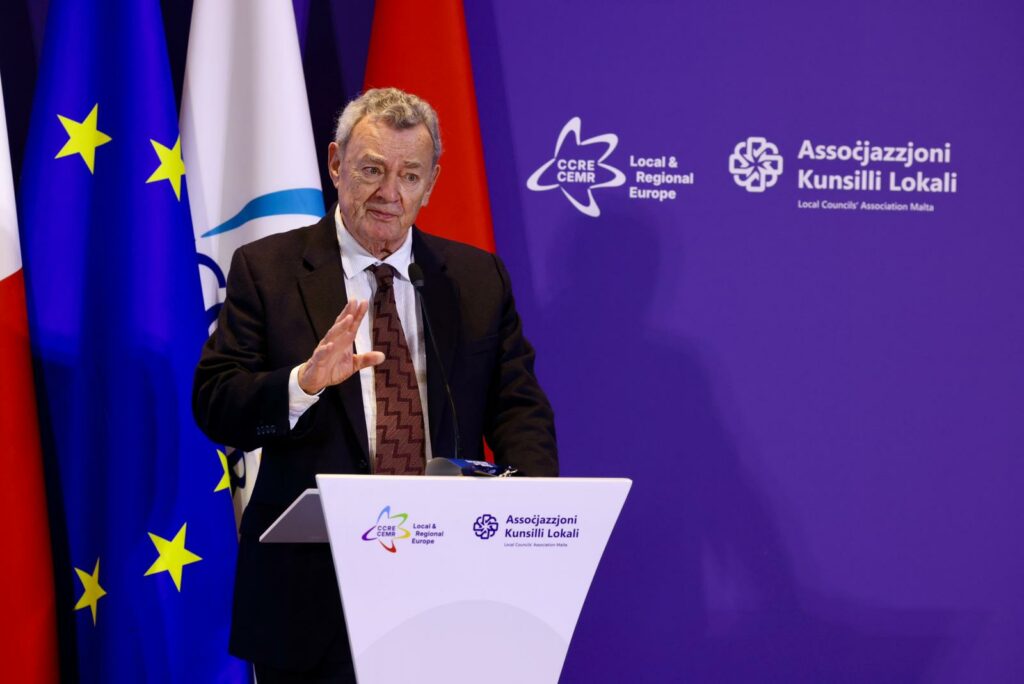
* Maltese Financial Minister Clyde Caruana – Leaders’ Summit 2025 Malta
The Summit’s political debates highlighted the profound impact of demographic transitions across Europe. In her opening intervention, Maltese Financial Minister Clyde Caruana stressed the realities his country faces as an island deeply shaped by mobility and rapid population change.
* Journalist and founder of Friends of Europe, Giles Merritt – Leaders’ Summit 2025 Malta
Giles Merritt, journalist and founder of Friends of Europe, warned that “ageing, rural depopulation and housing pressures are converging into a structural challenge for Europe’s future prosperity”.
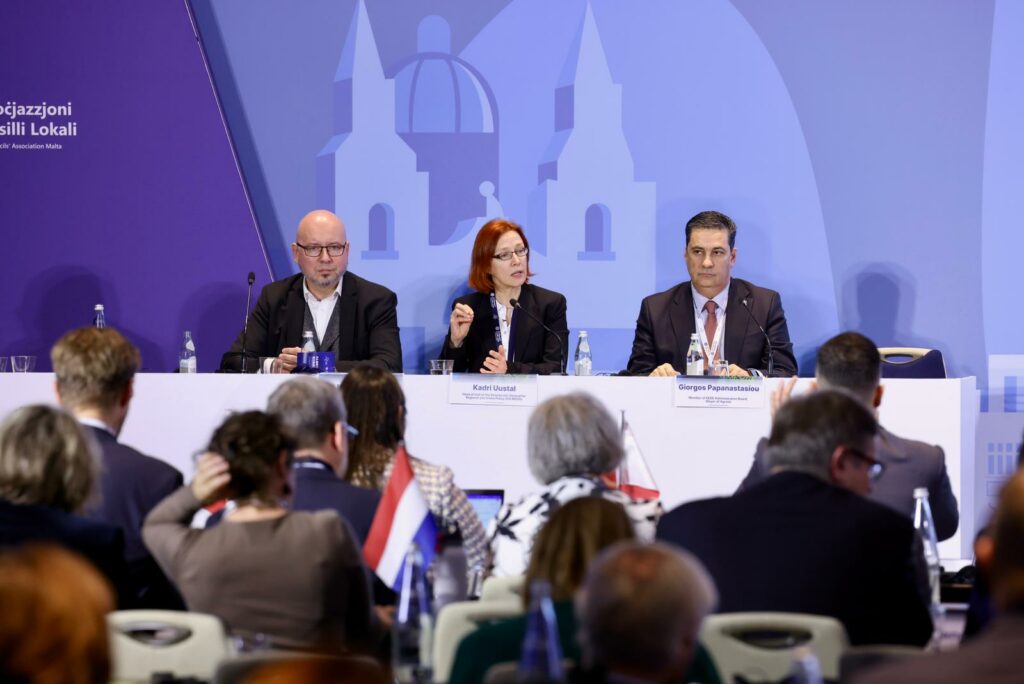
* Head of Unit at DG REGIO, Kadri Uustal; Municipal Councillor of Elva (Estonia) and representative of AECM, Juhani Jaeger, and member of KEDE and mayor of Agrinio in Greece, Giorgos Papanastasiou – Leaders’ Summit 2025 Malta
A high-level panel featuring Kadri Uustal, Head of Unit at the Directorate-General for Regional and Urban Policy (DG REGIO); Alison Zerafa Civelli, Parliamentary Secretary for Local Government within Malta’s Ministry for National Heritage, the Arts and Local Government; Giorgos Papanastasiou, Member of KEDE and Mayor of Agrinio (Greece); and Juhani Jaeger, Municipal Councillor of Elva (Estonia) and representative of AECM, explored how demographic pressures—declining birth rates, shrinking cities, labour shortages and uneven territorial development—require strong multilevel governance and durable policy consistency.
Their message was clear: local and regional governments are on the frontline of Europe’s demographic shift, and their leadership is essential to reverse decline, foster resilience and rebuild attractiveness in Europe’s territories.
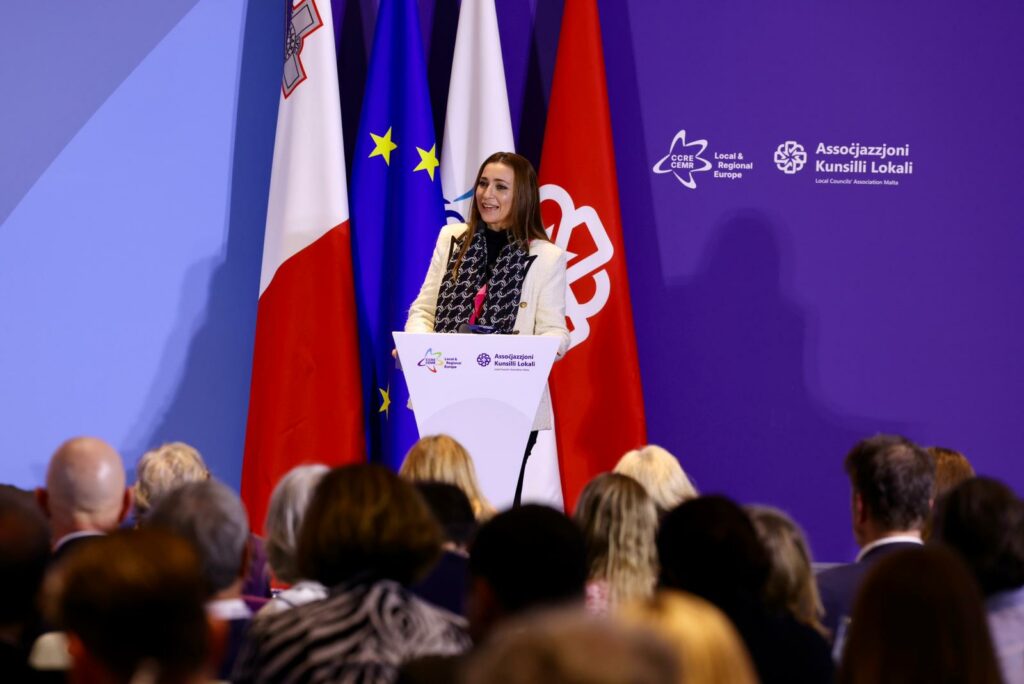
* Parliamentary Secretary for Local Government in the Ministry of the National Heritage, Arts and Local Government of Malta, Alison Zerafa Civelli – Leaders’ Summit 2025 Malta
Local governments call for a central role in shaping the next EU Budget
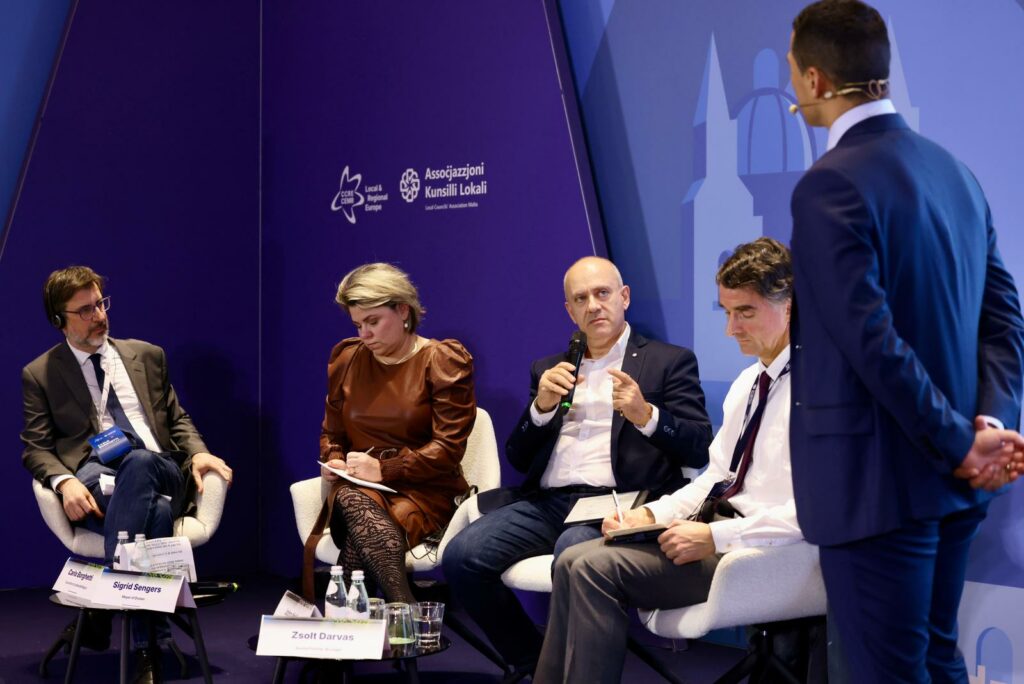
On the second day of the CEMR Leaders’ Summit, attention shifted to the next Multiannual Financial Framework (2028–2034). Contributions from Zsolt Darvas, Senior Fellow at Bruegel, John Mallia, President of the Malta Cooperative Federation, Jan Olbrycht, former MEP and Co-Rapporteur of the 2021–2027 EU Budget, Sigrid Sengers, Mayor of Druten (Netherlands), and Carlo Borghetti, Councillor of the Lombardy Region (Italy), reaffirmed a shared objective: ensuring that Europe’s budgetary priorities truly reflect the needs of its territories.
* Senior Fellow at Bruegel, Zsolt Darvas; President of the Malta Cooperative Federation, John Mallia; former MEP and Co-Rapporteur of the 2021–2027 EU Budget, Jan Olbrycht; Mayor of Druten (Netherlands), Sigrid Sengers; and Councillor of the Lombardy Region (Italy), Carlo Borghetti – Leaders’ Summit 2025 Malta
Speakers emphasised that cohesion and competitiveness must go hand in hand, and that the EU Budget must recognise the operational reality of local and regional governments, who implement over 70% of EU legislation and manage more than half of public investment.
Building Europe from the ground up
In his closing message, Fabrizio Rossi, CEMR Secretary General, underlined that the Summit had reinforced a shared political commitment across Europe’s territories. He stressed that CEMR will continue to champion stronger multilevel governance, advocate for EU investments that reflect the realities of every territory, confront demographic and social disparities, and defend democratic values where they matter most: at the local and regional levels. Rossi concluded by affirming that Europe’s future can only be built by empowering the communities that form its foundation.
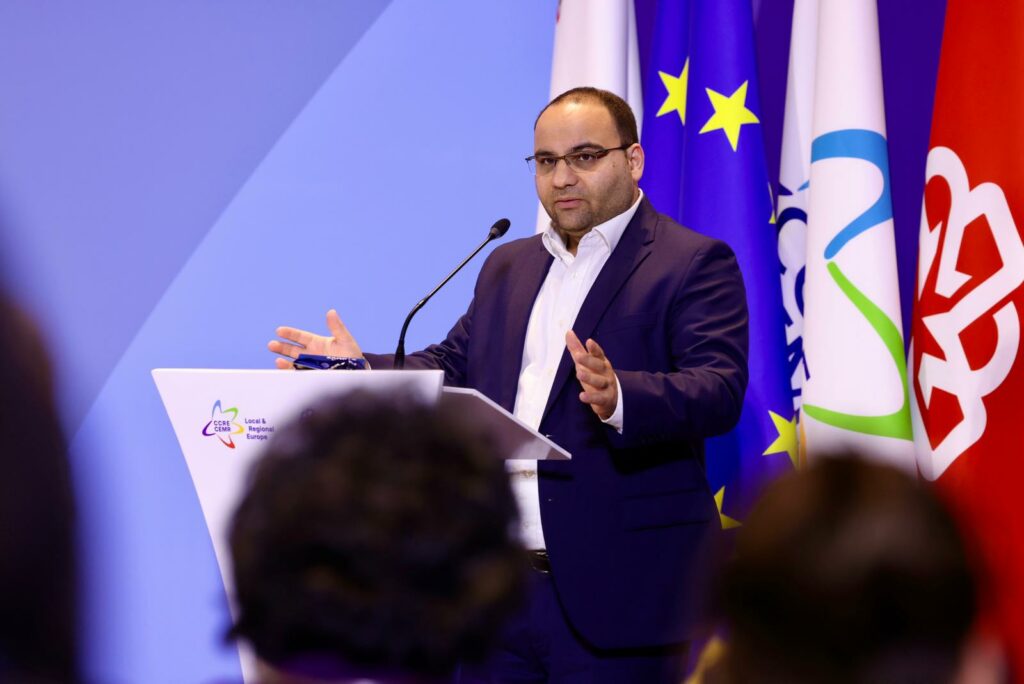
The Summit was opened by Mario Fava, President of the Maltese Association, who stressed that “demographic pressures, territorial fractures and shifting EU priorities show that Europe’s future begins locally. As the 2028–2034 MFF is shaped, cities and regions must be co-authors — not afterthoughts”, and also counted with an opening introduction by Olaf McKay, Mayor of Valletta, who underlined “today’s transitions demand the same instinct that built our city. We are facing demographic change, and as Europe shapes its next EU budget, cities must be co-authors of Europe’s agenda. That is the spirit of this Summit”.