TERRI report: survey to members

Local Alliance - News Section

CEMR launches new study on local governments’ role, responsibilities in housing governance


In 2026, CEMR will update its flagship study on governance trends, the Terri Report. The previous edition, published in 2021, focused on the role of local and regional governments in public health. The new edition will place housing policy under the spotlight — a policy field that clearly illustrates how responsibilities are shared across levels of government and how effective coordination shapes tangible outcomes and the well-being of citizens and local communities.

For many years, CEMR has monitored territorial and governance developments across its membership, analysing what institutional and territorial changes mean for democracy and the quality of public decision-making. As governance challenges grow more complex and increasingly differ between places, traditional top-down approaches are proving less effective. Strong coordination across national, regional and local levels is therefore more important than ever.

Alongside updating data on governance structures and administrative reforms, the study will use housing as a lens to examine how competences, financial resources and implementation capacities are distributed across levels of government — and what this implies for addressing territorial disparities and delivering place-based solutions.

To support this work, CEMR’s members will receive a detailed questionnaire in early March 2026, addressed to national associations and experts with practical knowledge of housing policy at municipal or regional level. The questionnaire is structured in two parts:
• Part I focuses on governance arrangements, competences and reforms.
• Part II examines housing policy as a case study of multilevel cooperation.

This is a substantial, expert-level exercise rather than a quick survey. The evidence gathered will form a key foundation for CEMR’s advocacy on effective multilevel governance and housing policy. Members will have approximately three weeks to respond.

The study is expected to be published in autumn 2026, and CEMR looks forward to your participation in this work. Your contribution will strengthen our collective evidence base and advocacy for better governance and stronger place-based policies across Europe.

For more information, please contact:

“Cities are laboratories for solutions”

ODELL - News 2026

Pol Morillas (CIDOB), MEP Hanna Jalloul and local leaders reflect on the current geopolitics and its effects in Europe, global disorder, and why local leaders matter more than ever


At a time when global politics is increasingly shaped by power rivalries and zero-sum logic, cities and regions may appear peripheral to the big geopolitical chessboard. But according to Pol Morillas, Director of CIDOB (Barcelona Centre for International Affairs), this perception is deeply misleading.

Speaking at a UCLG gathering of the European section, alongside MEP Hanna Jalloul, Vice-Chair of the European Parliament’s Foreign Affairs Committee, and representatives from municipalities and regions across Europe, Morillas offered a sharp diagnosis of the global moment, and a compelling argument for why local and regional leaders are essential actors in Europe’s response to it.

“We are entering a world we were not built for”

Morillas describes 2026 as the year when “brutal geopolitics” has fully taken shape. 

Pol Morillas - CIDOB

“We are not living in the world the European Union wanted”, he explained. “The open markets, rules-based globalisation, and cooperative multilateralism that Europe championed are giving way to power politics, transactional alliances, and the return of the state as the dominant actor”. 

*Pol Morillas, Director of CIDOB (Barcelona Centre for International Affairs)

This shift goes beyond any single election or leader. While the return of Donald Trump to the White House has accelerated trends, Morillas sees a broader transformation driven by major powers — including China and India — embracing national interest and zero-sum competition. 

In this emerging order, actors are reacting differently. Some are accommodating. Some are resisting, particularly youth movements across the globe. Others are disoriented. 

“And the European Union”, Morillas noted, “is navigating this disorientation”. 

Europe’s three strategic choices

According to Morillas, Europe is currently debating three broad strategies:

  1. Keep the United States engaged, even if it requires tactical appeasement, especially in areas like security and intelligence where Europe lacks full autonomy.
  2. Build new alliances with middle powers such as Japan, India, and Mercosur countries to preserve elements of a rules-based order.
  3. Pursue greater autonomy, particularly in areas like technology and geo-economics — though, as Morillas cautioned, “there is often more talk of autonomy than real action”.

These strategies coexist, sometimes uneasily, as Europe attempts to redefine itself in a harsher global landscape.

But this is only part of the story.

New diplomatic opportunities for cities and regions as “laboratories for finding solutions”

While geopolitics grabs headlines, Morillas argues that some of the most urgent crises are concentrated in cities and regions and that is precisely where their diplomatic relevance lies. “The role of cities and regions will be most important when they are laboratories for finding solutions to crises that are most held in cities and regions”, he said.

He pointed specifically to:

  • Housing
  • Cost of living
  • Energy
  • Youth mobilisation and the response to young people’s demands

“These areas are far away from brutal geopolitics and do not have defence as their main component”, Morillas explained. “They are low-hanging fruits for cities and regions to play an interesting diplomatic role”.

In other words, while states compete over security and strategic dominance, local governments are managing the everyday pressures that shape citizens’ trust in democracy. Their ability to innovate and respond effectively becomes a form of diplomacy in itself.

Youth mobilisation and democratic response

Morillas also underlined a growing global trend: youth resistance to national political systems perceived as unresponsive.

“We are seeing increasing numbers of young people resisting national politics and proposing alternative models of understanding society”, he said.

For cities and regions, this presents both a challenge and an opportunity. Local governments are often the first institutional level confronted with youth demands — from climate action to housing affordability. The quality of their response will shape democratic resilience in Europe.

A multipolar world, including the local level

The global order’s fragmentation is also reshaping inter-city cooperation. The CIDOB director pointed to new forums emerging beyond traditional Western-led networks, including initiatives linked to BRICS+.

“This multipolar world also takes place within regions”, he observed. “European cities and regions need to be aware of these new forums”.

Global alignment is no longer only a matter for foreign ministries. It is increasingly reflected in how cities cooperate, partner, and position themselves internationally.

From consultation to co-decision in Europe

Perhaps most significantly, Morillas sees cities and regions gaining weight within the European architecture itself. “It is not only a question of member states”, he argued. “Cities can play an important role in the European architecture — sometimes only as being consulted but increasingly having something to say about the future of European integration”.

From housing initiatives to urban energy transitions, European policy debates are increasingly touching areas where cities have primary competence.

To advance this agenda, CIDOB has launched the “Local Europe” initiative with the support of Barcelona City Council, aiming to reinforce what Morillas calls “the Europe of cities”.

The underlying message is clear: the future of European integration will not be decided solely in national capitals.

How should local leaders look at the world?

How, then, should local and regional leaders look at the world — and how are they perceived within it? 

The discussion made clear that towns, cities and regions are no longer peripheral actors but central pillars of Europe’s global credibility.

GUNNARSSON Carola

As Carola Gunnarsson, CEMR spokesperson for international affairs and local councillor of Sala, Sweden, underlined also during this session, “municipalities and regions are not merely implementers of European policy. We are co-creators of Europe’s credibility”. 

*Carola Gunnarsson, CEMR spokesperson for international affairs and Lord Mayor of Sala, at the Leaders’ Summit in 2025

In a geopolitical environment marked by ideological confrontation and democratic strain, consistency between local governance and global ambition becomes decisive. “If we would like Europe to be a strong global actor, we must be consistent both internationally and locally”, she stressed.

Echoing this call for coherence, MEP Hanna Jalloul, Vice-Chair of the European Parliament’s Foreign Affairs Committee, underlined the direct impact of EU decisions on citizens’ daily lives.

*MEP Hanna Jalloul, Vice-Chair of the European Parliament’s Foreign Affairs Committee

Yet, she questioned the persistent democratic disconnect: “Why have we reached only 50% participation in European elections?” According to Jalloul, “many citizens don’t fully realise how economic and agricultural decisions taken here directly affect them.”

*MEP Hanna Jalloul, Vice-Chair of the European Parliament’s Foreign Affairs Committee, European Parliament photo

Beyond internal policy, she stressed the importance of consistency in Europe’s external action. “We speak of peace, but our multilateral system — which we’ve defended since 1945 — must be consistent.” In a challenging geopolitical environment, she argued, the European Union must align its commercial priorities and strategic autonomy with its foundational values.

When democratic disconnect reaches the local level

This disconnect between European decision-making and citizens’ perception, participants warned, does not remain abstract. When people feel that decisions are distant, unclear or inconsistent with proclaimed values, frustration grows — and it often manifests first at the local level.

As highlighted by Eider Enunciaga, spokesperson for local democracy at CEMR and representative of Bilbao City Council, local leaders are increasingly experiencing hostility and intimidation — both offline and online. “The future of our democracies in Europe is at stake here,” he stressed, noting that geopolitical tensions, disinformation and polarisation are directly affecting municipalities and regions.

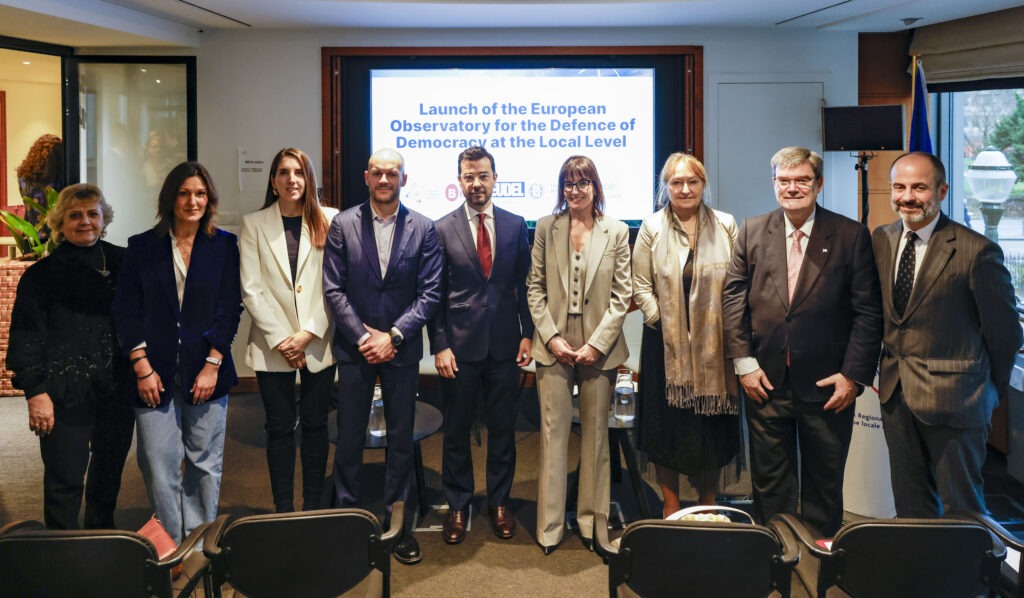
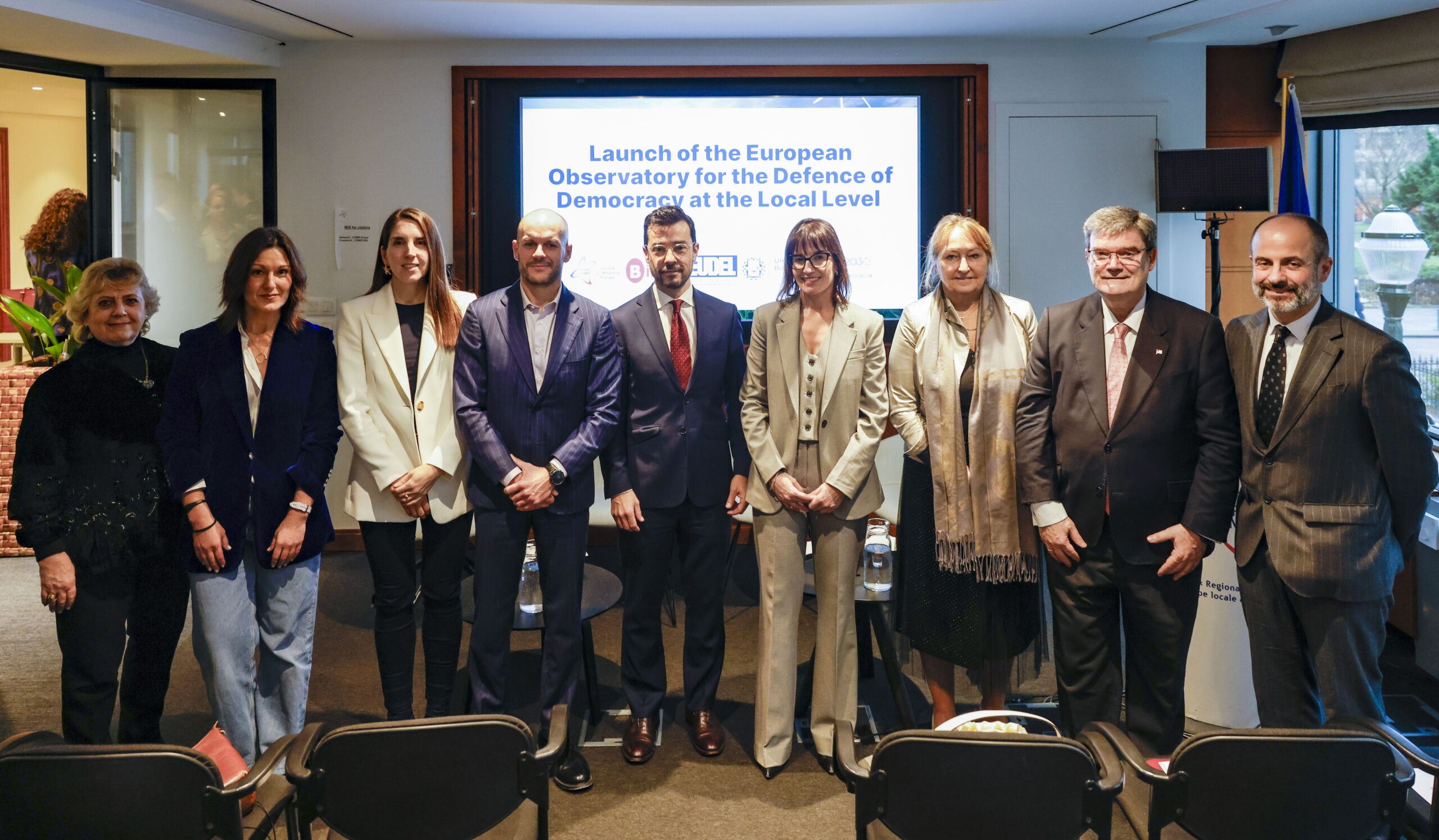
*Eider Enunciaga, spokesperson for local democracy at CEMR and representative of Bilbao City Council, at the CEMR event on the launch of the European Observatory

In response to this growing pressure, CEMR, together with the City of Bilbao, Bocconi University and the Basque Association of Municipalities, has launched the European Observatory for Democracy at the Local Level. The initiative aims to gather data on threats against local representatives, identify emerging trends and better understand the drivers behind attacks on democratic institutions.

“By strengthening democracy at the local level, we are also strengthening the European project,” Enunciaga concluded.

For more information, contact:

Global Europe 2028–2034

Global Europe - position paper

Local and regional governments at the heart of “Global Europe 2028–2034”: our Policy position


As the European Union prepares its next Multiannual Financial Framework (MFF) for 2028–2034, the Global Europe instrument will define the EU’s external action for the years ahead — encompassing development cooperation, humanitarian aid, enlargement support and Global Gateway. Discover PLATFORMA detailed policy position outlining how this strategic instrument should be shaped to foster sustainable global partnerships and advance inclusive governance.

At a time marked by intersecting global crises — from climate breakdown and shrinking development funds to geopolitical instability — the role of local and regional governments (LRGs) is more critical than ever. PLATFORMA’s paper is thus anchored in the belief that effective global action starts from the ground up.

Local and regional governments as co-decision-makers, implementers and partners

PLATFORMA’s position starts from a stark reality: despite their proximity to citizens and deep knowledge of local contexts, LRGs remain under-recognised in EU external action frameworks. The coalition calls for the Global Europe instrument to move beyond symbolic references to “local authorities” and embed mechanisms that genuinely empower LRGs as co-decision-makers, implementers and partners in EU external policies.

Key recommendations

The Policy Paper makes 9 key recommendations to EU decision makers:

  1. Strengthen multilevel governance in Global Europe and place local and regional governments in the driving seat of territorial development
  2. Pair flexibility and simplification with ambitious official development assistance targets, and enhance accountability and transparency mechanisms
  3. Unlock Global Gateway’s potential through the involvement of local and regional governments
  4. Foster EU delegations’ engagement with local and regional governments
  5. Recognise and empower local and regional governments as unique and effective development partners in fragile contexts
  6. Advance the localisation of the Sustainable Development Goals to achieve decarbonised societies and climate justice
  7. Involve citizens through Global Citizenship Education as a key component of decentralised development cooperation
  8. Foster inclusive and participatory local governance: empower youth, women, and disadvantaged and underrepresented groups
  9. Strengthen local governance through the EU Eastern neighbourhood and enlargement strategy

Through these recommendations, PLATFORMA aims to improve the current proposal for the Global Europe instrument, so that it fully recognises, acknowledges, and supports the contribution of local and regional governments to EU external action, notably through decentralised cooperation as a development aid modality.

PLATFORMA also calls on the European Commission to issue an updated Communication on the structured involvement of local and regional governments and their associations in the new (geo)strategic approach to EU external action.

Read the full Policy position

For more information, contact:

Meet Eider Inuntziaga (Bilbao)

Meet the Local Hero: Eider Inuntziaga, building trust from the streets of Bilbao


When Eider Inuntziaga talks about local government, one word comes up again and again: closeness. 

Since 2023, she has served as a city councillor in Bilbao, after years of political engagement within the Basque Nationalist Party. It is her first public mandate, and the experience has changed how she sees political life. 

Before, she observed politics from the inside. Now, she experiences it daily — in the street, in neighbourhood conversations, and in the direct reactions of citizens to local decisions. The distance between elected representatives and residents is minimal, which makes local politics both uniquely meaningful and uniquely exposed. She also brings this experience to the European level as one of the Council of European Municipalities and Regions’ spokespersons on Local Democracy. 

Across Europe, these challenges are increasingly visible. To better understand and address them, CEMR and its partners, including the City of Bilbao, have launched the European Observatory for the Defence of Democracy at the Local Level — an initiative that collects data, documents threats and harassment against local elected representatives, and helps develop practical tools and responses to better protect those serving their communities. 

As she puts it, “local governments are the closest level of administration; we are the face of democracy.” 

That proximity builds trust, but it also concentrates frustration. When people are unhappy, local leaders are often the first — and easiest — target. 

Social media: useful, but risky 

That visibility now extends far beyond the street. 

Inuntziaga describes her relationship with social media as “conflicted.” While it can help connect people and share information, she also sees clear downsides. 

Social media can connect people and stories, and it can be useful—up to a point. But it also creates noise, polarisation, and sometimes hate. It can be dangerous.” 

For local politicians, the effects are concrete. 
“It affects integrity, it affects how we speak, and it can silence people. It can make people leave the work they’re doing—or become afraid of what’s happening.” 

She keeps her presence limited, using Facebook and LinkedIn, and mixing personal and political communication carefully. 

Participation beyond election day 

Despite these challenges, Inuntziaga remains firmly optimistic about the role local governments can play in strengthening democracy. 

Her approach is simple: stay close, listen carefully and involve citizens as much as possible. For her, elections are only the starting point. Day-to-day participation matters just as much. In Bilbao, this philosophy has taken concrete form through participatory initiatives that invite residents to help shape the city’s direction.

One example is “Bilbao City of Values,” a process through which citizens collectively identified a shared set of principles to guide public life. The idea is to create a common framework that strengthens belonging and counters misinformation. The goal, she explains, is not only better policies, but stronger relationships between institutions and the people they serve. 

Learning from Bilbao’s past 

Bilbao’s history has also shaped how she thinks about governance. 

The city has experienced profound transformation over the past decades — from industrial decline and unemployment to renewal driven by long-term planning and cooperation between public institutions, private actors and civil society. For Inuntziaga, this experience shows that change does not happen overnight and that stability requires patience. 

She often points to three elements behind Bilbao’s recovery: cooperation, shared values and long-term vision. Quick fixes rarely work. Instead, consistent decisions taken with the future in mind gradually rebuild trust. 

“Decisions must be made with the long term in mind,” she says, describing democracy and stability as mutually reinforcing. 

Eider Inuntziaga during the launch of the European Observatory for the Defence of Democracy at the Local Level.

Rooted locally, thinking European 

Although her work is grounded in municipal politics, Inuntziaga keeps a strong European outlook. She follows debates beyond Spain closely and draws inspiration from leaders such as Kaja Kallas, whom she admires for her perspective on Europe’s role in a changing world. 

Still, her focus remains firmly local. For her, cities are where democracy is tested every day — where policies meet real life, and where trust is either built or lost through everyday interactions. 

It is not the most visible level of politics — but, in many ways, it is the one where democracy is felt most directly. 


To hear more from Eider Inuntziaga, you can listen to the full episode of Call Simone, also with Gianmarco Daniele of Bocconi University, . They discuss how growing harassment and disinformation are affecting local leaders across Europe, and how the launch of the European Observatory for the Defence of Democracy at the Local Level can better track threats and protect local democracy. 

For more information, contact:

New episode of Call Simone

“If we are lucky, she will be a mayor”
Power, pressure, and local democracy in Europe


Local democracy is often described as the closest level of government to people’s everyday lives. But across Europe, that closeness is increasingly being tested.

In the latest episode of Call Simone, we explore how power and democratic pressure are playing out at the local level — where politics is most visible, most accessible, and, increasingly, most exposed. Harassment, intimidation, disinformation campaigns, and threats are becoming part of the reality for many local elected representatives. The consequences go well beyond individual cases: when intimidation shapes who speak, who run, and who stay, representation shrinks and democracy weakens.

This episode brings together two voices who connect political experience with rigorous research:

  • Eider Inunciaga, City Councillor in Bilbao, Spain
  • Gianmarco Daniele, Executive Director of the CLEAN Unit, Bocconi University, Italy

Together, they unpack what harassment looks like in practice, why it is rising, who is most affected, and what local leaders — and European institutions — can do to respond with policies grounded in evidence.

When intimidation becomes a political filter

Harassment against local elected representatives is not only “bad behaviour” online — and the way humans respond to these attacks has little to do with personal resilience. As the episode shows, intimidation can work as a political filter: it discourages participation, pushes people out, and narrows the diversity of voices in local councils.

For Eider Inunciaga, the change became more tangible when she entered a public mandate in 2023. Local politics means proximity: you can be approached in the street, at community events, at school gates — and anger is often directed at local representatives precisely because they are the most reachable. As she puts it: “Local governments are the face of democracy.” And that visibility comes with exposure.

“Local governments are the face of democracy — and that makes us the most exposed.” – Eider Inunciaga, City Councillor Bilbao, Spain.

Who pays the highest price?

One recurring theme in the conversation is that harassment does not hit everyone equally. Those seen as “different” — women, minority representatives, LGBTQIA+ politicians — are often targeted more aggressively, with the implicit message: you don’t belong here.

Gianmarco Daniele shares research findings from Italy that put numbers to what many already sense. Using a carefully matched dataset to compare women and men in similar contexts, his work finds women are three times more likely to be targeted — and that almost one-quarter of female mayors experience an attack during their mandate. Importantly, these are offline attacks: assaults, burned cars, arson against property, threatening letters — not simply online hostility.

The timing is also revealing: attacks concentrate in the first year after election, consistent with a backlash against women’s visibility in power — and not explained by performance differences in office. The democratic cost is direct: women who are attacked are less likely to run again, turning progress on representation into a revolving door.

As Daniele notes, we often focus on how to get more diverse candidates into politics — and too rarely on why people leave.

“Without data, we’re fighting blind. Europe needs comparable evidence to spot risks early and respond.” – Gianmarco Daniele, Executive Director Clean Unit, Bocconi University, Italy.

Bilbao’s lesson: rebuild trust through participation and shared values

The episode also looks at the other side of the equation: how local governments can maintain trust and stay close to citizens in a polarised environment.

For Eider Inunciaga, the starting point is closeness and participation: democracy is not only elections and voting day. In Bilbao, she highlights the “Bilbao City of Values” process, where citizens helped define a set of shared values to create a common framework for community life. In her view, shared values and participation are also part of the response to misinformation: they strengthen belonging and reduce the space in which false narratives thrive.

Bilbao’s longer history adds perspective. The city’s transformation — shaped by industrial crisis, social hardship, terrorism and the 1983 floods — was driven by cooperation across institutions, partnerships with society, and long-term vision. The lesson is simple and demanding: coexistence is not inherited; it is cultivated — and democratic stability requires sustained investment.

From stories to evidence — and from evidence to action

This episode connects directly to the launch of the European Observatory for the Defence of Democracy at the Local Level: a new partnership bringing together local and regional governments (including Bilbao and Basque municipalities represented by EUDEL) and the research community at Bocconi, with the support of the Basque Country and CEMR.

The Observatory’s goal is to help Europe move from scattered stories to coordinated action by connecting the dots between:

  • what local elected leaders experience on the ground
  • what research and data can show about patterns, drivers and impact
  • what public authorities and institutions can do to prevent, protect and respond more effectively

A central message from the conversation is the data gap.  Today, there is no comparable European-level dataset even on local politicians, let alone on attacks and threats. Without common data infrastructure, risks are harder to detect early and policy responses are harder to evaluate.

As Daniele explains, better data brings not only understanding — but visibility. In Italy, there is evidence of more than one attack per day on average, yet the issue often remains local news and rarely reaches broader political attention. Data can help turn a hidden pattern into a shared European priority.

About Call Simone

Call Simone is CEMR’s podcast on power and democracy in Europe — told through the lens of the local level. Each episode brings together local leaders, insiders and researchers to explore who gets to sit at the table, who is pushed out, and why it matters for Europe’s future.

Listen on Spotify

For more information, contact:

Call for tenders: EU-Ukraine partnerships

Call for Proposals - News 2023

Establishing municipal partnerships between Ukraine and a European partner country in the context of the project “Towards a Bridges of Trust (BoT) Community


The Council of European Municipalities and Regions (CEMR) wishes to establish new partnerships between municipalities in Ukraine and municipalities in different European countries.

CEMR is looking for a service provider as an implementer to perform certain activities under this phase and provide dedicated expertise and support in the respective country. The service provider will work closely with CEMR, the Association of Ukrainian Cities (AUC) and if required, with other partners of the Bridges of Trust Community.

The call is divided into the following lots:

  • Lot 1: Belgium
  • Lot 2: Cyprus
  • Lot 3: Finland
  • Lot 4: France
  • Lot 5: Italy
  • Lot 6: Latvia
  • Lot 7: Malta
  • Lot 8: Netherlands
  • Lot 9: Norway
  • Lot 10: Portugal
  • Lot 11: Spain

Applicants can apply for one or several lots. All documents need to be submitted for each lot separately. The terms of reference describe the services per lot.

  • Deadline for submissions: 3 February 2026, 2 pm (CET)
  • Contract period: February 2026 – June 2026 
  • Budget:  Financial offer for the services up to 14.000 Euro without VAT.
    The costs of activities (e.g. interpretation costs for events, travel costs related to internship and events) will be covered directly by the BoT project.

Interested organisations or experts are invited to submit their application by email to application@ccre-cemr.org with the subject line: 
Establishing Municipal Partnerships between Ukraine and Name European Country”. Please specify the lot(s) you are applying for.

Questions may be sent to twinning@ccre-cemr.org by 30 January 2026.

For more information, read the Terms of Reference here.

Other Links:

Annexe 1 – Concept Note

Annexe 2 – Financial Offer

For more information, contact:

Sakharov Prize 2025 winners

Sakharov Prize 2025

Sakharov Prize 2025: standing with those who defend freedom of thought


The Sakharov Prize for Freedom of Thought is the European Parliament’s most prestigious award for human rights. Established in 1988, it honours individuals and organisations who demonstrate extraordinary courage in defending democracy, freedom of expression and fundamental freedoms, often under severe repression. 

Awarded annually, the Prize is both a recognition and a call to action: a reminder that freedom of thought is not guaranteed and must be actively defended. 

The 2025 Laureates 

On December 16 2025, the European Parliament awarded the Sakharov Prize to Mzia Amaglobeli of Georgia and Andrzej Poczobut of Belarus, two journalists imprisoned for their commitment to truth, democracy and human rights. 

Andrzej Poczobut, a journalist, essayist and activist from the Polish minority in Belarus, has long criticised the Lukashenka regime. Detained since 2021, he was sentenced to eight years in a penal colony on politically motivated charges. His health has deteriorated, his family is denied access, and yet he remains a symbol of resistance against authoritarian repression. 

Mzia Amaglobeli, a Georgian journalist and director of the independent media outlets Batumelebi and Netgazeti, was arrested in January 2025 after joining pro-democracy protests. Sentenced to two years in prison, she became Georgia’s first female political prisoner since independence and a powerful symbol of the country’s democratic aspirations

Announcing the laureates, European Parliament President Roberta Metsola stated that “both have paid a heavy price for speaking truth to power, becoming symbols of the struggle for freedom and democracy. The Parliament stands with them, and with all those who continue to demand freedom.” 

Democracy, EU values and enlargement 

The Sakharov Prize reflects the European Union’s commitment to defending democracy beyond its borders. In both Belarus and Georgia, democratic backsliding, repression of independent media and attacks on civil society threaten not only national freedoms but also the countries’ European paths. 

The European Parliament has repeatedly called for the immediate and unconditional release of both journalists and has adopted resolutions condemning repression, political imprisonment and the erosion of democratic institutions. 

Defending democracy from the ground up 

At CEMR and PLATFORMA, defending democratic values is central to our work, and we have a specific focus in the context of EU enlargement and the Eastern Partnership. Through cooperation with local and regional governments, national associations of local governments (such as NALAG in the case of Georgia), and civil society, we support democratic governance, freedom of expression and institutional resilience. 

Local democracy is often the first target of authoritarian pressure and the first line of defence. By empowering local and regional actors, supporting peer exchange and promoting EU values, CEMR and PLATFORMA contribute to a democratic Europe that is inclusive, resilient and anchored in fundamental rights. 

The Sakharov Prize is a reminder that democracy depends on courage but also on solidarity. 

For more information, contact:

New Observatory for local democracy

Launch event of the Observatory

New Observatory launched to protect local democracy in Europe 


  • Europe’s first Observatory to track threats against mayors and local councillors, from online harassment to intimidation and disinformation. 
  • Joint initiative of CEMR, Bilbao City Council, EUDEL, Bocconi University and the Basque Government to strengthen the quality of local democracy and support elected representatives. 

Brussels, 11 December – A new chapter in protecting local democracy began today with the launch of the European Observatory for the Defence of Democracy at the Local Level, presented at the CEMR Office in Brussels.

The Observatory responds to a sharp rise in online harassment, intimidation, disinformation and organised hate campaigns targeting mayors, councillors and regional leaders across Europe.

“Local democracy is Europe’s first line of defence”, stressed CEMR President Gunn Marit Helgesen. “When mayors and councillors are threatened, harassed or silenced, it is not only individuals who are targeted — it is the democratic fabric of our societies. With this Observatory, we are taking a united step to protect those who serve their communities and to ensure that democracy remains strong”.

On the opening of the launch event, Commissioner Michael McGrath responsible for democracy, justice, the rule of law and consumer protection in the European Commission, stated that “I am delighted to launch the European Observatory for the Defence of Democracy at the Local Level (the Observatory). Local democracy is not just a concept; it is the cornerstone of political life. It shapes decisions that affect citizens directly and gives everyone a tangible role in the choices that impact their communities. Today, our democracies face increasing threats, and these challenges are often felt at the local level. These threats don’t always arrive as overt attacks on institutions. Often, they creep quietly into our communities, directly affecting elected representatives and the everyday functioning of local democracy. And this is why the work of the Observatory is so important – we all need to work to protect and promote the democracies of tomorrow”.

The initiative — a partnership between the Council of Municipalities and Regions (CEMR), the City Council of Bilbao, the Association of Basque Municipalities (EUDEL), with the scientific expertise of Bocconi University and the support of the Basque Government — will generate data, analyse trends, and strengthen institutional responses at all levels.

Bilbao Mayor Juan Mari Aburto stressed the urgency of coordinated action: “Bilbao is a city of values because we have collectively chosen to build it that way. As the founding city of this Observatory, we share a clear conviction with Europe: democracy is safeguarded not only through laws, but through civic culture, respect and active listening. Defending democracy also means nurturing everyday coexistence in our neighbourhoods, where diversity enriches our communities rather than threatens them”.

EUDEL President Esther Apraiz highlighted the Basque contribution and experience: “In the Basque Country and across Europe, local democracy is embodied by the elected representatives who serve their communities every day. The Observatory must protect those who uphold democracy and help attract new talent to local politics, because when a mayor or councillor steps away, democracy weakens. Hosting the Observatory also in the Basque Country allows us to share our experience in collaborative local governance internationally”.

The Secretary General for External Action of the Basque Government, Ander Caballero, emphasised: “In the Basque Country, we work every day to build a territory grounded in cutting-edge democracy. That is how we build trust and satisfaction among citizens, and spark motivation and enthusiasm for taking part in political life. It is also a way to reinforce the foundations of our shared home against those who seek to weaken or undermine democracy. We have a tool to move forward: collaborative governance. The Observatory supports and promotes this approach, fostering cooperation between local institutions—both in the Basque Country and across Europe”.

Representing the scientific partnership, Bocconi University Rector Francesco Billari underlined the importance of evidence-based data: “When local leaders face intimidation, it is not only their safety that is compromised—it is the trust and participation on which democratic life depends. Studying this violence with state-of-the-art methods and data is essential if we are to safeguard those foundations.”

The Observatory will track threats, share solutions, build solidarity, and advise national and EU institutions.

For media inquiries, interviews or accreditation requests, please contact: 

Digital local and regional governments

Digital transition - News 2022

How Europe’s municipalities and regions can drive an inclusive, secure and people-centred digital transformation


Local and regional governments are at the heart of Europe’s digital transformation. As the public authorities closest to citizens, they deliver services such as healthcare, education, transport, social support and broadband deployment, all increasingly shaped by EU digital legislation. Their role is essential to ensure that digitalisation remains inclusive, sustainable and accessible to everyone. Yet many local and regional governments still face major obstacles: unequal access to digital infrastructure, insufficient financial and human resources, cybersecurity risks, and widening gaps in digital skills.

Across Europe, disparities in connectivity and digital access disproportionately affect rural and remote areas, low-income households and vulnerable groups. These inequalities threaten territorial cohesion and limit citizens’ ability to participate fully in digital society. To make digital public services truly accessible, digital solutions must follow inclusive design principles and remain complemented by in-person service options for those who cannot or prefer not to use digital channels.

Cybersecurity has become an increasing concern as local authorities manage sensitive public data and critical infrastructure, often without sufficient expertise or funding to meet growing EU requirements such as those under the NIS2 Directive. Smaller municipalities, in particular, lack the resources to implement robust cybersecurity measures, respond to incidents or comply with complex regulatory frameworks. Reinforced cooperation, simplification of rules and sustainable financial support are essential to strengthen local resilience.

Skills development remains another pressing challenge. To implement new EU digital policies, including those related to artificial intelligence, interoperability and data governance, local administrations need staff trained to oversee digital systems, maintain human oversight, and ensure ethical, transparent and fair use of technologies. At the same time, strengthening digital literacy among citizens through lifelong learning and community-based initiatives helps build trust, inclusion and participation. Cooperation between municipalities and across regions also accelerates innovation and avoids fragmentation by enabling the exchange of best practices and common solutions.

A Call for Stronger EU Support

To ensure a fair, secure and inclusive digital transition, CEMR calls on European institutions to reinforce investment in digital infrastructure, especially in underserved regions; provide technical and financial support for accessible digital public services; maintain non-digital access to essential services during the transition; facilitate public-private partnerships to expand connectivity; and offer tailored guidance, capacity-building and long-term funding to help local and regional governments strengthen their cybersecurity and digital skills. Europe’s digital future depends on empowering the actors closest to citizens: its municipalities, cities and regions!

Read the position paper here

For more information, contact:

Workshop on Gender Equality Action Plans

Women - News Section

Training on gender equality at the local level: from commitment to actions


On 18 November, CEMR organised the online workshop “From commitment to action: Training on gender equality action planning”. The event brought together around 60 participants from more than 10 countries, including France, Germany, Belgium, the Netherlands, North Macedonia, Romania, Ukraine, Greece, Poland, the United Kingdom and Austria. Municipal representatives, national coordinators and experts joined to strengthen their capacity to design, update and implement Gender Equality Action Plans (GEAP) in line with the European Charter for Equality of Women and Men in Local Life.

As the Charter approaches its 20th anniversary in 2026, the session provided practical guidance, tools and inspiration to support renewed commitment at local and regional levels.

Gender equality action planning: tools and approaches

The workshop started with inputs on the importance of gender mainstreaming as a core tool for local gender equality strategies. Miguel Hernandez Littlewood from DG REGIO presented the EU’s strategic framework, relevant funding mechanisms and the new gender-tracking methodology.

Aline Burni research fellow at the think tank ODI Europe shared findings from the GAP III report and offered practical guidance on conducting needs assessments, securing financial resources, ensuring leadership commitment and developing monitoring systems focused on impact rather than activities.

The experience of the Charter’s signatories

Several Charter signatories shared their experiences and challenges in developing their Action Plans.

Nataliya Lazarenko, on behalf of the Association of Ukrainian Cities, and Alina Khaletska, member of the Expert Council on Gender Integration of the City of Kyiv (Ukraine), presented their unique experience with the Charter, recalling that the first Ukrainian signatory was Vinnytsia (Ukraine) in 2017 and explaining how the context of war has intensified gender equality concerns.

Pascale Douineau, elected official responsible for gender equality from the City of Quimperlé (France), shared her work on the visibility of women in public spaces, while also highlighting the specific challenges faced in rural areas.

They emphasised the importance of strong political commitment, noting that signing the Charter is a concrete signal to take action, and that Action Plans are essential tools for implementing equality measures in daily life.

The workshop offered participants the chance to work through a practical exercise to design an action plan based on the Charter’s articles, including Article 22 on gender-based violence, which encouraged the exchange of good practices. Participants also discussed the need for an integrated approach, the challenges of securing adequate financial resources, and the importance of setting dedicated budget targets. Finally, the relevance of effective monitoring tools emerged as a key point of reflection.

The main takeaways from the workshop highlight that an assessment of gender needs is indispensable for identifying priorities and ensuring that measures are not generic but reflect local realities. Sustainable implementation requires adequate financial resources, committed leadership, and long-term structures. Ultimately, the discussions made clear that a single model for gender equality action planning does not exist. Each approach must be tailored to local contexts, and Gender Equality Action Plans are essential tools to translate these commitments into concrete, measurable actions.

Preparing for the Charter’s 20th anniversary

As next year 2026, we move toward the 20th anniversary of the Charter, CEMR will keep working alongside towns, cities and regions to advance their gender equality strategies. Participants are encouraged to take forward the tools and insights gathered during the workshop, embed them in their local plans, and remain active partners in the collective push for gender equality.

For more information, contact: