EU–Ukraine Municipal Partnerships Forum

Bridges of Trust - Committee of Regions 2025

Local and Regional Leaders building bridges for Ukraine’s Recovery and EU Path


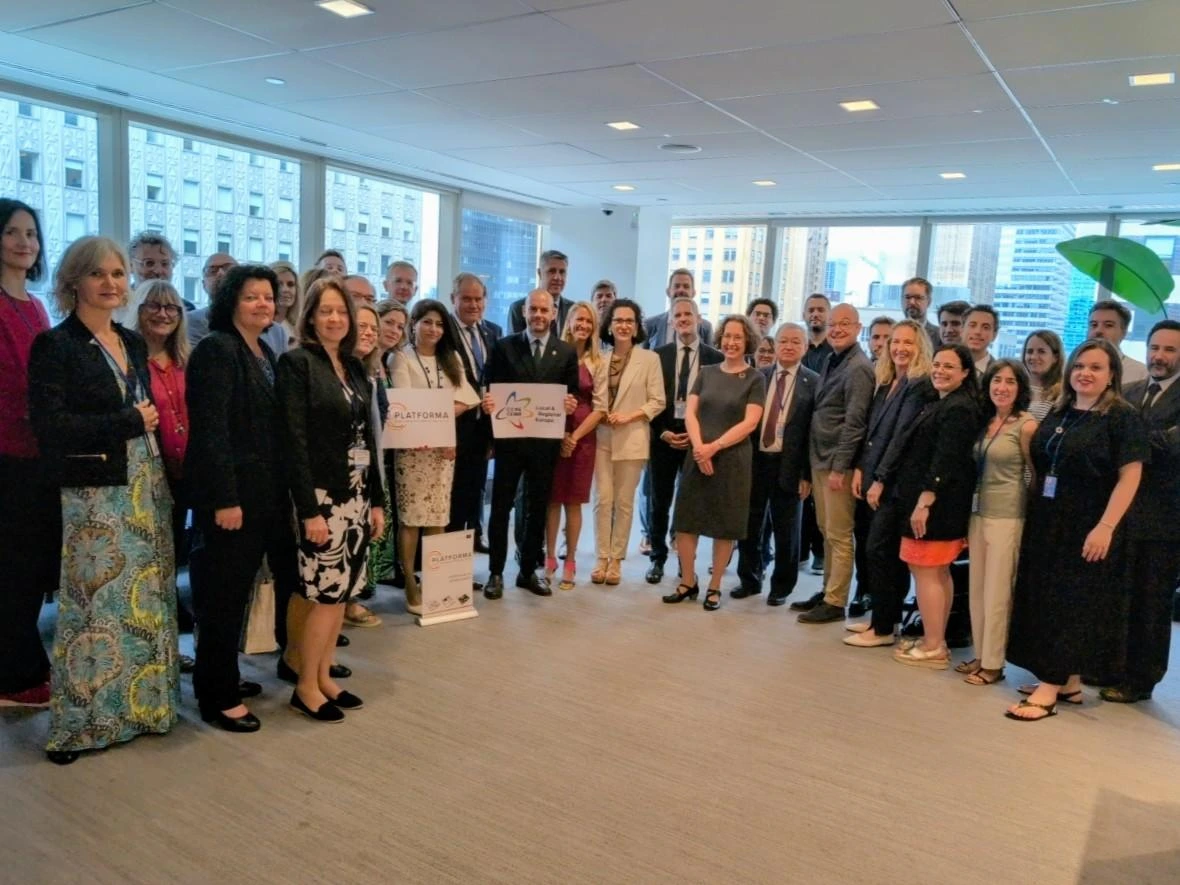
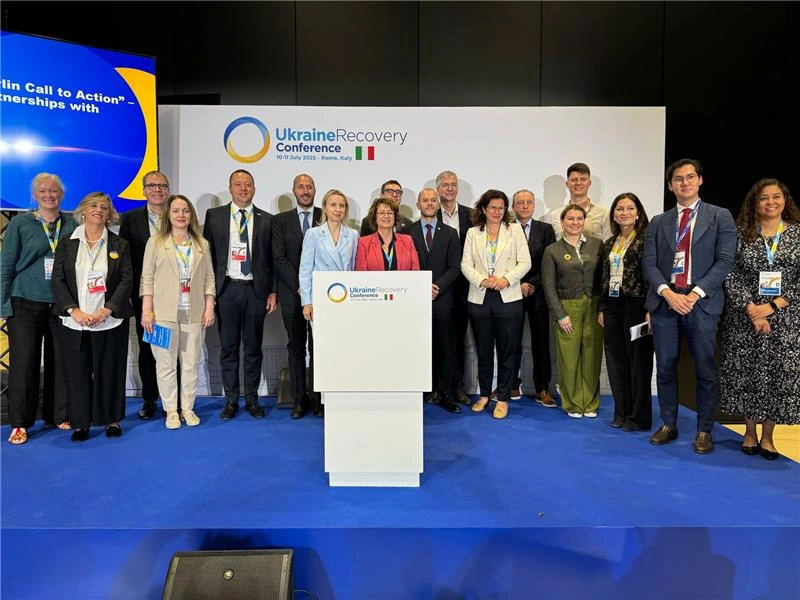
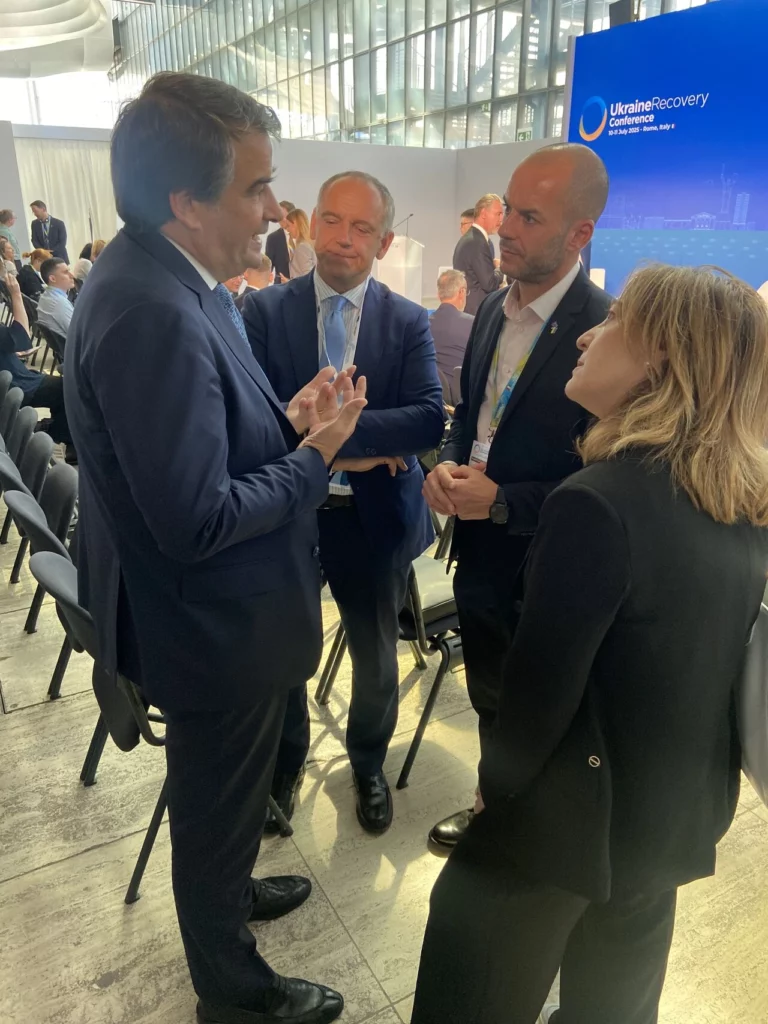
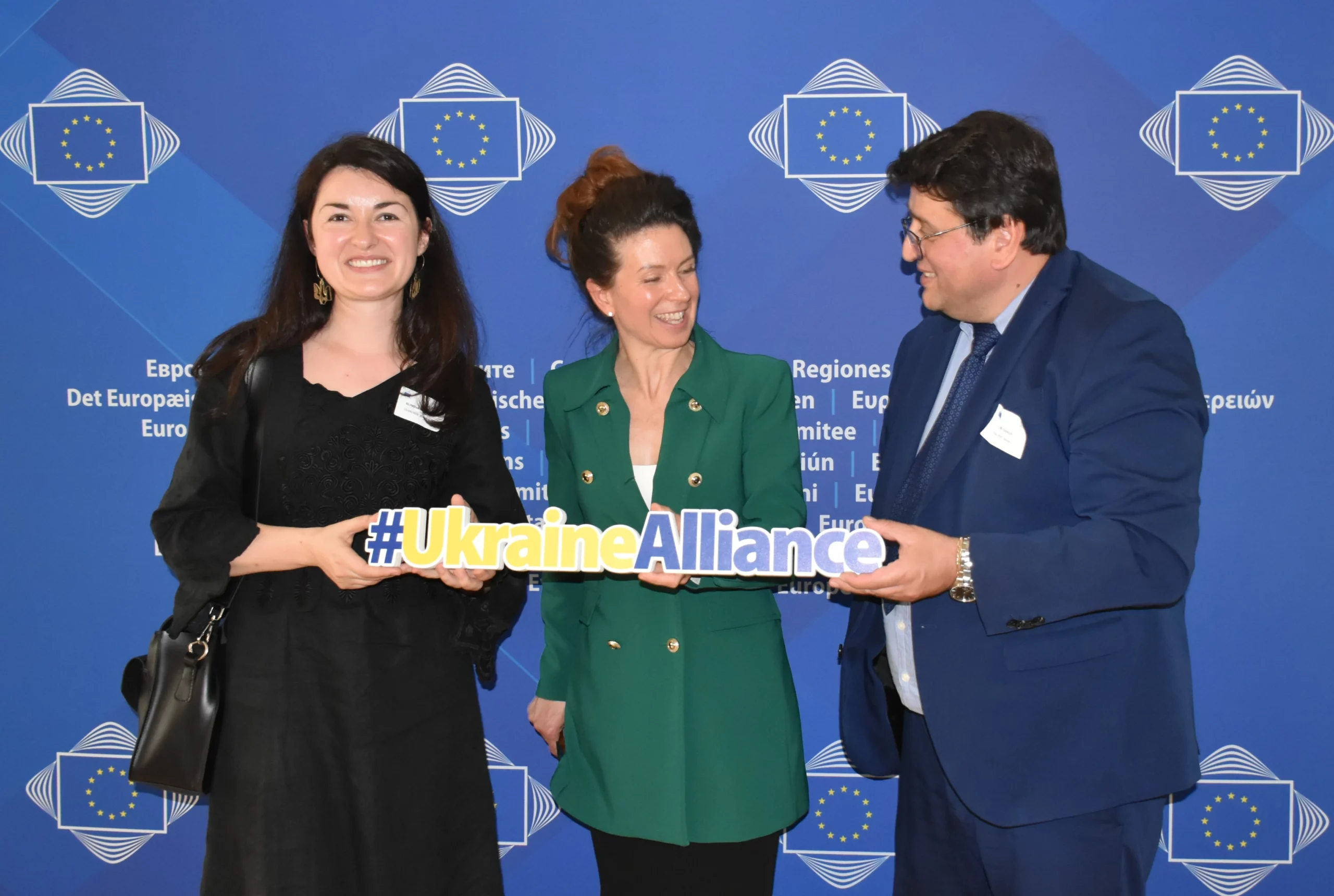
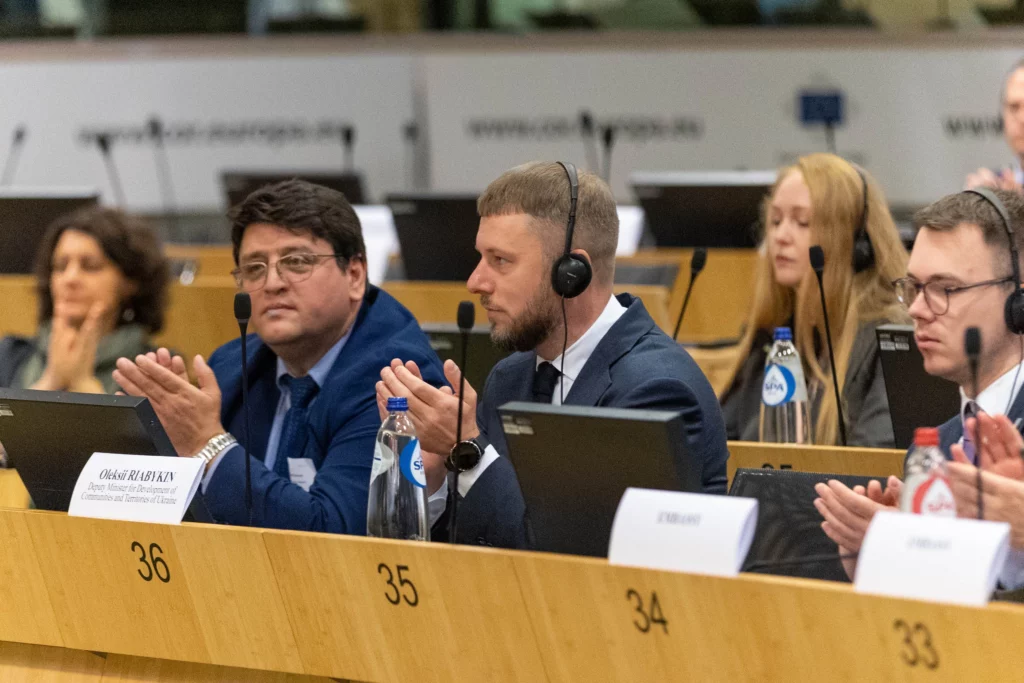
Brussels, 15 May 2025 – The European Alliance of Cities and Regions for the Reconstruction of Ukraine gathered its core members and Ukrainian and EU delegations at the European Committee of the Regions in Brussels to accelerate cooperation ahead of the Ukraine Recovery Conference (URC) in Rome this July. 

This high-level forum brought together municipalities from across Europe and Ukraine, alongside institutional partners, to exchange on Ukraine’s evolving territorial needs and to foster meaningful, lasting partnerships. At the heart of the discussions was a shared goal: empowering local governments to co-lead reconstruction, support reforms, and drive the local dimension of Ukraine’s EU accession process. 

CEMR’s Contributions: Tools for Lasting Cooperation 

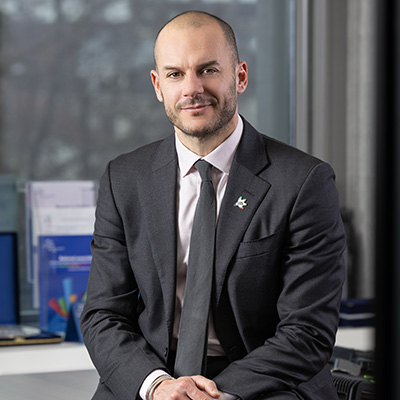
Speaking at the forum, Durmish Guri, CEMR’s Director of Projects and Programmes, presented two key initiatives from CEMR designed to foster long-term collaboration between EU and Ukrainian municipalities: 

🔹 The Matchmaking Platform: This digital tool connects municipalities across Europe, helping them identify shared priorities, explore cooperation opportunities, and launch joint projects. With a special focus on Ukraine, the platform supports deeper partnerships with the rest of the continent, accelerating both recovery efforts and Ukraine’s EU integration process.  
Learn more → https://partnerships.ccre-cemr.org/  

🔹 The Bridges of Trust Community: Evolving from a project into a growing community, Bridges of Trust brings together local leaders from Ukraine and across the European Union, alongside national associations and institutional partners. This consolidated community is committed to strengthening local partnerships by supporting municipalities in co-designing practical solutions in areas of common interest. By reinforcing bonds from the ground up, it empowers municipalities, accelerates Ukraine’s EU integration, and contributes directly to its recovery. 
Learn more → https://ccre-cemr.org/bridges-of-trust  
 
Political Level meeting 
 
The core members of Alliance adopted the Joint Statement on Empowering Local and Regional Governments for the Reconstruction and Future EU Accession of Ukraine to which CEMR contributed. In particular, CEMR put forward two key recommendations: 

  • Establishing a one-stop shop to coordinate and scale up municipal partnerships; 
  • Ensuring stronger access for local governments to financial resources and decision-making processes, particularly within the Ukraine Donor Platform. 

These proposals aim to amplify the voice of local and regional governments, ensuring that municipalities remain central actors in Ukraine’s reconstruction and path to EU integration. 

Memorandum of Understanding  
 
A key highlight came with the signing of a new partnership between Kassel (Germany) and Zhytomyr (Ukraine)—a symbolic and practical demonstration of how municipal cooperation is directly shaping Ukraine’s recovery on the ground. 

A Shared Mission 

CEMR expresses deep appreciation to all co-organisers for hosting a timely and impactful dialogue. Special thanks go to the European Alliance of Cities and Regions for the Reconstruction of Ukraine for championing this process and uniting dedicated partners around a common cause.  

The presence of committed, action-driven leaders— including Magali Altounian, Aleksandra Dulkiewicz, Andrej Horvat, Svitlana Blinova, Vadim Boychenko, Oskar Chmiel, Antonella Valmorbida, Alberto Rini, Kata Tüttő, Oleksii Riabykin, Davide La Cecilia, Pekka Toveri, and many more  – demonstrated the collective energy powering this growing movement of cooperation. 

Call for tenders – Social Dialogue

Call for Tender: Research Expertise on Social Dialogue Systems in Eastern Europe, Southern Islands, and EU Candidate Countries


The Council of European Municipalities and Regions (CEMR), in partnership with the European Federation of Public Service Unions (EPSU), is pleased to announce a call for tender for subcontracting external expertise to conduct research on social dialogue systems and practices within local and regional governments across a wide range of countries in Eastern and Southeastern Europe, Southern European islands, and EU candidate countries.

This call is part of the “LRG-SD Capacity Building” (Project LAB) initiative, co-funded by the European Commission, which aims to address the current underrepresentation and limited engagement of social partners in national and EU-level social dialogue in the local and regional government sector.

The selected contractor will:

  • Produce a desk research report offering a comprehensive overview of social dialogue systems in the target countries.
  • Document and synthesise the findings from three international workshops and three twinning activities.
  • Draft concise and informative reports (2–15 pages) in English, summarising the discussions, conclusions, and best practices exchanged during all project events.
  • Attend and report on project activities (online and in-person), providing valuable insights and comparative analysis.

Target countries include:
Eastern Europe (e.g. Poland, Hungary, Slovenia), Southeastern Europe (e.g. Romania, Bulgaria), EU candidate countries (e.g. Albania, Ukraine, Türkiye), and Southern European islands (Malta and Cyprus).

Expertise Required

Applicants must demonstrate:

  • Strong academic background in EU labour and social policy.
  • Proven experience with trade unions and employer organisations at the local, national, or European level.
  • Ability to work in multilingual and multicultural settings.
  • Skilled in conducting desk research and reporting on multi-stakeholder events.
  • Capacity to manage tight deadlines and coordinate with multiple project partners.
  • Availability for occasional travel to project events.

Budget and Timeline

  • Maximum budget: €28,925 (excluding VAT)
  • Contract duration: From June 2025 (upon appointment)
  • Deadline for submission: 30 May 2025, 12:00 (noon)
  • Submission email: application@ccre-cemr.org
    Please include the subject line: “Application – Project LAB”

For more information, contact:

Local Governments in Ukraine’s Recovery

Bridges of Trust - News 2025

Local Governments at the Heart of Ukraine’s Resilience, Reconstruction, and European Integration 


As Ukraine continues its courageous and determined fight for freedom and democracy, local and regional governments stand at the forefront of the country’s resilience and recovery. Across Ukraine, municipalities are playing a pivotal role in responding to the challenges of wartime destruction, leading reconstruction efforts, and advancing Ukraine’s path toward European integration. 

Decentralisation as a Foundation for Resilience 

Ukraine’s decentralisation reform, initiated years before the full-scale Russian invasion, has become one of the country’s greatest strengths. Empowered local authorities have mobilised communities, safeguarded essential services, and led local reconstruction efforts, often in partnership with residents and civil society. Municipalities have ensured water, electricity, medical supplies, and shelter, even under occupation and communication blackouts. 

The example of Novobilouska hromada in Chernihiv region, where local authorities swiftly protected sensitive information and are now leading reconstruction efforts, highlights the importance of local self-governance in times of war. 

Bridges of Trust: Rebuilding Ukraine through partnership with the EU municipalities 

International cooperation has further enhanced local resilience. Projects such as Bridges of Trust, led by CEMR in cooperation with Association of Ukrainian Cities and with support of U-LEAD with Europe Programme, connect Ukrainian municipalities with European partners, fostering knowledge exchange and joint reconstruction projects. To date, over 30 Ukrainian municipalities have partnered with counterparts from across Europe, submitting more than 40 joint project proposals focused on recovery and sustainable development. 

These partnerships go beyond solidarity; they promote mutual learning, strengthen democratic governance, and contribute to Ukraine’s European integration by aligning local development practices with EU standards and values. 

Digital Tools for Transparency and Efficiency 

Innovative digital solutions also play a key role. Ukraine’s Prozorro e-procurement system and the DREAM (Digital Restoration Ecosystem for Accountable Management) platform ensure transparency and accountability in reconstruction projects. These tools not only increase public trust but also facilitate international donor engagement by offering real-time data on funded projects. 

The Big Recovery Portal empowers civil society and local communities to monitor reconstruction efforts, report issues, and uphold high standards of integrity and efficiency. Such digital initiatives are critical to ensuring effective use of resources and advancing Ukraine’s EU accession ambitions. 

  • CEMR has developed the Matchmaking Platform, a digital tool connecting towns, cities, and local authorities across Europe, with a special focus on Ukrainian communities. This online platform enables quick peer interactions, joint projects in key cooperation areas, access to funding opportunities, best practices, and enhances international visibility.  

The Way Forward 

Ukraine’s local and regional governments are driving recovery, resilience, and reform. Through international partnerships, digital innovation, and Community engagement through Bridges of Trust, they are shaping a democratic, European future for Ukraine. As CEMR and its members continue to stand with Ukraine, supporting municipalities in their efforts remains essential for a united and resilient Europe. 

Read more at the GMF article:  https://www.gmfus.org/news/defending-democracy-ukraines-resilient-reconstruction-1 

For more information, contact

Partnerships for Ukraine’s recovery

Strengthening Partnerships for Ukraine’s Recovery: CEMR’s Actions on Solidarity, Municipal Cooperation, and EU Integration


24th February 2025, marks three years since Russia launched its full-scale invasion of Ukraine—a reminder of the resilience and determination of the Ukrainian people as they continue to defend their freedom and democracy. For CEMR, it reaffirms a long-standing commitment to supporting Ukraine’s recovery and EU integration, through tangible, grassroots cooperation between local governments. 

In recent months, this commitment has translated into new concrete actions, from public declarations of solidarity to community building and launching innovative digital tools that strengthen municipal partnerships. Across Europe, local and regional governments are not just expressing support but actively contributing to Ukraine’s reconstruction and future within the EU. 

A Declaration of Solidarity and Action 

Three years after the invasion, CEMR issued a declaration reaffirming its unwavering support for Ukraine. The statement highlighted the indispensable role of local leaders in sustaining communities under siege — from ensuring basic services to preserving democratic governance. 

Yet these leaders are not just bearing the weight of war; they are targets. The abduction, imprisonment, and murder of Ukrainian mayors are stark reminders of the risks they face. CEMR, standing alongside the Association of Ukrainian Cities, called for the immediate release of detained local leaders and condemned the Russian attacks on local democracy.
More information: https://ccre-cemr.org/press/declaration-on-three-years-of-war-in-ukraine 

Strengthening Networks: Joining the Coalition of Sustainable Municipalities
This year, CEMR reinforced its commitment by joining the Coalition of Sustainable Municipalities, an initiative launched by Ukraine, Germany, and international partners at the Ukraine Recovery Conference (URC) 2024. During the conference in Berlin, CEMR’s Secretary-General announced the launch of the Matchmaking Platform—an innovative digital tool designed to help municipalities across Europe connect and collaborate with their Ukrainian counterparts. 

On 12th February, as part of the Coalition, CEMR participated in an Open Exchange on Best Practices for Ukraine’s Recovery, organised by the German Federal Ministry for Economic Cooperation and Development (BMZ) and U-LEAD. Among other key topics, the event showcased insights into the fully operational Matchmaking Platform, which is already facilitating municipal partnerships. CEMR remains a dedicated partner, upholding the core principles of the Coalition. 

Empowering Local Leaders: The Matchmaking Platform 

One of CEMR’s most impactful recent initiatives in strengthening international municipal cooperation is the Matchmaking Platform, officially launched during the CEMR Leaders’ Summit in December. This innovative tool is transforming how municipalities establish partnerships. 

Building on CEMR’s seven decades of town twinning expertise, the platform enables local governments to connect and collaborate on projects in a few clicks. In just two months, it has attracted hundreds of verified users across Europe, fostering direct engagement between municipalities. Ukrainian local leaders have shown strong interest in harnessing its potential, with over 400 participants attending two dedicated info sessions organised by U-LEAD on 29th January and 12th February, where CEMR provided a comprehensive overview of the platform and addressed participants’ questions. 

To further extend its reach, a broader communication campaign will enhance visibility, while future developments will introduce new functionalities—potentially including funding opportunities, capacity-building programmes, and partnerships with key stakeholders of the Bridges of Trust Community.  

More information: https://partnerships.ccre-cemr.org/  

Expanding the Bridges of Trust Community 

Since 2021, CEMR has been actively implementing the Bridges of Trust project in collaboration with national associations and U-LEAD to strengthen municipal partnerships between the EU and Ukraine. Following two successful phases, the initiative reached a major milestone with the launch of the Bridges of Trust Community, announced at the CEMR Leaders’ Summit last December. 

This growing community serves as a central hub for municipalities looking to establish and sustain partnerships at a crucial moment in Ukraine’s transformation. The third phase of the project will further enhance the community’s benefits, advocacy efforts, and stakeholder engagement—expanding from bilateral cooperation to a more structured and comprehensive framework. 

New possible cooperations have been explored through the participation of potential members of the Bridges of Trust Community such as the German Marshall Fund (GMF) and many more, to explore their involvement in Ukraine’s recovery and EU integration efforts. 

For those interested in learning more, the revamped Bridges of Trust page on CEMR’s website offers key resources, funding opportunities, and success stories that highlight impactful municipal partnerships. 

The Matchmaking Platform is fully integrated into the community, providing a dynamic tool to not only establish new partnerships but also sustain and expand them over time. CEMR invites all interested stakeholders to join the Bridges of Trust Community, which is set to become a key hub for municipal collaboration across Europe. 

More information: https://ccre-cemr.org/bridges-of-trust  

Looking Ahead: A united effort for recovery 

With Ukraine’s path to EU integration in focus, local and regional governments must play a key role in shaping decentralisation, governance, and resilience. As we prepare for the Ukraine Recovery Conference 2025 in Rome, CEMR is actively contributing to the Working Group for the Local and Regional Component and the European Alliance of Cities and Regions for the Reconstruction of Ukraine. Our commitment remains steadfast in amplifying local voices and strengthening municipal partnerships to support Ukraine’s recovery and EU integration. 

Through community building supporting international municipal partnerships, advocacy for EU integration, decentralised cooperation, and innovative digital tools, CEMR reaffirms its dedication to supporting Ukraine. We remain open to further engagement and collaboration, ensuring a beneficiary-centred approach prioritising European municipalities. 

For more information, contact: 

Twinning call for proposals

Twinning - Call for Proposals

Call for proposals for the sub-granting 2025 – extended deadline until Tuesday, May 20


Building on the success of the 2024 pilot phase, CEMR is excited to announce the launch of the second sub-granting scheme, as part of the SPICE project —Empowering Local and Regional Governments for Sustainable Policy Implementation and Civic Engagement in Europe.

The initiative is funded by the European Commission, under the Citizens, Equality, Rights and Values (CERV) programme.

This call for project proposals is open to CEMR’s member associations and aims to strengthen further Twinning exchanges and activities between EU Local and Regional Governments. The focus is on promoting EU values and tackling key challenges such as democracy, citizens participation, gender equality, and inclusion.

Interested members are encouraged to participate in this call and contribute to fostering collaboration across the EU. For more details, and to submit your proposal, please read the full guidelines and complete the forms below.’

For more information, contact: 

Latvia-Ukraine Cooperation

Latvia - Ukraine Cooperation - News 2025

Latvia-Ukraine Municipal Cooperation: A Model for Reconstruction and Resilience 


In the face of war and destruction, rebuilding Ukraine requires more than just resources. It demands strong partnerships, knowledge exchange, and unwavering solidarity. The cooperation between Latvian and Ukrainian municipalities is a powerful example of how local governments can play a vital role in this process. 

Municipalities in Kuldīga, Ķekava, and Gulbene have established lasting ties with their Ukrainian counterparts, Chuhuyiv, Novyi Bilous, and Korop, transforming initial online meetings into concrete collaboration. Despite the challenges of war, these partnerships have led to knowledge sharing in social services, digital transformation, and local governance. Memorandums of Understanding have formalised their cooperation, while study visits to Latvia have further deepened their exchanges. These initiatives’ success has also been facilitated and supported by the Embassy of Ukraine in Latvia and the Association of Ukrainian Cities, demonstrating how national and local actors can work together for long-term recovery. 

This cooperation is part of a broader effort under the Bridges of Trust project, implemented by CEMR in collaboration with the Association of Ukrainian Cities and supported by the U-LEAD with Europe Programme. Since its launch, Bridges of Trust has helped forge partnerships between more than 30 Ukrainian and 30 EU municipalities, facilitating joint projects in infrastructure, waste management, and energy solutions. Through training and capacity-building, local governments are strengthening their role in Ukraine’s reconstruction, ensuring that recovery efforts are sustainable and aligned with European standards. 

The partnership between Latvia and Ukraine is a testament to the power of municipal cooperation. By working together, local governments are not only rebuilding what was lost but also laying the foundation for a stronger, more resilient Ukraine and Europe in general.  

Learn more about Bridges of Trust:

For more information, contact:

Declaration on three years of war in Ukraine

Ukraine Declaration - News 2025

CEMR issues a declaration reaffirming support and urging international action 


After three years of Ukraine’s resistance to Russia’s full-scale invasion, local and regional elected representatives from the Council of European Municipalities and Regions (CEMR) reaffirm their unwavering support for Ukraine and its people.  

CEMR has issued a formal declaration condemning the war launched by Russia and calling for decisive international action. 

Call against attacks on Ukrainian mayors 

Local and regional elected representatives are on the frontlines of this war, ensuring that essential services continue despite difficult conditions. Yet, they have also become targets of aggression.  

CEMR denounces the abduction of Ukrainian mayors and supports the call of the Association of Ukrainian Cities demanding the immediate release of those still detained: 

  • Oleksandr Babych – Mayor of Hola Prystan (Kherson region) 
  • Ihor Kolykhaiev – Mayor of Kherson 
  • Anatolii Siryi – Starosta of Novi Borovychi (Chernihiv region) 

CEMR also condemns arbitrary imprisonment, torture and murder of Ukrainian people in Russian captivity including: 

  • Yevhenii Matvieiev – Mayor of Dniprorudne (Zaporizhzhia region) 
  • Oleksii Vynnychenko – Starosta of Hrebenykivka (Sumy region) 

Call for Ukraine’s full EU membership 

A victory for Ukraine and a just peace that will allow its reconstruction requires the full engagement of the European Union and its member states.  

CEMR is committed to fostering resilience, recovery, and democratic governance in Ukraine. In its declaration, CEMR reaffirms its dedication to: 

  • Supporting the reconstruction of Ukraine’s municipalities and regions through partnerships and exchanges. 
  • Advocating for Ukraine’s full integration into the European Union to ensure long-term stability and prosperity. 
  • Sustaining cooperation between European and Ukrainian local and regional governments through key initiatives, including: 
  • The Bridges of Trust Community, Strengthening democratic governance, fostering partnerships, advancing recovery, and supporting Ukraine’s EU integration.   

A call for action 

As the war continues, it is time for European institutions, national governments, and local and regional authorities to intensify their support for and to Ukraine. The path to peace and reconstruction requires decisive action, sustained cooperation, and a commitment to justice. 

CEMR urges the international community to stand firm in defending democracy, peace, and the rule of law. We call for Ukraine’s victory and a just peace that will allow its cities, regions, and people to rebuild their brighter future. 

Read the full CEMR declaration: 

For more information, contact: 

FOSTER Local Training

Foster Training News 2025

Building Future-Oriented Governance for Climate Resilience


How can Local and Regional Governments prepare for the environmental challenges of tomorrow? On January 23, 2025, CEMR hosted a FOSTER Local Training, bringing together experts, policymakers, and local leaders to explore innovative governance approaches for a climate-resilient future.

FOSTER—Future Oriented Solutions Towards Environmental Resilience—is a two-year EU-funded initiative that strengthens local and regional authorities’ ability to anticipate and respond to climate challenges. Through participatory governance, strategic foresight, and inclusive capacity-building, the project empowers local actors to shape policies that reflect the needs of their communities.

Key Takeaways from the Training

During the event, participants delved into:

Inclusive Communication – How local governments can make their messages accessible and representative of diverse communities.

Participatory Democracy – Strengthening civic engagement and fostering trust between governments and citizens.

Women in Politics – A CEMR study revealing the barriers women face in leadership and strategies to promote gender equality.

Strategic Foresight & Scenario Planning – Equipping local governments with tools to anticipate future risks and opportunities.

Greening Cities – Exploring sustainable urban solutions through foresight discussions.

The training was not just about knowledge-sharing but about action. It provided local actors with practical tools to co-design policies that anticipate climate risks, engage communities, and ensure long-term environmental resilience.

📥 Download the training materials here

Subscribe to Resonance to stay tuned for more activities on climate resilience and join us in shaping the future of local governments!

For more information, contact:

FOSTER Training on Foresight Strategy

Building Local Resilience: FOSTER Training on Foresight Strategy, Governance, and Gender 


Yesterday, the Council of European Municipalities and Regions (CEMR) hosted a training session for the FOSTER – Future Oriented Solutions Toward Environmental Resilience project.  

Funded by the European Union’s CERV – Citizens, Equality, Rights, and Values programme, FOSTER aims to strengthen local governance frameworks to address environmental challenges through strategic foresight and inclusive management practices. 

This interactive training brought together local stakeholders, representatives from national associations of local governments, and municipal leaders. Its goal was to equip participants with practical tools to address key issues, such as climate resilience, participatory democracy, gender equality, and inclusive communication strategies. 

Key Highlights 

The event featured a series of workshops and discussions led by CEMR experts: 

  • Inclusive Communications for Local Governments 

Presented by Léa Hetz and Meritxell Parramon Vilè, this session explored ways to communicate effectively while embracing diversity and inclusion. 

  • Participatory Democracy and Local Governance 

Carol Thomas led this module, focusing on how participatory approaches can empower citizens and strengthen governance at the local level. 

  • Interactive Foresight Game 

The training concluded with a collaborative game, where participants applied foresight techniques to urban development scenarios, fostering innovative thinking and practical solutions for future challenges. 

Building Capacity for a Sustainable Future 

The FOSTER training provided participants with a unique opportunity to gain practical knowledge, share insights, and network with peers across Europe. The hands-on approach ensured that attendees were left with actionable strategies to implement within their communities, particularly in advancing climate resilience, gender equality, and participatory governance. 

This initiative is part of CEMR’s ongoing efforts to empower local and regional governments, enabling them to address global challenges while fostering inclusive and sustainable transitions at the local level. 

For more information on the FOSTER project, contact our Project Officer below: 

Bridges of Trust Community

Bridges of Trust Community - News 2024

Towards Building the Bridges of Trust Community 


At the recent Bridges of Trust Annual Gathering*, held alongside the CEMR Leaders’ Summit, a significant step forward was announced with the launch of the Bridges of Trust Community. This new phase marks a transition from bilateral partnerships between EU and Ukrainian municipalities to a cohesive, long-term framework for collaboration. The goal is to deepen existing connections, mobilise continued support in creating new partnerships, and build a lasting network of cooperation to support Ukraine’s recovery and its path toward EU integration. As part of this effort, CEMR is committed to strengthening the spirit of cooperation and ensuring that every Ukrainian municipality is paired with an EU partner, in line with the objectives of the Ukraine Recovery Conference 2024 in Berlin. The creation of these partnerships will be facilitated by the newly launched Matchmaking Platform
 
In the framework of the Bridges of Trust project, a survey was recently carried out to assess the effectiveness of the partnerships and identify areas for further development. In fact, the survey was conducted with participating municipalities across 8 European countries: Poland, Latvia, Hungary, Spain, Slovenia, the Czech Republic, France, and Sweden revealing a promising picture of these evolving partnerships. With 80% of the partnerships demonstrating moderate to high levels of interaction, and 67% having formal agreements in place, these collaborations are already making a significant contribution to a resilient, united Europe. This data underscores the potential of the Bridges of Trust Community as a dynamic, long-term platform for cooperation, one that will grow and adapt to the needs of both Ukraine and the EU local governments in the years ahead.  

Focus Areas of Cooperation:  

  1. The majority of municipalities are engaged in Youth, Cultural and Educational initiatives. Municipalities such as Kuldīga (Latvia), Bourges (France), Mińsk Mazowiecki (Poland), Tyresö (Sweden), and Budakeszi (Hungary) are emphasising the importance of cultural diplomacy, youth policy, and educational initiatives. 
  1. More than half of the municipalities are actively involved in energy efficiency and modernisation efforts. Municipalities such as Česká Třebová (Czech Republic), Budakeszi (Hungary), Puconci (Slovenia) and La Rochelle (France) have prioritised climate action, collaborating on green energy projects, energy efficiency improvements, and sustainable urban development. 
  1. A significant number of municipalities are also focused on emergency and humanitarian support. Bourges (France) and Sieradz (Poland) have led efforts in providing emergency aid, while others like Mińsk Mazowiecki (Poland) and Budakeszi (Hungary) have contributed to relief efforts for displaced populations and emergency infrastructure repairs. This includes essential supplies, housing for displaced persons, and rapid infrastructure repairs to ensure the basic functioning of Ukrainian municipalities during the crisis.  
  1. Almost half of the municipalities are engaged in governance and capacity-building activities. Such as Radzymin (Poland), Kuldīga Municipality (Latvia), Gulbene (Latvia), Puconci (Slovenia), are committed to strengthening local governance systems. This includes capacity-building efforts focused on crisis management, rebuilding governance structures, and ensuring municipalities can effectively manage their recovery processes. 
  1. Over a third of municipalities are active in the economic and business sectors. San Sebastián (Spain), Sieradz (Poland), Puconci (Slovenia), Gulbene (Latvia), and Kuldīga (Latvia), along with other municipalities, have focused on fostering economic ties, supporting local businesses, and creating collaborative opportunities for cross-border trade and entrepreneurship. 

Achievements:  

  • Formal Agreement: Half of the municipalities have formalised their partnerships with Ukrainian counterparts through Memorandums of Understanding or cooperation agreements, while another 40% are in the process of doing so. Beyond the survey results, a new cooperation agreement was signed at the Bridges of Trust Annual Gathering by Mayor Saulius Margis of Pakruojis (Lithuania) and Mayor Alla Myronova of Inhulka (Ukraine).  
  • Crisis Response: Several municipalities, such as Bourges and Korosten, provided emergency assistance during the early stages of the war. 
  • Knowledge Sharing: Peer-to-peer learning and exchange of best practices were cited as significant successes by more than half of the participants. 

 
While the difficulties in accessing funds and the ongoing Russian war against Ukraine were identified as significant challenges – an encouraging trend emerges: nearly 80% of partner municipalities have already planned or are in the process of planning activities for the next six months. This demonstrates a strong commitment to maintaining and expanding their cooperation despite the obstacles, highlighting the resilience and determination of local governments to foster meaningful partnerships and drive impactful initiatives even in complex contexts. 

The survey results reflect a shared commitment to facing both immediate challenges and long-term goals. In the months and years ahead, the Bridges of Trust Community will be essential in fostering the ongoing exchange of knowledge, support, and innovation between EU and Ukrainian municipalities, reinforcing the collective effort to support Ukraine’s recovery on the path to EU membership. 

*Since 2021, the Council of European Municipalities and Regions (CEMR), in partnership with the Association of Ukrainian Cities (AUC) and EU national associations, has been implementing the Bridges of Trust project. Supported by U-LEAD with Europe, this fosters connections between EU and Ukrainian municipalities to tackle pressing challenges, including reconstruction, recovery, and institutional modernisation.