The future of town twinning

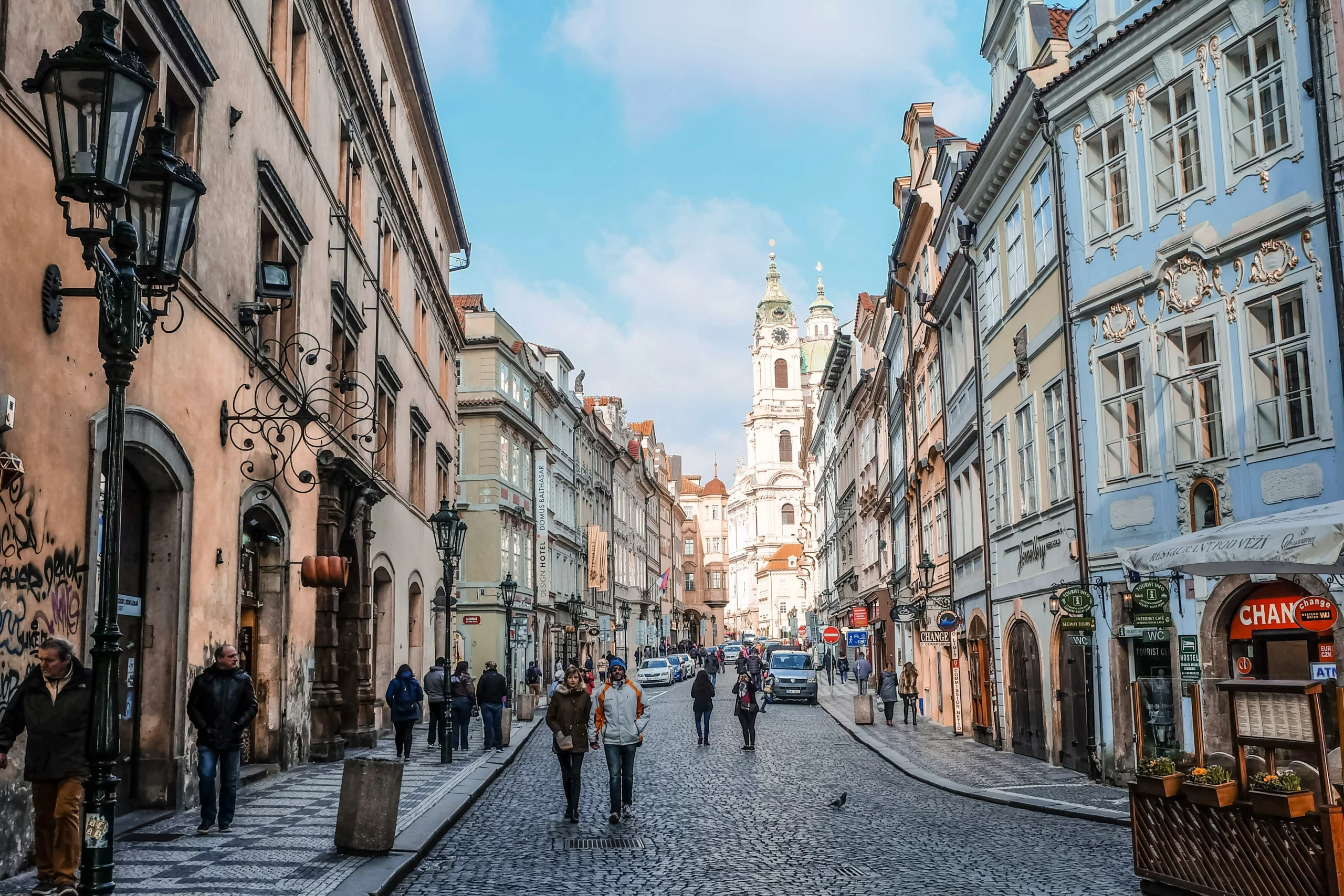
Town twinning - Village of Pyrenees in Spain

Town twinning in Europe: unlocking opportunities with AgoraEU


Since 1951, CEMR has championed town twinning as a driver of peace, democracy, and European identity. With the European Commission’s new AgoraEU programme proposed in the long-term budget, CEMR reflects on its legacy and introduces tools to further strengthen twinning, ensuring it continues to connect citizens across Europe.

Over seven decades later, town twinning remains one of Europe’s most powerful instruments for European integration and local governments diplomacy. In its long-term EU budget proposal presented last July, the European Commission (EC) included the AgoraEU programme, a promising opportunity to support and revitalise town twinning efforts. Yet, if twinning is to remain a vital bridge between Europe and its citizens, further steps must be taken to reinforce its role in today’s evolving political and social landscape.

Where does town twinning come from? Why does it still matter today? And how can the AgoraEU programme help strengthen its role in the Europe of today and tomorrow?

A legacy of connection and peace

In the mid-1990s, in cooperation with the EC, CEMR played a central role in coordinating the town twinning programme. Working closely with national associations of local and regional governments, CEMR promoted twinning, inspired thousands of initiatives and co-managed the “Star of Europe awards” with the EC to recognise outstanding partnerships. These efforts empowered thousands of small and medium-sized municipalities—particularly in rural and border regions—to build lasting bonds across borders, turning twinning into a grassroots driver of European integration. The 2002 Antwerp Congress further reinforced twinning as a vital tool for peace, democracy, and sustainable development.

A means to foster a shared European identity

Twinning has been evolving to better respond to the needs of cities, towns and municipalities facing multiple challenges in their territories. While cultural exchange and mutual understanding remain at its heart, today’s partnerships also address issues such as climate action, migration, social inclusion, digitalisation, and youth engagement. According to CEMR’s 2023 Twinning Report, municipalities of all sizes continue to value twinning highly, but smaller towns in particular face barriers in accessing funding and navigating sometimes complex EU procedures.

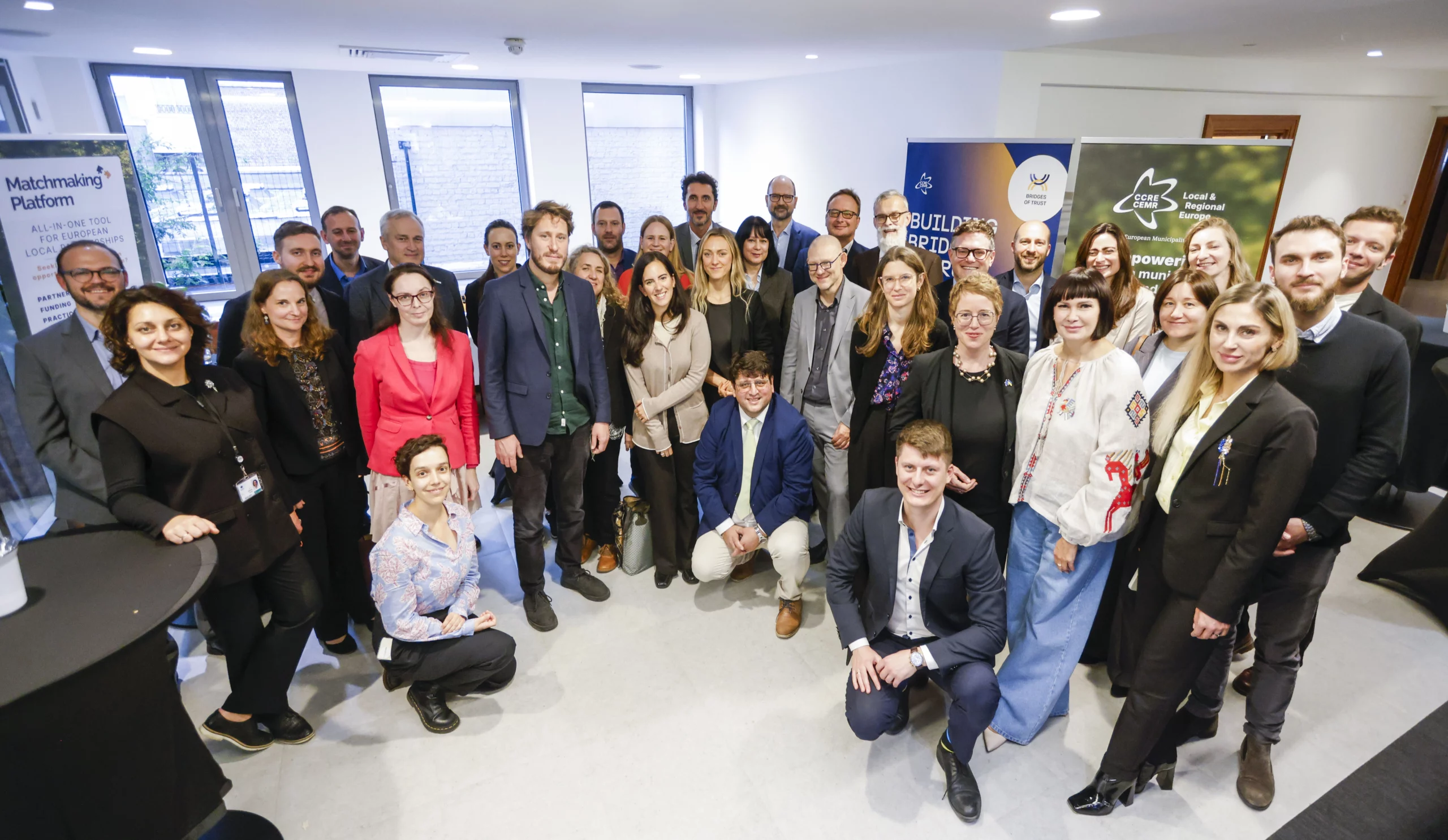
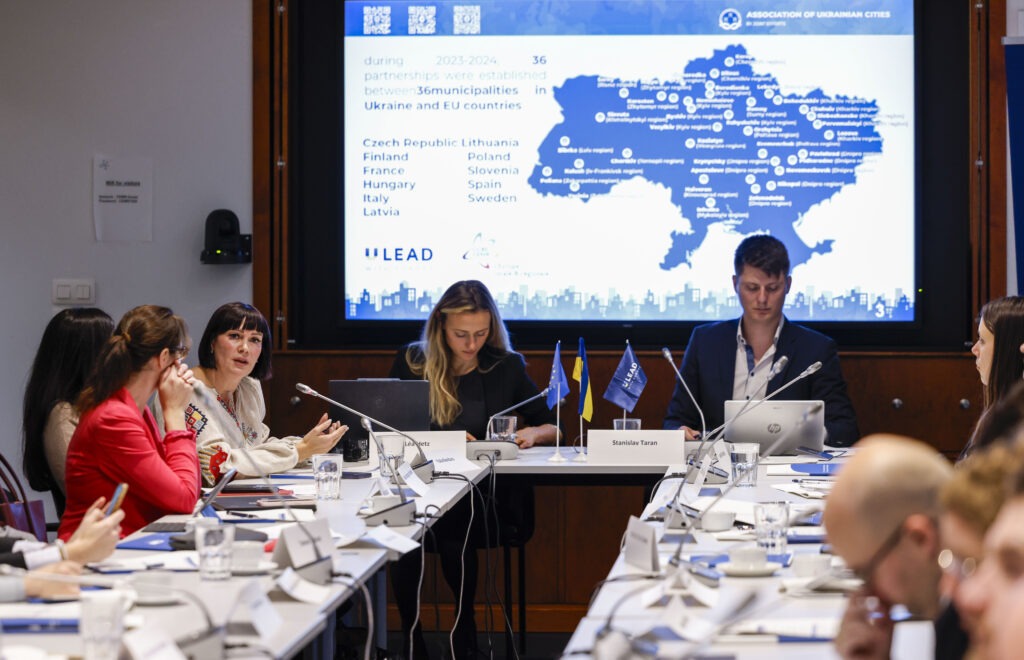
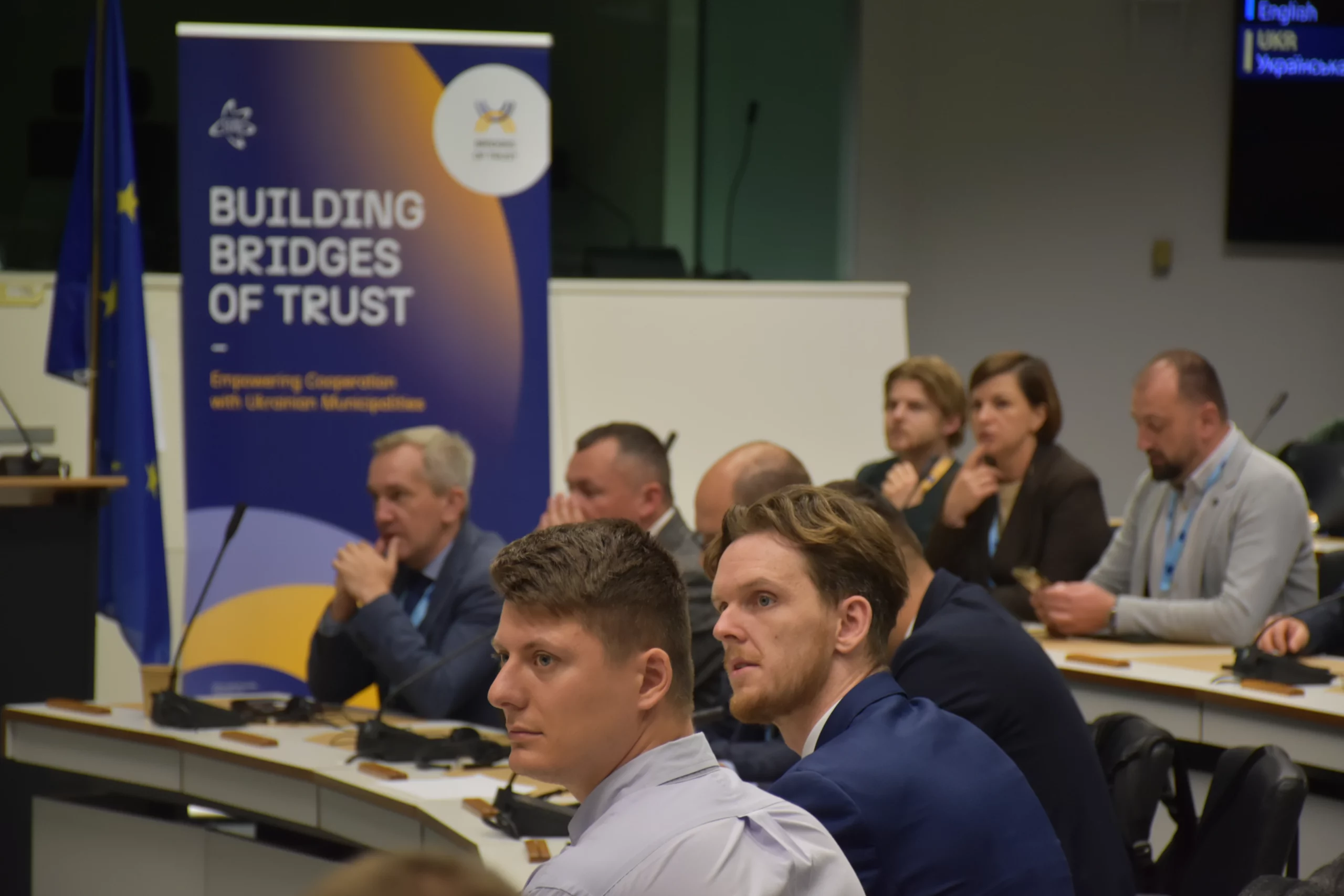
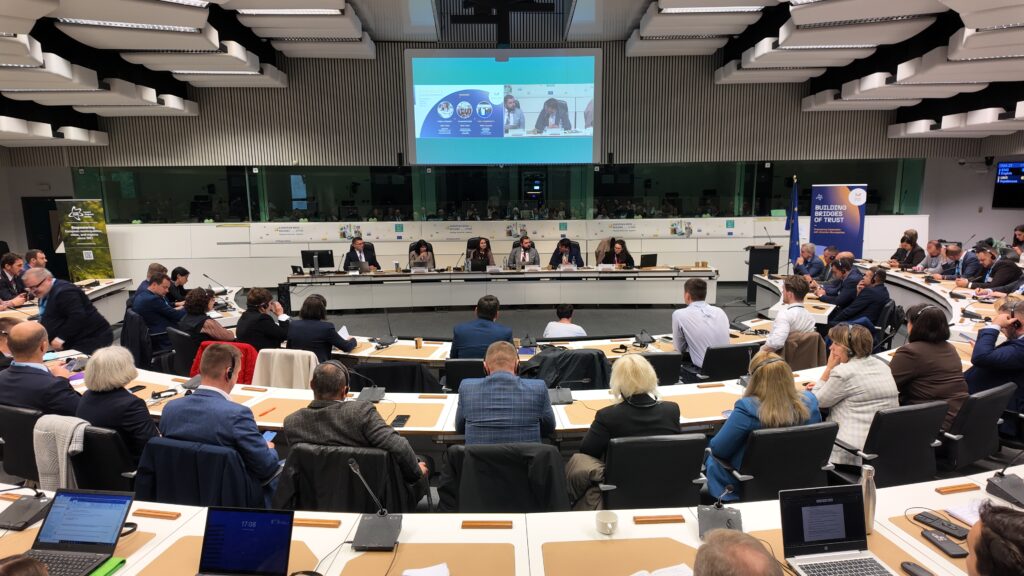
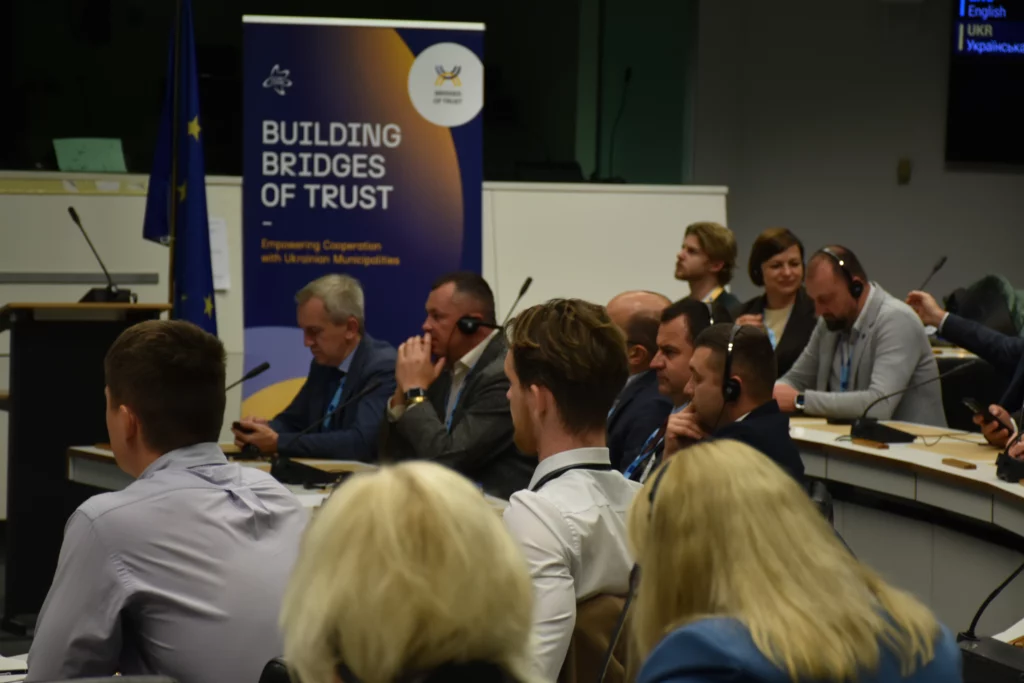
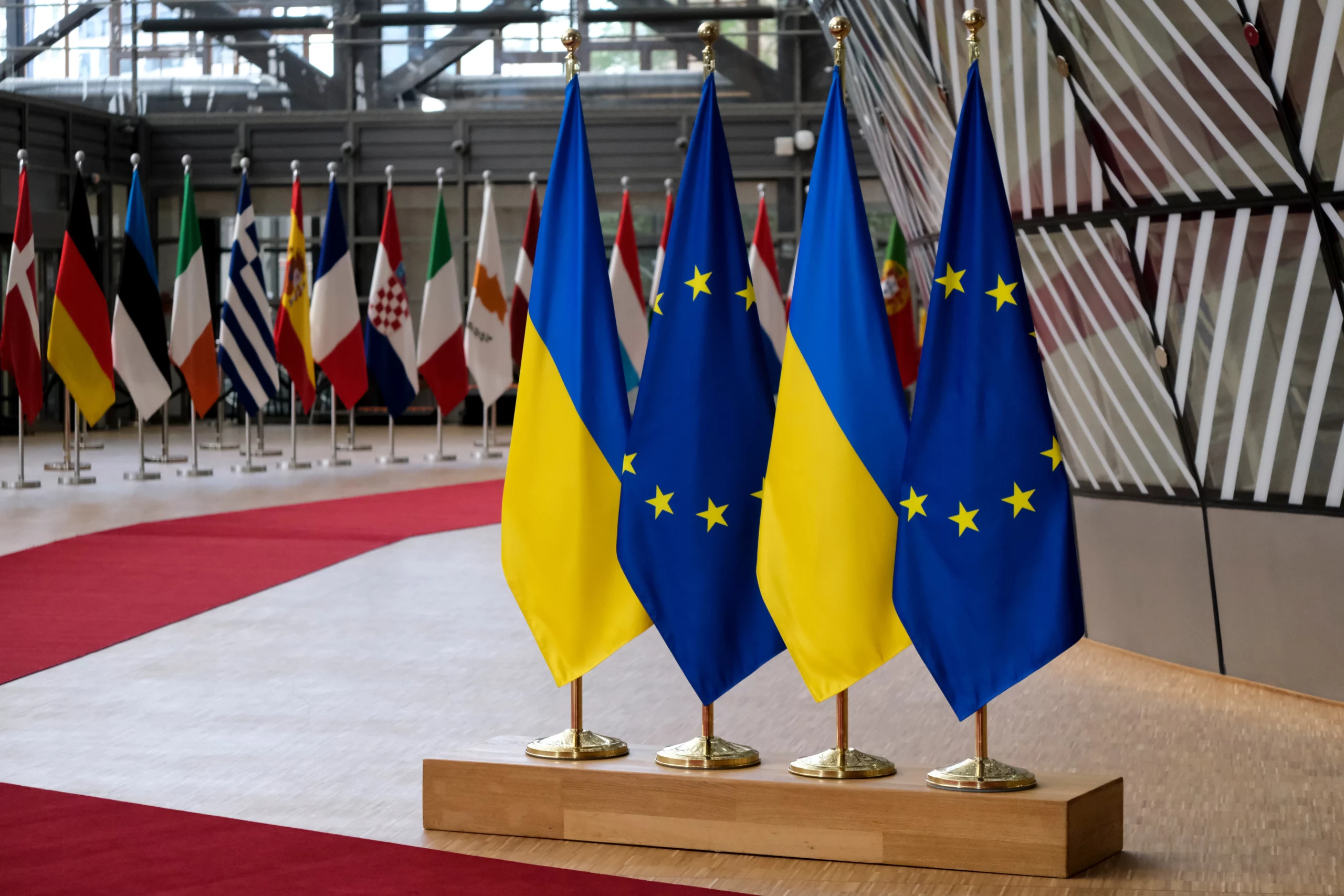
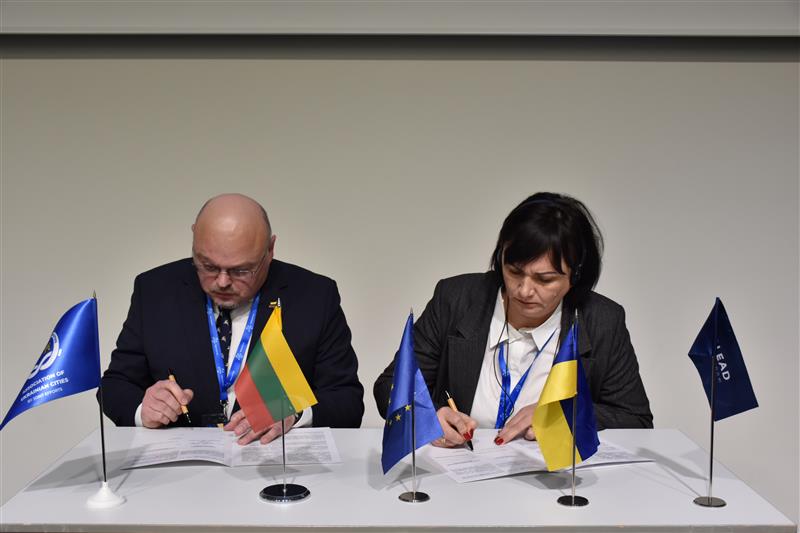
Pakruojis and Inhulka Municipalities signing Memorandum of Understanding during the Bridges of Trust Annual Gathering 2024  

Far from being outdated, twinning continues to play a vital role alongside other Europe’s mobility programmes, fostering connections that celebrate both cultural diversity and the continent’s shared heritage. For many citizens, especially teenagers, senior citizens, and residents of deprived or rural areas, town twinning remains one of the few ways to directly experience Europe. It offers a deep entry point into European construction and debates, helping to reduce the growing distance between citizens and the European Union (EU), while fostering a shared European identity and a spirit of living together.

The Matchmaking Platform: an innovative tool to tackle today’s challenges

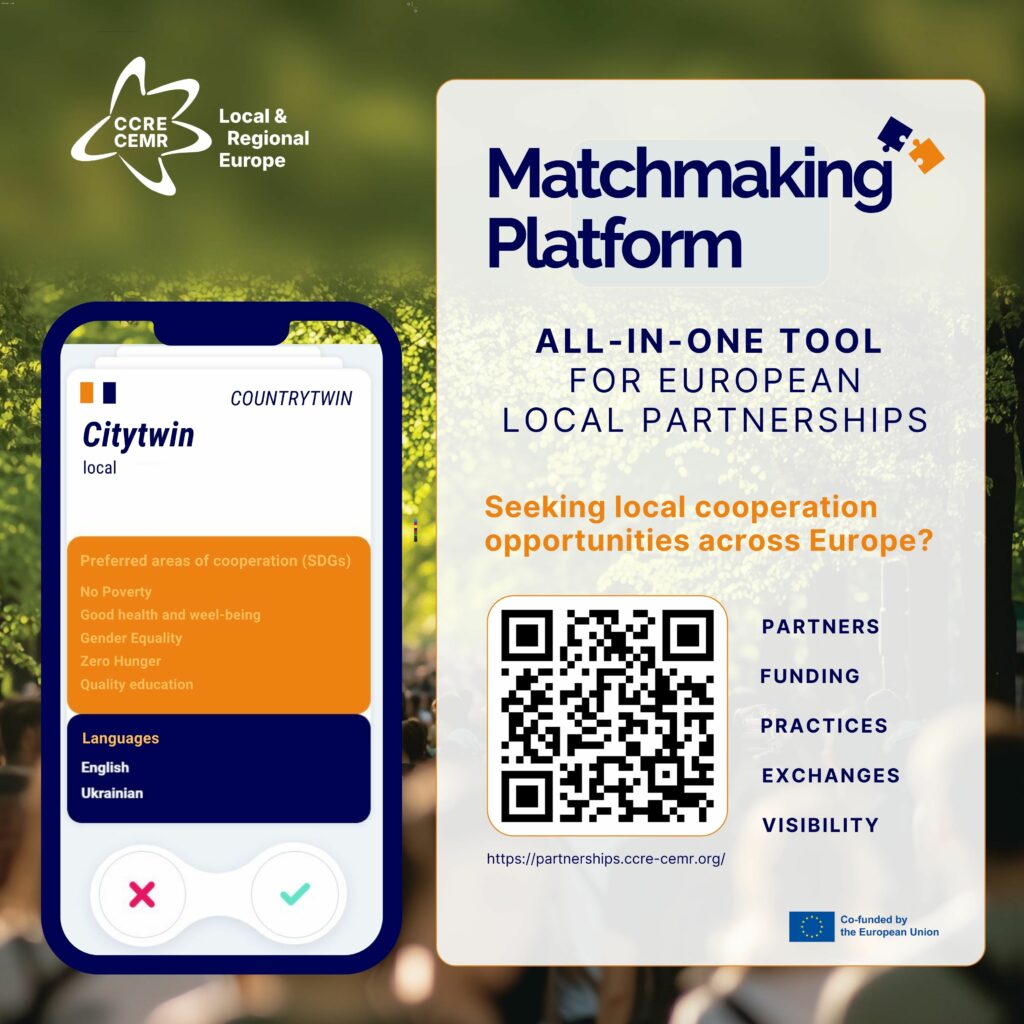
Many towns, cities, and regions face challenges in twinning, including finding suitable partners, limited opportunities for joint projects, difficulties accessing funding, and gaps in knowledge or capacity. Visibility and recognition of local initiatives can also be limited. To bridge these gaps, CEMR has launched a digital Matchmaking Platform, enabling subnational governments to:

  • Find peers and partners across Europe
  • Start joint projects with international visibility
  • Access funding and support opportunities more easily

This tool represents a modern continuation of CEMR’s long-standing role as a facilitator of exchange and cooperation between subnational governments in Europe and beyond.

A roadmap for 2028–2035

Looking ahead, CEMR calls for the revitalisation of twinning, especially for small and medium-sized municipalities by:

  • Simplifying access to EU twinning by cutting barriers and targeting support to underserved areas.
  • Strengthening national associations as local champions—reviving CEMR’s model of national correspondents to inspire and guide projects.
  • Creating a small-grants facility for new or renewed twinning between small towns, rural areas, and cross-border or enlargement partners.
  • Relaunching the “Star of Europe Awards” to celebrate excellence and raise the profile of high-impact twinning.
  •  Promoting twinning as a strategic tool to deliver EU priorities locally: democratic trust, youth participation, gender equality, climate, energy, and migrant inclusion.

AgoraEU: a timely opportunity

The European Commission’s €3.6 billion AgoraEU programme (2028–2034) shows a renewed commitment to citizen engagement. CEMR urges at least a doubling of EU support for town twinning and calls for simplified access to funding and streamlined administrative procedures, including application processes and reporting.

This support is urgently needed. Town twinning projects face growing financial pressures at the local level. Municipalities continue to invest heavily in keeping partnerships alive, yet many risk being unable to sustain them without stronger European backing. Twinning is not just a tradition, it is a living, evolving practice that connects citizens, strengthens democracy, and builds resilience across Europe.

The European Parliament and the Council will now examine the proposal. CEMR calls on both institutions to ensure that town twinning receives the recognition and resources it deserves, as one of the EU’s most effective tools to bring Europe closer to its citizens.

For more information, contact:
New project to boost social dialogue

Lab project launch - News 2025

CEMR has launched a new project to promote social dialogue in Eastern and Southeastern Europe


In April 2025, CEMR launched the LRG-SD Capacity Building Project (LAB project), a project funded by the European Commission and carried out in cooperation with EPSU, the European Public Service Workers Union.  

The aim of the project is to strengthen social dialogue in Eastern and Southeastern Europe, candidate countries, and Southern European islands by equipping local and regional social partners with the tools and knowledge to engage effectively at both the national and EU level. In line with this objective, CEMR has for many years been actively involved in social dialogue at the European level as part of its impact goal on labour, including the adoption of the European Multi-sectoral Guidelines to Prevent and Tackle Third-Party Violence and Harassment Related to Work (TPVH). 

The LAB project will run for a period of two years and will include the organisation of workshops and twinning activities targeting countries in the mentioned regions to address the underrepresentation and challenges to participation of local and regional government social partners. The capacity building activities will be based on a comprehensive analysis of social dialogue systems in the target countries to tailor effective tools to address specific needs. 

The first workshop will be held in Malta on the 13th and 14th of November 2025 and focus specifically on Southern European islands.  The workshop will aim to bring together social partners from Malta, Cyprus and Greece to share experiences, challenges, and best practices. It will serve as a platform for knowledge exchange and will help build a common understanding of the importance and benefits of robust social dialogue, inspiring and motivating CEMR and EPSU Member Associations to actively participate in this process. 

More information on the project can be found here. Additional information on the individual activities will be communicated directly to member organisations in the targeted countries.  

For more information, contact:

Local leaders bring their voice to the UN

HLPF 2025 - News

No SDGs without local action: European cities and regions step up at the United Nations (UN) HLPF 


From 14 to 23 July, the Council of European Municipalities and Regions (CEMR) and PLATFORMA took part in the 2025 UN High-Level Political Forum (HLPF) in New York, where more than 40 local and regional leaders from across Europe joined the global conversation on advancing the 2030 Agenda. Their mission: make the voice of local and regional governments (LRGs) heard at the heart of global decision-making. 

As part of the Global Taskforce of Local and Regional Governments led by UCLG, CEMR and PLATFORMA contributed to key HLPF sessions, brought fresh evidence from the field, and called for stronger partnerships to accelerate SDG implementation.  

This year’s Forum was also the first since the adoption of the 2024 Pact for the Future —a milestone that calls for more inclusive, effective multilateralism. “The Pact for the Future clearly calls for local and regional voices to be part of global decision-making” said Fabrizio Rossi, Secretary General of CEMR. “That’s why our presence in New York this year was more relevant than ever—we’re here to make sure those voices are heard”. 

Bringing local realities to the global stage: launching the European territories SDG report 

At this year’s HLPF, CEMR and PLATFORMA officially launched their latest flagship study European Territories Localise the SDGs: Getting Local SDG Actions onto the Fast Track. Based on a survey conducted with UCLG and contributions from 31 national associations, the report highlights how local and regional governments across Europe are advancing the 2030 Agenda—often with limited means, but high ambition. 

With over 150 concrete examples collected, the study provides a detailed snapshot of how local SDG action is evolving in real time. It looks at policy priorities, bottlenecks, and the extent to which national governments involve municipalities and regions in their Voluntary National Reviews (VNRs). Special focus was placed on the five SDGs under review this year—SDG 3 (health), SDG 5 (gender equality), SDG 8 (decent work), SDG 14 (life below water), and SDG 17 (partnerships). 

The report is part of an ongoing effort by CEMR and PLATFORMA to track progress, share innovations, and ensure local voices shape global decisions. Since 2016, these annual studies have become a key contribution to the HLPF process, reinforcing the call for stronger multilevel governance in sustainable development. 

Local voices in National Reviews: making VNRs truly inclusive 

This year, six countries with active CEMR members—Malta, Finland, Germany, Czech Republic, Bulgaria, and Israel—presented their Voluntary National Reviews (VNRs). CEMR and PLATFORMA were present not only as observers, but as co-creators of the process. 

Their messages were clear: national governments must engage LRGs from the start—not just during reporting phases. “The example of Finland proves that good cooperation between local and national governments deliver results for citizens. And CEMR and PLATFORMA are very useful partners when it comes to bring these results at the global stage said Eveliina Kiema-Majanen from Kuntalitto (Finland). Their interventions underscored that successful national strategies depend on strong, empowered local actors.  

CEMR and PLATFORMA members took the floor at all key events for local and regional governments during the Forum. These included the High-Impact Initiative on SDG Localization by the Local2030 Coalition, the launch of the Global Taskforce’s 9th report, the 8th Local and Regional Governments Forum, and the official UN session “Transformation from the ground up: Acting at local level”. They also joined the second annual meeting of the “Partnership Platform on Localizing the SDGs,” reinforcing the call for systemic change through multilevel governance and stronger local action. 

“Local leaders are best placed to deliver on the SDGs—because we are closest to people’s lives and everyday needs”, said Clifford Galea, member of CEMR-PLATFORMA Young Elected Officials Committee, President of the Tramuntana Region and High Commissioner of Malta to Namibia. 

Bettina Bunk, from the City of Stuttgart, underlined the power of collaboration beyond borders: “International cooperation between local governments and the exchange of best practices is key to advancing the 2030 Agenda”. 

Their messages sent a clear signal: meaningful, institutionalised involvement of local governments is not optional—it is essential for delivering on global goals. 

A seat at the table: meeting with the EU Delegation on the future of EU funding 

On the sidelines of the HLPF, CEMR and PLATFORMA hosted a high-level breakfast meeting with the EU Delegation to the United Nations—just days after the European Commission unveiled its proposal for the post-2027 Multiannual Financial Framework (MFF). With over 45 participants, the exchange focused on how the next EU budget can better reflect local and regional priorities in the delivery of the SDGs. 

CEMR Secretary General Fabrizio Rossi made a clear call: “The next EU budget must reflect the needs and contributions of local and regional governments in delivering the SDGs. From climate neutrality to youth employment, any fair transition starts locally. We need robust, accessible funding and stronger partnerships to deliver on the SDGs”. 

The meeting also served as a platform to discuss the risk of re-centralisation in EU governance. CEMR and PLATFORMA welcomed the EU Ambassador’s Renaud Savignat invitation to deepen collaboration with local government networks ahead of the EU’s next SDG implementation assessment. The message was clear: no sustainable future without strong local roots. 

At the heart of the forum: localising the SDGs one goal at a time  

While much of the week focused on advocacy, knowledge-sharing, and political dialogue, CEMR and PLATFORMA also used their platform to showcase concrete results from European cities and regions: 

SDG 3 – Health and well-being 
From digital elderly care in North Macedonia to “caring neighbourhoods” in Belgium, local initiatives are closing health gaps—despite growing inequalities between urban and rural areas. Greater investment and localised strategies are urgently needed. 

SDG 8 – Decent work and economic growth 
Municipalities are leading in youth employment, digital skills, and local job creation. But tight budgets and evolving labour markets demand new tools. Initiatives like the EU’s Union of Skills offer a path forward. 

SDG 5 – Gender equality 
Achieving gender equality requires action where inequality is most visible: locally. From safe public spaces to inclusive service delivery, local authorities are transforming values into policy. 

European Partnership Hub launch

Ukraine Recovery Conference - News 2025

CEMR launched the European Partnership Hub to strengthen inter-municipal cooperation between Ukraine and the EU


At the Ukraine Recovery Conference (URC) in Rome 2025, and in the context of the Coalition for Sustainable Municipalities, CEMR Secretary General Fabrizio Rossi announced the launch of the European Partnership Hub – a practical response to the Berlin Call to Action and a next step in connecting Ukrainian and European municipalities. 

This Hub will serve as the operational secretariat of the Bridges of Trust (BoT) Community — a pan-European network that brings together local and regional governments and key stakeholders to strengthen inter-municipal cooperation between Ukraine and the EU, promote decentralisation, build local resilience, and support Ukraine’s path towards EU integration.

This announcement marks a new milestone following last year’s launch of the Matchmaking Platform — an innovative tool that connects Ukrainian cities with other municipalities across Europe to support cooperation and unlock targeted funding.

Connecting, consolidating, and coordinating to maximise efforts

We know that partnerships don’t work on their own, they need coordination, shared purpose, and long-term support”, reminded CEMR Secretary GeneralFabrizio Rossi to ministers, mayors and partners who attended the Ukraine Recovery Conference in Rome.

Objectives of the European Partnership Hub:
Expand and connect: link local and regional governments through the Matchmaking Platform and other digital tools, while activating sectoral networks and national associations.
Build capacity: provide tailored services to support partnerships through targeted funding, joint projects, project guidance, and mentoring, addressing Ukraine’s recovery needs.
Boost synergies: ensure coordinated support among actors, programmes and existing initiatives, and maximising collective impact.

With the Hub and the Matchmaking Platform, every city or region can find the right partner, develop joint projects, access funding, join a vibrant network and actively contribute to Ukraine’s sustainable recovery and European future.

The European Partnership Hub is possible thanks to the support of the European Union and its member states Germany, with the leadership of the Federal Ministry for Economic Cooperation and Development, Denmark, France, Poland and Slovenia through U-LEAD with Europe and other supporters on European level as Alliance of Cities and Regions for the Reconstruction of Ukraine and many CEMR national association.

CEMR and SGI Europe meet Commissioner Raffaele Fitto

On the margins of the conference, CEMR Secretary General Fabrizio Rossi, together with SGI Europe, met with European Commission Vice-President and Commissioner for Cohesion and Reforms, Raffaele Fitto. The meeting was an opportunity to reaffirm the strong support of both organisations for a Cohesion Policy that continues to deliver on its Treaty-based mission: reducing regional disparities and supporting Europe’s most disadvantaged areas.

CEMR and SGI Europe acknowledged the importance of adapting the EU budget to current challenges while underlining that the future of Cohesion Policy must remain anchored in solidarity, flexibility, accessibility, and effectiveness. As the EU enters a new institutional cycle, both organisations reiterated that reform must reinforce—not replace—the core mission of Cohesion Policy.

For more information, contact:

Local voices at the UN for sustainable development

PLATFORMA - banner 2

Local and regional leaders at the United Nations: getting local SDG actions onto the fast track


More than 30 local and regional European leaders are heading to New York to advocate for their vital role in achieving the Sustainable Development Goals (SDGs) at the High-Level Political Forum on Sustainable Development (HLPF). Among them is Clifford Galea Vella Maslennikov, President of the Tramuntana Region (Malta) and a member of the CEMR-PLATFORMA Young Elected Officials Committee. He also signs the foreword of this year’s study on SDG localisation.

Galea Vella Maslennikov sends a strong and hopeful message:

“I firmly believe that localising the SDGs through inclusive processes that engage all levels of government, and all sectors of society […] is in fact the key to building a more inclusive, just, and sustainable future for all.”

This year’s report includes contributions from 31 associations of local and regional governments and puts forward nine key recommendations to the United Nations, the European Union, and EU Member States.

Local governments in dialogue with Member States

In recent years, the United Nations has increasingly acknowledged the essential role of local action in advancing global sustainability, including through various HLPF initiatives. However, the degree of involvement of local and regional governments – and their associations – in national SDG reporting processes still varies significantly from one country to another.

This year, Malta is one of 37 countries presenting a Voluntary National Review (VNR) at the HLPF. Three other countries with membership within CEMR – BulgariaFinland, and Germany – will also present their VNRs. Our latest study provides insights into how these four nations have involved local authorities in shaping their national SDG reports.

It also gives details about the progress made in achieving the five SDGs under review this year: SDG 3 (Good health and well-being), SDG 5 (Gender equality), SDG 8 (Decent work and economic growth), SDG 14 (Life below water), and DSG 17 (Partnerships for the Goals).  

Over 30 local and regional leaders representing Europe

Next week, PLATFORMA and CEMR, in collaboration with the Global Task Force of Local and Regional Governments (GTF), will represent European cities and regions at the HLPF, under the auspices of the UN.

Their participation aims to fast-track the localisation of the SDGs and ensure that local voices are not only heard, but also acted upon.

Here are some of the events they will attend:

  • 15 July, Local and Regional Governments’ Networking Hub, with the launch of the GTF Annual Report “Towards the Localization of the SDGs”, by the GTF and UCLG
  • 16 July, 8th Local and Regional Governments Forum on the 2030 Agenda, by UCLG, GTF, UN-DESA, the Executive Office of the UN Secretary-General, UN Habitat, UNDP, Local2030
  • 17 July, EU delegation – local leaders breakfast meeting, by CEMR and PLATFORMA
  • 17 July, HLPF Official Session on Localisation: “Transformation from the ground up: Acting at local level”, by UN
  • 18 July, VNR Lab on Local and Regional Governments engagement in VNR/VLR processes, by UN-DESA, UN-Habitat, and UCLG

For more information, contact:

Debate at the UN on localising SDGs

Localising SDGs - News 2025

Local and regional leaders at the HLPF: Getting local Sustainable Development Goals (SDGs) actions onto the fast track


More than 30 local and regional leaders are heading to New York to advocate for their vital role in achieving the Sustainable Development Goals (SDGs) at the High-Level Political Forum on Sustainable Development (HLPF). Among them is Clifford Galea Vella Maslennikov, President of the Tramuntana Region (Malta) and a member of the CEMR-PLATFORMA Young Elected Officials Committee. He also signs the foreword of this year’s study on SDG localisation.

Galea Vella Maslennikov sends a strong and hopeful message:

“I firmly believe that localising the SDGs through inclusive processes that engage all levels of government, and all sectors of society […] is in fact the key to building a more inclusive, just, and sustainable future for all.”

This year’s report includes contributions from 31 associations of local and regional governments and puts forward nine key recommendations to the United Nations, the European Union, and EU Member States.

Local governments in dialogue with Member States

In recent years, the United Nations has increasingly acknowledged the essential role of local action in advancing global sustainability, including through various HLPF initiatives. However, the degree of involvement of local and regional governments – and their associations – in national SDG reporting processes still varies significantly from one country to another.

This year, Malta is one of 37 countries presenting a Voluntary National Review (VNR) at the HLPF. Three other countries with membership within CEMR – Bulgaria, Finland, and Germany – will also present their VNRs. Our latest study provides insights into how these four nations have involved local authorities in shaping their national SDG reports.

It also gives details about the progress made in achieving the five SDGs under review this year: SDG 3 (Good health and well-being), SDG 5 (Gender equality), SDG 8 (Decent work and economic growth), SDG 14 (Life below water), and DSG 17 (Partnerships for the Goals).  

Over 30 local and regional leaders representing Europe

Next week, PLATFORMA and CEMR, in collaboration with the Global Task Force of Local and Regional Governments (GTF), will represent European cities and regions at the HLPF, under the auspices of the UN.

Their participation aims to fast-track the localisation of the SDGs and ensure that local voices are not only heard, but also acted upon.

Here are some of the events they will attend:

  • 15 July, Local and Regional Governments’ Networking Hub, with the launch of the GTF Annual Report “Towards the Localization of the SDGs”, by the GTF and UCLG
  • 16 July, 8th Local and Regional Governments Forum on the 2030 Agenda, by UCLG, GTF, UN-DESA, the Executive Office of the UN Secretary-General, UN Habitat, UNDP, Local2030
  • 17 July, EU delegation – local leaders breakfast meeting, by CEMR and PLATFORMA
  • 17 July, HLPF Official Session on Localisation: “Transformation from the ground up: Acting at local level”, by UN
  • 18 July, VNR Lab on Local and Regional Governments engagement in VNR/VLR processes, by UN-DESA, UN-Habitat, and UCLG

Contact for more information:

EU enlargement from a local perspective

European Union - EU Enlargement News

EU enlargement is not sustainable without local ownership: 8 takeaways from CEMR webinar 


Empowering local and regional governments will ensure that EU integration is felt, understood, and embraced by citizens, making enlargement not only a policy success but a democratic one. This is the main lesson learned from the CEMR webinar on Empowering Local Governments on the Road to EU Enlargement, organised in collaboration with PLATFORMA on 1st July. 

Local leaders, EU officials, and representatives from candidate and EU member countries reaffirmed the essential role of local and regional governments in the EU enlargement process. They also discussed the capacity needs involved in this journey. 

Here are the 8 key findings based on the webinar discussions, which witnessed that enlargement is not sustainable without local ownership.

1. Set local and regional governments as strategic actors in the EU accession process 

  • Involve local governments early and systematically in national accession plans, screenings, and cluster evaluations. 
  • Ensure local leaders are recognised not just as implementers, but as policy co-creators, especially in areas aligned with the EU acquis. 

2. Strengthen multilevel governance structural dialogue 

  • Establish permanent coordination mechanisms between LRGs, national governments, and EU institutions. 
  • Move from consultation to co-creation platforms—especially during roadmap design, monitoring, and policy review phases. 

3. Guarantee local access to EU funding mechanisms 

  • Ensure that a minimum percentage of EU financial assistance is directly allocated to local governments (e.g., in Ukraine, it is already 20%) 
  • Simplify procedures for municipalities to access EU funds and develop capacity-building programs to support their management. 

4. Invest in capacity building and institutional continuity 

  • Develop sustained training for local officials, including in public procurement, project management and all locally implementing EU standards.  
  • Address gaps in institutional memory due to political turnover by investing in civil service professionalisation and knowledge transfer. 

5. Support peer-to-peer learning and twinning initiatives 

  • Promote city-to-city cooperation between EU member states and candidate countries (decentralised cooperation) 
  • Expand twinning programs across thematic areas such as education, green transition, disaster resilience, and digital governance (if you need tools to find partners, use existing ones such as the CEMR Matchmaking Platform). 

6. Promote inclusive participation and gender equity 

  • Encourage the participation of women leaders and marginalised communities in enlargement dialogues. 
  • Ensure that decentralisation and integration efforts incorporate diverse perspectives and address local inequalities.

7. Strengthen civic trust and communication

  • Support local and regional governments in leading public communication campaigns that explain EU values and the benefits of enlargement. 
  • Equip municipalities to become trusted messengers of the EU to citizens, countering misinformation and building democratic resilience. 

8. Leverage local and regional governments for reconstruction and sustainability goals 

  • In countries affected by war (e.g., Ukraine), prioritise local-led reconstruction and sustainable recovery as a path to integration. 
  • Align local development strategies with the Green Deal, digital transition, and social cohesion policies. 

Context: 

Nine countries are officially on a path to join the European Union in the coming years: five in the Western Balkans (Albania, Bosnia and Herzegovina, Montenegro, North Macedonia and Serbia), three in the Eastern neighbourhood (Georgia, Moldova and Ukraine), and Turkey. 

For more information, contact:

Country profile #1 – Poland

Poland services - News 2022

Country Profile on decentralised development cooperation: the case of Poland 


The country profiles offer a short overview of national models of (decentralised) development cooperation frameworks in selected EU Member States. The aim is to provide insights into specific mechanisms and modalities of analysed national frameworks and identify enabling factors as well as challenges related to practical implementation, focusing on the role and opportunities for local and regional governments and their associations.  
 
Based on the study, Poland’s approach to DDC is characterised by: 
 
 1. Focusing on cooperation with Eastern European countries – with Ukraine, Georgia, and Moldova. Polish local governments actively support partners through strategy development, peer learning, and implementation support. 
 
2. Highlighting the vital role of direct local-level partnerships in times of crisis, including twinning and hands-on collaboration despite the ongoing war. 
 
3. Polish municipalities have developed strong expertise in accessing EU funds and designing effective local strategies, which they can use in their partnerships. 
 
This article is part of a series of 7 Country Profiles examining decentralised development cooperation frameworks across Europe. The second edition, focusing on Germany, will be published in September. Stay tuned! 
 
Read the Country Profile, available in four languages:

CEMR encourages Polish authorities to strengthen the role of LRGs in development policy, not only as implementers, but also as strategic partners helping shape a more resilient, inclusive and effective development agenda. 

This publication is produced within the Bridging and Mapping Knowledge Gaps in Decentralised Cooperation (Mindcraft), funded by the German Federal Ministry for Economic Cooperation and Development (BMZ) and supported by the Deutsche Gesellschaft für Internationale Zusammenarbeit (GIZ).

* The content of this publication is the responsibility of its author(s) and does not reflect the views of the German Federal Ministry for Economic Cooperation and Development (BMZ).

For more information, contact: 

Results of SPICE Twinning Programme

Twinning - News

CEMR announces grant recipients for SPICE 2025 Twinning Programme 


Twinning plays a vital role in connecting municipalities and regions, encouraging them to tackle shared challenges — from climate action and digital transition to social cohesion and public service innovation. Beyond these policy priorities, Twinning also nurtures mutual understanding and a sense of European belonging among citizens and communities.  

Since 1951, CEMR has championed Twinning as a powerful tool for peacebuilding, dialogue, and long-term collaboration. Today, these partnerships go beyond symbolic exchanges to become strategic platforms for co-creating solutions to the pressing challenges facing Europe’s towns and regions.  

The Council of European Municipalities and Regions (CEMR) is pleased to unveil the selected recipients of the SPICE 2025 sub-granting scheme, part of the broader project “SPICE – Empowering Local and Regional Governments for Sustainable Policy Implementation and Civic Engagement in Europe”. 

Funded by the European Commission under the Citizens, Equality, Rights and Values (CERV) programme, this grant scheme builds on the success of the 2024 pilot phase. It aims to support national associations of local and regional governments in strengthening Twinning initiatives and related activities across Europe. 

The selected proposals reflect a strong commitment to EU values, civic participation, gender equality, social inclusion, and democratic governance. Each winning association will receive a sub-grant of up to € 30 000 to implement projects that bring together municipalities across borders in shared learning and joint action.  

CEMR is proud to support the following local and regional government associations as recipients of the SPICE 2025 grant programme: 

  1. TÖOSZ – Települesi Önkormanyzatok Orszagos Szövetsege (Hungarian National Association of Local Authorities) 
  1. KEDE – Κεντρική Ένωση Δήμων Ελλάδας (ΚΕΔΕ) (Central Union of Municipalities of Greece) 
  1. LALRGA – Latvijas Pašvaldíbu Savieníba (Latvian Association of Local and Regional Governments) 
  1. AFCCRE – Association Française du CCRE (French Association of CEMR) 
     

CEMR warmly thanks all member associations who submitted proposals under the 2025 call and contributed to its success. Stay tuned as we share updates on these promising initiatives and their impact across Europe. 

For more information, contact

UCLG meeting with EU Commissioner Síkela

“Local governments must be at the heart of the EU’s international partnerships”


UCLG President, Jan van Zanen, met with EU Commissioner Jozef Síkela: “Local governments must be at the heart of the EU’s international partnerships”

In a bilateral meeting on 10 June UCLG President and Mayor of The Hague Jan van Zanen met with the European Commissioner for International Partnerships Jozef Síkela at the occasion of 10 years of strategic partnership agreements between key associations of local and regional governments with DG INTPA (2015–2025), to advocate for a stronger role of local and regional governments (LRGs) in EU development cooperation – and to secure long-term support for decentralised cooperation in the next EU budget.

The delegation of CEMR and PLATFORMA, led by Mayor van Zanen, and including CEMR Secretary General Fabrizio Rossi, found promising common ground with the Commissioner. Both sides agreed that the goals of the Global Gateway strategy and the objectives of the EU international action – from sustainable development to infrastructure investment – can only be met by empowering the actors who are closest to the people: local governments.

Mayors and local leaders are not just implementers. They are political actors, democratically elected and accountable to their communities“, Mayor Jan van Zanen said. “They have a unique role to play in achieving the EU’s goals – but they need the means and the recognition to do so“.

Commissioner Síkela acknowledged the critical contribution of cities and regions to the EU’s Global Gateway strategy and international partnerships. As a former Czech Minister of Industry and Trade and a representative of the liberal “Mayors and Independents” party, Síkela expressed strong political sensitivity to the added value of local and regional leadership in global cooperation.

The meeting was part of a coordinated advocacy effort based on the PLATFORMA Political Declaration on the Role of Local and Regional Governments in the next Multiannual Financial Framework and EU External Action, adopted by local leaders in April 2025. CEMR and PLATFORMA underlined the need for a dedicated financial mechanism in the next Multiannual Financial Framework (MFF 2028–2034) that would allow LRGs and their associations to scale up their international cooperation and support peer-to-peer partnerships with their counterparts in partner countries.

They also called for improved dialogue with EU Delegations on the ground, clearer distinction between LRGs and civil society organisations in EU instruments, and tailored, realistic and impactful calls for proposals.

Beyond financial tools, CEMR and PLATFORMA emphasised the importance of political recognition of the role of local and regional governments and their associations and networks in the implementation and governance of the Global Gateway strategy. As Europe’s largest network of municipalities and regions, CEMR highlighted the importance of structured policy dialogue and inclusive governance – especially in fragile contexts where local actors are often the last line of defence of democratic values, and provision of basic public services to the local populations.

The exchange with Commissioner Síkela comes ahead of the “2025 Cities and Regions for International Partnerships” conference, scheduled for December, where the Commissioner is invited to continue the dialogue with the presidents of five key associations, signatories of a strategic partnership agreement with DG INTPA.

As the EU begins to shape its upcoming budget cycle, the message from Europe’s mayors and local leaders is clear: for EU development cooperation to succeed, and for the Global Gateway strategy to deliver on its ambition as a value-based offer to partner countries, the local level must be included.

For more information, contact: