Reflecting on what local governance means in the face of current challenges
354 words
1–2 minutes
Local and regional governments across Europe are under growing pressure. Tight budgets, staff shortages, rising social care needs, climate challenges, and digital transformation are pushing governments to rethink how they deliver services and allocate resources to meet increasingly diverse local needs. At the same time, citizens expect more services that are responsive, accessible, and rooted in local realities.
These issues were the subject of a recent meeting of CEMR’s Governance and Local Democracy Expert Group, where one key takeaway stood out: governance is no longer just about deciding who is responsible for what. It is more often about how different levels of government work together and their ability to do so well.
Adapting governance to new realities
Governments across Europe are pursuing all kinds of reforms — decentralisation, territorial restructuring, inter-municipal cooperation and administrative consolidation. The approaches vary, but the goal is often the same: making sure public institutions can keep up with a changing world.
But reform is not just about reshuffling structures. It raises fundamental questions: How clearly are responsibilities divided? How can governments build capacity while staying accountable? And how can reforms improve services without undermining democratic legitimacy? Ultimately, those delivering services on the ground need a real say in shaping reforms, otherwise they risk becoming exercises in administrative tinkering rather than genuine improvements.
Monitoring change
This is part of why CEMR tracks governance developments through its Territorial Governance, Structures and Reforms (TERRI) report. The previous edition, produced during COVID-19, captured how governance arrangements affected crisis response. The next edition, due this autumn, will focus on housing policy, examining how responsibilities are shared across national, regional, and local levels to meet growing demand under tight resource constraints.
The report will not have all the answers, but it will capture a moment in time. Across very different systems, one lesson holds: reform is not an end in itself. The real test is whether it makes public action more effective and more legitimate — and that is what CEMR will keep monitoring.
Committee of the Regions adopts AgoraEU opinion with CEMR’s key policy recommendations at its core
742 words
3–5 minutes
The European Committee of the Regions (CoR) adopted its opinion on the proposed AgoraEU programme at its 171st plenary session. Drafted by rapporteur Csaba Borboly (RO/EPP), Vice-President of Harghita (Romania) County Council, the opinion sends a clear message to EU institutions: local and regional governments are essential implementing partners in Europe’s cultural, media and democratic future.
AgoraEU is the Commission’s proposal to merge Creative Europe and the Citizens, Equality, Rights and Values (CERV) programme into a single framework for the EU budget 2028–2034, covering three strands: culture, media, and democracy. While the ambition to create coherence is welcome, CEMR and the CoR have both underlined that this merger must not dilute the specific objectives and funding of each stream.
Ahead of the CoR’s deliberations, CEMR submitted several policy recommendations to the European Committee of the Regions, which have been reflected across four critical areas.
Town twinning: from omission to recognition
The most important alignment concerns town twinning and networks of towns. CEMR called for twinning to be recognised as a strategic democratic instrument with a clearly earmarked budget line — a cost-effective vehicle for civic participation, intercultural dialogue and European identity-building, especially in the context of geopolitical instability and enlargement process.
The CoR echoes this directly, calling for twinning networks and cross-border municipal partnerships with dedicated multi-annual funding. It also formally regrets that the Commission’s proposal dropped the twinning actions provided for under CERV and calls for their reinstatement. Town twinning reaches hundreds of thousands of citizens each year, including in small towns and rural areas rarely served by complex EU funding instruments. A CEMR Analysis of Twinning in Europe in 2023 showed that local and regional government associations (LRGAs) play an important role in twinning. More than 80% of respondents stated that they have been active in this field in the last two years and 75% declared interest to continue and to develop activities even further including cultural exchange, peer learning and joint project implementation.
National Contact Points and simplified access
National local and regional government associations and city networks have a proven track record in channelling EU funding to grassroots actors. CEMR argued that well-resourced National Contact Points, hosted by national associations of local and regional governments, are essential to reach smaller municipalities, rural areas and first-time applicants, and that national associations and municipal networks should be formally recognised as strategic bridge actors empowered to manage Financial Support to Third Parties (FSTP) mechanisms.
The CoR moves in the same direction, though with its own framing. It stresses that proportionality must be assessed not only in policy scope but in accessibility and inclusivity, and endorses simplified grant formats, capacity-building support and two-step application and cascade grant processes that have proven their value in previous programmes. It also calls for AgoraEU contact points to be established at least at national level, and where appropriate at regional level. Critically, it proposes that own contribution requirements for small-scale and grassroots initiatives be capped at 10% of total eligible costs, coverable through national, regional or local co-financing — a practical measure that directly addresses one of the most persistent barriers to bottom-up participation.
Embedding local governments within the programme’s governance framework
The CoR holds that AgoraEU must fully align with active subsidiarity and multilevel governance, calling for the role of LRAs to be formally recognised in the regulation, for territorial participation indicators to be introduced, and for evaluation criteria to be explicitly linked to territorial cohesion and citizen engagement.
What comes next
The CoR opinion is a strong institutional signal. The challenge now is to carry this territorial voice into the EU budget negotiations between the European Parliament and the Council.
CEMR will continue to advocate for the four pillars essential to making AgoraEU work for local and regional governments: a protected budget line for twinning actions; well-resourced National Contact Points with a genuine territorial mandate; formal recognition of intermediary organisations to facilitate the access to small subgrants; and meaningful participation of LRGs representatives in programme governance from the outset.
Culture, media and democracy are lived every day in town squares, local theatres and municipal councils across Europe. AgoraEU has the potential to reinforce that. The CoR has made clear what it takes — now it is up to the European Parliament and the Council to move towards this direction.
Read the Committee of the Regions’ adopted opinion [here]
CEMR warns EU Parliament’s move risks weakening the Polluter Pays Principle and undermining investments by local and regional governments and wastewater operators
Following today‘s European Parliament vote on a motion for resolution calling for a “stop the clock” on the implementation of the revised Urban Wastewater Treatment Directive (UWWTD), the Council of European Municipalities and Regions (CEMR) regrets the adoption of amendments calling on the European Commission to consider suspending the implementation of the Extended Producer Responsibility (EPR) and quaternary treatment obligations*. CEMR finds the resolution to be contradictory to all the efforts that are currently being undertaken by local and regional governments, and wastewater operators, which include optimising the machinery to meet the requirements of the revised Directive.
According to Andrea Carli, CEMR spokesperson for the environment and Regional Councillor of Friuli Venezia Giulia “we are deeply concerned with the outcome of today’s plenary vote. We are standing with Europe’s local and regional governments and wastewater operators that have already been preparing the investments needed to implement the revised Urban Wastewater Treatment Directive. What they need now is aclear commitment that the agreed implementation timeline will be respected.”
The polluter pays principle, which states that those responsible for causing pollution should bear the costs of managing it and repairing the damage caused, is one of the cornerstones of EU environmental policy. Any suggestion that the implementation of EPR could be suspended risks undermining investor confidence. The revised Directive reached a carefully negotiated balance between protecting public health, safeguarding the environment, and ensuring that those responsible for pollution contribute to the costs of its removal.
CEMR recognises the legitimate need to monitor the impact of the Directive on the availability of critical and generic medicines. However, it strongly believes these concerns should be addressed through the monitoring and flexibility mechanisms already provided for in the legislation.
Therefore, CEMR calls the Commission to maintain the agreed implementation timeline and provide the legal certainty that local and regional governments, and wastewater operators need to invest in quaternary treatment. As Member States will likely start preparing next year their National and Regional Partnership Plans (NRPPs) under the next EU budget, delaying implementation could result in wastewater infrastructure investments being deprioritised or excluded from future funding plans.
In a letter written last year to Commission President Ursula von der Leyen, CEMR and 11 other European organisations representing local and regional governments, public utilities, environmental NGOs, trade unions, and water professionals urged the Commission to firmly uphold the EPR scheme introduced by the revised UWWTD, which entered into force on 1 January 2025.
*The quaternary treatment is the additional treatment step for removing micropollutants from urban wastewater, which is now an obligation introduced in the last revision of the UWWTD. EPR is the scheme that makes the contributor (pharmaceutical and cosmetic industry), cover at least 80% of the related treatment costs.
In its contribution to the European Commission’s call for evidence on the upcoming “Right to Stay” strategy, the Council of European Municipalities and Regions (CEMR) calls for a politically ambitious, place-based framework that puts local and regional governments at the centre of Europe’s response to territorial, social, economic and demographic imbalances.
For CEMR, the right to stay means that people must be able to live, work and thrive in the place of their choice: whether in a city, a town or a rural area, without being forced away by lack of public services, economic opportunity, poor connectivity or rising living costs.
This is not just a matter of territorial cohesion. It is also a question of fairness, democracy and trust in the European project. If the EU wants to respond to growing territorial inequalities, it must start by investing in the places people call home and by recognising the governments closest to citizens as strategic partners.
In its response, CEMR underlines that there can be no right to stay without access to services, housing and opportunity. Across Europe, too many territories still face shortages in healthcare, education, mobility, childcare, energy and digital infrastructure. At the same time, rising housing costs are pushing people out of cities, while many rural and shrinking areas continue to suffer from depopulation and underinvestment.
CEMR therefore calls on the EU to strengthen support for services of general interest, affordable housing and integrated territorial development. It also stresses the need to create enabling conditions for local economic opportunities in every territory, including through better transport and digital connectivity, support for entrepreneurship, and action to tackle labour shortages in key local public services.
CEMR also highlights the growing importance of climate resilience, sustainable mobility and local energy production for territorial attractiveness and energy security. Investments in adaptation, renewable energy and accessible transport must therefore be part of any credible Right to Stay agenda.
For CEMR, Cohesion Policy must be the main delivery tool of the future strategy. In the next EU budget, the Right to Stay should be recognised as a clear strategic objective, backed by strong funding, integrated territorial instruments and genuine partnership with local and regional governments in the design of national and regional plans.
CEMR also calls for the Right to Stay to be embedded in EU governance, including through the European Semester and stronger territorial impact assessments. Europe cannot continue to shape policies for territories without systematically involving the authorities responsible for delivering them.
The message is clear: the right to stay will only be real if the EU gives territories the means to remain attractive, affordable, connected and resilient. That requires political ambition, long-term investment and a genuine multilevel partnership with local and regional governments.
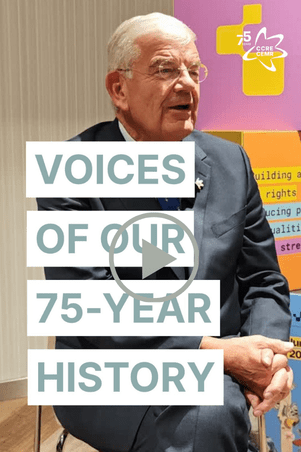
Jan Van Zanen, Mayor of The Hague and President of United Cities and Local Governments (UCLG), has been a long-standing figure in international municipal cooperation. With more than a decade of active involvement in both CEMR and UCLG, he has witnessed first-hand how cities increasingly shape global responses to shared challenges, from climate change to social cohesion.
This interview was recorded in Barcelona during the UCLG Retreat in February 2026. In it, Van Zanen reflects on the defining moments of his engagement within the global municipal movement, the importance of international city networks, and his vision for the future of CEMR and UCLG.
For three days, more than 300 local leaders from around the world gathered in the Dutch city, in a moment that carried both political and symbolic significance. The meeting took place 125 years after The Hague hosted the first Peace Conference, adding historical depth to the occasion.
“To see that global community come together in The Hague,” he recalls, “was very meaningful.”
*UCLG World Council in the Hague 2024
The event also marked a personal milestone, as Van Zanen took over the rotating presidency of UCLG. In line with the city’s long-standing identity as a centre for peace and justice, the gathering led to the adoption of The Hague Charter on Municipal Peace — a document designed to guide cities in fostering dialogue and strengthening peaceful communities at the local level.
“Doing so in my own city, surrounded by colleagues from all over the world, made it truly memorable,” he says. “It is something I always look back on with pride.”
Cities at the heart of global challenges
Beyond memorable milestones, Van Zanen emphasises the growing importance of international cooperation between cities. In his view, local and regional governments today are on the frontline of major global transformations.
“From climate adaptation and migration to digitalisation and social cohesion, these developments may be global, but they always land locally in our streets and neighbourhoods,” he explains.
This is precisely why networks such as CEMR and UCLG play a crucial role. For cities like The Hague — home to numerous international institutions — engagement at the global level is both natural and necessary. But, he insists, the value of these networks goes beyond visibility or prestige.
“It is about connecting with fellow cities,” he says. “Sitting around a table with other mayors and local leaders, exchanging openly about what works in practice.”
Through this peer-to-peer exchange, cities are able to share solutions, learn from each other, and build collective resilience. Ultimately, this cooperation translates into more effective policies and tangible benefits for citizens.
Recognising local governments as key partners
Looking ahead, Van Zanen outlines an ambitious but clear vision for CEMR and UCLG in the coming decade. His expectation is that both organisations become fully recognised as indispensable partners in policymaking at all levels.
“I would hope that CEMR and UCLG are recognised everywhere as key actors in shaping solutions,” he says, “not only globally but also within the European Union and at national level.”
Central to this ambition is the idea that local governments should be involved from the very beginning when major agreements are designed, whether on climate, migration or development. For Van Zanen, this early involvement is essential to ensure that policies are both practical and impactful.
“Involved from the beginning, with a clear and recognised role,” he insists.
However, recognition alone is not enough. He also stresses the importance of aligning responsibilities with adequate resources, particularly in terms of access to funding. Without this, cities cannot fully deliver on their commitments.
From ambition to impact
Underlying Van Zanen’s reflections is a consistent message: local and regional governments are not just implementers but also innovators and essential drivers of change.
“Cities implement, cities innovate, cities are closest to citizens,” he notes.
This proximity gives local governments a unique capacity to translate global ambitions into concrete action. But to fully unlock this potential, stronger collaboration between levels of governance is needed.
“If we really want impact, global governments and local governments must go hand in hand,” he concludes.
For Van Zanen, the history of CEMR over the past 75 years demonstrates precisely this capacity: turning shared ambition into tangible results. Strengthening that role in the years to come will be key to addressing the complex challenges ahead — and ensuring that solutions are rooted where they matter most: in towns, cities and regions and its local communities.
Local Alliance urges the EU leaders to support the vision for multilevel governance in the next EU budget
1,141 words
5–7 minutes
As negotiations on the EU’s next long-term budget enter a crucial phase, mayors and local leaders from across Europe are urging national leaders to ensure that cities and regions remain central to EU investment.
Ahead of the European Council meeting on 18 – 19 June, CEMR, as part of, and in partnership with the Local Alliance – a coalition of the Europe’s leading networks of local and regional governments representing more than 1,800 cities, 60 regions, 60 energy agencies and 42 national associations – has issued an open letter to Heads of State and Government.
The letter was signed by the presidents of all eight member networks, alongside over 50 additional signatories — including municipalities such as Barcelona, Budapest, Lisbon, Paris and Rome, as well as provinces, networks and associations.
Local and regional governments translate EU priorities into concrete projects, services and investments that improve the daily lives of their citizens. From expanding public transport and protecting water quality to modernising schools, hospitals and social housing, most EU priorities are implemented locally.
This is why the Local Alliance has consistently called for the next EU budget to be place-based, grounded in multilevel governance, and designed to deliver our shared European goals, including competitiveness and the green transition.
Ahead of the Council meeting, the open letter urges national leaders to uphold the Parliament’s key positions, including:
On the overall EU budget: Clearly define budget allocations for key programmes serving local and regional governments – including Cohesion Policy, the European Regional Development Fund (ERDF), the European Social Fund (ESF) and LIFE. This would prevent uncertainty and competition with other priorities like the Common Agricultural Policy. Mayors also call for safeguards to ensure local beneficiaries are not penalised when EU funds are suspended at Member State level due to rule-of-law concerns.
On the National and Regional Partnership Plans (NRPPs): Require mandatory regional and territorial chapters in national plans, make multilevel governance a core principle, allocate resources to strengthen administrative capacity, and protect integrated territorial and urban development tools through dedicated ERDF funding.
On the Competitiveness Fund: Maintain support for territorial innovation with dedicated mechanisms, provide predictable funding streams specifically for local and regional investment pipelines, and explicitly recognise local authorities as eligible beneficiaries and implementation partners.
The Local Alliance stands ready to provide practical evidence from cities and regions and to contribute to a structured dialogue on implementation.
About the Local Alliance
The Local Alliance is an informal coalition of Europe’s leading networks representing local and regional governments, including CEMR, ACR+, Climate Alliance, Energy Cities, Eurocities, FEDARENE, ICLEI Europe, and POLIS. Together, they advocate for a stronger, more inclusive European Union that empowers local democracy.
Statements from signatories:
“Navigating the next budget period, the MFF 2028-2034 must at once bolster competitiveness, invest in sustainability, and restore stability to our economies, as well as societies and ecosystems. At this critical junction, Europe needs cities and regions now more than ever. Successfully delivering for EU citizens requires the work of local and regional authorities — those on the ground who know their challenges best. Cities and regions are the theatre of the European project, indispensable to the twin green and digital transitions, and indeed at the very centre of the circular economy. ACR+ endorses this letter to Heads of State and Government because these common goals require our cumulative strength and multilevel governance.”
Hugh Coughlan, acting president of ACR+
“The next EU budget must deliver competitiveness, cohesion and trust in every territory. That means a budget with clear and predictable funding for cohesion, genuine multilevel governance, and a real role for local and regional governments in shaping and implementing the instruments that will carry Europe’s priorities to the ground.”
Arjen Gerritsen, King’s Commissioner of Flevoland and CEMR spokesperson on the EU budget
“Europe’s ambitions on climate, sustainability and resilience cannot be achieved by Member States alone. Regions, cities and towns are key partners in delivering EU priorities on the ground. The European Council now has an opportunity to ensure the next EU budget reflects this reality through genuine partnership and adequate, predictable funding.”
Andreas Wolter, Councillor and former Mayor for the City of Cologne, Germany
“Local authorities turn Europe’s competitiveness and cohesion goals into tangible results for businesses and citizens on the ground. Cities and towns are already building a more resilient energy future, through renovation, decarbonisation and local energy infrastructure projects, one building and one neighbourhood at a time. The next European budget should recognise this role by making us full partners in the design and delivery of EU programmes, and by investing directly in the place-based projects that strengthen our communities and economies.”
Mohamed Ridouani, President of Energy Cities and Mayor of Leuven
“Europe is at a decisive moment in the MFF negotiations. This is not only about the EU budget, it is about how Europe governs, invests and delivers. We support simplification through the National and Regional Partnership Plans, but it must not lead to centralisation or disconnect decision-making from local delivery. Cities and regions are where EU priorities become reality, from climate and innovation to housing, mobility and social inclusion. The European Parliament’s position is moving in this direction, and national governments should take these messages into account. Over the past year together with 20 other Belgian city mayors, we have consistently called on the Belgian governments to ensure stronger recognition of cities and local governments in the next EU budget. We now urge the Belgian government, and all member states in the European Council, to set a clear direction for a budget that delivers competitiveness, cohesion and trust across all territories.”
Mathias De Clercq, President of Eurocities and Mayor of Ghent
“The credibility of the next EU budget will be measured not only by what it promises, but by whether it will work in practice. To build a more resilient, competitive and climate-neutral Europe, cities and regions need predictable investment, genuine partnership and a stronger role in shaping the programmes they are expected to implement. The European Council should ensure the next MFF empowers local and regional governments as full partners in Europe’s future.”
Martin W. W. Horn, ICLEI Europe President and Mayor of Freiburg
“From sustainable mobility to climate adaptation, cities are where Europe delivers results for citizens. In Ljubljana, EU funding has helped us create safer streets, greener neighbourhoods and better public transport. These investments show what is possible when European priorities are matched with local action. The next EU budget must continue to empower cities as key partners in building a competitive, resilient and sustainable Europe.”
Dejan Crnek, President of POLIS and Deputy Mayor of Ljubljana
This high-level Brussels event, held during the European Week of Regions and Cities 2026, will bring together EU, national and local leaders to discuss
Event Details
This high-level Brussels event, held during the European Week of Regions and Cities 2026, will bring together EU, national and local leaders to discuss the future of Cohesion Policy and its territorial dimension. It will focus on upcoming decisions on the EU budget and investment framework, while promoting balanced, place-based development across urban and rural areas and strengthening cooperation between key European stakeholders.
Organisers: German Federal Ministry for Housing, Urban Development and Building in cooperation with the German Association for Housing, Urban and Spatial Development (DV) and Council of European Municipalities and Regions (CEMR)
Against the backdrop of the European Week of Regions and Cities 2026, this high-level evening event in Brussels creates a timely political space to take stock of where Cohesion Policy is heading—and what is at stake for the territorial dimension in the next EU programming period.
The Week brings together European institutions, Member States and local and regional leaders around the central question of how Europe can deliver place-based solutions to shared transitions. This event deliberately connects that overarching debate with one of the most consequential upcoming decisions: the shaping of the new Multiannual Financial Framework (MFF) and the emerging architecture of National and Regional Partnership Plans (NRPPs), where priorities, governance and delivery tools for future EU investment will be negotiated.
In this context, the territorial dimension is not a technical add-on, but a core condition for impact. Climate neutrality, competitiveness, social inclusion and resilience will only be achieved if EU investment recognises different territorial starting points and capacities across cities, surrounding areas, functional regions and rural territories.
The event responds to this moment with three interconnected objectives:
To anchor key recommendations for a strong territorial dimension in the forthcoming negotiations on the MFF and NRPPs;
To safeguard a balanced territorial approach that addresses urban and rural territories in a complementary way; and
To strengthen a European coalition for integrated territorial approaches bringing together Member States, European institutions and the organised local and regional government community, notably through CEMR, the Committee of the Regions and the European Commission.
Designed as a politically oriented panel discussion followed by a networking reception, the event will convene a targeted community of decision-makers and practitioners: representatives from EU institutions, national and regional managing authorities, cities and regions with hands-on experience in territorial tools, European associations, as well as researchers, think tanks and civil society organisations working on cohesion policy and spatial development.
By combining policy dialogue with exchange among practitioners, the event aims to build shared understanding—and strengthen alliances—at precisely the time when Europe’s future place-based investment framework is being defined.
Please note that spaces are limited. Your registration does not constitute confirmation of participation. You will receive a separate confirmation once your participation has been approved.
Public-public cooperation and in-house provision are essential tools enabling local and regional governments to organise, deliver, and manage public services directly — whether through cooperation with other public authorities or through entities under their control — without resorting to external operators.
The Council of European Municipalities and Regions (CEMR) released a statement in which it expresses its strong opposition to calls and proposals that further restrict public-public cooperation and in-house provision in view of the upcoming Revision of the EU Public Procurement Directives.
In this new statement, CEMR argues that public-public cooperation and in-house provision are firmly grounded in the EU Treaties, the Public Procurement Directives, and the case law of the Court of Justice of the European Union. Local and regional governments must retain the freedom to choose the delivery model that best serves their communities — including direct provision and cooperation with other public authorities.
CEMR also takes aim at the notion that public-public cooperation or in-house provision harms competition. There is no evidence to support that claim; if anything, these models can improve efficiency, support investment, and strengthen essential public services for citizens.
Additionally, at a time of growing geopolitical uncertainty, cybersecurity risks, and growing pressure on public services, local authorities cannot afford to lose the flexibility to organise critical services in-house or through trusted public partnerships.
CEMR calls to the European institutions for greater legal certainty — not further restriction — in the revision of Article 12 of the Public Procurement Directive, while safeguarding the right of local and regional governments to organise public services according to local needs and democratic choices.
To complement this information, you can also read here CEMR’s position paper setting out what local and regional governments need from the revision of the 2014 Public Procurement Directives.
Fiscal tools must play a central role in tackling the housing crisis
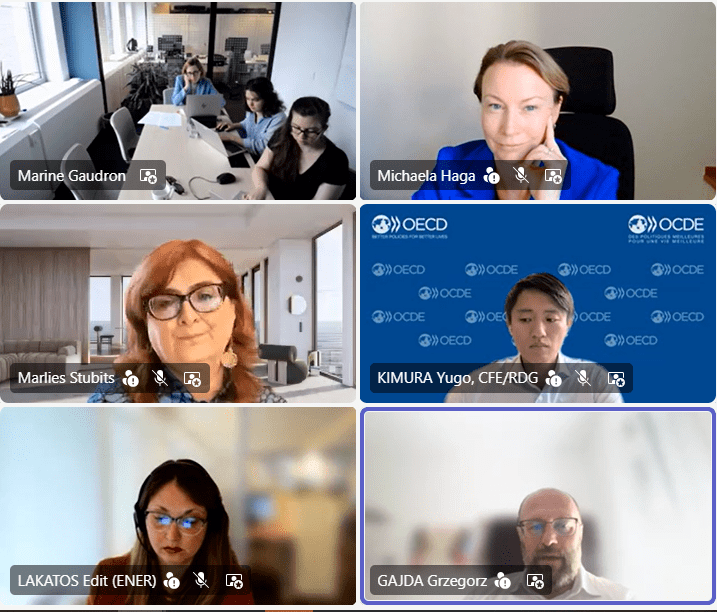
On 10 June 2026, CEMR held an online event that brought together policymakers, local leaders, researchers, EU institutions and financial experts to explore how local and regional public finance shapes housing affordability, availability and investments.
A key message emerged from the discussion: Europe’s housing crisis cannot be addressed through planning or construction policy alone. It also depends on whether local and regional governments have the fiscal room, investment tools and policy flexibility to act.
Opening the event, Ellen van Selm, Mayor of Purmerend (The Netherlands) and CEMR spokesperson on housing, underlined that housing must be approached as an integrated territorial challenge rather than a single policy field. “There are as many housing markets as there are local realities,” she said, warning against one-size-fits-all solutions. Her intervention set the tone for the discussion: local governments are on the frontline of housing pressures, yet they do not always have the resources, instruments or flexibility needed to respond effectively.
Why local solutions are a must in the housing crisis
Benedikt Herrmann from the European Commission’s Joint Research Centre invited participants to look more closely at the incentives created by local tax systems. His key point was that local finance does not simply support housing policy: it can also shape it in unexpected ways. Property taxation, often seen as a stable and appropriate local tax, may create unintended incentives when municipalities depend on rising property values for revenue. “Local taxes can play a fundamental role for mitigating local housing crisis. The property taxes on residential property can be a hidden catalyst of local housing crisis,” he noted.
Building on this framing, CEMR presented the first results of its survey on the links between local finance and housing. The preliminary findings point to a familiar but important contradiction: towns, cities and regions hold many of the practical responsibilities related to housing,but their room for manoeuvre often remains limited. In many countries, local governments rely heavily on property-related taxes, but within national limits that constrain their ability to use such tools strategically. At the same time, more targeted instruments, such as taxes on vacant dwellings or short-term rentals, remain fragmented, underdeveloped or unevenly available across Europe.
…And why so is multilevel governance
The panel discussion confirmed that housing is fundamentally a multilevel governance issue. Bringing the OECD perspective, Yugo Kimura highlighted both the scale of subnational involvement and the need for stronger coordination. Across OECD countries, local and regional governments account for a very large share of public expenditure linked to housing and community amenities. Yet many of them struggle to access funding, mobilise their own revenues, or navigate fragmented support structures. “Housing is not only cross-sectoral, it spans many policy sectors as well, but it’s also a multilevel governance issue,” he said.
This point resonated strongly with Michaela Haga, Councillor of the Region Stockholm and CEMR spokesperson on local finances, who brought the conversation back to the political reality faced by towns, cities and regions. In her intervention, she stressed that local and regional governments are expected to deliver housing solutions while also financing the wider ecosystem that makes housing liveable: transport, schools, care services, utilities and social infrastructure. “The real question is whether all places have the tools and resources they need to respond to their own realities,” she argued. Her final message was also one of the clearest takeaways of the day: match responsibilities with resources, make investment easier and more strategic, and trust local governments more and equip them better.
From EU frameworks to local realities
The event also offered a timely look at how housing is moving up the EU agenda. Edit Lakatos, from the European Commission’s Housing Task Force, explained the significance of the 2026 European Semester, which for the first time includes dedicated housing annexes in the country reports and a stronger housing dimension in the policy guidance to Member States. For local and regional governments, this matters because it opens a new channel to connect national reforms, investment priorities and local housing realities. She also pointed to the work under way on the Affordable Housing Act, which is expected to provide a framework for public authorities in areas under housing stress, including the possibility to address the impacts of short-term rentals.
This EU-level perspective found a strong echo in the contribution from Marlies Stubits, from the Austrian Association of Cities and Towns, who showed how Austrian cities combine fiscal instruments, regulation and investment strategies to respond to housing and tourism pressures. She pointed in particular to the Viennese model, where public land policy, limited-profit housing and long-term investment help the city to actively shape the market rather than merely react to it. At the same time, she highlighted the specific difficulties faced by smaller tourist municipalities in dealing with vacancy, holiday homes and short-term rentals. “The most effective Austrian approaches combine regulation, taxation and investment,” she said, insisting that taxation alone is not enough without a broader and more coherent housing strategy.
From the European Investment Bank, Grzegorz Gajda focused on the practical conditions needed to turn policy ambitions into housing delivery. Access to finance remains a major challenge, especially where local governments or housing providers struggle to build robust project pipelines or meet creditworthiness requirements. At the same time, he stressed that European-level decisions on state aid, procurement and debt treatment can make a decisive difference for what becomes possible locally. His message also added an important nuance to the debate: tools alone are not enough if decision-makers are not incentivised to use them. “We really need to work on both ends,” he said: both on the tools available, and on the motivations and incentives shaping local action.
The path forward
One conclusion stood out across all interventions: housing policy cannot be separated from local finance. Whether through land policy, taxation, transfers, investment rules, planning, or social infrastructure, the financial frameworks around housing shape what local and regional governments can actually do. If Europe wants more affordable, sustainable and inclusive housing, it must give local governments not just expectations, but also the means to act.
The discussion will now feed into CEMR’s ongoing analytical work on local finances and the housing crisis, with a publication expected in fall 2026. By connecting evidence, practice and policy, CEMR aims to continue strengthening the case for a housing agenda that fully recognises the role of cities, towns and regions in delivering solutions on the ground.
Cities and regions must lead Europe’s climate adaptation
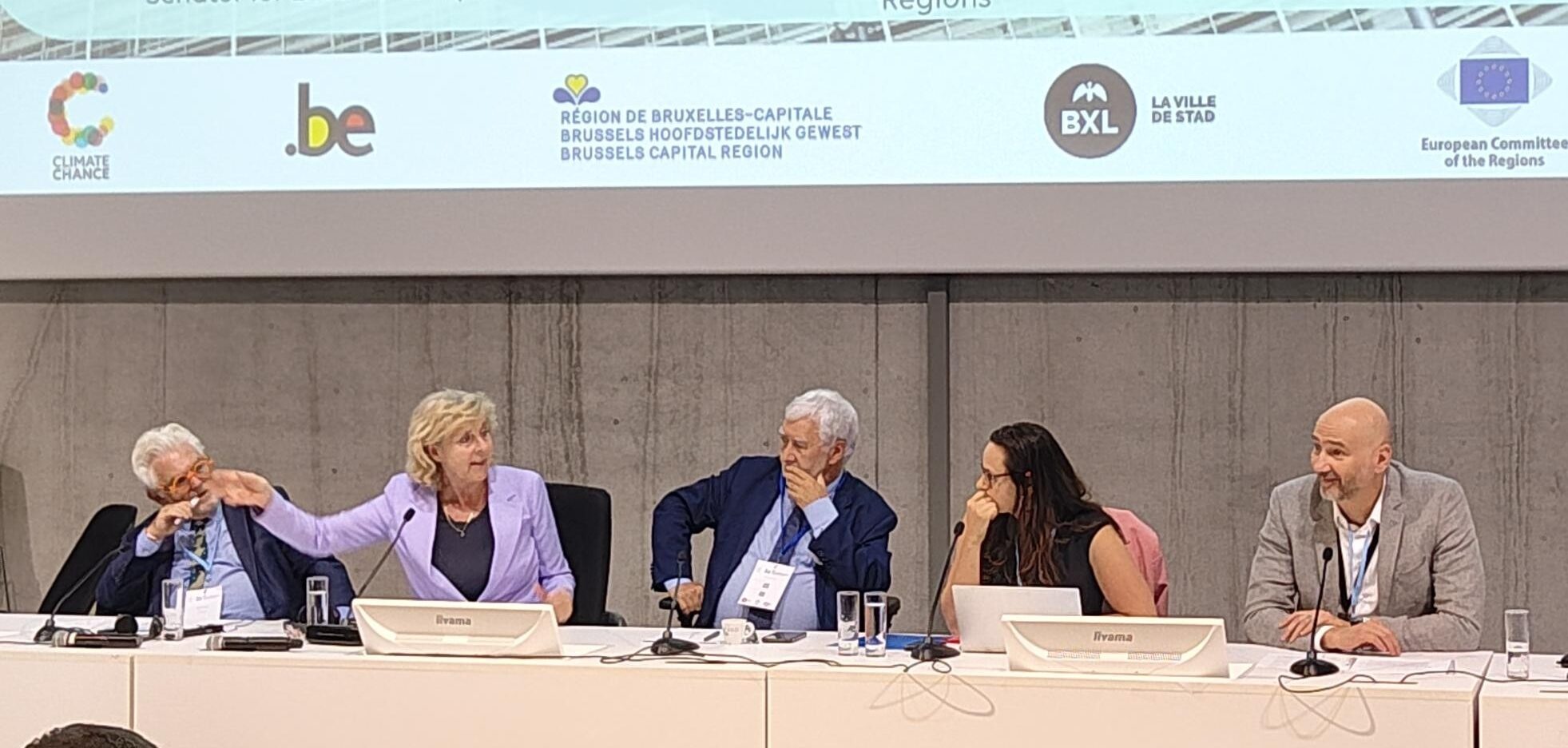
CEMR participated on 3 and 4 of June in the Climate Chance Europe Summit 2026 organised in Brussels by The Climate Chance association. The two-day event brought together local and regional leaders, European institutions, businesses, NGOs and civil society networks around a shared theme: climate adaptation as a lever for resilience and prosperity in Europe.
The message shared by the Council of European Municipalities and Regions (CEMR) was that towns, cities and regions must be recognised as strategic partners in designing Europe’s climate response, not merely as implementers on the ground.
The summit echoes the key messages of CEMR’s position paper “Adapting Together – A territorial approach to resilience and risk management”, published in February 2026. In this position paper, CEMR makes a case for a territorial approach to climate resilience, grounded in multi-level governance. A fundamental gap is highlighted: local and regional governments already implement most adaptation measures, yet their role remains insufficiently recognised and supported in EU and national frameworks.
To close this gap, CEMR continues to flag six priorities:
Empowering local and regional governments with clear mandates and flexibility to act
Strengthening local capacity through better access to data and peer learning
Securing predictable and accessible funding for adaptation investments
Improving preparedness and disaster risk management
Restoring ecosystems and scaling nature-based solutions
Ensuring water resilience through integrated, locally driven water management
The summit organised by Climate Chance came at a critical political moment. The European Commission is currently developing a new integrated framework for European Climate Resilience and Risk Management, expected to be adopted in the second half of 2026.
Ronan Dantec, CEMR Spokesperson for Climate: “Climate adaptation will only succeed if local and regional governments are recognised as full partners in the future resilience framework. Territories need a common trajectory, the tools to understand their vulnerabilities and the long-term funding to turn resilience into reality.”
Discussions at the summit on multi-level governance, funding adaptation and resilience at local level, technical support for LRG to prepare risk management strategies and investments, and solidarity mechanisms all reinforced what our position paper argues: coherent and effective climate action requires local and regional governments at the table from the very beginning — in the design, financing and monitoring of policy, not just its delivery.
It commits all signatories to playing an active role in shaping Europe’s climate resilience policies and calls for adaptation to be built into every level of decision-making, from EU policy down to local plans.
CEMR will continue to push this message forward in the lead-up to the adoption of the EU framework by the end of the year. Europe’s resilience starts in its territories.
Connie Heedegard, Chair of the Climate Adaptation Mission and former Commissioner for Climate Action: “Adaptation is crucial for resilience, but it is also key for citizens safety. The EU Adaptation Mission has laid the foundations; now is the time to harvest the fruits and scale up implementation.”