

“Right to Stay” strategy

Right to Stay strategy news

CEMR calls for a place-based “Right to Stay” strategy

468 words
2–3 minutes

In its contribution to the European Commission’s call for evidence on the upcoming “Right to Stay” strategy, the Council of European Municipalities and Regions (CEMR) calls for a politically ambitious, place-based framework that puts local and regional governments at the centre of Europe’s response to territorial, social, economic and demographic imbalances.

For CEMR, the right to stay means that people must be able to live, work and thrive in the place of their choice: whether in a city, a town or a rural area, without being forced away by lack of public services, economic opportunity, poor connectivity or rising living costs.

This is not just a matter of territorial cohesion. It is also a question of fairness, democracy and trust in the European project. If the EU wants to respond to growing territorial inequalities, it must start by investing in the places people call home and by recognising the governments closest to citizens as strategic partners.

In its response, CEMR underlines that there can be no right to stay without access to services, housing and opportunity. Across Europe, too many territories still face shortages in healthcare, education, mobility, childcare, energy and digital infrastructure. At the same time, rising housing costs are pushing people out of cities, while many rural and shrinking areas continue to suffer from depopulation and underinvestment.

CEMR therefore calls on the EU to strengthen support for services of general interest, affordable housing and integrated territorial development. It also stresses the need to create enabling conditions for local economic opportunities in every territory, including through better transport and digital connectivity, support for entrepreneurship, and action to tackle labour shortages in key local public services.

CEMR also highlights the growing importance of climate resilience, sustainable mobility and local energy production for territorial attractiveness and energy security. Investments in adaptation, renewable energy and accessible transport must therefore be part of any credible Right to Stay agenda.

For CEMR, Cohesion Policy must be the main delivery tool of the future strategy. In the next EU budget, the Right to Stay should be recognised as a clear strategic objective, backed by strong funding, integrated territorial instruments and genuine partnership with local and regional governments in the design of national and regional plans.

CEMR also calls for the Right to Stay to be embedded in EU governance, including through the European Semester and stronger territorial impact assessments. Europe cannot continue to shape policies for territories without systematically involving the authorities responsible for delivering them.

The message is clear: the right to stay will only be real if the EU gives territories the means to remain attractive, affordable, connected and resilient. That requires political ambition, long-term investment and a genuine multilevel partnership with local and regional governments.

For more information, contact:

Statement on public procurement

Public procurement services news

Call on European institutions to safeguard public-public cooperation and in-house provision in the Revision of the Public Procurement Directives 

313 words
1–2 minutes

Public-public cooperation and in-house provision are essential tools enabling local and regional governments to organise, deliver, and manage public services directly — whether through cooperation with other public authorities or through entities under their control — without resorting to external operators.  

The Council of European Municipalities and Regions (CEMR) released a statement in which it expresses its strong opposition to calls and proposals that further restrict public-public cooperation and in-house provision in view of the upcoming Revision of the EU Public Procurement Directives.  

In this new statement, CEMR argues that public-public cooperation and in-house provision are firmly grounded in the EU Treaties, the Public Procurement Directives, and the case law of the Court of Justice of the European Union. Local and regional governments must retain the freedom to choose the delivery model that best serves their communities — including direct provision and cooperation with other public authorities.  

CEMR also takes aim at the notion that public-public cooperation or in-house provision harms competition. There is no evidence to support that claim; if anything, these models can improve efficiency, support investment, and strengthen essential public services for citizens.  

Additionally, at a time of growing geopolitical uncertainty, cybersecurity risks, and growing pressure on public services, local authorities cannot afford to lose the flexibility to organise critical services in-house or through trusted public partnerships.  

CEMR calls to the European institutions for greater legal certainty — not further restriction — in the revision of Article 12 of the Public Procurement Directive, while safeguarding the right of local and regional governments to organise public services according to local needs and democratic choices.  

To complement this information, you can also read here CEMR’s position paper setting out what local and regional governments need from the revision of the 2014 Public Procurement Directives. 

For more information, contact:

EU budget political declaration

Leaders Summit Finland 2026

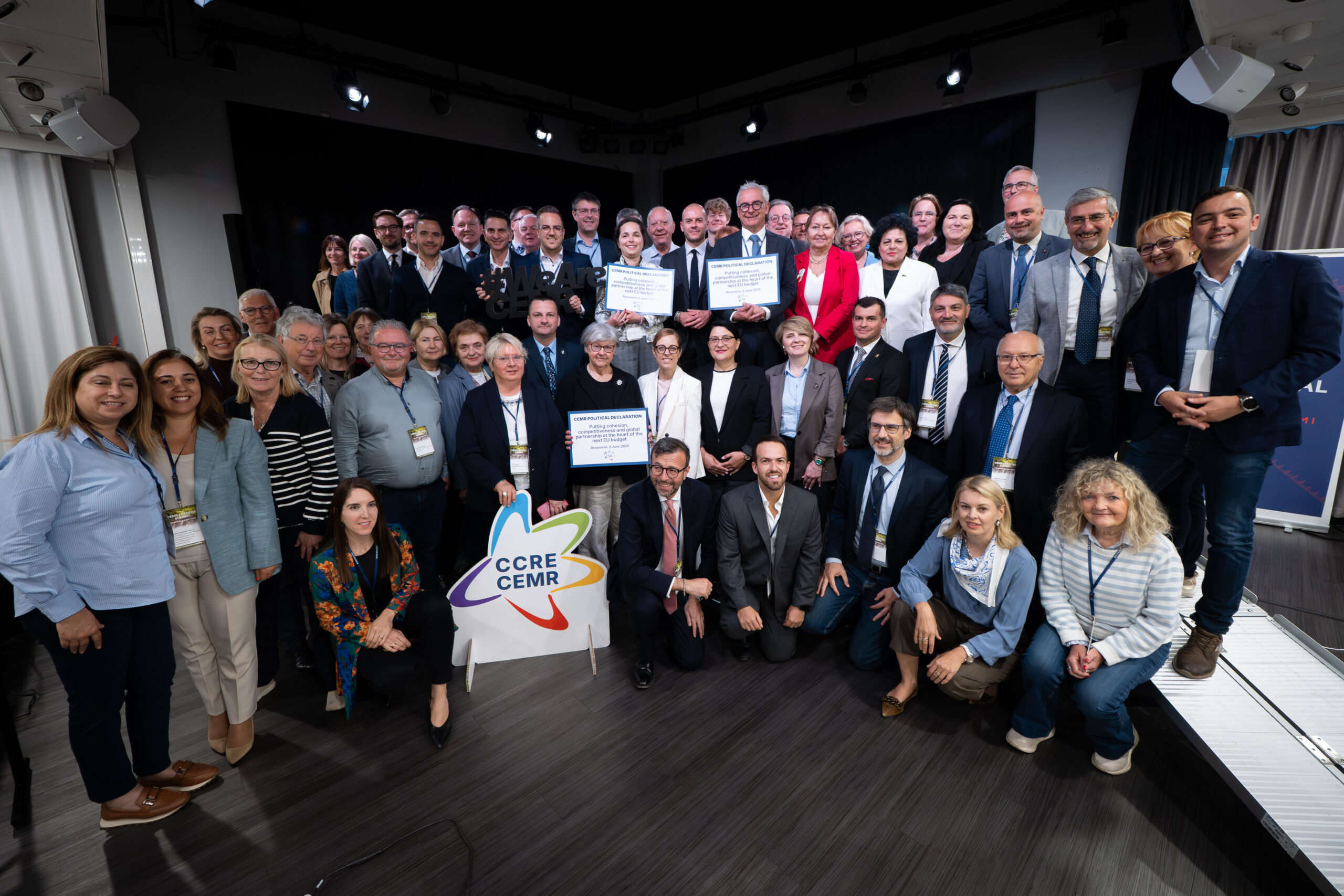
CEMR local leaders adopt a political declaration in support of an EU budget that works for every territory


Gathered in Rovaniemi on 5 June, local leaders call on the EU’s Heads of State and Government to include the European Parliament’s EU budget recommendations on multilevel governance, territorial delivery and predictable funding into their negotiations with the Council


Local leaders of the Council of European Municipalities and Regions (CEMR) Policy Committee have adopted a political declaration calling on EU Heads of State and Government to incorporate the European Parliament’s key recommendations on the next EU budget (2028-2034) into their negotiations in the European Council. The declaration, with 55 signatories, approved during the CEMR Leaders’ Summit in Rovaniemi, comes at a crucial moment in the interinstitutional discussions on the upcoming Multiannual Financial Framework (MFF).

By endorsing this declaration in support of an EU budget that works for every territory, CEMR members urge to ensure that the next long-term budget is fit for the EU ambition for cohesion, competitiveness and global partnership. Addressed to national leaders, the declaration makes the case for a budget that is place-based, predictable, and grounded in genuine multilevel governance.

A particularly significant timing

The declaration follows the European Parliament’s adoption of its interim report on the 2028–2034 EU budget on its plenary meeting of 28 April 2026 in which the Parliament set out its political priorities and will be the basis of negotiations with the Council.

As Member States meeting on 18-19 June Council will finalise their position, CEMR calls on them to take into consideration the position and proposals put forward by the European Parliament towards an EU budget that delivers competitiveness, cohesion, and trust across all territories.

Key asks of the political declaration

In practical terms, the declaration encourages Heads of State and Government to uphold the European Parliament’s key recommendations on multilevel governance, territorial delivery and predictable funding under the future National and Regional Partnership Plans (NRPP). It also calls for the continuation of territorial innovation and competitiveness tools, as well as stable and predictable support for innovation, scale-up and investment in towns, cities and regions under the future European Competitiveness Fund (ECF).

Local and regional governments are essential to turning EU priorities into concrete projects, services and investments on the ground. Among the main calls of the political declaration, it urges to preserve strong and clearly allocated funding for Cohesion Policy, which will secure key investments for economic, social and territorial cohesion in all regions.

It also insists that local and regional governments must be properly involved in the design and implementation of future NRPP.

The text further calls for the protection of integrated territorial and urban development tools, stronger administrative capacity for local and regional governments, and a more realistic approach to performance and delivery rules for long-term investment.

On competitiveness, the declaration argues that the future ECF must be accessible across all territories and better connected to local realities. It also calls on the EU to recognise local and regional governments as full partners in external action and development cooperation.

The overall message is clear: if the EU wants its next budget to produce tangible results for citizens, it must give local and regional governments the means and the role to make that happen.

CEMR advocacy campaign on the next EU budget

This action is part of CEMR’s wider campaign on the future EU budget. The campaign stresses that the decisions now being negotiated will shape the European Union’s ability to invest in people and places for the next decade. It also warns that greater flexibility in the new budget architecture must not come at the expense of safeguards for place-based investment, multilevel governance and predictable funding for towns, cities and regions.

For more information, contact:

Declaration on four years of war in Ukraine

Mayors in Ukraine - News 2023

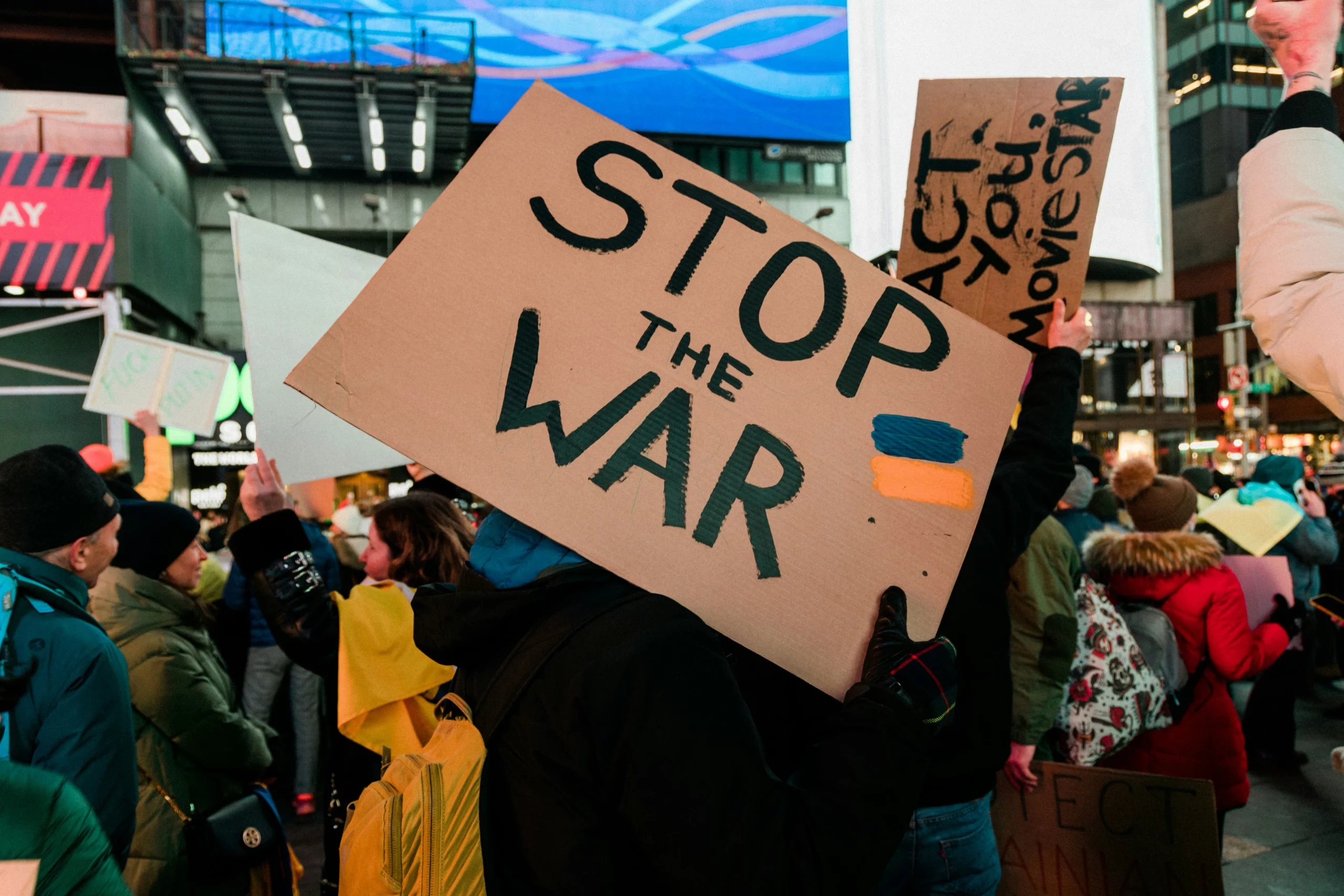
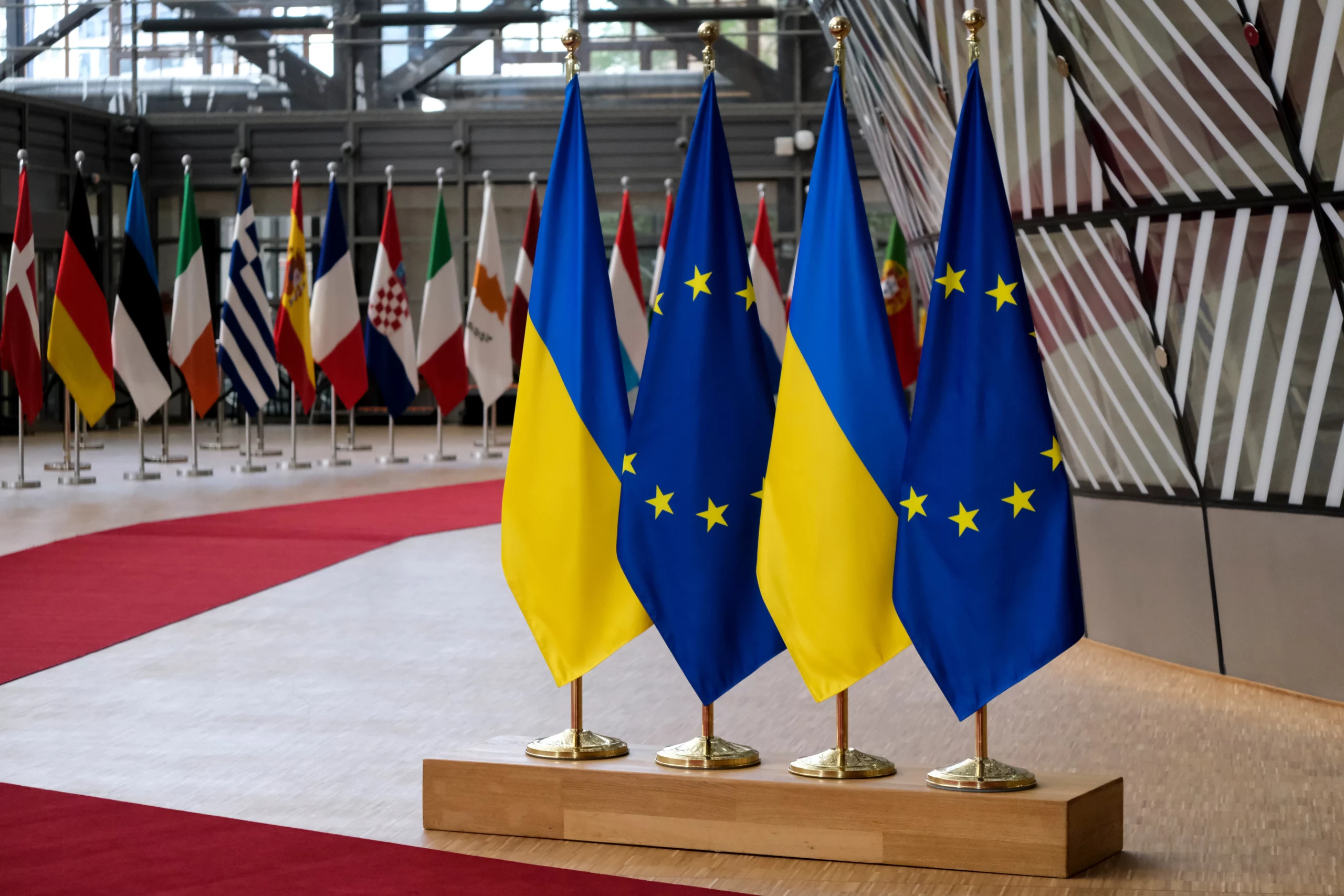
CEMR issues declaration marking four years of war and reaffirming unwavering support for Ukraine


Four years after Russia’s full-scale invasion of Ukraine, local and regional elected representatives from the Council of European Municipalities and Regions (CEMR) once again reaffirm their unwavering support for Ukraine and its people.

On this fourth anniversary of Russia’s aggression, CEMR has issued a formal declaration strongly condemning the war, which continues to claim countless victims, and reiterating the commitment of European local and regional governments to stand alongside Ukraine in its struggle for freedom, reconstruction and European integration.

Call against attacks on Ukrainian mayors

Local and regional elected representatives remain on the frontlines of the war, ensuring the continuity of essential services under extraordinary and often dangerous conditions. Yet they continue to be directly targeted.

CEMR denounces the abduction of Ukrainian mayors and supports the call of the Association of Ukrainian Cities demanding the immediate release of those still detained:

  • Oleksandr Babych – Hola Prystan City Mayor
  • Ihor Kolykhaiev – Kherson City Mayor
  • Anatolii Siryi – Starosta of Novi Borovychi Starosta District, Snovsk City Municipality

CEMR also condemns the arbitrary imprisonment, torture and murder of Ukrainian people in Russian captivity, including:

  • Yevhenii Matvieiev – Mayor of Dniprorudne
  • Oleksii Vynnychenko – Starosta of the Hrebenykivka Starosta District of Boromlia Village Municipality

Commitment to peace, reconstruction and EU integration

CEMR calls for the immediate end to the war, and for decisive actions to enable the establishment of a just and lasting peace in Europe and the reconstruction of Ukraine. Achieving this requires full engagement of the European Union and its Member States at every stage of the process. European local and regional governments stand ready to contribute actively to recovery, democratic resilience, and long-term stability.

In its declaration, CEMR reaffirms its dedication to:

  • Supporting Ukraine’s reconstruction through partnerships, exchanges and decentralised cooperation between towns, cities and regions.
  • Accompanying Ukraine on its path to full EU membership, strengthening democratic governance and multilevel cooperation across Europe.
  • Sustaining and expanding cooperation through key initiatives, including:
    • Bridges of Trust Community, bringing together local and regional representatives engaged in cooperation to foster trust, resilience, sustainable development and democratic governance.

A call for sustained European engagement

As the war enters its fifth year, sustained political, financial and institutional support remains essential. The reconstruction of Ukraine and the achievement of a just and lasting peace demand continued solidarity, coordinated action and long-term commitment.

CEMR stands firm in defending European values of democracy, peace and the rule of law. European local and regional governments remain committed to accompanying Ukraine to full EU membership, contributing to a stronger, more resilient and more secure Europe.

Read the full CEMR declaration:

CEMR’s recommendations: five essential conditions for the fair and effective integration of Ukraine into the EU

For more information, contact:

Concerns over local democracy in Türkiye

Democracy in Turkyie - News 2025

CEMR issues a statement condemning escalating pressure against democratically elected mayors in Türkiye 


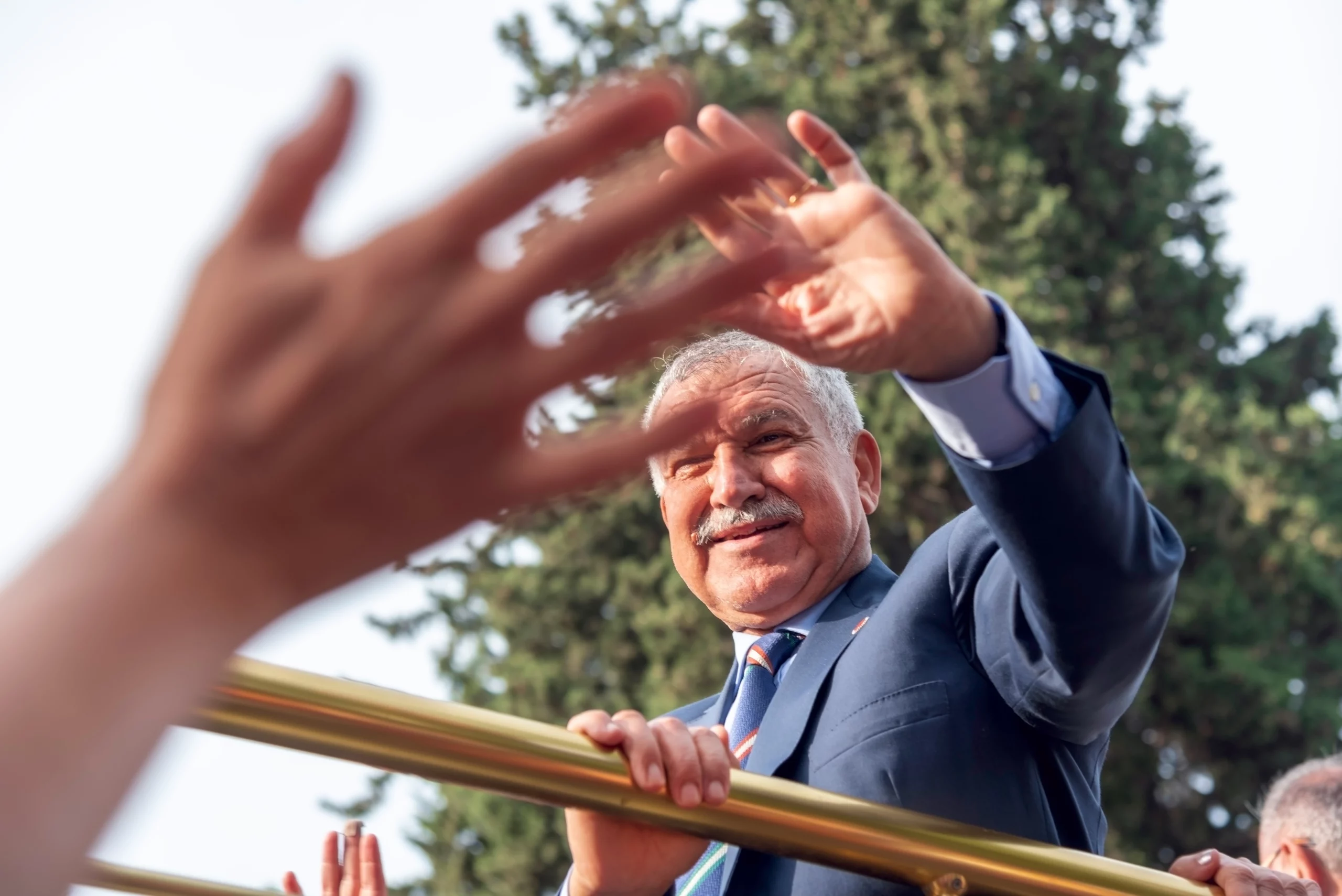
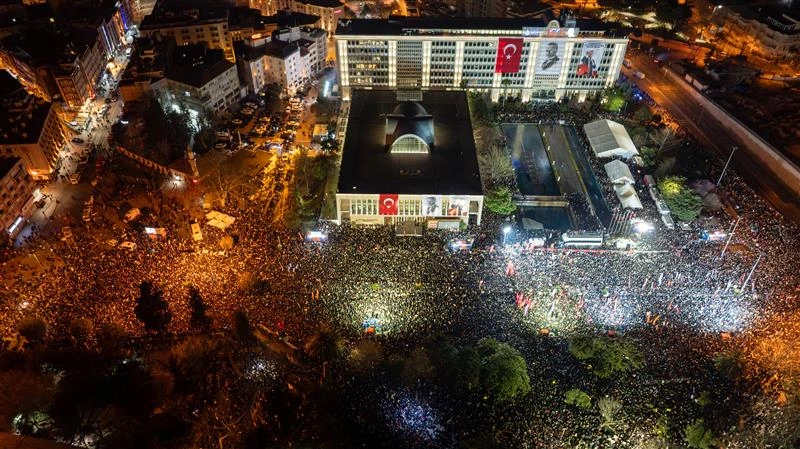
The Council of European Municipalities and Regions (CEMR) has issued a statement expressing its deep concern over the intensifying political pressure on local democracy in Türkiye, following the detention of Zeydan Karalar, Mayor of Adana and Deputy-President of the Union of Municipalities of Türkiye (UMT), CEMR’s member organisation. 

In recent months, an increasing number of opposition-affiliated mayors and staff members of the municipalities have been suspended, prosecuted, or detained in ways that obstruct their ability to carry out their democratic mandates. 

The detention of Mayor Karalar follows the earlier arrest of Ekrem İmamoğlu, former President of UMT. These successive events “risk undermining the principles of local democracy and have potentially far-reaching consequences for stability, democratic resilience, and social cohesion across our continent”. “The legitimacy of democratic governances relies on strong, autonomous local governments, and respect for political pluralism”, defend the signatories.  

CEMR calls on the European and international communities to keep the principles of democracy, the rule of law, and local self-government at the core of their engagement with Türkiye. 

“We respectfully urge the prompt release of all detained Mayors and officials and the full restoration of their rights to perform their democratic functions without fear or interference”, the signatories declare. “Democracy and local self-government cannot and will not be compromised”, they conclude. 

Signatories of this statement include: 

  • Vince Maple, Councillor of Medway, Chair of CEMR Financial Management Committee 
  • Philippe Laurent, Mayor of Sceaux, CEMR Co-President 
  • Christoph Schnaudigel, President of the County of Karlsruhe, CEMR Co-President 
  • Gunn Marit Helgesen, Member of Telemark County Council, CEMR President 
  • Jan van Zanen, Mayor of The Hague, CEMR Executive President 
  • Anders Knape, Councillor of Karlstad, CEMR Executive President 
  • Aleksandra Dulkiewicz, Mayor of Gdansk, CEMR Executive President 

Related content: 

Op-Ed on local democracy in Türkiye

Turkiye democracy - News 2025

Op-Ed on the local democracy in Türkiye co-signed by presidents of the Congress, CoR, ALDA and CEMR


The recent arrests and dismissals of democratically elected mayors in Türkiye, and their replacement by appointed trustees, mark a dangerous turning point for local democracy, not only in Türkiye but for Europe as a whole. At its core, democracy is not just about casting ballots; it is about ensuring that those elected by the people can govern freely, without fear of persecution. The replacement of elected mayors through judicial intervention, without full transparency and due process, raises serious questions about democratic standards and political freedom. 

This is not an isolated event. It is part of a worrying trend of democratic backsliding that threatens the fundamental values upon which modern Europe has been built. From the ashes of World War II, Europe emerged with a commitment to decentralization, democracy, and human rights. The European Charter of Local Self-Government, adopted in 1985, was a direct response to past authoritarianism, ensuring that local governments have the autonomy to serve their communities without undue interference from central authorities. This principle of local self-government is a safeguard against the concentration of power and a guarantee that democracy remains rooted in the daily lives of citizens.  

Yet today, these hard-won principles are being undermined. The detention of local leaders in Türkiye is a blatant violation of the commitments the country made as a member of the Council of Europe. It is a direct assault on the principles enshrined in the Charter and an ominous signal to other governments that such actions might be tolerated.  

Local democracy is the first line of defense for our freedoms. When it is attacked, it is not just a city or a region that suffers—it is the very foundation of democracy. As local elected representatives, mayors are the bridge between national governments and citizens, the leaders who turn democratic principles into tangible actions—whether in public services, social cohesion, or crisis response.  

Ignoring the crackdown on local leaders in Türkiye is not just a failure to support our colleagues—it is a failure to defend democracy itself. If Europe allows the erosion of local democracy anywhere on the continent, it sets a dangerous precedent that could spread.  

EU institutions, together with Member states of the European Union and of the Council of Europe, must take a clear and firm stance. The defense of democracy must not be selective or conditional on political expediency. The right of people to choose their leaders—and for those leaders to govern without fear—must be upheld at all costs.  

Democracy in Europe was never guaranteed; it was built through struggle and commitment. In the face of new threats, we must show the same commitment. The free election of representatives is not a privilege; it is the foundation of a just and stable society. If we fail to defend it today, we risk losing it tomorrow. 

Signatories: 

  • President of the Congress of Local and Regional Authorities of the Council of Europe, Marc Cools 
  • President of the Committee of the Regions, Katta Tüttő 
  • President of ALDA: Nataša Vučković
  • President of CEMR: Gunn Marit Helgesen

*****

This opinion article was published on EU Observer on 15 April 2025. You can read it here

Related content:

For more information or media inquiries, please contact:

Declaration on three years of war in Ukraine

Ukraine Declaration - News 2025

CEMR issues a declaration reaffirming support and urging international action 


After three years of Ukraine’s resistance to Russia’s full-scale invasion, local and regional elected representatives from the Council of European Municipalities and Regions (CEMR) reaffirm their unwavering support for Ukraine and its people.  

CEMR has issued a formal declaration condemning the war launched by Russia and calling for decisive international action. 

Call against attacks on Ukrainian mayors 

Local and regional elected representatives are on the frontlines of this war, ensuring that essential services continue despite difficult conditions. Yet, they have also become targets of aggression.  

CEMR denounces the abduction of Ukrainian mayors and supports the call of the Association of Ukrainian Cities demanding the immediate release of those still detained: 

  • Oleksandr Babych – Mayor of Hola Prystan (Kherson region) 
  • Ihor Kolykhaiev – Mayor of Kherson 
  • Anatolii Siryi – Starosta of Novi Borovychi (Chernihiv region) 

CEMR also condemns arbitrary imprisonment, torture and murder of Ukrainian people in Russian captivity including: 

  • Yevhenii Matvieiev – Mayor of Dniprorudne (Zaporizhzhia region) 
  • Oleksii Vynnychenko – Starosta of Hrebenykivka (Sumy region) 

Call for Ukraine’s full EU membership 

A victory for Ukraine and a just peace that will allow its reconstruction requires the full engagement of the European Union and its member states.  

CEMR is committed to fostering resilience, recovery, and democratic governance in Ukraine. In its declaration, CEMR reaffirms its dedication to: 

  • Supporting the reconstruction of Ukraine’s municipalities and regions through partnerships and exchanges. 
  • Advocating for Ukraine’s full integration into the European Union to ensure long-term stability and prosperity. 
  • Sustaining cooperation between European and Ukrainian local and regional governments through key initiatives, including: 
  • The Bridges of Trust Community, Strengthening democratic governance, fostering partnerships, advancing recovery, and supporting Ukraine’s EU integration.   

A call for action 

As the war continues, it is time for European institutions, national governments, and local and regional authorities to intensify their support for and to Ukraine. The path to peace and reconstruction requires decisive action, sustained cooperation, and a commitment to justice. 

CEMR urges the international community to stand firm in defending democracy, peace, and the rule of law. We call for Ukraine’s victory and a just peace that will allow its cities, regions, and people to rebuild their brighter future. 

Read the full CEMR declaration: 

For more information, contact: 

Adoption of the nature restoration law

Green City - News Section

Cities and regions urge swift adoption of EU Nature Restoration Law to combat climate and biodiversity crises


As Europe faces intensifying environmental challenges, from biodiversity loss to climate-driven heatwaves and pollution, cities and regions are stepping up their call for action. Partners of the Urban Agenda for the EU Partnership on Greening Cities, including many local and regional governments, have issued a joint letter urging EU Member States to swiftly adopt the long-delayed Nature Restoration Law. 

Local authorities are often at the frontline of environmental crises. With over 70% of Europeans living in urban areas, the need to restore green spaces is not only a climate priority but also a public health and quality-of-life imperative. The proposed law would provide a long-awaited framework to strengthen biodiversity, adapt cities to rising temperatures, and support sustainable land use. 

Delays in the law’s adoption not only undermine urgent environmental action but also threaten democratic trust in EU decision-making. A provisional agreement between the European Parliament and Council was reached months ago, and failure to finalise it now would send the wrong signal, both to EU citizens and the global community. 

CEMR and its partner’s stress: restoring nature is not optional. It is essential! Local governments stand ready to deliver, but they need the political will at the EU level to match their ambition. 

For more information, contact: 

Funding local services first

Funding and investment in Local Regional Governments must be protected


Europe’s sectoral social dialogue partners for local and regional government unions are concerned about the review of the EU’s economic governance rules.

The Council of European Municipalities and Regions (CEMR) and the European Federation of Public Service Trade Unions (EPSU) are concerned that the proposed reduction in public spending will negatively impact the essential services provided by local and regional governments.

The EU institutions are currently reforming the EU economic governance frameworkBruegel Institute calculations indicate that several member states will have to reduce public spending in 2025 and in the coming years, often in the billions of euros, under this mandate.  

This would not be the first time the EU sets indications to member states to reduce public spending. The effects of such measures have strongly impacted funding for local and regional governments and, therefore, their ability to provide quality services to citizens. Local governments are first responders to the immediate needs of citizens – they deliver services that allow all our communities to thrive. From public administration to housing and social services, from firefighters to waste collection: underfunding means jeopardising the delivery and quality of services to citizens.

Insufficient funding for local and regional governments exacerbates inequalities and disparities across regions and municipalities, as well as between rural and urban areas. Without adequate resources, local and regional authorities struggle to address pressing issues such as unemployment, labour and skills shortages, working conditions, social inclusion, and the digital and green transition.

Moreover, reductions in public spending hit women harder. Underfunding contributes to the persistence of the gender pay gap in the EU, given that the majority of workers in the sector are women often low pay. In addition, women are more reliant on local public services.

Furthermore, local and regional governments ensure democracy and equal access for all citizens. With just two months until European elections, it is important to recall that underfunding local governments means underfunding our democracies.

We urge European policymakers to carefully assess the implications the economic governance framework reform will have on local and regional governments in the EU. The impact of these rules cannot hinder the ability of local and regional governments to fulfil their mandates and provide essential services to citizens. As sectoral social partners in local and regional governments, we are committed to continue supporting the implementation of the European Pillar of Social Rights towards a social Europe for all. This economic reform must not constrain this European ambition.

We expect economic governance rules that protect the funding and investment that Local and Regional Governments require to serve their communities with the services which Europe’s citizens deserve.

Read the statement here

For more information, contact:

Local Alliance for the Green Deal

Local Alliance: city and regional networks urge EU to stay the course on Green Deal implementation


Eight leading networks of European cities and regions – ACR+, CEMR, Climate Alliance, Energy Cities, Eurocities, FEDARENE, ICLEI Europe and POLIS – have come together to form the Local Alliance. 

In a joint letter, the Alliance calls on EU leaders to find new ways to effectively roll out the European Green Deal at the local level. The EU must “stay the course on the European Green Deal under this and the next mandate of the European Commission, the networks have stated.

Recent challenges, such as the passage of the Nature Restoration Law, which still languishes with the European Council, or the last-minute setbacks suffered by the internal combustion engine phase out, are undermining the Green’s Deal objectives. As the European elections approach, the EU must ensure it remains a global beacon for climate leadership.  

Given the more complicated arena for climate legislation that lies ahead, local leaders are adamant that the EU’s commitment to achieve climate neutrality by 2050 should remain a top priority, delivering a just transition that works for people and planet. 

Cities and regions are where at least 70% of the European Green Deal legislation must be implemented. European local and regional governments have already embarked on the journey to climate neutrality and started to transform European cities and regions, as well as ways of living, heating and cooling, housing, mobility, producing and consuming for millions of citizens. Today, the EU’s subnational governments mobilise around 58% of climate-significant public expenditures, surpassing their central governments. 

“Through this Local Alliance, we call on the EU institutions to listen to cities and regions that are already localising the Green Deal objectives by implementing 70% of the EU legislation. Putting the experience of local governments at the centre means prioritizing effective transition policies that will ensure fairness and acceptance of the Green Deal for all European citizens” – Fabrizio Rossi, Secretary General, CEMR.

In the letter sent to EU leaders, the Local Alliance highlights that Europe’s pace of success in achieving the Green Deal objectives will depend on the following help for cities and regions:  

  • More joined up support for investments from the EU, national and regional funds across different funding programmes and actors, which are more responsive to locally developed integrated and holistic action and investment plans. This would also be a prerequisite for creating local jobs and markets for the European green industry.   

Local leaders highlight that partnership between all levels of government is key as “Financing the local transition to climate neutrality will require mobilising the EU and national budgets.” 

  • Cities and regions need adequate in-house skills and a workforce to successfully do their part of the climate neutrality transition and by doing so, to create demand for European businesses and industries.   

“These opportunities are the best way to create local investment potential for European industry, and to share the transition benefits for all EU citizens,” say the Local Alliance leaders.

  • Establishing structured dialogues with the local and regional levels at the EU and national level will be critical to achieving the necessary transformation and societal resilience at scale in Europe.  

It is only with cities, regional and local governments on board – the closest level of government to people and the one responsible for implementing most of the European Green Deal legislation – that we can fully meet the objective of a climate neutral Europe by 2050. 

The Local Alliance further repeats its commitment to work with national governments, the European Council, the Commission, and the Parliament to turn the European Green Deal into reality for every citizen across Europe. 

For more information, contact: