Backing local investment 

Local Investment

Municipalities, cities and regions urge the EU to support long-term local investments through flexible financial rules


Municipalities, cities and regions are the backbone of Europe’s future prosperity. Their ability to invest in sustainable infrastructure and services is crucial for creating jobs, driving growth, and enhancing resilience. Yet, current financial and budgetary rules too often limit their capacity to invest for the long term. In response, POLIS, CEMR and EUROCITIES have come together to call on EU institutions to support local governments by creating more flexibility in investment frameworks. 

Representing thousands of local and regional governments across Europe, the three organisations underline that resilient territories must have the financial capacity to adapt and grow in the face of social, economic and environmental challenges. Quality local investments in services, mobility, housing and infrastructure trigger private investment and support sustainable economic recovery. 

To make this possible, they urge EU institutions to take key actions: 

  • Ensure local and regional investment is included in the European Commission’s future plans for economic governance. 
  • Encourage the European Parliament to highlight barriers to local investment. 
  • Call on the European Council to create leeway for local investments within the Stability and Growth Pact. 
  • Invite Eurostat to treat long-term investment debt differently from operating expenditure. 
  • Adapt EU funds and financial instruments, such as EFSI, to better fit local needs. 

As local leaders stress, the EU must adapt its financial rules to enable sustainable long-term investments. Whether it is modernising infrastructure, supporting mobility, or creating jobs, empowering local and regional governments to invest is crucial for Europe’s growth and cohesion. A more flexible approach to fiscal rules will ensure that Europe’s recovery and future prosperity start at the local level. 

Read the position paper here 

For more information, contact: 

Strengthening Europe’s social dimension 

Workplace - News

The European Pillar of Social Rights should focus on quality, investment, and upward convergence across Member States 


The European Pillar of Social Rights is intended to reinforce the EU’s social dimension and rebalance economic and social priorities. Public services and services of general interest (SGIs) are at the heart of this process, as they underpin citizens’ quality of life and provide the infrastructure for sustainable growth. 

Rather than producing new legislation, the priority should be to ensure that existing EU social rules remain fit for purpose. The current Social Acquis already includes around 70 directives that protect workers and guarantee rights. What is needed now is stronger enforcement and, where necessary, modernisation, for example, revisiting the Working Time Directive to provide clarity for employers and employees alike. 

The Pillar also offers an opportunity to introduce benchmarks that compare and measure social policy developments across Europe, within the framework of the European Semester. Such benchmarking could improve transparency, highlight gaps, and support upward convergence while respecting the diversity of national systems. Importantly, this approach should apply to all EU Member States, not just the euro area. 

A stronger social dimension requires reliable and predictable investment in both physical and social infrastructure, from transport and energy to education, healthcare, and social services. To make this possible, fiscal rules may need to be reviewed so that key public investments can be prioritised without undermining sustainable growth. 

The success of the European Pillar of Social Rights will depend on respecting subsidiarity and recognising national differences, while at the same time providing common principles to guide reform. By focusing on quality, enforcement, and strategic investment, the Pillar can help Europe reduce inequalities, strengthen essential services, and support sustainable growth across all territories. 

Read the declaration here 

For more information, contact: 

Regions driving climate action

Environment - News

Municipalities and regions as catalysts for COP22 progress 


COP22 in Marrakesh marked a crucial moment in translating the Paris Agreement into concrete action. For Europe’s municipalities and regions, this summit was an opportunity to showcase their role as catalysts in building sustainable and decarbonised societies. Represented by CEMR and PLATFORMA, local and regional governments brought forward five key messages to ensure that climate policies are inclusive, effective, and grounded in local realities: 

  1. Embedding the subnational level in global climate governance 
    Since COP15, the EU has acknowledged the role of municipalities and regions in combating climate change. At COP22, local leaders urged the EU to formalise a permanent, structured dialogue, allowing subnational governments to join EU delegations in climate negotiations. This would not only strengthen governance but also ensure that national commitments reflect local realities. 
  1. Linking COP outcomes with global agendas 
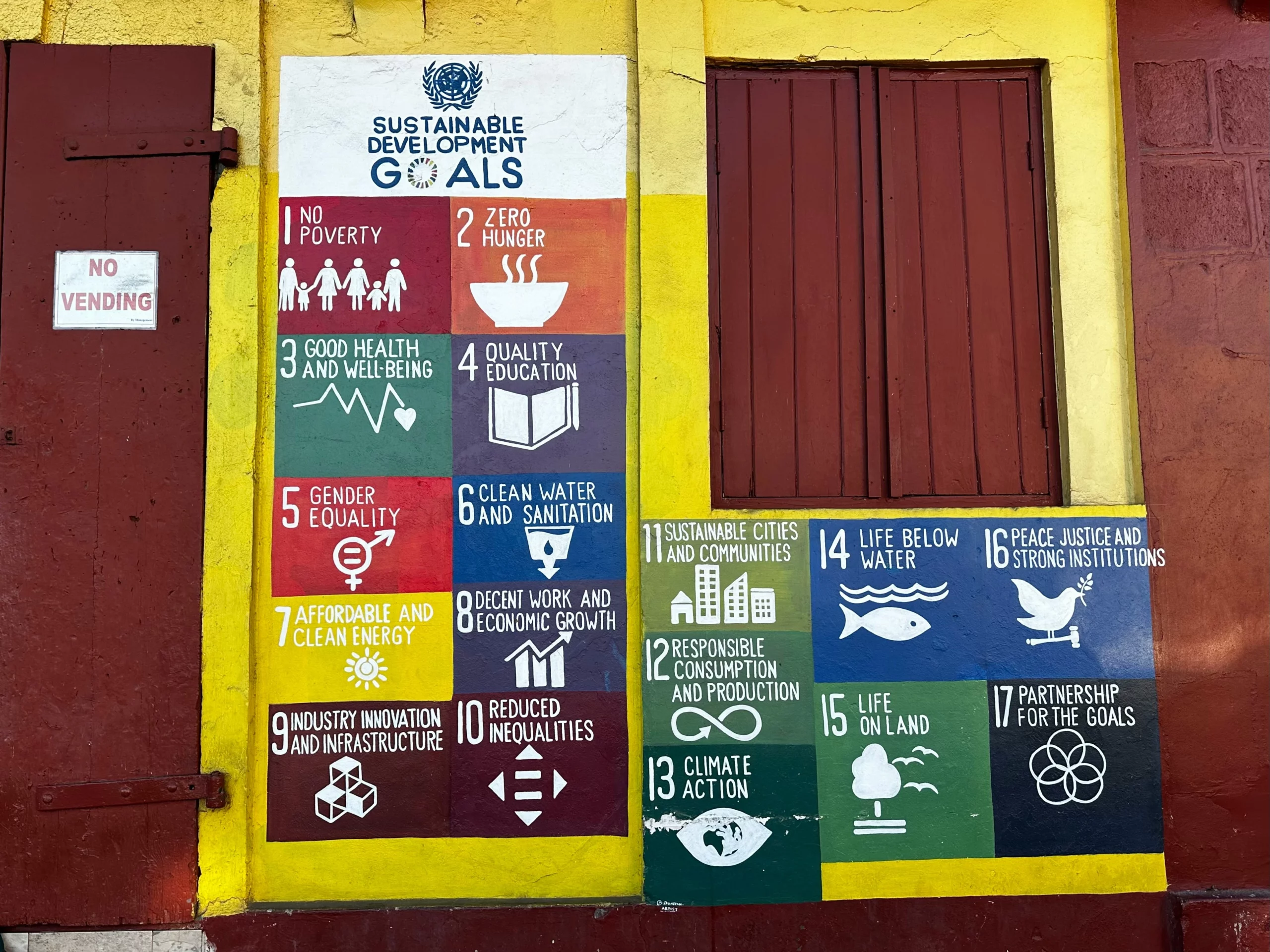
    COP22 should not stand alone but connect to broader frameworks such as the Sustainable Development Goals, particularly SDG 11, and the Habitat III Urban Agenda. Local financial capacities and legal competences must be assessed early to avoid unrealistic policies or burdensome costs for municipalities. 
  1. Mobilising financial and political resources 
    Successful climate action requires adequate resources. CEMR and PLATFORMA highlighted the importance of EU Structural and Investment Funds, access to global climate financing, and innovative tools like sustainable public procurement. Local politicians’ direct engagement and citizen ownership are vital to building resilient and low-carbon communities. 
  1. Mainstreaming local action into EU and national policies 
    Climate legislation must fully integrate the local dimension. Early recognition of local authorities as legitimate actors is essential. Initiatives such as the EU Urban Agenda, Territorial Agenda 2020, and the Covenant of Mayors show how climate policies can work when municipalities are treated as true partners. 
  1. Encouraging cooperation and knowledge exchange 
    Sharing practices, tools, and joint initiatives among cities and regions is key to accelerating progress. Decentralised cooperation, particularly through the Covenant of Mayors in Sub-Saharan Africa and the Global Covenant of Mayors, demonstrates how European municipalities can support global peers in their transition to sustainable development. 
     

CEMR and PLATFORMA reaffirmed their commitment to climate action by promoting multi-level governance, showcasing local best practices, and strengthening decentralised cooperation worldwide. Their message at COP22 was clear: local and regional governments are not bystanders but central actors in achieving a sustainable, low-carbon future. Climate action is an opportunity for green jobs, growth, and resilience, and municipalities and regions are ready to lead. 

Read the position paper here 

For more information, contact: 

State ofplay – energy union

Energy Transition - News

Becoming More Energy Efficient: CEMR’s Key Messages for the EU’s Legislative Review on Energy


As the European Union prepares to revise its energy legislation, the Council of European Municipalities and Regions (CEMR) is calling on the EU and national governments to place local and regional authorities at the heart of the energy transition.

Cities and regions across Europe are already taking bold steps to become more energy-efficient, reduce emissions, and build climate-resilient communities. But to succeed, they need enabling legislation, access to funding, and recognition of their existing efforts. The forthcoming reviews of the Energy Efficiency Directive, the Energy Performance of Buildings Directive, and the Renewable Energy Directive are key opportunities to strengthen local involvement and accelerate the green transition.

Four Key Messages from CEMR

1. Governance: Empower Local and Regional Authorities

CEMR urges EU institutions to embrace a shift towards inclusive, multi-level governance. Local and regional governments are no longer just implementers, they are now co-drivers of the energy transition. The EU must ensure that subnational authorities are directly involved in preparing and implementing national energy and climate plans. A bottom-up approach is not only more democratic but also more effective in engaging citizens and delivering tangible results on the ground.

Many local governments have already developed Sustainable Energy and Climate Action Plans through initiatives like the Covenant of Mayors. These efforts show that local leadership is essential to reaching EU targets for 2030, including a 40% reduction in greenhouse gas emissions and a 27% share of renewable energy.

2. Regulation: Promote Flexibility and Policy Integration

CEMR advocates for flexible regulations that acknowledge the diverse realities across Europe. While energy efficiency goals are shared, the path to achieving them must be adaptable to local contexts. The principle of subsidiarity must guide legislation, allowing local governments to balance economic, social, and environmental priorities.

Local authorities must also retain discretion in public procurement, especially when it comes to energy performance requirements. Instead of imposing rigid obligations, the EU should provide guidance and incentives, for instance, by supporting the use of life-cycle costing and encouraging innovation in decentralised energy systems.

3. Financing: Ensure Access to Funding

Ambitious targets demand robust financial support. Cities and regions need accessible and flexible financing tools to renovate public buildings, deploy renewables, and invest in low-carbon infrastructure. CEMR stresses the importance of tailored financial mechanisms, such as off-balance sheet financing and favourable loans supported by the European Investment Bank or Member States.

The EU must also address legal and procedural barriers to joint procurement and bundled investments across municipalities. Initiatives like the CITYnvest project show how collaboration can unlock innovative financing and accelerate energy-efficient renovation.

4. International Cooperation: Strengthen Global Partnerships

CEMR, together with its PLATFORMA partners, champions international cooperation among local and regional authorities. Building on the legacy of strong local governance, these partnerships support low-carbon development worldwide.

CEMR also plays an active role in global advocacy through forums like the UNFCCC COPs and Habitat summits. The international community is increasingly recognising the value of local action, and European cities are leading the way.

Conclusion

CEMR stands ready to support the EU’s energy transition, but success hinges on empowering local and regional governments. With the right governance, flexible regulation, accessible financing, and global collaboration, the EU can deliver a just, effective, and locally driven pathway to a sustainable energy future.

Read the position paper here

For more information, contact:

Circular economy starts locally

Waste - News Section

CEMR’s Priorities for Revising EU Waste Rules and Advancing the Circular Economy 


With the EU revising its Waste Framework Directive as part of the broader Circular Economy Package, the Council of European Municipalities and Regions (CEMR) is calling for an approach that respects local realities and builds true governance partnerships

Local and regional governments are central to delivering Europe’s circular economy goals. From waste collection and recycling to raising citizen awareness, they are closest to the daily operations that make sustainability a reality. 

In its 2016 position, CEMR welcomes the Commission’s shift toward a more balanced approach. It supports clearer definitions for municipal waste, realistic recycling targets, and the inclusion of Extended Producer Responsibility (EPR) rules. However, CEMR also warns against overregulation through delegated acts and stresses the importance of flexibility in areas like separate collection and biowaste. 

Key recommendations include: 

  • Respecting subsidiarity: Leave room for national and local adaptation. 
  • Ensuring fair cost-sharing: Producers should fully cover the costs of waste linked to their products. 
  • Supporting public investment: EU funds must clearly back local waste infrastructure. 
  • Promoting green public procurement: Encourage but avoid overlap with procurement rules. 
  • Looking beyond municipal waste: Industrial and commercial sectors must also be addressed. 

Ultimately, CEMR sees municipalities as essential partners, not just implementers, in shaping a sustainable and job-creating circular economy. Without their full involvement and adequate resources, Europe risks missing the mark on both ambition and delivery. 

Read the position paper here 

For more information, contact: 

Simplifying EU funds for all 

Cohesion Policy - News 2023

Clearer rules and better access to cohesion funding 


Accessing EU funding shouldn’t be complicated and yet, for many local and regional governments, navigating the European Structural and Investment Funds (ESIF) remains a challenge. In its 2016 position paper, the Council of European Municipalities and Regions (CEMR) outlines concrete proposals to simplify EU cohesion funding, making it easier and more efficient for local authorities and other beneficiaries to participate. 

Key recommendations 

CEMR’s proposals focus on five main priorities

  1. Harmonising rules across funds 
    The current system is fragmented, with different rules for different funds and ministries. CEMR advocates for common procedures and a “one-stop-shop” that simplifies access, coordination, and application processes, particularly for multi-fund programmes. 
  1. More flexibility at the national and local levels 
    Local needs vary, but EU rules often limit how funds can be used. CEMR urges the EU to give Member States and local authorities greater flexibility to set priorities, so that funding can better address real challenges like broadband access, transport, and local infrastructure. 
  1. Streamlining controls and audits 
    Excessive checks and overlapping audits discourage smaller beneficiaries. CEMR calls for a more proportionate and risk-based approach, better coordination among audit bodies, and a clear distinction between fraud and honest mistakes. 
  1. Results-based funding 
    Rather than focusing on paperwork and compliance, funding should reward measurable outcomes. CEMR supports instruments like Joint Action Plans and Integrated Territorial Investments (ITIs), though they are still underused due to late or unclear guidance. 
  1. Clearer, timely guidance 
    Technical guidance should be available early in the process and in all EU languages. This helps local and regional stakeholders plan ahead and ensures they are not penalised by last-minute rule changes. 

Building trust through better governance 

At its core, CEMR’s message is about trust and responsibility. Local authorities should be empowered to manage funding within clear frameworks, with a focus on results, not red tape. Simplifying EU funds is not just about efficiency; it’s about ensuring that local communities can truly benefit from European solidarity. 

CEMR remains committed to working with EU institutions and Member States to make simplification a reality on the ground

Read the position paper here 

For more information, contact: 

A smarter EU urban agenda

Head Banner - RFSC

Simplification, coordination and local leadership for better urban policy


As cities and towns face rising challenges, from ageing populations to climate adaptation, the EU Urban Agenda must evolve to support them effectively. In its 2015 position paper, the Council of European Municipalities and Regions (CEMR) sets out key proposals to make the Urban Agenda a useful and inclusive tool for all local governments, regardless of size or geography.

What’s needed for real impact?

1. A clear roadmap with local voices at the table
An EU Urban Agenda should not be a top-down project. It must be developed in partnership with local governments and their associations, with a well-defined timeline and concrete actions.

2. Territorial impact across all policies
Policies across all EU institutions, not just DG REGIO, should consider local impacts. A strong territorial dimension in EU policymaking can ensure smarter regulation with less administrative burden.

3. Recognising cities of all sizes
Urban policy should reflect the reality of Europe’s diverse territories, including small and medium-sized towns and functional areas, not just major cities.

4. Easier access to EU funds
More streamlined, locally managed funding for urban development will empower municipalities to lead the changes they are best placed to deliver.

5. Innovation without rigid standards
While innovation is key, any urban indicators (e.g. for “smart cities”) should remain voluntary, flexible, and designed with local input, not imposed through rigid benchmarks.

Towards an inclusive global agenda

CEMR also calls for stronger involvement of local authorities in shaping the EU’s input into international processes, including the Habitat III conference and the global New Urban Agenda. Cities and towns are where global challenges meet real-world solutions, and local voices must shape the global conversation.

Read the position paper here

For more information, contact:

Women Leadership

Women - News Section

Women leadership at the local level: a requirement to fight against climate change


“As a woman leader I encourage us all to take development challenges into our own hands,” said the Mayor of Paris, Anne Hidalgo, at the meeting on women’s leadership in development organised by our global association (UCLG), on 6 December, in the city hall of Paris.

Organised in the margins of the COP21 negotiations, the event gathered local elected representatives worldwide to put forward the gender equality approach in the fight against climate change, to achieve the Sustainable Development Goals and to shape sustainable urban policies.

Read a full article on the event on the website of the Charter of the Observatory for equality of women and men in local life.

Gender Equality Policies

Gender Equality - News Section

European institutions should support towns and regions to plan, monitor and evaluate gender equality policies


The Observatory on the European Charter for equality of women and men in local life (the Observatory) and the Council of European Municipalities and Regions (CEMR) call on the European institutions to support towns and regions to implement initiatives to advance gender equality at the local level. 

Today, 1500 towns and regions from 32 European countries are already taking action towards gender equality, for instance, by promoting gender diversity in municipal professions, like bus drivers, or by offering training programmes in schools to prevent gender-based stereotypes. This is why, in October 2015, the Observatory launched a toolkit to support these towns and regions to plan, monitor and evaluate gender equality policies. The new tool includes a set of 76 indicators covering areas such as employment, decision-making process or social care.

Despite local government efforts, several challenges remain, such as the lack of financial and human resources or non-adapted national institutional framework. To overcome these challenges, EU institutions must support fully policies developed by towns and regions. Otherwise the risk is that initiatives undertaken by municipalities, cities and regions will diminish or even disappear. Using this tool will therefore provide a real chance to achieve this goal: “We must ensure that this new tool does not remain hidden away in a drawer,” said Ibon Uribe CEMR spokesperson for gender equality.

In addition, locally elected representatives should be included in the implementation of the EU’s future strategy for equality that will frame European actions and policies to improve gender equality over the next five years. 

The Observatory and CEMR call on towns and regions to use the tool

The new tool will make it easier to identify needs on the ground and to set up suitable projects, such as the establishment of public bodies to ensure gender equality or the promotion of women in decision-making positions at the local level.  

“The toolkit will constitute a common framework at European level for local and regional governments to monitor gender equality policies,” said CEMR spokesperson on gender equality. This is why it is important for CEMR’s associations to undertake their responsibility and support the implementation of public policies. “Now it is our role to ensure that this tool is disseminated and used. This is our collective responsibility, the European institutions, CEMR member associations and we as politicians and experts at local and regional level,” stated Ibon Uribe. 

Local voices for climate at COP21 

Environment - News section

Municipalities and regions shaping COP21 success 


In December 2015, the Paris Summit (COP21) became a milestone in global climate governance. For Europe’s municipalities and regions, represented by CEMR and PLATFORMA, it was the moment to demonstrate that climate action succeeds only when local and regional governments are part of the solution. By presenting clear demands, affirming shared values, and committing to concrete actions, local leaders positioned themselves as indispensable actors in the transition to low-carbon societies. 

Developing the Demands and Values 

Local and regional governments brought forward a set of concrete demands to ensure their recognition in climate governance. They called for: 

  • A structured EU dialogue to integrate the subnational dimension into the UNFCCC process. 
  • A formal seat at the COP negotiation table for municipalities, regions, and their associations. 
  • Stronger support for networks, enabling them to deliver unified positions and assist EU institutions. 
  • Mainstreaming climate across all EU and national policies, ensuring local perspectives are embedded from the outset. 
  • Recognition of green public procurement as a driver for innovation and CO₂ reduction. 
  • Links between COP outcomes, the SDGs, and Habitat III, ensuring consistency across global agendas. 
  • Adequate financing and research tools, including access to EU Structural and Investment Funds and international climate funds. 
  • Better EU regulation, with early recognition of local authorities in decision-making. 
  • Support for knowledge exchange at the subnational level in Europe and globally. 

Underlying these demands are shared values: confidence in local governments’ ability to deliver, support for the EU’s climate objectives, and the conviction that climate action is also an opportunity for green jobs and sustainable growth. 

Actions on the Ground 

Municipalities and regions also highlighted how they are already leading by example: 

  • Multi-actor governance: championing bottom-up approaches, engaging with all levels of government and stakeholders to tackle climate change collectively. 
  • Local leadership: through initiatives like the Covenant of Mayors and Mayors Adapt, thousands of cities have set ambitious emission-reduction goals. 
  • Networking for impact: collaborating across European and global networks to amplify messages and coordinate strategies. 
  • Tools for sustainable planning: promoting the Reference Framework for Sustainable Cities (RFSC) to benchmark and guide local sustainable development. 
  • Decentralised cooperation: supporting international partnerships where European municipalities work hand in hand with peers worldwide to advance sustainable urban development. 

At COP21, local and regional governments made clear that the Paris Agreement could only succeed with their full participation. Their message was simple but powerful: municipalities and regions are closest to citizens, already delivering results, and ready to scale up climate ambition. Recognising and empowering them is not optional, it is essential to building a sustainable, low-carbon future. 

Read the position paper here 

For more information, contact: