MFF and COVID recovery

MFF and COVID recovery - News 2020

Upcoming recovery package and MFF should support municipalities and regions


The response to the COVID-19 pandemic has made it clear: local and regional governments are playing a crucial role in implementing and monitoring the necessary measures to tackle the crisis. With revenue sources in steep decline and expenses skyrocketing, municipalities and regions need to be specifically targeted under the European Union’s proposed recovery plan.

More than ever, the EU needs a robust budget, both for the immediate recovery and to invest in future generations. This has been clearly voiced by European Commission President Ursula von der Leyen and is backed up by the joint proposal of French President Emmanuel Macron and German Chancellor Angela Merkel to provide a €500 billion recovery fund to modernise the European economy.

The European institutions and national governments must closely involve municipalities, regions and their representative associations in the implementation of the recovery fund.  As the OECD states in its recent study on the territorial impact of COVID-19, coordination mechanisms and shared responsibilities across all levels of government are essential to ensuring a coherent and effective response.

What’s more, the recovery fund will be linked to the Commission’s recommendations to member states issued as part of the European Semester. Given that 60% of these recommendations have a local or regional impact, it is essential to take into account local and regional governments’ role in the recovery. This is all the more necessary insofar as the fund aims to support those regions and sectors that have suffered most.

Supporting future-oriented investments and resilient territories

CEMR fully supports using the EU’s new Multiannual Financial Framework (MFF) to encourage future-oriented investments that respect European climate ambitions and foster resilient societies, including through the Green Deal and the Digital Strategy.

Member States have a unique opportunity here to take action to mitigate and fight against climate change”, said French Senator and CEMR Spokesperson for Climate Ronan Dantec. “The EU’s immediate and long-term investments need to be climate-proof, especially in the areas of mobility, construction and energy.

Cohesion funds are more crucial than ever to enabling Europe’s towns and regions to undertake long-term and sustainable planning and investment, and thus become more resilient. That is why cohesion policy should continue to make up at least one third of the EU budget.

“Europe now needs to be thinking about the post-crisis situation and long-term needs”, said Ilaria Bugetti, Councillor of the Toscana Region and CEMR Spokesperson for Territorial Development. “We need to support the local economies and citizens that have suffered from the lockdowns, rethink territorial planning and redesign urban spaces to make them more resilient; we have to invest in innovation and education to make our societies sustainable and fit for a carbon-free future. This is a huge effort, to which cohesion funds need to considerably contribute.”

Decentralised cooperation will contribute to the EUs international engagements

Municipalities and regions are also well-placed to contribute to the EU’s international development policies, if supported by the right tools, notably the new Neighbourhood, Development and International Cooperation Instrument (NDICI).  “Local and regional governments’ actions with partner countries to limit the spread of COVID-19 show once again their central role beyond our borders”, said Tine Soens, Municipal Councillor for Kortrijk (Belgium) and PLATFORMA Spokesperson for International Cooperation. “By financing decentralised cooperation between towns and regions, the EU’s long-term budget can foster a swift recovery and resilient societies worldwide.

The future EU budget must be agreed as soon as possible and ideally before the end of the year. Any further delay would jeopardise the security of many planned EU projects and negatively impact municipalities, regions, SMEs, workers and an already vulnerable population.

Equality in Poland

Equality in Poland - News 2020

Local and regional leaders across Europe oppose self-declared “LGBTI-free zones” in Poland


Whereas in Poland around 100 municipalities have instituted “anti-LGBTI” zones or other discriminatory measures, the Council of European Municipalities and Regions (CEMR) calls on Europe’s local and regional officials to support their peers fighting against homophobia.

Frédéric Vallier, CEMR’s Secretary General, and Emil Broberg, Regional Councillor of Östergötland (Sweden) and Chair of CEMR standing committee for Equality, have jointly penned an open letter opposing these measures to Polish municipalities, counties and regions. They call on local and regional governments throughout Europe to express their support by signing on to the letter. To date, CEMR has collected 120 signatures from 14 European countries.

Expressing his view on the situation in Poland, CEMR President and President of the Emilia-Romana Region Stefano Bonaccini said: “Equality is for all Europeans. It is a core European value. As we are striving to build a better and brighter future for all, we simply cannot turn back the clock on human rights and sweep aside decades’ worth of progress.

“In the world we live in today, equality must be built from the ground up”, said Emil Broberg. “Local and regional governments should not give way to national political movements opposing equality. On the contrary, municipalities and regions can set an example by holding firm to the principles of human rights and to the progress we have made so far.

Further confirmation of the gravity of the situation came last week with the publication of the European Union Agency for Fundamental Rights’ survey on LGBTI equality, which revealed that 40% surveyed people in Europe said they experienced harassment due to their sexual orientation. In the case of Poland, intolerance towards LGBTI people has increased overall and the country has the highest rates of physical or sexual attacks motivated by the victim being LGBTI (15%).

The open letter also seeks to counter the rise in anti-LGBTI rhetoric. It affirms the signatories’ support for Polish local and regional governments that have rejected and resisted discriminatory measures and who continue to champion the common fundamental European values of freedom and human rights.

Many local and regional officials in Poland are fighting against these anti-LGBTI measures. Marta Mazurek, Municipal Councillor for Poznan, is one of them. “As a Polish elected representative and as a European, I am very grateful for any international support for human rights and gender equal policies”, she said. “Such support energises our efforts and fortifies our courage.”

With this action, CEMR calls for dialogue and invites European cities who have relations with the concerned Polish municipalities and regions to raise the issue. Local and regional governments across Europe should share their experiences in addressing issues of discrimination and equal rights, for the benefit of all.

List of signatories (as of 25 August):

Stefano Bonaccini, CEMR President and President of the Emilia-Romana Region – Italy | Emil Broberg, Chair of CEMR’s standing committee for Equality, Regional Councillor of Östergötland – Sweden | Frédéric Vallier, CEMR Secretary General and:

Anne Hidalgo, Mayor of Paris – France | Dagur B. Eggertsson, Mayor of Reykjavík – Iceland | Fernando Medina, Mayor of Lisbon – Portugal | Zoran Janković, Mayor of Ljubljana – Slovenia | Dieter Reiter, Lord Mayor of Munich – Germany | Anders Knape, President of the Congress of Local and Regional Authorities of the Council of Europe, SALAR President, Lord Mayor of Karlstad – Sweden | Gunn Marit Helgesen, President of the Chamber of Regions of the Congress (Council of Europe), Councillor of Telemark – Abel Caballero Álvarez, FEMP President, Mayor of Vigo – Spain | Aldis Hafststeinsdottir, SAMBAND President, Mayor of Hveragerðisbær – Iceland | Bjørn Arild Gram, KS President, Mayor of Steinkjer – Norway | Emile Eicher, SYVICOL President, Mayor of Clervaux – Luxembourg | Gorka Urtaran, EUDEL President, Mayor of Vitoria-Gasteiz – Spain | Jan Van Zanen, VNG President, Mayor of Utrecht – Netherlands | Philippe Laurent, AFCCRE President, Mayor of Sceaux – France | Stéphane Roberti, BRULOCALIS President, Mayor of Forest – Belgium | Ahmed Laaouej, Mayor of Koekelberg – Belgium | Andreas Starke, Lord Mayor of Bamberg – Germany | Belit Onay, Lord Mayor of Hanover – Germany | Bojan Srot, Mayor of Celje – Slovenia | Carlos Martínez Mínguez, Mayor of Soria – Spain | Carola Gunnarsson, Lord Mayor of Sala – Sweden | Christian Scharpf, Lord Mayor of Ingolstadt – Germany | Dirk De fauw, Mayor of Bruges – Belgium | Eva Döhla, Lord Mayor of Hof – Germany | Felix Schwenke, Lord Mayor of Offenbach – Germany | François Rebsamen, Mayor of Dijon – France | Frédéric Valletoux, Mayor of Fontainebleau – France | Fritz Kuhn, Lord Mayor of Stuttgart –- Germany | Henriette Reker, Lord Mayor of Cologne – Germany | Hermann-Josef Pelgrim, Lord Mayor of Schwäbisch Hall – Germany | Javier Ayala, Mayor of Fuenlabrada – Spain | Jochen Partsch, Lord Mayor of Darmstadt – Germany | Johan Rocklind, Mayor of Gnesta – Sweden | Johanna Rolland, Mayor of Nantes – France | Josep Mayoral Antigas, Mayor of Granollers – Spain | Juan María Aburto Rique, Mayor of Bilbao – Spain | Jürgen Zieger, Lord Mayor of Esslingen am Neckar – Germany | Katrin Stjernfeldt Jammeh, Mayor of Malmö – Sweden | Klaus Mohrs, Lord Mayor of Wolfsburg – Germany | Klaus Schmotz, Lord Mayor of Hansestadt Stendal – Germany | Lilja Einarsdóttir, Mayor of Hvolsvöllur – Iceland | Madelaine Jakobsson, Mayor of Nordmaling – Sweden | Mari-Louise Wernersson, Mayor of Falkenberg – Sweden | Maria Noelia Garcia Leal, Mayor of Los Llanos de Aridane – Spain | Markus König, Lord Mayor of Nuremberg – Germany | Markus Lewe, Lord Mayor of Münster – Germany | Michael Ebling, Lord Mayor of Mainz – Germany | Michael Makiolla, Head of Unna District Council – Germany | Nathalie Appéré, Mayor of Rennes – France | Norbert Zeidler, Lord Mayor of Biberach an der Riss – Germany | Peter Freier, Mayor of Offenbach – Germany | Peter Kurz, Lord Mayor of Mannheim – Germany | Phedon Phedonos, Mayor of Paphos – Cyprus | Pietro Puccio, Mayor of Capaci – Italy | Pit Clausen, Lord Mayor of Bielefeld – Germany | Rico Badenschier, Lord Mayor of Schwerin – Germany | Simone Lange, Lord Mayor of Flensburg – Germany | Stefan Belz, Lord Mayor of Böblingen – Germany | Thomas Andersson, President of the Regional Council of Jämtland Härjedalen – Sweden | Thomas Geisel, Lord Mayor of Düsseldorf – Germany | Tim Kähler, Mayor of Hansestadt Herford – Germany | Ulrich Markurth, Lord Mayor of Brunswiek – Germany | Vanessa Slimani, Mayor of Saint Jean de Braye – France | Victor Hadjiavraam, Mayor of Morphou – Cyprus | Yoomi Renström, Lord Mayor of Ovenåker – Sweden | Alessandra Medici, Councillor of Guastalla – Italy | Amelie Tarschys Ingre, Vice-Mayor of Lidingö – Sweden | Anders Henriksson, Regional Councillor of Kalmar – Sweden | Andreas Höffler, Councillor of Berching – Germany | Andreas Wolter, Vice-Mayor of Cologne – Germany | Andri Michalia, Councilor of Lakatamia – Cyprus | Angela Everbäck, Councillor of Vellinge – Sweden | Anne Herrezeel, Councillor of Eghezée – Belgium | Anne Tyssaen, Deputy Mayor of Koekelberg –Belgium | Benjamin Debroux, Councillor of Jumet – Belgium | Jürgen Czernohorszky, Executive City Councillor of Vienna – Austria | Benjamin Plach, Councillor of Innsbruck – Austria | Carine Gol-Lescot, Deputy Mayor of Uccle – Belgium | Carine Henry, Chair of Floreffe public centre for social welfare – Belgium | Caroline Quintero P., Councillor of Namur –Belgium | Cécile Egrix, Councillor of Uccle – Belgium | Cecilia Dalman Eek, Regional Councillor of Gothenburg – Sweden | Christine Oppitz-Plörer, Councillor of Innsbruck – Austria | Christophe Pierroux, Councillor, Etterbeek public centre for social welfare – Belgium | Dennis Wedin, Vice-Mayor of Stockholm – Sweden | Dejan Lukovic, Councillor of Innsbruck – Austria | Elisabeth Unell, Vice-Mayor of Västerås – Sweden | Fatmir Limani, Deputy Mayor of Koekelberg – Belgium | Gabi Laschet-Einig, Councillor of Lahnstein – Germany | Giovanni Allodi, Councillor of Poviglio – Italia | Gunilla Westerberg Dupuy, Deputy Mayor of Suresnes – France | Henrik Hammar, Councillor of Örkeljunga – Sweden | Irlin Bråten, Trosopplæringsleder – Norway | Janine Bex, Councillor of Innsbruck – Austria | Jelena Drenjanin, Vice-Mayor of Huddinge – Sweden | Jens Sjöström, Regional Councillor of Stockholm – Sweden | Jonathan Biermann, Alderman of Uccle – Belgium | Khalil Aouasti, Deputy Mayor of Koekelberg – Belgium | Kathleen Delvoye, Councillor of Uccle – Belgium | Laura Goffart, Councillor of Liège – Belgium | Laurence Vandeputte, Councillor of Uccle – Belgium | Lorenzo Pasini, Councilor of Colorno – Italy | Maëlle Brouwer, Deputy Mayor of Uccle – Belgium | Magnus Berntsson, Vice-President of the Regional Council of Västragötland – Sweden | Marie Bijnens, Deputy Mayor of Koekelberg – Belgium | Martin Casier, Councillor of Watermael-Boitsfort – Belgium | Nadia Badri, Deputy Mayor of Koekelberg – Belgium | Nora Bednarski, Councillor of Ixelles – Belgium | Ossamah Maghfour, Lord Mayor of Koekelberg – Belgium | Patrick Klugman, Deputy Mayor of Paris – France | Paul-Gerhard Weiß, Councillor of Offenbach – Germany | Romain De Reusme, Alderman of Ixelles – Belgium | Ronan Dantec, Senator and Councillor of Nantes – France | Sabine Groß, Councillor of Offenbach – Germany | Sihame Haddioui, Deputy Mayor of Schaerbeek – Belgium | Theresa Ringler, Councillor of Innsbruck – Austria | Thomas Lechleitner, Councillor of Innsbruck – Austria | Véronique Lefrancq, Deputy Mayor of Koekelberg – Belgium

EU funds

EU Funds - News 2020

How to upgrade the EU’s COVID response in the territories


This op-ed by CEMR Secretary General, Frédéric Vallier, was originally published in English in Euractiv and in French in Le Courrier des Maires and in Euractiv France.

While all of Europe is reeling from the coronavirus pandemic, the crisis undeniably has a strong territorial dimension. Some localities and territories are more severely affected and different regions are not equally well equipped to deal with such a rapidly propagating virus. There is unbearable pressure on hospitals and health services, most severely in areas such as northern Italy, Spain, northern England, or eastern France.

Municipalities and regions are at the forefront of this crisis, whether in enforcing lockdowns, continuing to provide essential public services – above all healthcare and support for the most vulnerable – or in leading the gradual relaxation of containment measures. At the same time, many of their sources of revenue are falling due to the closure of public facilities and the general economic slowdown.

The European Commission has taken steps towards addressing these challenges by creating the Coronavirus Response Investment Initiatives (CRII and CRII+). These will provide unspent cohesion funds to finance medical assistance and economic and social support to fight the pandemic.

The new rules feature some welcome flexibility. Member States will be able to redirect money from the European Regional Development Fund (ERDF) towards the priorities they identify, such as direct support to SMEs. They will also have the option of transferring money between different thematic priorities and cohesion funds.

In this difficult moment, we are fortunate to be able to build on solidarity and cooperation between European regions. This is what European Cohesion Policy is all about.

Improving the Coronavirus Response Investment Initiatives

However, there continue to be obstacles to the rapid and smooth implementation of the new measures and the EU’s territorial response to coronavirus could be improved. In particular, the rules of audits and control need to be drastically relaxed to allow the Managing Authorities to make rapid and secure use of these measures. The controls on state aid, public procurement, traceability, justification of expenses and eligibility of beneficiaries must be adapted to the new needs and the emergency situation created by the crisis. 

The possibility of transferring funds between categories of regions should be solely motivated by high local or regional impact of the current health, social and economic crisis. Otherwise, there is a risk that funds will be recentralised at the national level at a time when Member States are defining how they will work with the local and regional level for the next budgetary period. 

The impact of the COVID-19 crisis on the local and regional level is tremendous and the proposed support will not be sufficient to address it completely. What’s more CRII and CRII+ will only use unallocated cohesion funds from the previous spending period and hence the money available in various countries will not necessarily be proportionate to COVID-19’s impact there.

At CEMR, we strongly believe the European Commission and Member States should explore additional possibilities to support municipalities and regions. The Commission in particular should consider extraordinary measures for 2021 in order to ensure continuity of the response to the economic and social challenges that are only beginning to emerge. 

The EU’s long-term response

We can’t go back to business as usual. We need a long-term budget and strategy to be prepared for future pandemics and crises. 

Member States are struggling to contain the pandemic because of a structural lack of investment in critical sectors. This shows more than ever the need for a strong Cohesion Policy, which is not designed to respond to an urgent crisis situation, but rather to structurally strengthen regions’ social and economic development (including health and climate action) through long-term planning.

This crisis has also shown that European states have failed to ensure their collective capacity to respond to such a situation. We will need to rethink our model of development, so that our continent can provide for our basic needs and not be dependent on others when it comes to safeguarding the health and life of Europeans. 

Without an agreement on the EU’s next long-term budget, we will not have the resources to answer the dire needs of citizens and the territories most affected by the crisis. I urge legislators to promptly reach an agreement for an ambitious Multiannual Financial Framework (MFF). This must provide the necessary funds to dampen the COVID-19 crisis’ short- and medium-term socio-economic impact and promote robust territorial, economic and social cohesion in all Member States and regions.

Municipalities and regions have a wealth of experience and expertise of practical management in our territories. As such, to ensure CRII and CRII+ can be swiftly and practically implemented, we call on Member States to include their country’s associations of local and regional governments in the reflection on how to implement these new measures. The associations will be able to identify the remaining barriers to the full application of the CRII and CRII+. At European level, the Council of European Municipalities and Regions will both collect and share information on the effective implementation of CRII and CRII+ in different Member States.

We must do all we can to help those in need and put an end to this pandemic. The need for a vigorous immediate response should not however make us lose sight of our long-term goals: resilient and equitable societies founded on sustainable development. A strong Cohesion Policy is needed more than ever to make sure all of Europe’s territories can thrive and look to the future with confidence.

Statement on COVID-19

COVID Statement - News 2020

Stefano Bonaccini: Strong local and regional governments are crucial to tackling COVID-19


This op-ed by CEMR President Stefano Bonaccini was first published by EUobserver.


The COVID-19 pandemic is an unprecedented situation for virtually all of Europe’s citizens, territories and Union. So far, over a million Europeans have been infected and 100,000 have died from this disease. These grim figures can only increase in the coming weeks and months. All of our lives have been affected in one way or another.

As President of the Italian Region of Emilia-Romagna and of the Council of European Municipalities and Regions, I have witnessed first-hand the efforts and sacrifices of our doctors, nurses, police officers, waste collectors, civil servants, volunteers and countless others in the struggle to protect our citizens from the virus and continue to serve their community.

As is often the case during crises, municipalities and regions are on the frontlines against this pandemic. They continue to provide essential services all the while doing their utmost to limit the risk of further infection. Simultaneously, local governments face huge shortfalls in revenue due to the collapse in business activity and general economic slowdown, as well as the closure of theatres, museums and sports facilities. In Italy alone, cities face a shortfall in revenue estimated around €3 billion.

At a time when solidarity was needed, European States’ initial response was dismaying. Nationalistic reflexes reappeared in many countries, with export embargoes on certain medical products and even expressions of xenophobia. All EU countries and levels of government must now work together to fight this virus, which respects neither borders nor nationalities and restore our continent’s well-being.

We have been happy to see the swift mobilisation of resources by the European institutions. More will have to be done however to overcome this crisis and be better prepared for the next one. The Council of European Municipalities and Regions and its members are committed to a strong and united Europe, based on joint action, shared values, and solidarity.

Though EU Cohesion Policy is not designed to respond to emergency situations, it will in this crisis show its usefulness as a concrete expression of European solidarity. The European Commission’s new Coronavirus Response Investment Initiative (CRII), allocating unspent cohesion funds to help municipalities and regions to handle the crisis, will provide much-needed support.

It is true that the new financial assistance will not be sufficient and will even be marginal compared to the large-scale national support schemes that are being prepared in the Member States. Beyond the emergency response, CEMR urges the Commission to consider extraordinary measures for 2021 to ensure continuity of response to the economic and social challenges that are only beginning to emerge.

More generally, we call on the European Commission to work with us and Member States to include the national associations of local and regional governments in their immediate and long-term working groups responding to coronavirus.

Why? Because, our expertise, knowledge of territorial realities and continuous contact with local and regional officials can be of invaluable assistance. In all affected countries, and in particular among the worst-hit as I can bear witness in my own country of Italy, we have seen that a coordinated response and dialogue between cities, regions and national governments are crucial.

As we enter a new phase of gradually withdrawing restriction measures, municipalities and regions will continue to have a crucial role. As the European Commission observed in its recent coronavirus exit strategy roadmap: “The lifting of measures should start with those with a local impact and be gradually extended to measures with a broader geographic coverage”. Close collaboration with local and regional governments will be essential in safely executing this great task.

The ordeal of COVID-19 must lead us to reflect on our policies and stimulate us to prepare for the future. Addressing the immediate crisis should not make us overlook the need to invest in the future-oriented sectors necessary for a prosperous and sustainable future. The European Green Deal and the European Digital Strategy are steps in the right direction and others should follow.

This crisis shows yet again the need for strong international coordination and resilient territories. As such, Europe should continue to promote worldwide both vertical and horizontal cooperation between all levels of government, as well as the achievement of the Sustainable Development Goals.

It is often said that the European Union takes the necessary steps when it is challenged by a crisis. If this is true, we should not remain passive in this ongoing tragedy, but make the most to prepare for a healthier and safer tomorrow. It is not too late to unite and to build a sustainable future based on solidarity.
Europe’s municipalities and regions are ready to play their part.

Gender equality: A local matter

Gender Equality - News

Exploring the EU Gender Equality Strategy 2020–2025 and what it means for Europe’s local and regional governments 


In a significant move for gender equality in Europe, the European Commission has adopted a new Gender Equality Strategy for 2020–2025. As the first high-level communication of its kind in years, this strategy sets out a clear ambition to achieve a Europe free from gender-based violence, stereotypes, and structural inequalities. 

The Council of European Municipalities and Regions (CEMR) has conducted an in-depth analysis of the strategy, identifying its opportunities, shortcomings, and implications for local and regional governments. 

Key developments and opportunities 

The Commission’s strategy adopts a dual approach, combining targeted actions with systematic gender mainstreaming, and for the first time, takes an intersectional perspective. The strategy touches on six key areas, from violence prevention to women’s representation and gender equality in the workplace. 

Local and regional governments stand to benefit from new funding and networking opportunities, particularly in the areas of gender-based violence prevention, childcare provision, care infrastructure, and women’s entrepreneurship. The establishment of an EU network for preventing domestic violence, EU-wide awareness campaigns, and future updates to childcare targets all offer a space for local actors to lead and share practices. 

New investment and support opportunities through the European Social Fund Plus, Horizon Europe, and Common Agricultural Policy also provide avenues for local authorities to implement gender-sensitive services and policies. 

Gaps and concerns 

Despite these strengths, CEMR highlights areas where the strategy could go further. The role of local and regional governments is not sufficiently acknowledged, and the Commission misses the opportunity to reference the European Charter for Equality of Women and Men in Local Life, which has nearly 1,800 signatories across 36 countries. 

Furthermore, while the strategy rightly focuses on gender balance in the private sector, political representation at the local and regional levels is underdeveloped. There is also no mention of violence against elected women, a critical issue that undermines women’s participation in democratic life. 

CEMR’s key messages 

CEMR puts forward several recommendations to strengthen the strategy and better support local authorities: 

  • Recognise local and regional governments as strategic partners in implementing, monitoring, and reporting on the strategy. 
  • Include the European Charter for Equality in the EU Platform for Diversity Charters. 
  • Address the underrepresentation of women in politics and promote initiatives supporting female political leadership at all levels. 
  • Strengthen protections for women in public life, particularly against gender-based violence and harassment. 
  • Improve data collection on women’s representation and leadership and fund new studies across all European countries. 
  • Support local gender equality initiatives through EU funding programmes, including the Charter and work on men and masculinities. 

A call for greater collaboration 

Local and regional governments are not only essential for implementing EU policy, but they are also drivers of innovation in equality. As the level of government closest to citizens, they play a unique role in translating ambition into action. 

CEMR urges the European Commission to fully recognise and support this role in the implementation of the Gender Equality Strategy, ensuring local authorities have the tools and resources to build a truly inclusive Europe. 

Read the position paper here 

For more information, contact:  

Europe 2030 – local leaders speak out

Europe 2030 - News

Local and regional leaders call for a renewed European model, rooted in unity, democracy, and empowered territories


Europe has always been a bold political project. Born from the ashes of two World Wars, it was built on the conviction that lasting peace and prosperity can only be achieved together. From the beginning, local and regional leaders played a decisive role: mayors and municipalities spearheaded cooperation across borders and called for stronger local democracy through the European Charter for Local Liberties.

Today, facing crises from climate change to migration, from social tensions to war at its borders, Europe once again needs its local pioneers. In 2016, CEMR launched a visionary initiative inviting leaders, citizens, and young people to share their vision of Europe in 2030. The results were clear: citizens want a more cohesive, democratic, and responsive Europe, one that listens and acts closer to their daily lives.

The vision for 2030 is ambitious: empower local and regional governments with greater resources, strengthen cooperation between all levels of governance, and ensure that policies remain people-centered. Local governments already provide over 60% of public investment in the EU, showing that they are key drivers of innovation, social support, and sustainable development.

Contributors stress that decentralisation is essential to building trust in democracy. Nation-states should act as regulators and guarantors of equality, regions should drive economic growth, and towns should remain the heart of community life. At the same time, Europe must stay united in diversity, serving as the guardian of territorial cohesion, welfare, and collective security.

By 2030, Europe will be more global and more urban. Local and regional governments must therefore take a stronger role in international cooperation, through city diplomacy, twinning, knowledge-sharing, and decentralised cooperation, to tackle challenges like climate change and sustainable development.

The message is simple but powerful: to change the world, we must think and act locally while standing united as Europeans. A renewed European model, decentralised, democratic, and open to the world, is the key to regaining citizens’ trust and securing a brighter future.

Read the study here 

For more information, contact: 

#InvolveMen

Gender Equality - News

How redefining masculinity can improve the lives of both men and women


The promotion of positive forms of masculinity can improve the lives of both men and women. If gender equality is to be achieved, men and boys need to be involved as allies as well as targets of transformative initiatives.

These are some of the conclusions of CEMR’s seminar “#InvolveMen: Redefining masculinities”, held in Brussels on 19 November. The event was co-organised with CEMR’s member associations from Sweden (SALAR) and the Basque Country (EUDEL).

“Gender equality work must challenge the notions of masculinity that are a barrier to true equality,” said Emil Broberg, CEMR spokesperson on equality and regional councillor of Östergötland.

The participants emphasised that adherence to perceived ‘traditional’ gender norms can be harmful to both men and women, being associated with dangerous driving, unhealthy eating and drinking, violence and academic underachievement. “Challenging and changing toxic norms of masculinity can be a win-win: it can improve the life of men and women, and it can improve the equality and effectiveness of the services that we provide our citizens,” Broberg added.

Sandy Ruxton, an independent policy advisor and researcher, provided an overview of how masculine identities are formed and reinforced by culture and social institutions. He argued that society can move towards gender equality by promoting positive images of masculinity – such as active male parenting and fitness – or by “disinvesting” in masculinity altogether.

How regions and cities are promoting gender equality

Local and regional representatives showcased an inspiring array of projects which are promoting gender equality on the ground. These ranged from awareness-raising campaigns to mentoring and professional retraining programmes.

In Botkyrka municipality, Sweden, youth violence is being tackled at school through the Mentors in Violence Prevention (MVP) programme that educates older students as agents of change. An older student takes a younger one under their wing, discouraging negative behaviour such as sexist language and ‘honour’ based violence.

In the Basque Country, the regional government and Emakunde – the Basque Institute for Women – have been raising awareness about gender equality among men for a decade. Through various campaigns, ranging from training programmes to the distribution of ‘Backpacks for Fathers’ promoting gender-equal parenting, tens of thousands of men have been reached. The region has also organised meetings of male politicians to discuss how they can do more to promote gender equality, as shown in this video.

In the Swedish region of Värmland, the campaign “A Real Man” confronts men from various backgrounds with stereotyped statements about masculinity and shows their reactions. A website and mobile application were launched to involve as many men as possible in the conversations and a discussion-starting box was also distributed locally.

In Trondheim, Norway, a special programme is retraining unemployed men between the ages of 25-55 to become health professionals, a field that has often been stereotyped as ‘women’s work’. Since 2010, some 300 men have completed vocational training in this area.

The EU’s new Gender Equality Strategy must #InvolveMen

During the event, CEMR’s Standing Committee for Equality adopted a Statement affirming the importance of involving men and boys in gender equality and challenging certain notions of masculinity.

The seminar is particularly timely given that Ursula von der Leyen’s incoming European Commission will be elaborating a new, holistic post-2019 Gender Equality Strategy. Halliki Voolma, an EU official representing the Commission at the seminar, invited CEMR to provide their input in developing the Strategy. CEMR will seek to ensure that the Strategy involves men, boys and masculinities in the work for gender equality. The Strategy should also recognise and support the work in favour of gender equality being done by municipalities and civil society organisations.

An online photo album of the event is also available.

Study on how local and regional governments apply the SDGs

ADD ME project

Just out: New study on how towns, regions and their associations bring international ambitions to territorial realities


Four years into Agenda 2030, it is clearer than ever that a global shift requires local action. But how are local and regional governments, and their associations, paving the way towards sustainable development? Find out more in the new study carried out by the Council of European and Municipalities (CEMR) and PLATFORMA.

This study entitled “How local & regional government associations bring the SDGs to life” highlights how towns and regions are bringing international ambitions to territorial realities.

The 10 recommendations of this study are there to take towns and regions one step closer to better localise the SDGs. The study also shows that no less than 73% of the European countries surveyed are now developing local indicators to assess the implementation of the SDGs.

Towns and regions are “tailoring, mainstreaming and living” the SDGs

One year on, local and regional government associations have not just been implementing policies in service of the goals, they are tailoring, mainstreaming and living them. Local and regional government associations are increasingly being recognised as the torchbearers in embracing the 2030 Agenda,” said Frédéric Vallier, Secretary General of CEMR, lead partner of PLATFORMA.

The clock is ticking – we only have around ten years left before we hit 2030. We need all hands on deck! Until then, we should be proud of what Europe’s cities and regions have already achieved,” added Stefano Bonaccini, President of CEMR, AICCRE & Emilia Romagna Region (Italy).

This new study is based on a joint survey conducted by CEMR, PLATFORMA and United Cities and Local Governments (UCLG) sent out to national associations of local and regional governments. It is a follow up of the 2018 study entitled “Sustainable Development Goals – How Europe’s towns and regions are taking the lead”.

More about #LocalizingSDGs

  • Local and regional governments represented in New York

European local and regional leaders from a CEMR-PLATFORMA delegation are calling to accelerate climate action and the localisation of UN Global Goals at the UN General Assembly.

Read more

  • Engaging citizens in Global Sustainable Development

PLATFORMA is presenting the 4th edition of the European Days of Local Solidarity (EDLS) at the Europeaid InfoPoint Lunchtime Conference “Cities & regions: engaging citizens in Global Sustainable Development” on Wednesday 25 September 2019, 12:30-14:00.

Read more & register

CEMR Congress on SDGs

Ten years ahead of the SDGs global deadline, CEMR invites you to its congress on SDGs in Innsbruck, from 6 to 8 May 2020. One of a kind, the congress will bring together the whole SDG family in one place: mayors, local and regional leaders, national governments, etc.

Read the interview with the Mayor of Innsbruck, Georg Willi.

Note to the editor:

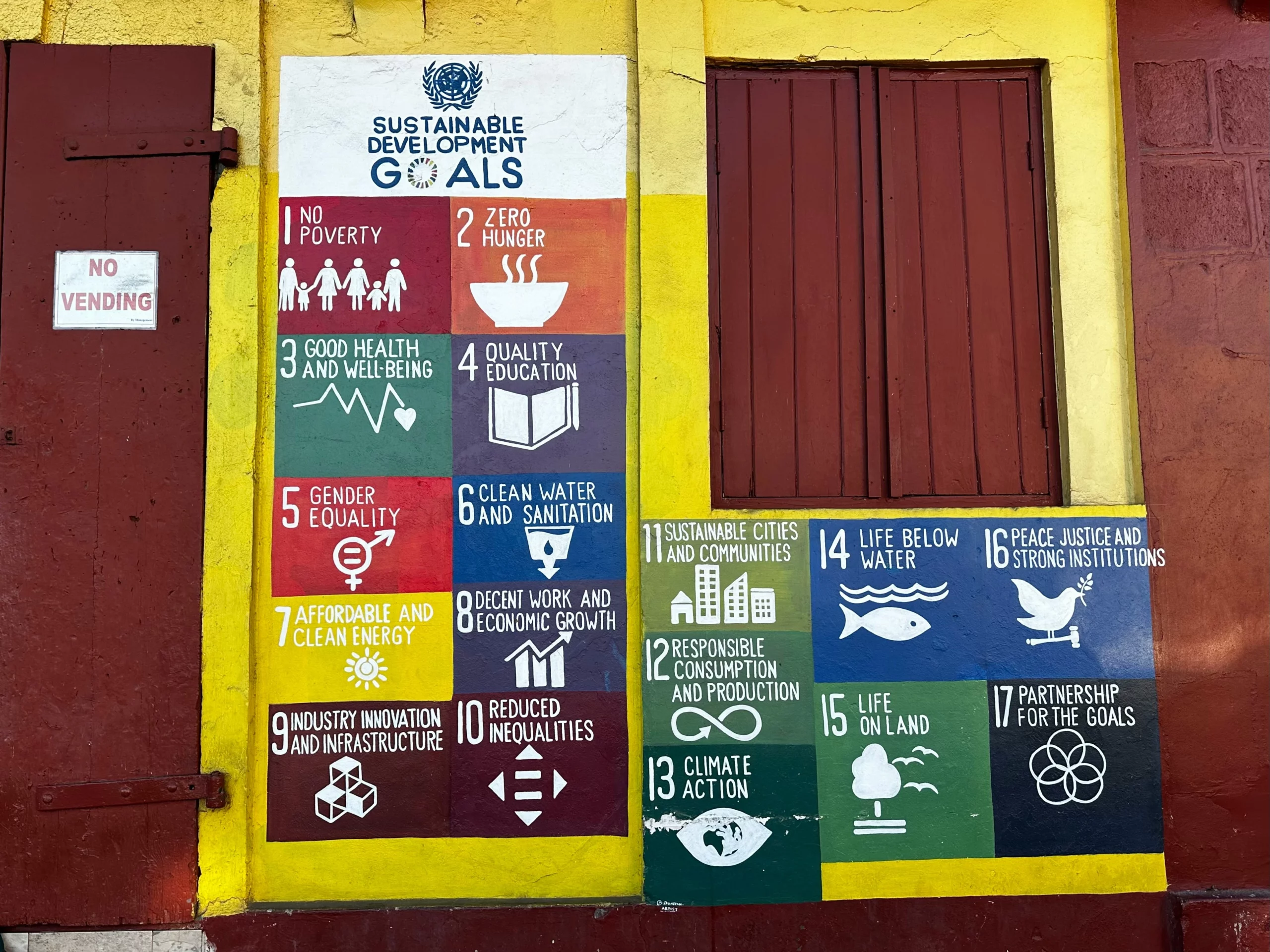
25 September is the Global Day to act for SDGs: it marks the 4th anniversary of the adoption of the 2030 Agenda for Sustainable Development by Heads of State and Government. But even though the 17 Sustainable Development Goals (SDGs) were launched by the United Nations, the targeted beneficiaries are citizens and its primary implementers are local and regional governments.

For more information, contact:

Global goals into local action  

Localising SDGs study - News

How local and regional government associations turn global goals into local action 


The 2030 Agenda for Sustainable Development and its 17 Goals are often seen as a global framework, but their success depends on local action. Nearly two-thirds of the SDGs must be implemented at the local level, making municipalities, regions, and their associations crucial actors in bringing this agenda to life. 

Local and regional government associations (LRGAs) act as bridges between citizens and higher levels of governance. They support awareness-raising, provide technical expertise, and advocate on behalf of local governments at the national, European, and international levels. Their proximity to communities allows them to translate abstract global objectives into tangible improvements in daily life, from better public services and climate action plans to gender equality policies and local economic development. 

Since the first CEMR-PLATFORMA study in 2018, the role of associations in localising the SDGs has grown significantly. Many are now actively involved in monitoring, reporting, and international advocacy, including through contributions to the UN’s High-Level Political Forum. Voluntary Local Reviews (VLRs) and decentralised cooperation projects have become powerful tools to highlight progress, inspire others, and ensure that local voices are heard on the global stage. 

At the same time, challenges remain. Municipalities and their associations still struggle with limited resources, lack of data, and uneven awareness across regions. In particular, gaps persist between Northern/Western Europe, where SDG implementation is more advanced, and Central/Eastern Europe, where awareness and uptake are still developing. To make the 2030 Agenda truly transformative, multi-level collaboration and inclusive partnerships are essential. 

Despite these hurdles, LRGAs continue to push boundaries. By fostering cooperation between cities and regions, they strengthen international solidarity, enhance capacity-building, and adapt services to better reflect sustainability goals. They are not only localising the SDGs but also giving them credibility and momentum in Europe and beyond. 

In short, associations of towns and regions are proving that the SDGs are more than a global vision: they are a practical tool for creating sustainable, inclusive communities, driven by partnerships and citizen engagement. 

Read the study here 

Check the infographic here 

For more information, contact: 

Women in politics – first edition 

CEMR study reveals persistent underrepresentation of women in politics and calls for stronger action at local and European levels 


Gender equality is a cornerstone of democracy, yet women remain significantly underrepresented in politics across Europe. According to CEMR’s study Women in Politics: Local and European Trends, women account for only 34.1% of political decision-makers, despite representing half of the population. 

At the local level, the situation is particularly concerning: only 15.4% of mayors are women, while women councillors make up just under 30% of local councils. Although there has been gradual progress over the last decade, the pace is slow, and parity remains a distant goal. 

The report highlights important regional variations. Nordic countries lead the way, thanks to decades of policies fostering a genuine culture of equality. In Central and Eastern Europe, positive trends are visible, especially in the Balkans, where reforms and EU accession processes have strengthened gender mainstreaming. Yet, in much of Europe, women still face structural, cultural, and financial barriers to political participation. 

CEMR stresses that achieving gender equality requires more than political rhetoric. Quotas and legal measures have proven effective in boosting women’s representation, but they must be accompanied by mentoring, training, and dedicated funding to empower women candidates and dismantle persistent stereotypes. 

As the level of government closest to citizens, municipalities and regions are pivotal in fostering inclusive leadership. Local office often serves as the first step towards regional, national, or even European roles. Supporting women at this level is therefore essential for building stronger, more representative democracies. 

CEMR, through its European Charter for Equality of Women and Men in Local Life and the Equality Observatory, continues to mobilise local and regional governments, promote good practices, and push for equality to remain at the heart of the EU’s political agenda. 

The study’s message is clear: while progress has been made, gender parity in politics is far from achieved. Europe must act now, through quotas, support structures, and political will, to ensure that women and men share power equally at every level of governance. 

Read the study here 

Check the infographics

For more information, contact: