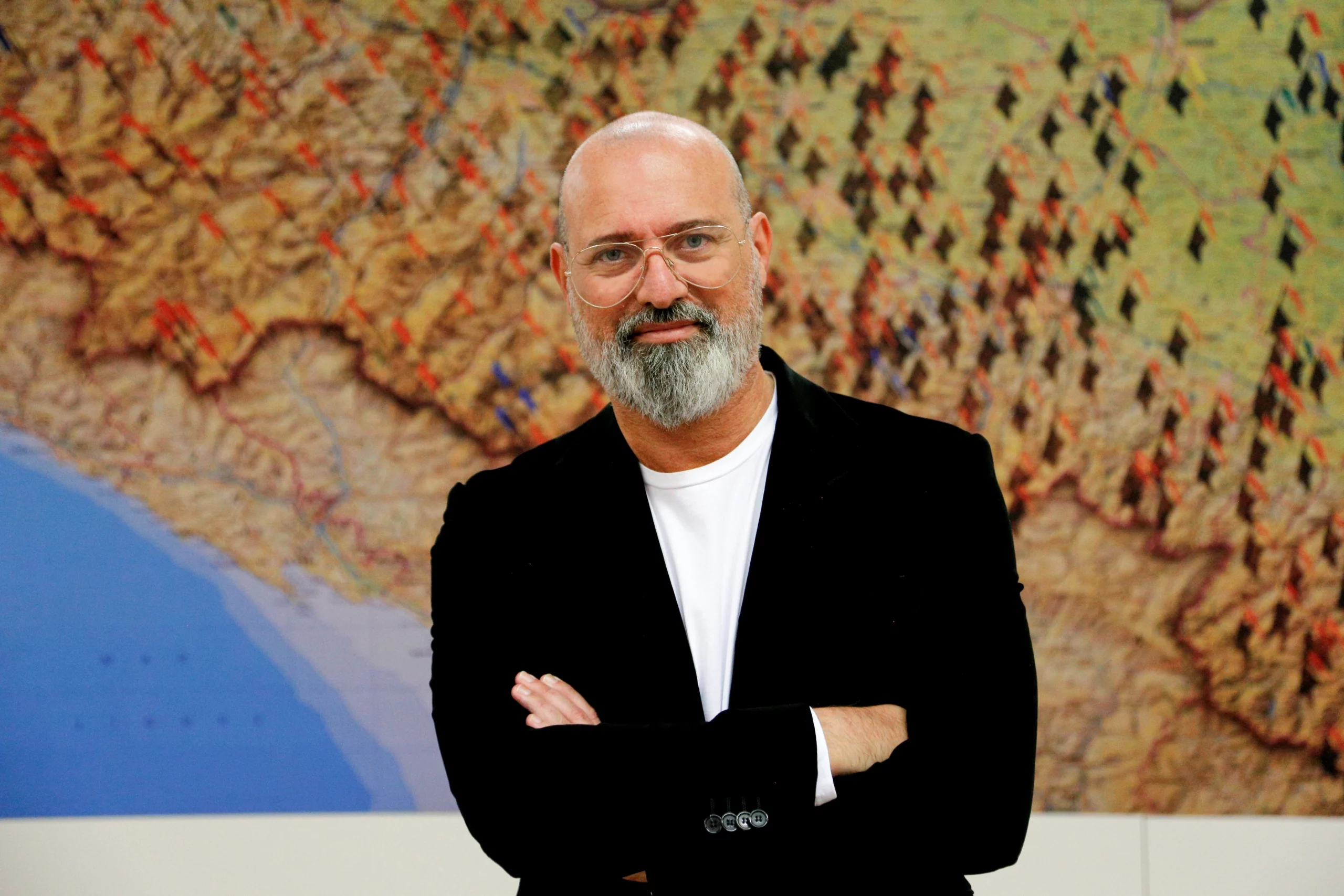
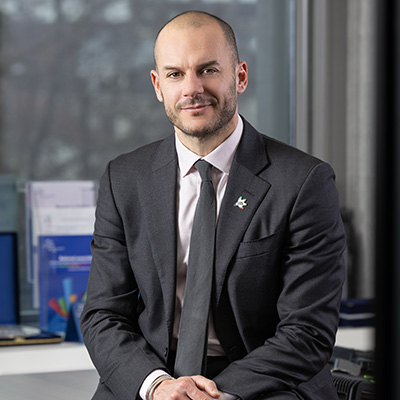
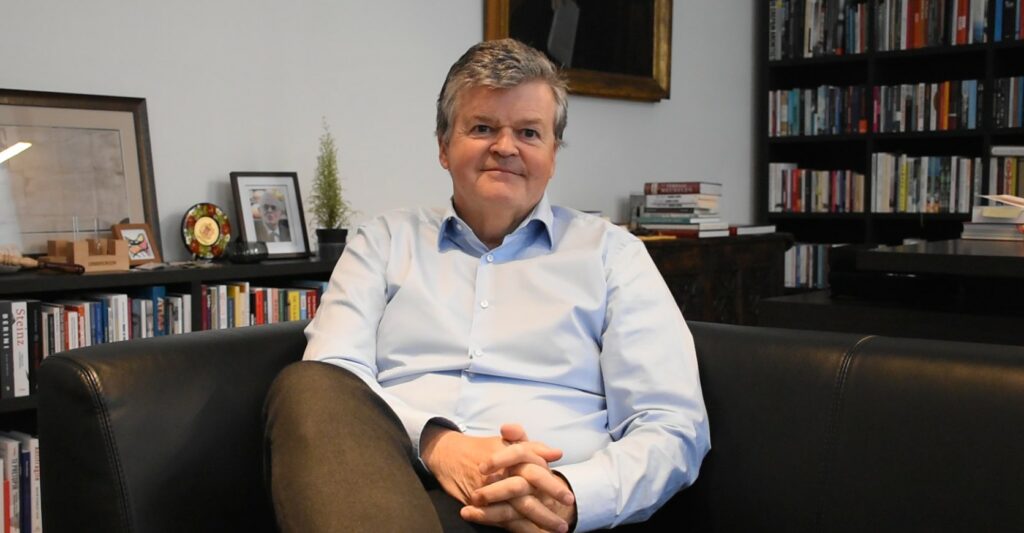
Stefano Bonaccini served as the President of the Council of European Municipalities and Regions (CEMR) from 2016 to 2022, leading the organisation through two consecutive three-year terms. With an extensive background in Italian regional governance, having served for 10 years as the President of the Emilia-Romagna region and six years as the President of all Italian regions, Bonaccini brought a deep understanding of local administration to the European stage. Today, as a Member of the European Parliament, he welcomes us to discuss his experience, the role of local governments in Europe, and the challenges ahead.
In this interview, Bonaccini looks back on the challenges and rewards of leading a continent-wide network such as CEMR. He shares his views on the importance of cohesion policy in the ongoing discussions on the EU budget and reflects on what lies ahead for both CEMR and the wider local and regional government movement within the EU project.
Building consensus across a diverse membership
Asked about his fondest memory from his six years as CEMR President, Bonaccini does not point to a particular event. Instead, he highlights what he sees as one of the organisation’s greatest achievements: bringing together local and regional governments from across Europe around a shared agenda.
Representing members from countries with different political traditions, cultures and priorities is no easy task. During Bonaccini’s presidency, CEMR brought together local and regional leaders from both EU and non-EU countries, often with very different perspectives on key issues.
Despite long debates, Bonaccini proudly recalls that nearly all major decisions and objectives were voted on and passed almost entirely with unanimity. For him, this ability to find common ground is one of CEMR’s defining strengths and a key reason why the organisation has remained an influential voice for local and regional government in Europe throughout its 75-year history.
Standing firm on the relevance of local governance in EU discussions
Drawing from his experience as CEMR President, Bonaccini stresses the importance of organisations such as CEMR in shaping European debates.
In his view, decisions taken at the EU level cannot be effective unless they take account of the realities faced by towns, cities and regions on the ground. This is particularly true for the ongoing discussions on the next EU budget, where he clearly states that “we cannot exclude cohesion policy” because “that would mean excluding regions and municipalities from the planning of European funds”. “When planned and discussed together with the territories, these policies can provide citizens with opportunities”, he concludes.
A vision for an expanded, fairer, and more cohesive continent
Looking toward the next decade, Bonaccini outlines a clear, ambitious path for the future of CEMR. His hope is to see the family of European territories, cities, and regions expand even further, welcoming more diverse local voices.
At the same time, he believes CEMR must continue to make the case for a Europe that works closely with its local and regional governments. Whatever their political complexity, national and European leaders need to recognise that many of today’s challenges can only be addressed through stronger cooperation and solidarity across the continent.
The Council of European Municipalities and Regions (CEMR), together with President Christoph Schnaudigel, voices full solidarity with Mayor Sinem Dedetaş, member of the CEMR Policy Committee, following her detention, and calls on Turkish authorities and European institutions to defend local self-government and the rule of law.
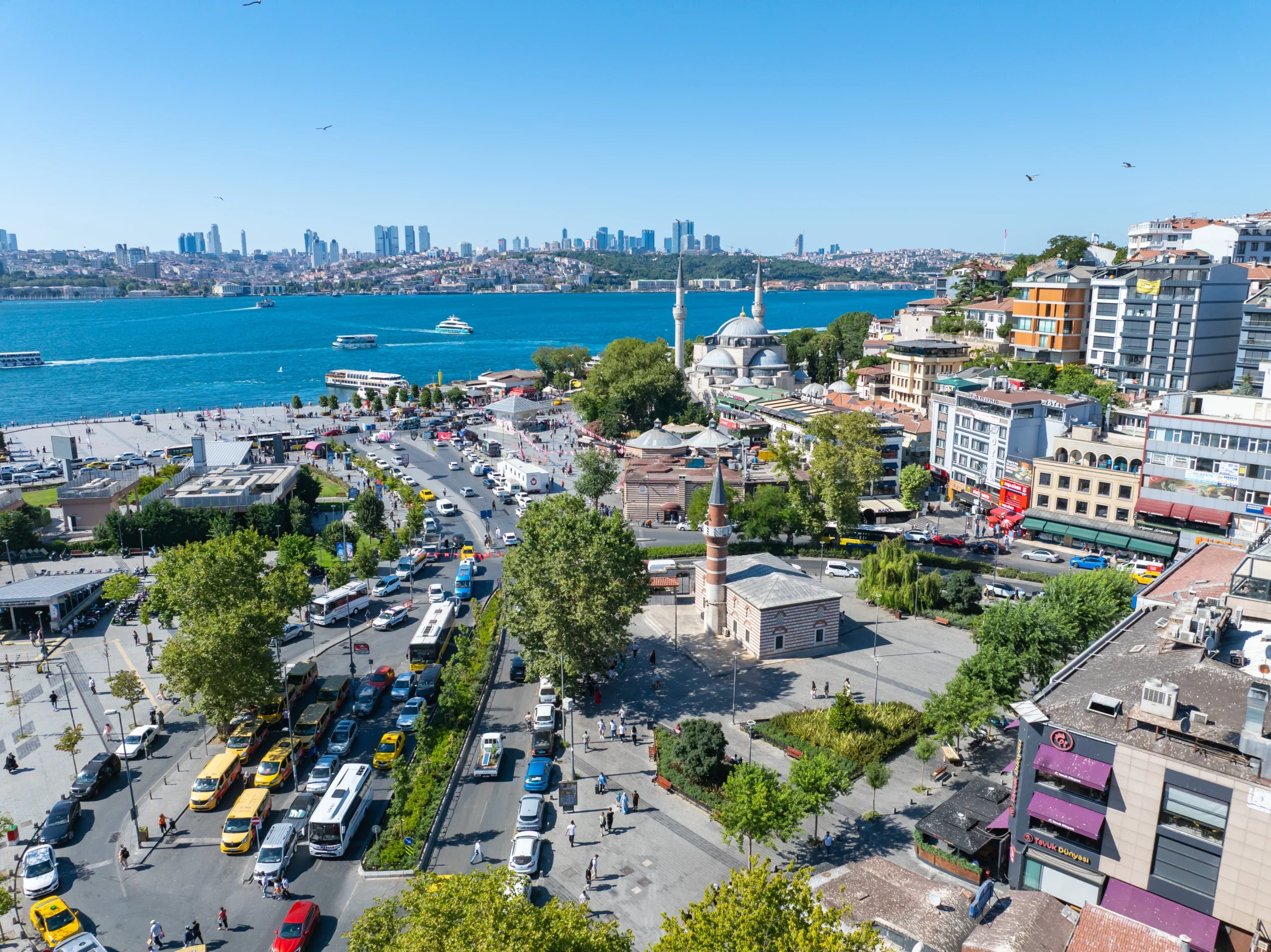
CEMR has issued a statement expressing its deep concern over the detention today of Sinem Dedetaş, Mayor of Üsküdar and member of the CEMR Policy Committee, along with several members of her team.
CEMR stresses that this is not an isolated case, but the latest in a sustained series of actions targeting democratically elected local representatives in Türkiye. Since the 2024 local elections, more than 80 municipalities in the country have seen their elected mayors replaced through trustee appointments, dismissals or arrests, while over 30 mayors have been detained, many remaining in prolonged pre-trial detention.
“As President of CEMR, I wish to express full solidarity with Mayor Sinem Dedetaş and with all local elected representatives affected by these developments“, writes Christoph Schnaudigel, CEMR President and President of the County of Karlsruhe (Germany).
It should be noted that when mayors and local leaders are deprived of their liberty and unable to exercise the mandates entrusted to them by citizens, the consequences extend far beyond those directly concerned: each case leaves a community without the representatives it elected. Taken together, these developments point to a steady erosion of local democracy and a lack of respect for the will of voters in Türkiye.
CEMR recalls the importance of the principles enshrined in the European Charter of Local Self-Government, including respect for democratic mandates and the autonomy of local governments; principles CEMR considers essential to maintaining citizens’ trust in democratic institutions at all levels.
CEMR calls on the Turkish authorities to ensure full respect for fundamental democratic standards and the rule of law, and to guarantee that elected representatives can carry out their responsibilities freely and without undue interference. It also calls on European institutions and the international community to stand in solidarity with democratically elected local representatives in Türkiye, and to continue advocating for the protection of local self-government, democratic institutions and the rule of law.
CEMR will continue to monitor developments closely and stand alongside its members and partners in Türkiye in their commitment to democratic local governance.
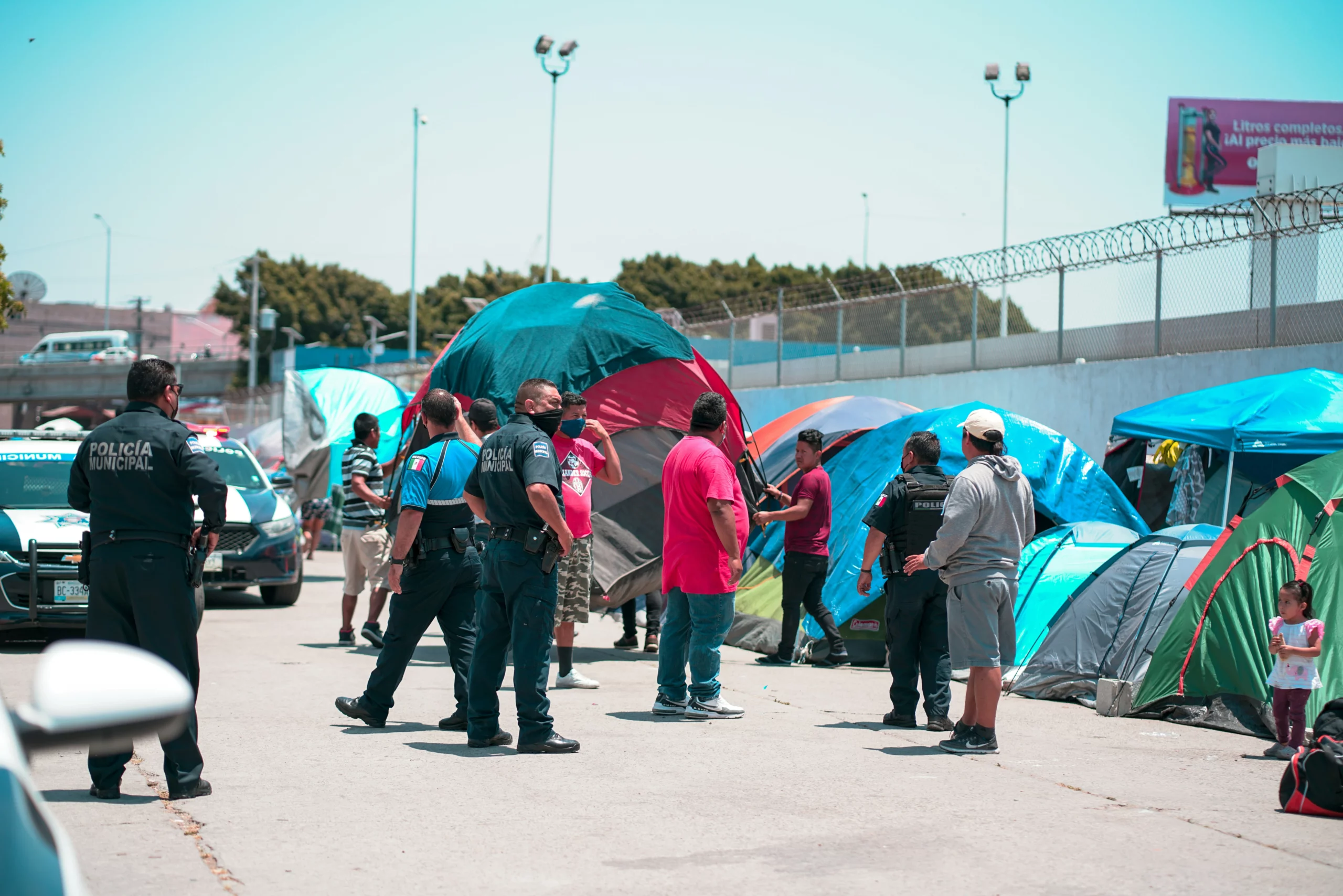
The EU Pact on Migration and Asylum entered its application phase this year. The Council of European Municipalities and Regions (CEMR) puts a question at the centre of that transition: are the local and regional governments who will actually deliver the Pact being treated as partners in shaping it?
Drawing on a questionnaire circulated among CEMR member associations, direct exchanges with local and regional leaders, and complementary desk research, the report maps how prepared towns, cities and regions are for the Pact’s application, how involved they have been in designing it, and what they say they need to make it work.
Already central, not always recognised
The findings confirm what many mayors and regional leaders already know from experience: local and regional governments are not new to migration governance; they are already at its centre. Long before the Pact, towns, cities and regions were carrying the bulk of integration, housing, education, health and social support for migrants and asylum seekers. Regional authorities reported responsibilities in this field in 87.5% of cases, and municipal authorities in 62.5%.
A governance gap
Half of respondents said local and regional governments were not consulted at all during the Pact’s negotiation and drafting. Where consultation did happen, it was often informal, ad hoc, or limited to written contributions requested by national authorities. No country reported involving local and regional governments (LRGs) as genuine co-designers of national implementation plans, CEMR calls this a “missing link” in multi-level governance: the level expected to deliver the Pact on the ground is rarely in the room when the rules are set.
A capacity gap
Responsibility without resources is a recurring theme. Only Austria considered its LRGs “mostly prepared” for the Pact; several other countries reported no additional resources at all since 2024. Where support existed, it was sporadic: extra IT tools here, an operational manual there, rarely the stable, dedicated funding implementation requires.
A coordination gap
Information about the Pact often reached local authorities through fragmented channels — circulars, ministry emails, informal networks, even the press; and clarity about who is responsible for what varied sharply from one country to the next. This uncertainty was not a side effect; it actively hampered planning, budgeting, and staffing decisions on the ground.
Was the deadline ever realistic?
For most respondents, the June 2026 application deadline of the Pact looked difficult or uncertain, well before it arrived, held back by staff shortages, unclear national guidance, and delayed preparations. Yet the report also points to a genuine reserve of capability: local authorities’ rapid, resourceful response to the displacement of people fleeing Ukraine shows what towns, cities and regions can do under pressure — provided that effort does not have to rely on improvisation every time.
What comes next
The analysis closes with three recommendations:
Formally recognise LRGs within the Pact’s governance architecture;
Strengthen synergies between AMIF, ESF+ and other EU funds around a more place-based approach;
Ensure the Pact’s monitoring mechanisms track local and regional implementation, not only national transposition.
CEMR will continue to bring this evidence into the EU debate as the Pact moves further into its implementation phase.
Europe’s Electrification Plan can only succeed with local governments
552 words
2–4 minutes
The European Commission has presented its Electrification Action Plan, setting out how Europe can accelerate the transition to clean electricity across buildings, industry and transport and reduce costs of future-proof solutions. For CEMR, this is an important step towards a more competitive, secure and decarbonised Europe.
Efficient electrification is no longer a sectoral energy policy – it is becoming a defining element of Europe’s economic and territorial transformation. That is why local and regional governments must be fully involved to make the plan a success.
The Action Plan rightly recognises the need for major investments in electricity grids, energy storage, renewable energy, electric mobility and cleaner heating systems.
CEMR welcomes the Commission’s proposal to support local heating and cooling planning through the European City Facility. The programme will begin with €15 million to help 180 local and regional governments prepare local plans before expanding to support up to 1,000 local plans, ready for investments.
CEMR also welcomes the focus on clean heating solutions, including heat pumps and district heating and cooling, which already play an important role in the transition in many towns, cities and regions. Local governments are leading projects and investments in these solutions and help make buildings and neighbourhoods more sustainable. At the same time, CEMR stresses that support measures and new requirements must work together in a coordinated way.
CEMR also highlights the importance of efficient waste-to-energy use for waste that cannot be recycled. EU legislation should clearly recognise energy recovered from non-recyclable waste and ensure that emissions from the fossil part of waste are allocated fairly to producers and waste generators, rather than to district heating operators or energy users.
While the Commission calls for simplifying permitting procedures for clean energy projects, implementation will occur locally. Every new charging station, heat pump, district heating network, energy storage facility or grid connection depends on local planning, permits and cooperation with citizens and stakeholders. Local and regional governments are therefore not only implementing the transition; they are strategic partners in shaping the transition. Efficient permitting requires locally and regionally grounded solutions and processes with early coordination among stakeholders, rather than uniform EU-wide deadlines.
Europe’s regions also face different challenges. Solutions that work in large cities may not be suitable for rural areas, islands, or industrial regions. Recognising the skills and capacity gap at the technical and administrative level is essential. A flexible, place-based approach is key to ensure that every community can benefit from electrification.
Since Europe’s electrification targets will ultimately be delivered in its cities, towns and regions, the local and regional governments are already investing in the infrastructure needed for the transition, from electricity grids and heating networks to electric vehicle charging stations.
CEMR therefore welcomes the ambition of the Electrification Action Plan and its recognition of the opportunities offered by clean electricity and modern heating and cooling solutions. To make the Plan a success, local and regional governments must have the resources, flexibility and role they need as full partners in Europe’s energy transition.
CEMR will continue to contribute to this work in the months ahead and is awaiting the European Cooling and Heating Action Plan to be announced.
The future of the 2030 Agenda should be local, or it won’t be
1,701 words
7–11 minutes
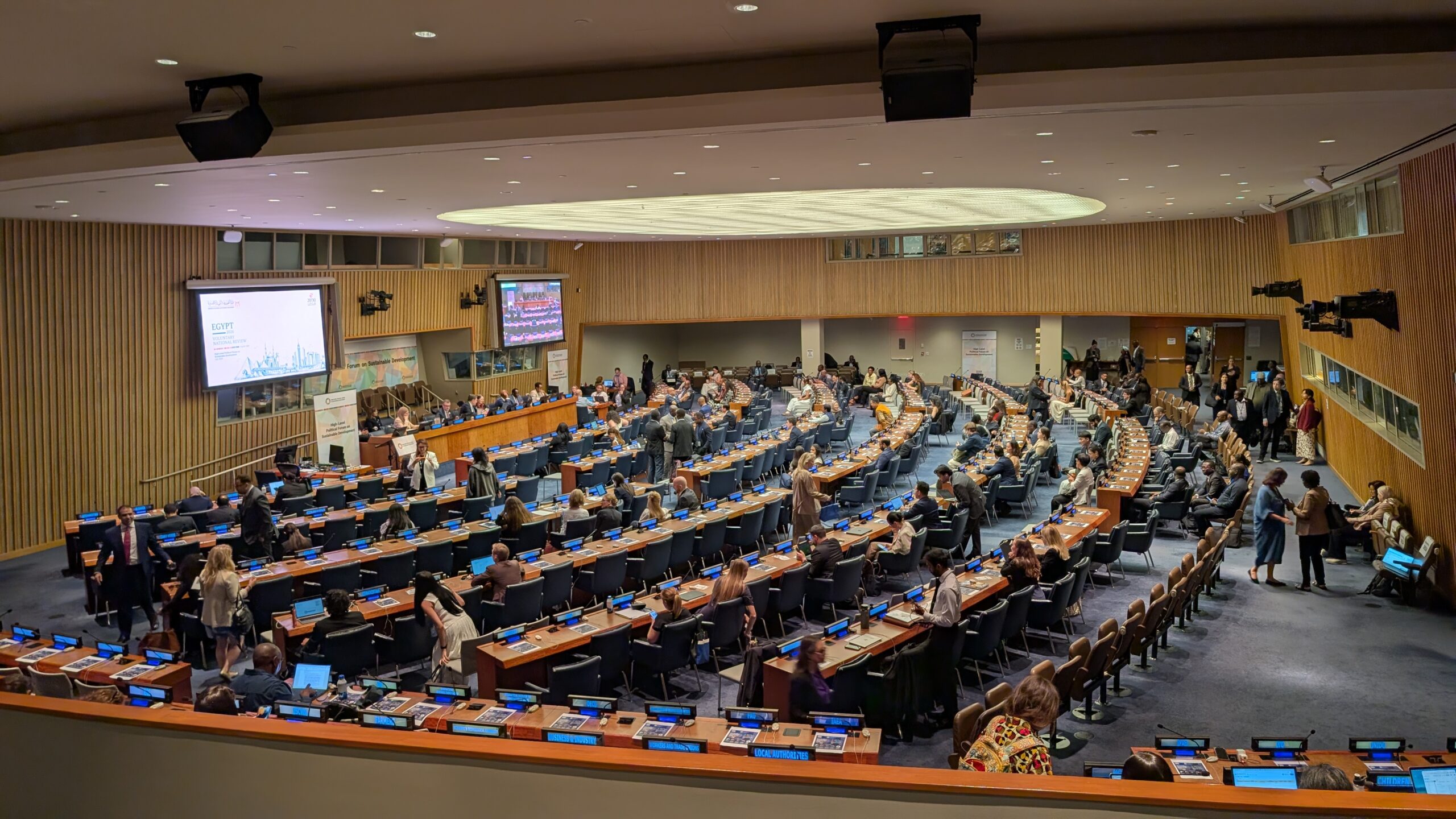
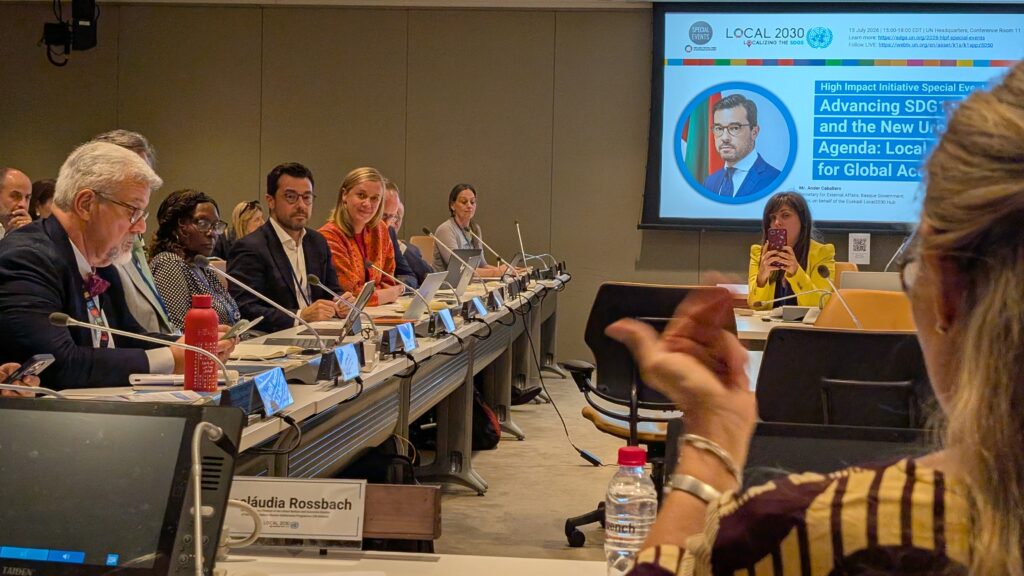
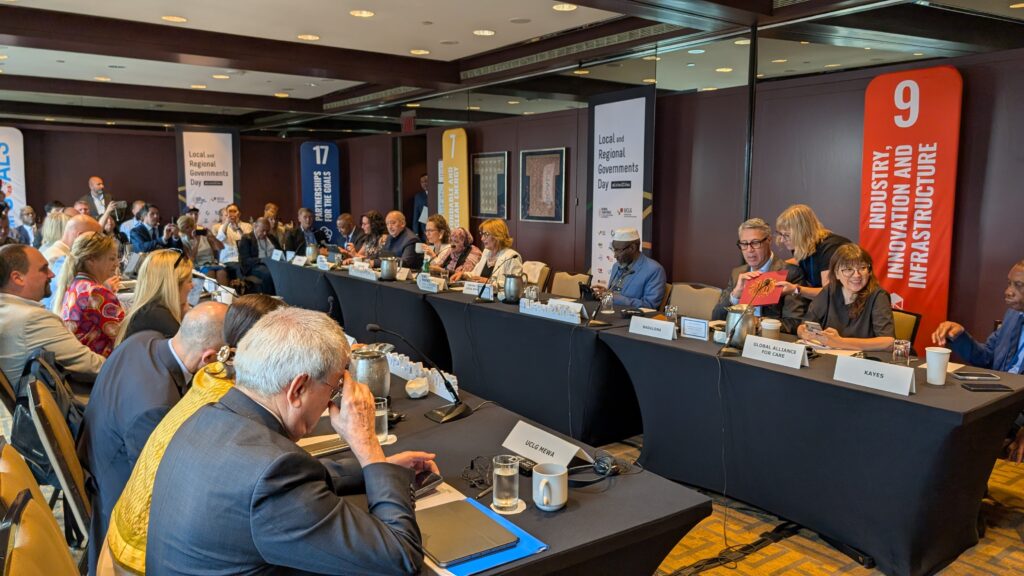
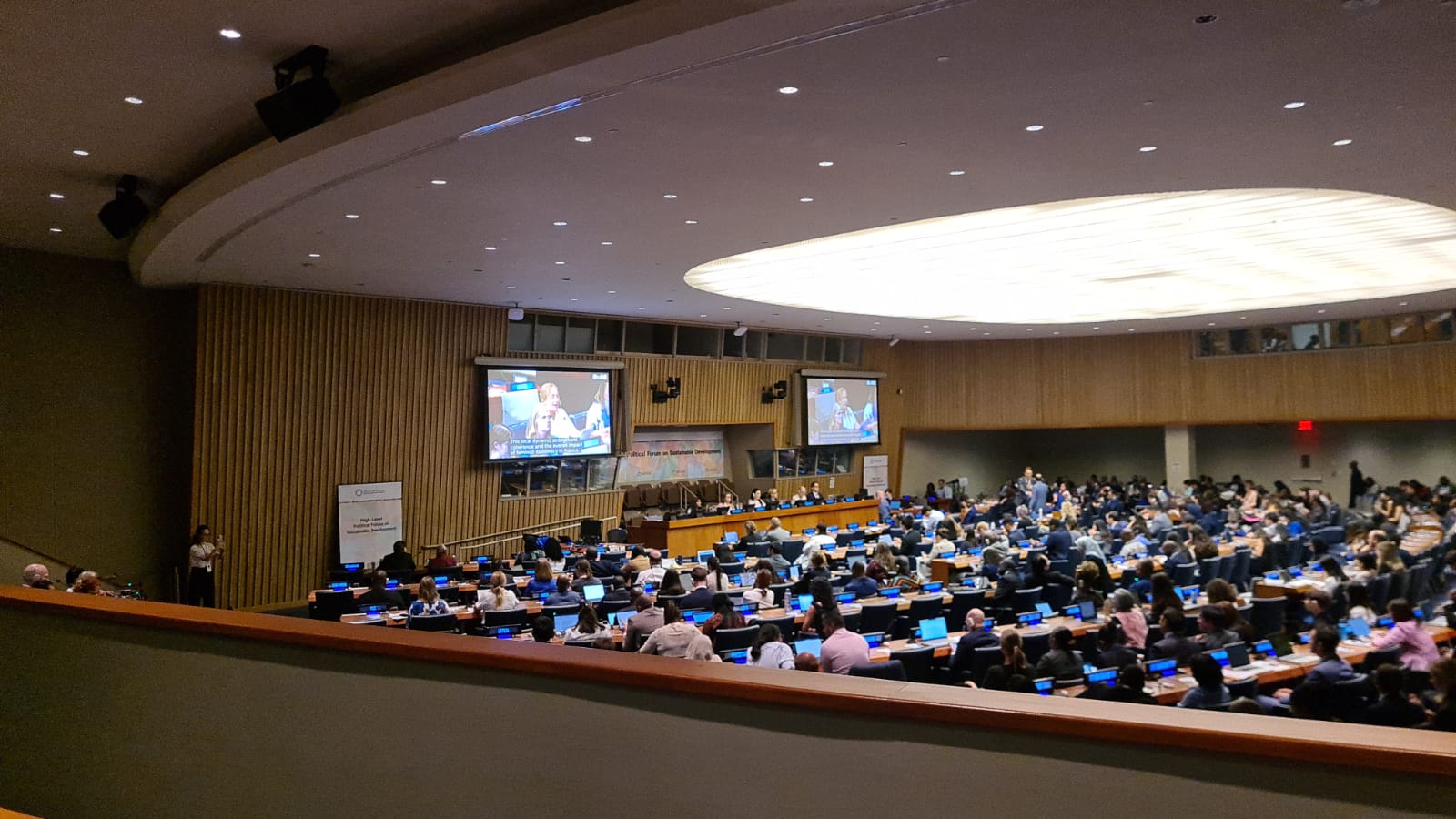
More than 15 European mayors and local leaders dominated the stage this week in New York. They run from one session to another at the UN High-Level Political Forum (HLPF) on Sustainable Development to defend the role of towns, cities and regions in delivering the 2030 Agenda and helping define what comes next. Through various events, mostly co-organised by the Global Task Force of Local and Regional Governments led by UCLG, European local leaders took the floor more than 50 times.
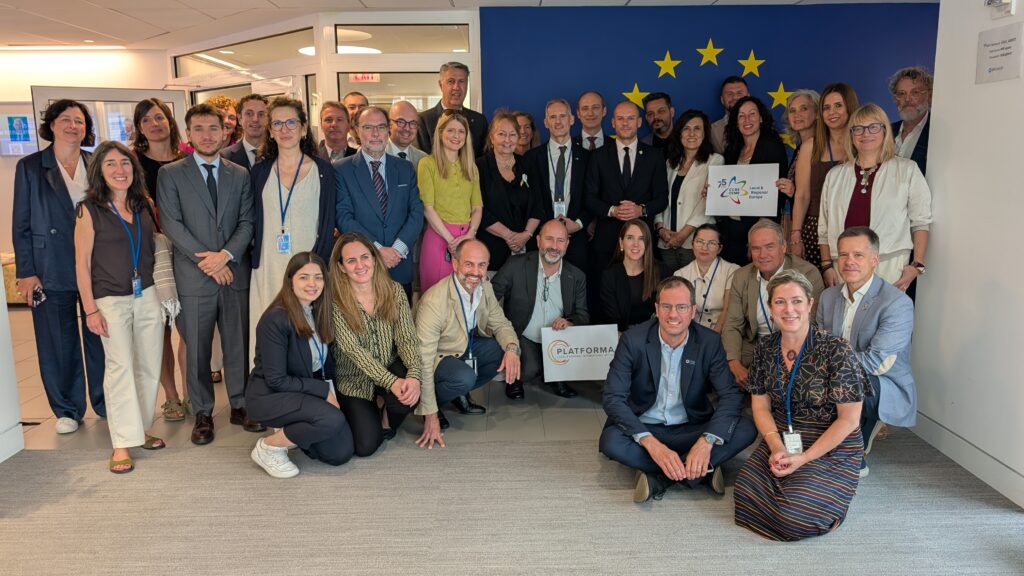
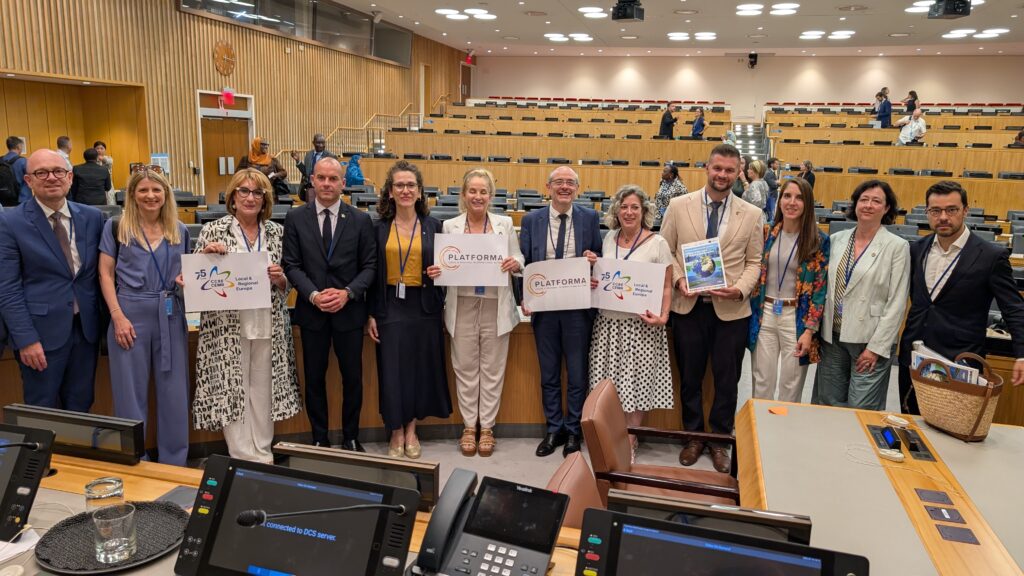
With only four years to go until 2030, the clock is ticking to implement as much as possible the Sustainable Development Goals (SDGs), but also to shape their future. During the UN-proofed Local and Regional Governments Forum, but also the Global Task Force Local and Regional Governments Day, and the CEMR-PLATFORMA meeting with the EU Delegation in New York, mayors and local leaders gave examples and ideas on how to implement the 2030 Agenda from the ground. They all asked the United Nations (UN) to deepen local and regional governments’ engagement, stressing that SDG 11 (Sustainable Cities and Communities), among many others, cannot be delivered without empowering towns, cities and regions.
Even if the Local and Regional Governments Forum is officially recognised as being part of HLPF, towns, cities and regions are absent from the final conclusions of the ECOSOC (UN’s Economic and Social Council, a platform to advance the economic, social and environmental dimension of sustainable development), responsible for the organisation of HLPF. However, the numerous UN officials who attended the various sessions all recognised the key role of local and regional governments in achieving the SDGs and defining their future shape.
High-Level Policy Forum – CEMR and PLATFORMA, New York 2026
The voice of European local leaders at the United Nations
The future is local
Wim Dries, Mayor of Genk (Belgium), Association of Flemish Cities and Municipalities (VVSG): “Local and regional governments are often invited only after decisions have already been made. We need a stronger role in decision-making, adequate financing, and better coordination. We connect SDGs to budgets. The SDGs will be local or they won’t be.”
Antoine Le Solleuz, Deputy Mayor of Nancy (France), AFCCRE and Cités Unies France: “For me, SDG17 (Partnerships for the goals) is not the last SDG, it’s in fact the first one. We need real commitments to meet the SDGs by 2030. We call on the UN to recognise networks of cities and regions as partners, especially in areas such as the climate crises, to strengthen multilateralism.”
Xavier García Albiol, Mayor of Badalona (Spain), Spanish Federation of Municipalities and Provinces (FEMP): “As we look beyond the 2030 Agenda, we must build on what works. SDG localisation delivers results, but we need stronger financing, partnerships, and empowered governments at the heart of implementation.”
“Housing must be at the centre of the future post 2030 Agenda. The challenge beyond 2030 will depend on how well we deliver on the commitments we have already made. Rather than setting new goals, we need to focus on the areas where implementation is still falling short and where the response has not been sufficient. The years after 2030 will be decisive in turning these commitments into tangible benefits that citizens can clearly see and experience.”
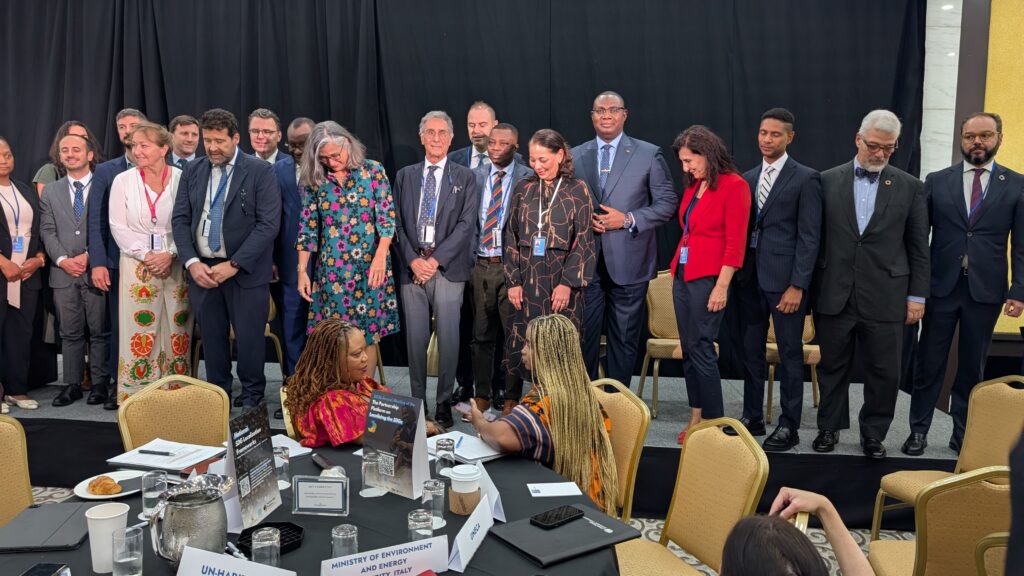
Local leaders in New York for the High-Level Policy Forum 2026
María del Mar Vázquez, Mayor of Almería (Spain), Andalusian Fund of Municipalities for International Solidarity (FAMSI): “We have developed a local plan to localise the 2030 Agenda, with over 70% achieved so far. To face our challenges, we need: real multilevel governance, financing, and stronger cooperation between different spheres of governance.”
Barbara Meyer, Mayor of the City of Saarbrücken, German Association of Cities (DST): “Cities are responsible for more than a third of the Sustainable Development Goals (SDGs). That is why cities should be the focus of the era beyond 2030.”
Eckart Würzner, Mayor of Heidelberg (Germany), Association of German Cities (DST): “We need a step forward: empowering local governments through local development banks and stronger funding mechanisms. We see more and more discussions and support from finance ministers and development banks towards local and regional governments. It is time to ensure this happens. SDG 11 should be at the centre of the future SDGs. If you focus on city diplomacy, you can be the game changer.”
Gunn Marit Helgesen, President of the Congress of Local and Regional Authorities and President of the Norwegian Association of Local & Regional Authorities (KS): “The SDGs won’t be achieved in conference rooms. They will happen within local communities.”
Quality public services and adequate funding
Local 2030 meeting – High-Level Policy Forum in New York 2026
Jordi Castellana, Vice President of the Barcelona Metropolitan Area, Spain: “Quality public services are how people experience the SDGs. Metropolitan governments need stronger multilevel cooperation and direct access to finance to deliver local change.”
Clare Hart, Vice-President of Montpellier metropole (France), Cités Unies France: “Infrastructure alone is never enough. Sustainable public services require strong local governance, skilled public institutions and trust —and maybe even caring— between our partners. This is why investing in territorial cooperation is also investing in the achievement of the Sustainable Development Goals.”
Marek Hudak, Member of the City of Bardejov and Member of Presov Regional Council (Slovakia), Member of CEMR Young Elected Officials Committee (YEOC), Association of Towns and Communities of Slovakia (ZMOS): “Looking beyond 2030, our cities and regions face major challenges. From a Slovak perspective, strengthening decentralisation – with adequate funding, competences and responsibilities – it is essential, especially in the context of the future Cohesion Policy and the next EU budget. At the same time, innovation will be key to keeping our regions competitive and ensuring that young people can build their futures in the places they call home.”
Stronger partnerships
High-Level Policy Forum debate in New York 2026
Ander Caballero, Secretary General for External Action, Basque Government, Spain: “Major global challenges also require responses at the regional and local levels. Systemic challenges cannot be solved in silos. Strong partnerships across all levels of government, academia and communities are essential, because how we work together is just as important as what we achieve.”
Rosanna Laconi, Regional Minister of the Autonomous Region of Sardinia (Italy): “Strong partnerships, robust evaluation and inclusive governance are key to scaling local action and delivering lasting impact.”
Clare Hart, Vice-President of Montpellier Métropole (France), Cités Unies France: “It is equally important that local governments have a voice and a seat at the table here at the United Nations, a highly symbolic place where local voices are finally being heard and where we can contribute directly to shaping our future. Let’s be optimistic about the future, with cities fully engaged as partners in delivering sustainable development for all.”
“We have the imminent end of the 2030 Agenda for the SDGs, and we are not strictly on track. Local governments are responsible for delivering 70–80% of the SDGs, which makes supporting them essential to advancing the SDGs agenda. Sharing ideas is key to accelerating progress and strengthening collaboration.”
Eider Inuntziaga, Councillor for Citizen Attention and Participation, the 2030 Agenda and International Relations and Euskera, Bilbao City Council (Spain): “Localisation is a method. Our strategy embeds the SDGs in our daily work, with a methodology focused on a transformative agenda, action plans to involve communities and developing capacities. The post 2030 Agenda has to go one step ahead.”
Bärbel Kofler, Parliamentary State Secretary to the Federal Minister for Economic Cooperation and Development, Germany: “Localising the SDGs means equipping municipalities with the resources they need to deliver. Through peer learning & partnerships like the Local 2030 Coalition, cities are driving innovation.”
The UN still needs to walk the talk
CEMR and PLATFORMA in New York for the High-Level Policy Forum 2026
Anacláudia Rossbach, Under-Secretary-General and Executive Director of the United Nations Human Settlements Programme (UNHABITAT): “Localising the SDGs is the only way to close the implementation gap. Through the Local2030 Coalition, we are working together to support cities and local governments with the tools, partnerships, and platforms they need.”
Koldo Casla, UN Special Rapporteur on the Right to Adequate Housing: “The right to housing is realised locally. From social and public housing to rent control and land policies, local and regional governments play a central role in protecting human rights & ensuring no one is left behind.”
Sarah Lister, Global Director for Governance, Rule of Law and Peacebuilding, UNDP: “The last five years of the 2030 Agenda demand stronger collaboration across all levels of government. Empowering local governments while reinforcing national-local partnerships will be essential to accelerate progress on the SDGs.”
Dario Liguti, Director, Energy, Housing & Land Management Division, United Nations Economic Commission for Europe (UNECE): “Local and regional governments need to be involved from the outsets in implementing solutions. The Global Taskforce of Local and Regional Governments makes this possible by bringing the organised voices of LRGs to the steering committee of Local 2030″
Amina Mohammed, UN Deputy Secretary-General: “SDGs must be built with local actors. The UN Secretary General’s Report sets out how the UN needs to work. The role of local and regional governments needs to be embedded in how we plan, finance and deliver. Let this Forum be a catalyst for shared solutions”
Lok Bahadur Thapa, President of the UN Economic and Social Council (UNECOSOC): “We need to strengthen local actions through Voluntary Local Reviews, to reinforce the value of local acceleration of the 2030 Agenda. The next phase needs to be defined by delivery, measurable actions, strong partnerships and local action.”
“The next phase of SDG implementation must be defined by delivery – moving from commitments to measurable action, strengthening partnerships across all levels of government, and ensuring solutions reach the communities where they are needed most. The success of the 2030 Agenda will ultimately be measured not by the ambitions we express, but by the realities people experience in their daily lives. That is why local leadership is indispensable.”
To strengthen the role of local and regional governments in the 2030 Agenda and the post‑2030 framework, CEMR and PLATFORMA, together with UCLG, will continue working closely with local leaders and with actors across the multilateral system. They will also keep producing knowledge, including reports like the one presented this year at the HLPF (European Territories Localise the SDGs), which shows how essential towns, cities and regions are to delivering the SDGs.
The Council of European Municipalities and Regions (CEMR), representing 110,000 local and regional governments and 1,000,000 elected representatives across Europe, sends a letter to the Commission President amid continuous reports of a possible weakening of Directorate-General for Regional and Urban Policy (DG REGIO)
Brussels, 13 July 2026 – The Council of European Municipalities and Regions (CEMR), Europe’s largest association of local and regional governments, has sent a letter to European Commission President Ursula von der Leyen warning of the serious consequences that could result from any move to weaken or eliminate the Directorate-General for Regional and Urban Policy (DG REGIO), following persistent reports about a possible internal restructuring.
In a letter sent on behalf of 110,000 local and regional governments and 1,000,000 elected representatives across Europe, CEMR stresses that such a move would not be a simple administrative change but would represent a major political shift in the relationship between the European Union and the cities, towns and regions responsible for delivering many of the EU policies on the ground.
“Should DG REGIO be substantially weakened or its role reduced, this would send a profoundly negative political message to Europe’s local and regional governments: that they no longer have a central place in the Union’s institutional architecture”, writes Christoph Schanudigel, CEMR President and President of the County of Karlsruhe (Germany).
CEMR warns that weakening DG REGIO would undermine the expertise, territorial knowledge and long-standing partnerships that have made cohesion policy one of the EU’s most effective instruments for promoting development, competitiveness and solidarity across Europe.
The organisation also cautions that a reduced role for DG REGIO could weaken the European Commission’s ability to maintain direct contact with the Managing Authorities responsible for implementing EU funds, many of which are regional and local governments.
Rather than reducing DG REGIO’s role, CEMR argues that current challenges require stronger territorial capacity within the European Commission. In its letter, the organisation stresses that DG REGIO’s role will become even more important as the Commission prepares its proposed National and Regional Partnership Plans (NRPPs) for the post-2027 EU budget. It also points to recent Commission initiatives on islands, coastal communities, outermost regions and eastern borderregions as evidence of the growing importance of place-based policymaking.
For these ambitions to succeed, Europe needs a strong institutional anchor capable of maintaining dialogue with regional and local governments and ensuring that territorial realities are reflected in EU policymaking.
The letter also recalls that local and regional governments are responsible for implementing up to 70% of EU legislation and are indispensable to the Union’s effectiveness, democratic legitimacy and capacity to deliver results for citizens.
CEMR is calling on the European Commission to clarify its intentions regarding DG REGIO and has requested a meeting with President von der Leyen and relevant Commissioners to discuss the future of the EU’s territorial agenda.
The letter, which was also addressed to Raffaele Fitto, Executive Vice-President for Cohesion and Reforms; Piotr Serafin, Commissioner for Budget, Anti-Fraud and Public Administration; and Ilze Juhansone, Secretary-General of the European Commission, was sent at this stage as, according to Politico, Valère Moutarlier, deputy director-general at the Directorate-General for Internal Market, Industry, Entrepreneurship and SMEs, who is overseeing the review of the Commission’s restructuring process, is expected to weigh in later this month. The final restructuring proposals are expected to be presented by Budget Commissioner Piotr Serafin to von der Leyen and the College by the end of 2026.
With less than four years remaining to achieve the 2030 Agenda, a new CEMR–PLATFORMA report highlights a clear message from local and regional governments across Europe: sustainable development will only succeed if cities, towns and regions are placed at the centre of decision-making, financing and implementation.
Published by the Council of European Municipalities and Regions (CEMR) and PLATFORMA at the occasion of the High-Level Political Forum on Sustainable Development (HLPF), the 2026 edition of the report European territories localise the SDGs: Cities at the core of the implementation examines how local and regional governments are contributing to the Sustainable Development Goals (SDGs) and what is needed to accelerate progress during the final stretch to 2030.
The study is based on a survey of 23 respondents from 17 countries, including associations of local and regional governments from 15 EU Member States and two non-EU countries.
Local action is essential for global goals
The report comes at a pivotal moment. As both the UN New Urban Agenda and the Urban Agenda for the EU reach their tenth anniversary, local and regional governments are reaffirming their indispensable role in translating global ambitions into concrete results on the ground.
From mobility and housing to climate resilience and social inclusion, towns, cities and regions are responsible for many of the policies that directly affect residents’ daily lives. According to the report, SDG implementation is not primarily a technical matter but a political one, requiring trust, resources and authority to be devolved to the territorial level.
The publication places particular emphasis on SDG 11 – Sustainable Cities and Communities, one of the goals under review at the 2026 HLPF. It argues that sustainable urban development cannot be achieved without strong local democracy, effective multi-level governance and meaningful involvement of subnational authorities in national and international decision-making processes.
Six recommendations to accelerate SDG implementation
Drawing on the experience of local and regional governments, the report puts forward six recommendations addressed to the United Nations, the European Union and national governments.
Among its key messages, the study calls for:
Reinforcing multi-level governance as a political priority for the 2026–2030 period.
Placing the subnational level at the centre of SDG implementation, including stronger participation of local and regional governments in global review processes and improved access to development finance.
Reaffirming the importance of the UN New Urban Agenda as the main global framework for sustainable urbanisation.
Ensuring that cities and towns remain central to Europe’s sustainable development agenda through stronger alignment between EU and UN urban policy frameworks.
Recognising the role of territories in the upcoming EU Multiannual Financial Framework 2028–2034, with more accessible and place-based funding for municipalities and regions.
Accelerating the localisation of the SDGs by fully involving local and regional governments in the design and implementation of sustainable development policies.
A contribution to the global SDG debate
Beyond policy recommendations, the report showcases good practices from across Europe and explores how local and regional governments are advancing the goals under review in 2026 (SDG 6 – Clean Water and Sanitation, SDG 7 – Affordable and Clean Energy), SDG 9 – Industry, Innovation, and Infrastructure, and SDG 17 – Partnerships for the Goals). It also includes a dedicated focus on housing and the outcomes of discussions linked to the World Urban Forum, reflecting growing concerns about affordability, inclusion and sustainable urban growth.
As the international community approaches the final years of the 2030 Agenda, the report sends a strong and consistent message: the SDGs will be achieved — or missed — at the local level. Empowering towns, cities and regions with the necessary political mandate, resources and partnerships is therefore not optional, but essential.
Sustainable Development Goals – European local leaders at the UN table
A delegation of more than 15 European local leaders is heading to New York next week for the High-Level Political Forum on Sustainable Development (HLPF) organised by the United Nations. There, thanks to the coordination of the Global Task Force of Local and Regional Governments (GTF) led by UCLG,they will take the floor at several high-level events to defend the key role of towns, cities and regions in localising the 2030 Agenda, but also designing its future shape. This includes, among others, the UN Habitat and Local2030 coalition annual event (14 July), UCLG Local and Regional Government Day (15 July) and CEMR-PLATFORMA breakfast meeting at the EU Delegation (16 July).
Under the theme “Transformative, equitable, innovative and coordinated actions for the 2030 Agenda for Sustainable Development and its Sustainable Development Goals (SDGs) for a sustainable future for all”, this year HLPF will concentrate on the review of a crucial goal for local and regional governments: SDG 11 (Sustainable Cities and Communities). It will also focus on SDG 6 (Clean Water and Sanitation), SDG 7 (Affordable and Clean Energy), SDG 9 (Industry, Innovation, and Infrastructure), and SDG 17 (Partnerships for the Goals), where local and regional governments play a key role.
Mayors and councillors will present the CEMR-PLATFORMA annual study: European Territories Localise the SDGs |Cities at the core of the implementation. With examples from 23 associations of local and regional governments, the report highlights concrete local actions supporting the SDGs under review in 2026, while stressing the need for stronger multilevel governance, financing and partnerships to accelerate progress towards the 2030 Agenda.
A special focus on housing and territorial inequalities underlines that achieving sustainable development requires empowering towns, cities and regions, sharing good practices, and ensuring that no community is left behind.
A large delegation of European local leaders
Among CEMR members and PLATFORMA partners’ local leaders attending HLPF this year are:
Rosa del Amo, Third Deputy Mayor of the City of Badalona (Spain), Spanish Federation of Municipalities and Provinces (FEMP)
María del Mar Vázquez Agüero, Mayor of the City of Almeria (Spain), Andalusian Fund of Municipalities for International Solidarity (FAMSI)
Óscar Bleda, Councilor of the City of Almeria (Spain), Andalusian Fund of Municipalities for International Solidarity (FAMSI)
Wim Dries, Mayor of the City of Genk (Belgium), President of the Association of Flemish Cities and Municipalities (VVSG)
Xavier García Albiol, Mayor of the City of Badalona (Spain), Spanish Federation of Municipalities and Provinces (FEMP)
Clare Hart, Vice-President of Montpellier Méditerranée Métropole and President of the Crisis Group of Cités Unies France (CUF)
Gunn Marit Helgesen, President of the Council of Europe’s Congress of Local and Regional Authorities and President of the Norwegian Association of Local and Regional Authorities (KS)
Marek Hudak, Member of the City of Bardejov and Member of Presov Regional Council (Slovakia), Member of CEMR Young Elected Officials Committee (YEOC), Association of Towns and Communities of Slovakia (ZMOS)
Eider Inuntziaga, Councillor for Citizen Attention and Participation, the 2030 Agenda and International Relations and Euskara of the City of Bilbao (Spain), CEMR Spokesperson on Local Democracy, Relations and Euskera
Antoine Le Solleuz, Deputy Mayor of the City of Nancy, President of the Lebanon Country Group of Cités Unies France (CUF)
Michael Maas, Mayor of the City of Pirmasens, German Association of Cities (DST)
Barbara Meyer, Mayor of the City of Saarbrücken, German Association of Cities (DST)
Giorgos Papanastasiou, Mayor, City of Agrinio (Greece) and second Vice President of the Central Union of Municipalities of Greece (KEDE)
André Viola, President of the Aude Departmental Council (France), Cités Unies France (CUF)
Dirk Wurm, Mayor of the City of Augsburg, German Association of Cities (DST)
Eckart Würzner, Mayor of the City of Heidelberg, German Association of Cities (DST)
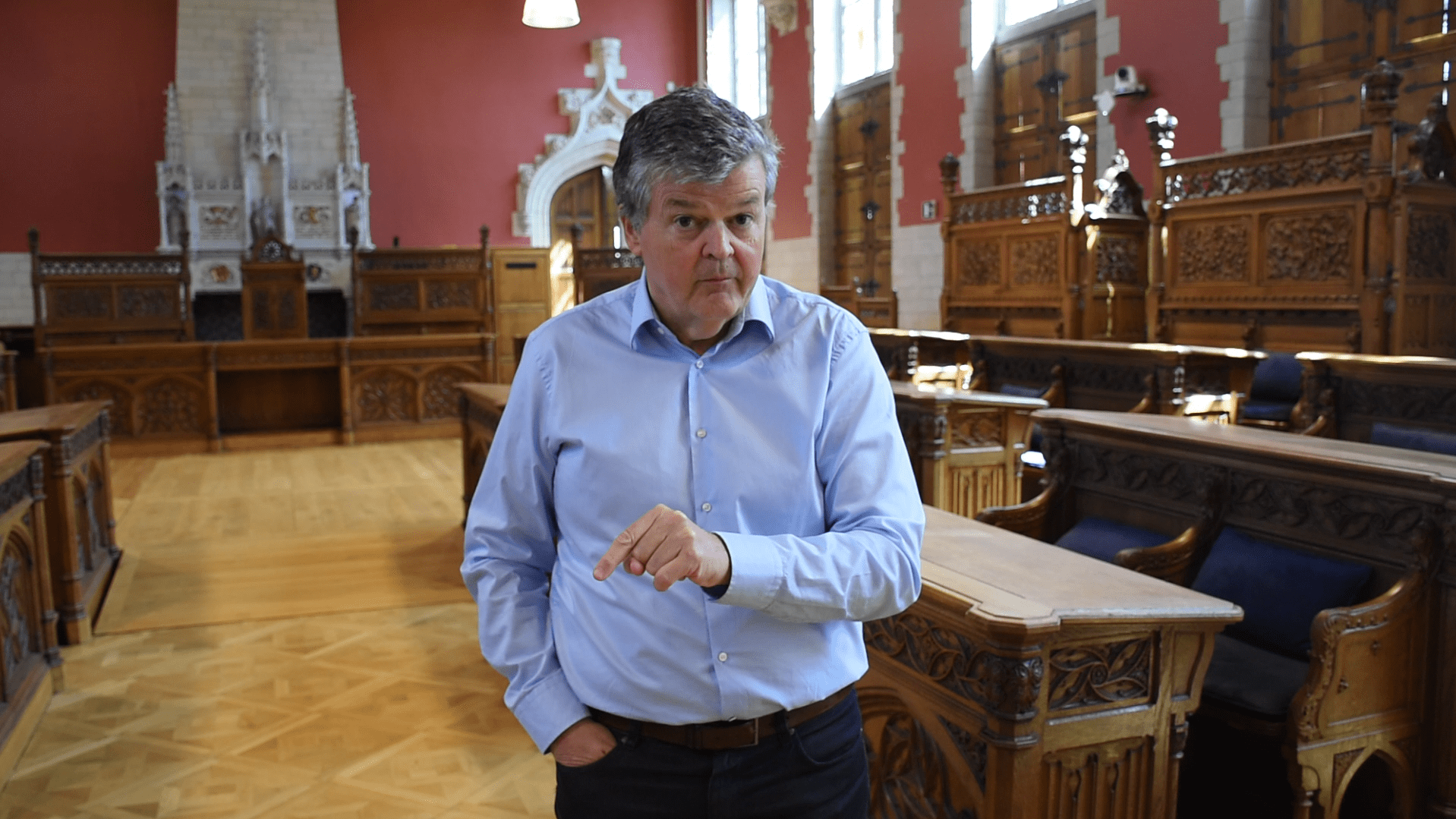
When Bart Somers talks about local government, one idea keeps coming back: it is the level where you can really make a difference.
He has been mayor of Mechelen in Belgium for 26 years — a tenure that ran in parallel with a national political career that took him through parliament, a ministerial post, and the leadership of a political party. Somers has spent much of his career moving between the two levels of politics. He never doubted which one he wanted to keep.
“The real strength of politics in the 21st century is situated on the local level, where you really can make a difference.”
A love for the city, a case for the local level
Somers was born and raised in Mechelen, and that attachment to the city is part of why he stayed. But it is not the whole story. Early in his career, he became convinced that the local level was where politics could achieve the most — a conviction he carried with him even while sitting in national government and parliament, where he pushed colleagues to lean on local leverage far more than they typically do.
*Bart Somers, Mayor of Mechelen in Belgium – interview on 29 April 2026
Climate action recognised at street level
That belief runs through Mechelen’s climate work too, recently recognised with the EUCovenant of Mayors Award for its heat decarbonisation success, which served as inspiration for other cities and towns across Europe. At a moment when some EU institutions appear to be easing off the pace of the green transition, Somers sees the local level as where the urgency is most visible and most actionable.
“At the local level, you can see with your own eyes what the impact of climate change is, and sometimes it’s really devastating. So, you feel the urgency to do something about it.”
Mechelen has been recognised for its large-scale roll-out of heat networks combined with heat storage to provide green heat to densely populated areas, while maximising the potential of local, renewable and residual heat sources.
The jury of the EU Covenant of Mayors Award applauded Mechelen’s comprehensive planning and concrete implementation steps of this specific project. The implementation of Mechelen’s heat plan is driven by strong local stakeholder mobilisation through a Heat Coalition of over 25 key organisations, from district system operators, energy cooperatives and government bodies to social housing corporations and local businesses. The jury praised Mechelen’s vast engagement and outreach efforts to get everyone on board with their heat plan, as well as their focus on supporting vulnerable communities facing energy poverty.
International, European and national frameworks matter, he says, but it is within them that cities do the concrete work: getting people onto bicycles instead of into cars and shifting investment away from fossil energy and into solar power.
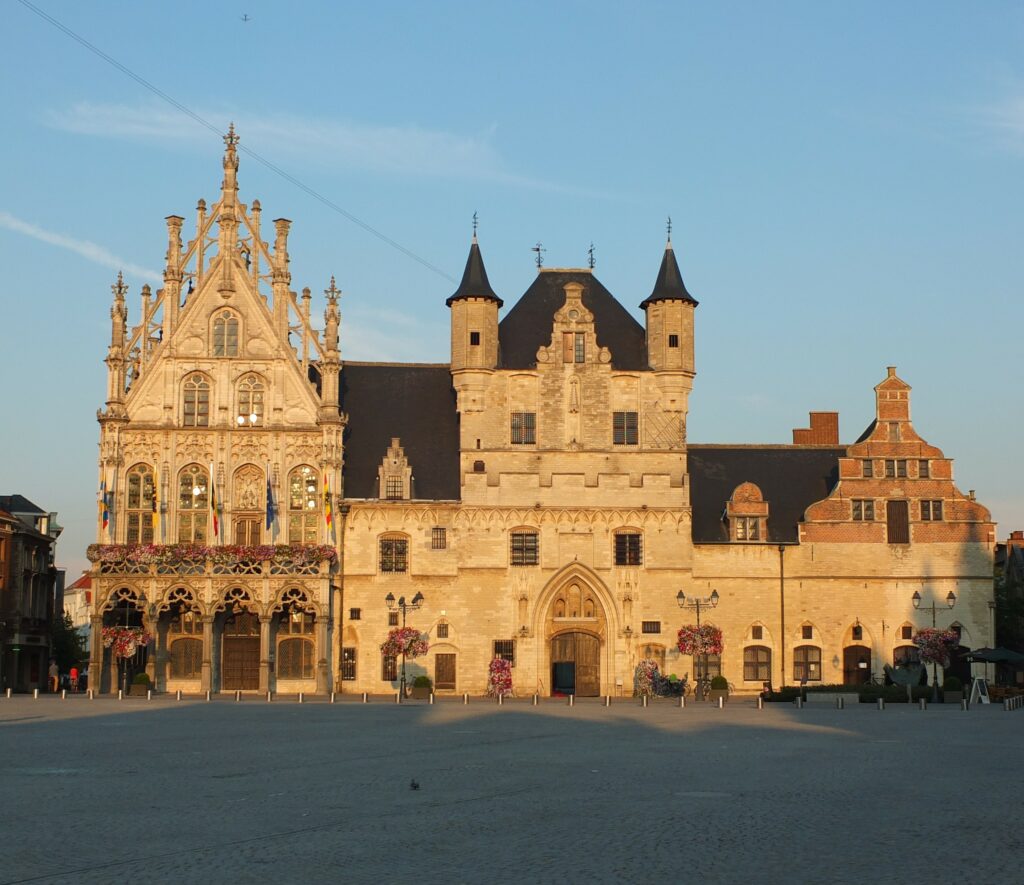
*Mechelen, city centre and city hall
Refugees, and a city that remembers
Mechelen’s response to Russia’s full-scale invasion of Ukraine was, for Somers, emotional as much as political. He had visited Maidan in 2014, as a member of parliament, while the uprising against Ukraine’s government was unfolding. Standing behind Ukraine afterwards felt like the only option for a city that, in his words, embraces human rights and European values.
“They are fighting our fight. They are sacrificing lives to protect also my country.”
Convincing the city to act was not difficult, he says, partly because Mechelen carries its own history of displacement. During the First World War, 90% of the city’s residents became refugees; Somers’ own grandfather spent three years in a refugee camp in the Netherlands, from the age of 14. It is a story many families in Mechelen share, and one that shaped how naturally the city opened its doors this time.
Safety and inclusion, hand in hand
Somers has built his reputation on combining an inclusive approach with a firm stance on the rule of law — a combination he says is often misunderstood. Asked about his most difficult decision as mayor, he points to the work of convincing people that safety and inclusion reinforce each other rather than conflict.
“Safety and inclusion go hand in hand, it strengthens each other.”
The people who most need a safe city, he argues, are not the ones in comfortable, middle-class neighbourhoods, they are mothers raising children in more vulnerable areas, where danger is closer to home. That conviction, he says, has helped Mechelen become a city where people from different backgrounds live together well.
A message to Brussels: trust the local laboratory
Asked what he would tell national and EU leaders, Somers is direct: solving today’s crises requires the local level. Cities and towns hold people’s trust, sit close to citizens, and can move fast and pragmatically in ways higher levels of government often cannot.
“We not only need a top-down policy, but we need a bottom-up policy. The place where you can reinvent democracy, where you can find real answers for the challenges of today and tomorrow, is at the local level.”
His advice is to treat that local level as a laboratory: a place to experiment and build strength that, in turn, feeds back into national and European politics.
CEMR is launching a call for proposals for the design and production of the Bridges of Trust Partnerships Award 2026 trophies.
The Bridges of Trust community brings together Ukrainian towns and cities and their European counterparts, fostering cooperation, resilience, recovery, decentralisation and mutual learning. The Bridges of Trust Partnerships Award 2026 will recognise outstanding municipal partnerships and celebrate their contribution to Ukraine’s European integration journey.
To mark these achievements, CEMR will award five municipal partnerships as Bridges of Trust Ambassadors 2026 and is looking for a creative professional or organisation to design and produce the trophies presented during the award ceremony.
What are we looking for?
Artists
Designers
Craftspeople
Studios
Creative agencies
Other qualified professionals
The selected contractor will design and produce ten trophies (two per awarded partnership), inspired by the Bridges of Trust identity and symbolising the connection between partner municipalities.
The trophies should visually reflect the values of Partnership, European Ukrainian cooperation, solidarity and trust, and resilience and reconstruction.
How to apply
Applicants should submit:
A portfolio showcasing relevant work and experience
A short concept proposal
Visual references, sketches or mock-ups
A proposed timeline for design, production and delivery