When local leaders are attacked

European Observatory for the Defence of Democracy at the Local Level

Why protecting local elected representatives is essential to safeguarding trust, stability and democratic resilience across Europe


Across Europe, local elected representatives are facing growing pressure, harassment and disinformation at a time when communities need trusted leadership more than ever. In a new article published in Burgemeester (pages 158, 159 and 160), the magazine of the Dutch Association of Mayors, dedicated to local governance, democratic resilience and public leadership. In the article, CEMR presents the work of the Observatory for the Defence of Local Democracy at the Local Level (ODELL), a European initiative created to monitor threats against local democracy, support mayors and councillors, and strengthen public trust through clearer communication, evidence-based advocacy and practical tools for municipalities.

Webinar Defending Local Democracy Together

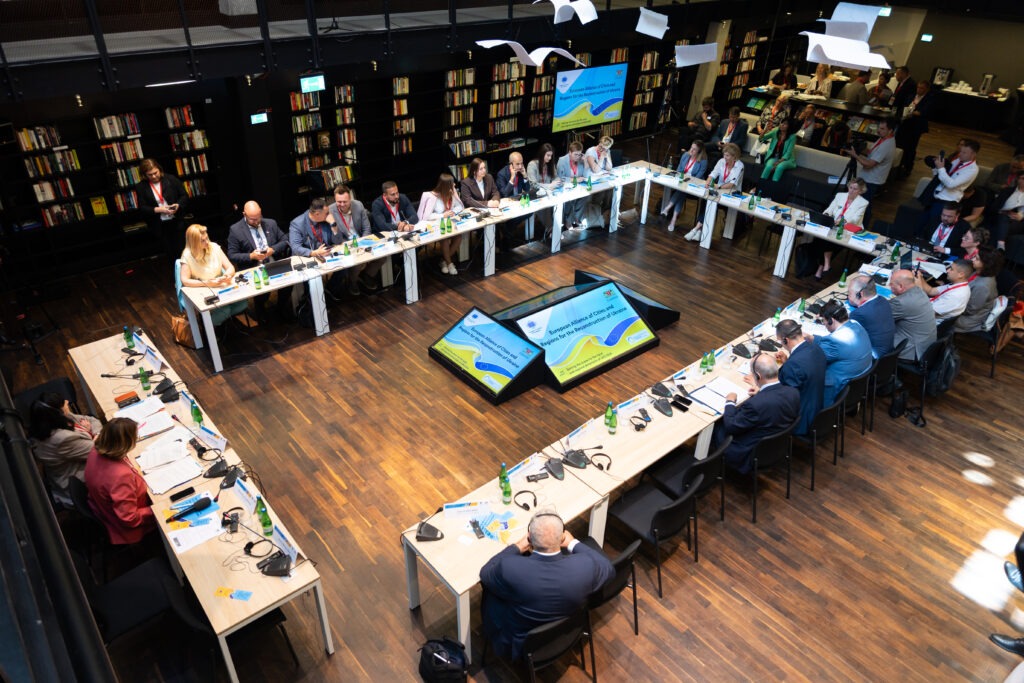
On 21 May 2026, from 14h to 15h15, the Council of European Municipalities and Regions (CEMR) and partners of the Observatory for the Defence of Local Democracy in Europe will host an online webinar exploring the growing threats faced by local and regional elected representatives across Europe.

The discussion will bring together local leaders, experts and European partners to explore the growing challenges facing democracy at the local level, from harassment and intimidation to disinformation and declining public trust, while sharing practical solutions and experiences from across Europe.

Register and learn more here: Defending Local Democracy Together webinar

For more information, please contact:

Webinar: defending local democracy together

ODELL - Democracy news

The European Observatory for the Defence of Democracy at the Local Level presents the first findings on threats against local elected representatives


On 21 May 2026, from 14h to 15h15, the Council of European Municipalities and Regions (CEMR) and partners of the Observatory for the Defence of Local Democracy in Europe will host an online webinar exploring the growing threats faced by local and regional elected representatives across Europe.  

Launched in December 2025 by CEMR, the Municipality of Bilbao and the Association of Basque Municipalities (EUDEL), in partnership with Bocconi University and with the support of the Basque Government, the Observatory aims to monitor, analyse and respond to the increasing pressures affecting local democracy across Europe.  

The webinar will present the preliminary findings of the Observatory’s upcoming European report examining patterns of intimidation, harassment, violence and attacks targeting local and regional politicians. The discussion comes at a time when democratic institutions across Europe are facing growing polarisation, disinformation, and declining trust in public authorities.

Local elected representatives are often on the frontline of these challenges. As the level of government closest to citizens, municipalities and regions play a crucial role in safeguarding democratic participation, social cohesion and public trust.

“Threats to local politics affect integrity, how we speak, and can silence people. It can make elected representatives afraid — or push them to leave public life,” said Eider Inuntziaga, city councillor of Bilbao and CEMR spokesperson on local democracy.

The event will bring together local elected representatives, researchers, international organisations and European institutions to discuss how to strengthen democratic resilience at the local level and better protect those serving in public office.

Speakers include Filiz Ceritoğlu Sengel, who will open the webinar, as well as academics and experts working on democratic governance and political violence. Representatives from the European Commission and the Council of Europe Congress will also contribute to the discussion.  

The webinar will also examine threats occurring during electoral processes and explore possible policy responses to violence and intimidation targeting local elected officials.

For more information, please contact:

Europe’s Day and 75 years of CEMR

EU day 2026 - news

Europe Day: CEMR celebrates 75 years with a Europe-wide meme vote


Today we celebrate Europe’s Day alongside CEMR’s anniversary, 75 years of representing and supporting local and regional governments across Europe. 

Celebrated every year on 9 May, Europe Day commemorates the Schuman Declaration, which laid the foundations for peace, cooperation and shared values in Europe. For 75 years, CEMR has accompanied towns, cities and regions throughout Europe’s evolution, strengthening local democracy and cohesion at the heart of the European project. 

To mark this double celebration, CEMR is once again inviting citizens to take part in a playful and interactive Europe Day initiative

Following last year’s interactive map game highlighting EU-funded projects, this year we are launching a meme vote celebrating CEMR’s anniversary. 

👉 Discover the game and vote for your favourite meme: 

Participants can vote by selecting their favourite meme directly on social media. 
🏆 The winning meme will be announced on Monday, 18 May

This initiative is part of CEMR’s ongoing effort to celebrate Europe Day in a creative and accessible way, and more surprises are already in store for future editions. 

Happy Europe Day! 🇪🇺✨ 

EU budget campaign – The Czech Republic

The advocacy work of our national associations: the case of the Czech Republic


As negotiations on the next EU long-term budget move forward at both European and national level, CEMR is calling for a stronger role for local and regional governments in shaping EU investments and priorities.

In a recent video message, Richard Vereš, Mayor of Slezská Ostrava and CEMR Vice-President, warns that the current proposal risks moving decision-making further away from the territories most affected by EU policies. Speaking from the Moravian-Silesian region in the Czech Republic, he highlights in particular the absence of clearly dedicated funding for the Just Transition and the broader risk of weakening citizens’ trust in European institutions.

The Union of Towns and Municipalities of the Czech Republic (SMO ČR) has been active both nationally and at European level, working alongside CEMR and the European Committee of Regions to advocate for a less centralised EU budget proposal that better reflects the needs of cities and regions.

Our views on the current EU budget proposal

CEMR calls for stronger guarantees for multilevel governance and partnership, greater flexibility for local governments to respond to crises, and a budget that reflects today’s challenges — from climate adaptation and housing to digital services and territorial cohesion.

The message behind the campaign is simple: when local and regional governments are involved from the start, Europe delivers better results for citizens.

For months, CEMR has been calling for:

  • A strong role for local and regional governments in EU programmes and funds
  • Clear guarantees for multilevel governance and partnership
  • Greater flexibility so local governments can respond quickly to crises
  • A budget that matches today’s real challenges, from climate adaptation to housing, digital services and territorial cohesion

CEMR’s EU budget campaign centres on one simple truth: When local and regional governments are involved from the start, Europe delivers better results for its citizens.

This is how democracy works — through cooperation, partnership and decisions made close to the people they affect.

Join us in defending that principle.

Learn more about the CEMR EU budget campaign

For more information, contact:

Parliament questions centralised MFF model

MFF - banner text

European Parliament sets MFF 2028–2034 priorities, questions the “one plan per Member State”


On 28 April 2026, the European Parliament adopted its interim report on the Commission proposal for the Multiannual Financial Framework (MFF) 2028–2034, a key political milestone as this will be the basis for the European Parliament to engage in negotiations with the Member States in the Council on the next long-term budget for the EU. With this report, the Parliament sends a clear signal: the budget architecture proposed by the European Commission risks recentralising decision-making and weakening place- based investments.

Many of the report’s messages echo CEMR’s calls to have a budget that strengthens Europe through its towns, cities and regions.

 In particular, while confirming new priorities in defence and competitiveness, the EU Parliament safeguards funding for the Cohesion policy and the Common Agricultural policy. It also emphasises the need to make partnership and multilevel governance a reality, especially in the proposed National and Regional Partnership Plans (NRPPs).

Arjen Gerritsen, King’s Commissioner of Flevoland (NL) and CEMR spokesperson on EU budget, pointed to the significance of the Parliament’s stance:

“Cities and regions plan investments in regional innovation, sustainability and strategic autonomy over decades. The next MFF must guarantee predictable funding and support long term sustainable investments at local and regional levels.”

What the European Parliament’s interim report says

A more ambitious EU budget, shielded from inflation and debt pressures

Parliament calls for the MFF to reach 1.27% of EU Gross National Income (GNI), and insists that NextGenerationEU debt servicing should be treated outside the MFF ceilings (i.e., not competing with programme spending). It also supports an adjustment method that better protects the budget’s purchasing power during inflationary shocks. This allows the Parliament to increase the budget of the three main headings: Europe’s social model and quality of life (including the NRPPs); Competitiveness, prosperity and Security (including European Competitiveness Fund and Horizon); and Global Europe by about 10% compared to the Commission’s proposal.

 A firm rejection of the “à la carte approach” for Member States
One of Parliament’s strongest political messages is its opposition to the Commission’s approach of “one plan per Member State”, warning it risks renationalising EU policies, undermining the European dimension of spending, creating competition between beneficiaries, and weakening subsidiarity and multilevel governance.

Ring-fenced funding for cohesion and social priorities
Parliament calls for strong, clearly distinct and adequate funding for cohesion policy, the European Social Fund (ESF+), and other long-standing policies, and argues that “non-ringfenced” amounts under NRPPs should be fully allocated to provide predictability for beneficiaries. It also stresses cohesion policy’s treaty basis and calls for a dedicated and robust envelope for cohesion funds. However, one of the great omissions in the report is the European Agricultural Fund for Rural Development, which is the only Cohesion Policy fund not clearly allocated a specific budget, putting at risk rural municipalities and regions relying on the rural development fund

Clearer governance: regional chapters and full involvement of local and regional governments
The interim report calls for the establishment of regional chapters (in line with Member States’ institutional frameworks) and the full involvement of regional and local governments in the design, implementation, monitoring and evaluation of programmes, explicitly referencing shared management, partnership and multilevel governance. It also notes that shortcomings seen in the Recovery and Resilience Facility model were not sufficiently addressed in the NRPP proposal. 

New priorities with territorial impact: housing, resilience and crisis response
Parliament flags the housing affordability and availability crisis and calls for more strategic investment in decent, sustainable and affordable housing, energy and security across the different headings. It also pushes for stronger crisis-response instruments and a dedicated solidarity reserve for natural disasters.

“We welcome the European Parliament’s position—it sends a clear signal in support of multilevel governance and the role of local and regional governments in delivering EU investments,” said the CEMR spokesperson. “As negotiations move forward, it will be crucial for local and regional governments to actively support these priorities in their dialogue with national authorities.”

Just as the European Parliament was adopting its interim report, the CEMR Expert group on territorial cohesion met to exchange with Member States representatives on the state of play of MFF negotiations and on the ongoing process of elaboration of the National and Regional Partnership Plans. Discussions highlighted that this process is already underway in several Member States, with varying levels of involvement of local and regional government associations.

For more information, please contact:

New project launched for local democracy

LORAI – the Local Observatory on Reform Agendas Implementation

A new chapter for local democracy in the Western Balkans: launch of the LORAI programme


April 1st marked an important milestone for local democracy and European integration in the Western Balkans, as CEMR joined the Congress of Local and Regional Authorities, the European Commission, NALAS, and local government associations from across the region to officially launch LORAI – the Local Observatory on Reform Agendas Implementation

The high‑level ceremony took place on the margins of the Congress’s 50th Session, bringing together European institutions, municipal leaders, experts and national associations to celebrate the beginning of a partnership designed to strengthen the role of local authorities in one of the most decisive phases of the region’s EU accession process. 

A new observatory with a clear mission 

LORAI is not just a new project. It is a new architecture of collaboration

The programme, jointly established by the European Union and the Council of Europe, will support local authorities in Albania, Bosnia and Herzegovina, Kosovo*, Montenegro, North Macedonia and Serbia to take a more active role in shaping, implementing, and monitoring their countries’ Reform Agendas under the EU’s Reform and Growth Facility

For years, local and regional governments (LRGs) have been responsible for delivering essential services, infrastructure, and community support – yet they have been only marginally involved in monitoring the reforms that directly affect them. LORAI is designed to close that gap. 

It aims to: 

  • Empower municipalities to take part in designing, monitoring and evaluating reforms 
  • Strengthen policy dialogue between all levels of government 
  • Build local capacity to identify investment priorities for the next EU Multiannual Financial Framework 2028-2034 
  • Increase transparency and accountability through an open‑access dashboard tracking reform progress on the ground 
  • Boost peer learning through regional exchanges, workshops, and reviews 

These collective efforts will enable reforms to become not only national commitments, but tangible improvements in citizens’ daily lives

A strong partnership to drive real results 

LORAI will be implemented by the Congress of Local and Regional Authorities, in partnership with: 

  • NALAS – Network of Associations of Local Authorities of South-East Europe 
  • CEMR – Council of European Municipalities and Regions 
  • Local government associations from each beneficiary country 

This partnership brings unparalleled reach, expertise and legitimacy. Each organisation plays a vital role in ensuring reforms are not abstract commitments but concrete transformations at the local level

Opening the launch event, Congress President Gunn Marit Helgesen highlighted the stakes: 

“With its unparalleled convening power among local and regional authorities, this partnership will deliver real benefits for the citizens of the Western Balkans. Real change happens when local governments are active shapers of reform; we must enable their meaningful participation in the reform process.” 

Representing the European Commission, Valentina Superti, Director for the Western Balkans at DG ENEST, added: 

“For citizens, progress must be visible and tangible. LORAI plays a key role in empowering local authorities to turn reform commitments into concrete results. Today marks the beginning of a fruitful collaboration.” 

CEMR Vice‑President Mélanie Lepoultier emphasised the importance of linking reforms to investment readiness: 

“Our mission at CEMR is to transform local experiences into actionable policy. Through LORAI, we will support local officials to convert reforms into investment roadmaps aligned with the next Multiannual Financial Framework and foster meaningful peer‑to‑peer exchanges.” 

NALAS President Dubravko Bilić stressed the Observatory’s long‑term value: 

“Sustainable progress requires tracking implementation where it matters most—at the local level. LORAI will ensure reforms deliver measurable and lasting results for citizens.” 

Why LORAI matters 

Reform Agendas represent some of the most strategic commitments Western Balkan governments have made on their path towards EU accession. Yet reforms can only succeed when local governments, those closest to the citizens, are active contributors, not bystanders. 

LORAI is important because it brings: 

1. Accountability, where reforms are felt the most 

The open-access dashboard will provide communities, governments, and partners with transparent data on how reforms are progressing locally. 

2. Stronger multilevel governance 

The programme strengthens collaboration between national and local authorities, ensuring reforms are implemented realistically and sustainably. 

3. Investment-ready local priorities 

LRGs will be better equipped to shape priorities for future EU funding, especially in the next MFF (2028–2034)

4. A regional ecosystem of learning 

Peer exchanges, workshops, and reviews will allow governments from Western Balkan countries to learn from each other, share solutions, and amplify impact. 

For CEMR, this programme is fully aligned with our mission:  

To ensure that Europe’s local and regional governments are empowered, heard, and equipped to shape the future of their communities. 

Looking ahead 

With a dedicated budget of €2,222,222 for its first two years and a duration running from March 2026 to February 2028 (with the possibility of extension), LORAI is set to become a cornerstone for stronger governance, better reforms, and deeper European integration in the Western Balkans countries.  

For more information contact: 

Voices of our 75-year history 

Barcelona - Antonia interview

Antònia Sabartés: “I would like CEMR to be brave and bold” 

1,089 words
5–7 minutes

Antònia Sabartés

Antònia Sabartés was Head of Cabinet to Pasqual Maragall, Mayor of Barcelona, and President of the Council of European Municipalities and Regions (CEMR) from 1992 to 1997. Closely involved in the organisation’s leadership during a pivotal period for Europe, she witnessed first‑hand how CEMR helped shape the place of local and regional governments in the European project.

*Antònia Sabartés – Head of Cabinet to Pasqual Maragall, President of CEMR from 1992 to 1997.

In this interview —recorded at the Fundació Mies Van der Rohe in Barcelona, rebuilt during Maragall’s time as the Mayor of the Catalan capital and closely linked to the European Union through the European Union Prize for Contemporary Architecture — she looks back on Maragall’s presidency, the defining moments of that period, and the legacy she believes continues to guide CEMR today.

Pasqual Maragall: a European by conviction and practice

Pasqual Maragall was elected President of CEMR in December 1991 in Paris and formally took office on 9 May 1992, at a moment of intense political, institutional and symbolic change for Europe. The year of his appointment coincided with the Olympic Games in Barcelona and with the ratification of the Maastricht Treaty, placing him — and CEMR — at the heart of Europe’s transformation.

Pasqual Maragall with Jacques Delors - Arxiu Digital Pasqual Maragall, Fundació Catalunya Europa

As Mayor of Barcelona, he embodied the growing international role of cities, having an active role also in the creation of Eurocities. His political and intellectual background reinforced this outlook: he had studied in Paris, been a student of Jacques Delors, knew key European figures such as Romano Prodi, and came from a deeply pro‑European family.

*Pasqual Maragall with Jacques Delors – Arxiu Digital Pasqual Maragall, Fundació Catalunya Europa

For Sabartés, this combination of experience and conviction made him particularly suited to leading CEMR at a time when local and regional governments were claiming a stronger voice in Europe.

Memories that mattered: from Delors in Barcelona to the Steering Committee in Prague

Certain moments remain particularly vivid in Sabartés’ memory for their symbolic weight and historical significance. One was Pasqual Maragall’s formal inauguration as CEMR President in Barcelona on Europe Day in 1992 — an event made exceptional by the presence of Jacques Delors. Delors rarely left Brussels, and his decision to attend underlined both the importance of the moment and the esteem in which Maragall and CEMR were held.

Another landmark was the 1992 Steering Committee meeting in Prague, held shortly after the Olympic Games. Beyond its timing, the meeting marked a turning point for CEMR, reinforcing its internal consolidation and expanding its European ambition at a crucial moment of transformation for the continent.

Alongside these emblematic events, Sabartés also recalls more personal memories linked to Maragall’s presidency. Initially, she admits to having doubts. As a mayor with major responsibilities, she wondered whether he would be able to devote enough time to CEMR. Those concerns were quickly dispelled. Maragall attended every single meeting without exception and treated the presidency as a true priority.

*Pasqual Maragall with Josef Hofmann, ECOS Conference (Prague), in the 90s. HAEU, CCRE-846

She also vividly remembers the intense spirit of collaboration within the CEMR team during those years. Working closely with Elisabeth Gateau and Christophe Chaillou, coordination between Paris and Barcelona was constant and often demanding. In a pre-digital era, communication relied on phone calls and faxes, with short messages sometimes exchanged several times a day. Achieving what today comes effortlessly thanks to the internet required at that moment a real level of coordination.

The relevant role of Maragall in the creation of the Committee of the Regions

Under Maragall’s leadership, CEMR played a central role during one of the most important phases of European integration. The approval of the Maastricht Treaty created new opportunities, notably the future establishment of the Committee of the Regions.

*General view in the ceremony auditorium of the signature of the Maastricht Treaty. Copyright: European Communities, 1992.

Securing a place for the President of CEMR in the first presidency of the Committee of the Regions was a major success. From the moment Maastricht was approved until the Committee became operational in 1994, CEMR worked intensively to ensure that local and regional authorities would be taken seriously within the EU’s new institutional framework.

This effort was reinforced through a Consultative Council of Local and Regional Authorities set up by the European Commission, working closely with Eneko Landaburu, then Director‑General of DG REGIO. These relationships opened doors and ensured that CEMR was recognised as a key interlocutor.

Another complex but decisive achievement was the reform of the Conference of Local and Regional Authorities of the Council of Europe, which became the Congress of Local and Regional Authorities with two chambers. This process sparked debate between CEMR and the Assembly of European Regions, led by another Catalan, who, in this case, was the President of the Government of Catalonia, Jordi Pujol.

Throughout all the discussions, Maragall’s personal qualities made a difference. Multilingual, approachable and deeply European, he had a unique ability to connect people across political and cultural divides, even when positions were opposed.

Another greatest achievement: a vision that still matters

Beyond institutional successes, Sabartés believes Maragall’s most important contribution was strategic and ideological. He was a convinced federalist, defending a Europe built on subsidiarity, proximity and citizenship at a time when this narrative was far from mainstream.

He also played a decisive role in shaping the path that would later lead to the creation of United Cities and Local Governments (UCLG). Working with mayors such as Jorge Sampaio of Lisbon, Pierre Mauroy of Lille, and leaders of IULA, he pushed for unification — particularly as a way to strengthen the presence of local governments within the United Nations system.

*Pasqual Maragall with Romani Prodí (2004) – Author: Bedmar, Jordi. Arxiu Digital Pasqual Maragall

Defending the European Charter of Local Self‑Government as a global reference helped open doors and positioned Europe as a leader in local democracy, also in the multilateral system.

“Brave and bold”, this is what CEMR needs to be in the next 10 years

Looking ahead, Sabartés is clear about what she hopes for CEMR today. In a context marked by geopolitical tensions, social inequalities, migration challenges and the rise of the far right, she believes CEMR must once again show courage.

“I would like CEMR to be brave and bold, as we were during the Maragall years,” she says. “Above all, it needs strong leadership. If we do not act, governments of proximity risk being sidelined. We must work to improve the lives of European citizens, confront prejudice and defend the values we believe in. That is my dream for CEMR.”

For more information, contact:

CEMR activity report 2025

Impact Community - Head banner

What was CEMR’s impact in 2025?


The year 2025 was a period of many activities and a great impact at the local and international levels.

We are truly grateful to our members, partners and donors for their continued trust, commitment and collaboration throughout that year.

Local and regional governments are essential to tackle Europe’s most urgent and day-to-day challenges, and through CEMR, we have worked together to ensure that European local voices remain present, heard, and influential in EU and global debates.

Check CEMR’s activity report 2025 below:

For more information, contact:

Meet Emil Boc (Cluj-Napoca)

Cluj Napoca - Local Heroes 2026

Meet the Local Hero: Emil Boc. From national leadership to local transformation — and a call to put cities at the heart of Europe’s future


For Emil Boc, leadership has never been confined to a single level of governance. A former Prime Minister of Romania until 2012 turned long-serving mayor of Cluj-Napoca since then, his career reflects a rare continuity between national vision and local delivery. 

Today, as Europe debates its next budget, Boc’s message is direct: without cities and regions at the table, the European project risks losing both effectiveness and legitimacy. 

From Prime Minister to Mayor: why vision comes first 

Boc’s years as Prime Minister fundamentally reshaped how he approaches local governance. 

“The first lesson,” he explains, “is that no country — and no city — can develop without a clear vision, followed by a strategy and a concrete plan.” 

Returning to Cluj-Napoca after his time in national office, he applied this logic with precision. The city identified its competitive advantage — universities, education, and innovation — and built a development model around a knowledge-based economy.

But beyond economic strategy, Boc insists leadership is about more than administration: 

“A leader is not just there to keep the lights on or clean the streets. You need a long-term vision, and the discipline to follow it.”

Turning Cluj-Napoca into a pro-European city 

Over the past two decades, Boc has overseen a profound transformation. 

Once considered one of the most Eurosceptic cities in Romania, Cluj-Napoca — a city of around 300,000 inhabitants in the northwest of the country, with a dynamic, university-driven and innovation-based economy — is now, in his words, “the most pro-European city in the country.” 

This shift did not happen overnight. It was built “day by day,” by embedding what Boc calls a European way of life: openness, tolerance, and cooperation — combined with strategic use of EU funds. 

The results are visible everywhere: infrastructure, schools, public transport, and urban regeneration. For Boc, these are not abstract policies but tangible proof of what Europe delivers. 

“If someone asks me why Europe matters,” he says, “I just go outside. The schools, the roads, the parks — they are there because of European funding.” 

At the core of this transformation is a simple idea: freedom to stay. 

“People should not be forced to leave their city or country for economic reasons.
Europe must guarantee not only freedom of movement, but also the freedom to build a life at home.”

This message resonates particularly strongly in Romania, a country that has experienced one of the largest waves of emigration within the European Union. Since the early 2000s, millions of Romanians — many of them young, educated, and highly mobile — have left to study and work abroad, seeking better economic opportunities and living conditions. While this mobility reflects one of the EU’s core freedoms, it has also created deep territorial imbalances, with cities and regions losing talent at a critical stage of their development.  

What’s at stake in the next EU budget 

As negotiations intensify over the next Multiannual Financial Framework, Boc warns that the role of cities and regions is far from secure. 

His concern is not rhetorical — it is structural. 

First, he argues that local governments must move from consultation to real decision-making power: “We want to be at the table, not on the menu.” 

A key issue is how the European Commission plans to introduce so-called “regional checks.” Without legal weight, Boc fears these could become a box-ticking exercise rather than a genuine partnership. 

His proposal is clear: a binding subsidiarity clause, ensuring that municipalities and regions are involved at every stage — from design to implementation and evaluation — and can reject national plans that ignore them. 

Second, he pushes back against proposals to merge cohesion policy funding with other priorities, particularly agriculture. 

“These are two pillars of the European Union. If they are put in the same pot, cities and regions risk losing out.”

Third, Boc insists that cohesion policy must remain universal. Limiting access only to less-developed regions would weaken Europe’s ability to address inequalities across all territories. 

“Cohesion is the glue that keeps Europe together — and that glue is needed everywhere.” 

Finally, he calls for dedicated regional chapters in national plans to ensure that local perspectives are not sidelined. 

 
From climate to defence: investing in cities is investing in Europe 

For Boc, the debate about the EU budget ultimately comes down to credibility. 

“Europe has the vision. Now it needs the resources to deliver.”

He points to climate policy as a concrete example. Cities are expected to lead the transition — including initiatives like climate-neutral urban development — but without sufficient funding, ambitions risk remaining theoretical. 

At the same time, he highlights the growing interconnection between policy areas. Investments in urban infrastructure, such as metro systems, serve multiple purposes: sustainability, mobility, and even resilience in times of crisis. 

“Look at how metro systems are used in emergencies,” he notes. “This is not just climate policy — it is also about security and preparedness.” 

 
A Europe built with its cities 

Boc’s argument is ultimately political as much as financial. 

The European Union, he says, cannot be reduced to negotiations between capitals. 

“It is not just a union of states. It is a union of municipalities, regions, and cities.” 

Excluding them from decision-making would not only weaken policy outcomes but also erode the diversity and cohesion that define Europe itself. 

As the EU looks ahead to 2034 and beyond, Boc’s message is a warning — and a roadmap: 

Without strong local governments, there is no strong Europe. 

Cluj-Napoca is member of CEMR national association Romanian Municipalities Association.


Check out our EU budget campaign and what we have produced so far:

For more information, contact:

TERRI report – 4 May deadline 

Housing policy paper - News 2026

CEMR collects data and evidence on the evolving nature of local and regional governments’ competences and responsibilities for TERRI study 


CEMR is preparing the next edition of its flagship study on structures and competences, which examines how local and regional governments across Europe are organised and how their responsibilities change over time. The study, publication foreseen in autumn 2026, will explore recent reforms affecting municipalities and regions, and assess their impact on the effectiveness of public service delivery. 

A core focus of the new edition will be housing policy, a growing priority for CEMR members. The study will examine housing as a key competence for local and regional governments, with a particular emphasis on how they balance housing demand and supply, and how governance arrangements influence policy implementation on the ground. 

CEMR members are invited to contribute to the survey, with responses due by 4 May, to support the analysis underpinning the study. 

For more information, contact: