EU budget campaign – The Netherlands

EU budget campaign 2026

The advocacy work of our national associations: the case of the Netherlands


As negotiations on the next long-term EU budget move forward on two fronts—both between the EU institutions and within each member state among national governments, stakeholders, and regional and local networks—CEMR is sending a clear message: Europe works best when towns, cities, and regions have a real seat at the table.

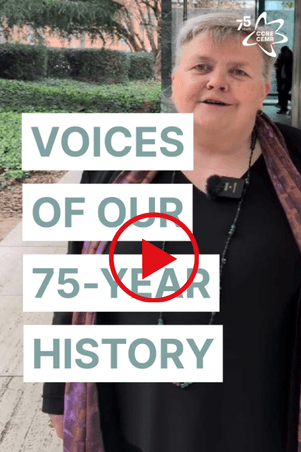
In this video message, Arjen Gerritsen, King’s Commissioner of Flevoland and CEMR spokesperson on the EU budget, highlights why the stakes are high — not just for local governments, but for every European community.

Town, cities and regions are where EU policies become real. This is where roads are built, where homes are planned, where climate protection happens, where small businesses get support, and where essential public services are delivered every single day. Europe’s ambitions only work when they work locally.

The most crucial discussions are now taking place within the Council and the European Parliament. This is why conversations in the capitals of the different member states are more relevant than ever. CEMR is mobilising its full strength to advocate at the national and regional levels, drawing on the influence of our national associations in the member states.

In this video, Arjen Gerritsen stresses that organisations like the Association of Provinces of the Netherlands (IPO) are already working to ensure regional voices are heard at the national level. But this effort needs to be shared across Europe, and he invites every local and regional politicians to do the same: “Talk to your governments. Raise your voice. Defend multilevel governance.”

Our views on the current EU budget proposal

The current proposal for the next Multiannual Financial Framework (MFF) risks shifting decisions further away from local and regional governments. And when choices are made too far from the ground, investments become less effective — and citizens feel the gap.

That’s why CEMR’s message is clear: partnership should not be optional — it must be the standard.

For months, CEMR has been calling for:

  • A strong role for local and regional governments in EU programmes and funds
  • Clear guarantees for multilevel governance and partnership
  • Greater flexibility so local governments can respond quickly to crises
  • A budget that matches today’s real challenges, from climate adaptation to housing, digital services and territorial cohesion

CEMR’s EU budget campaign centres on one simple truth: When local and regional governments are involved from the start, Europe delivers better results for its citizens.

This is how democracy works — through cooperation, partnership and decisions made close to the people they affect.

Join us in defending that principle.

Learn more about the CEMR EU budget campaign

For more information, contact:

EU gender equality strategy: our reaction 

Gender Equality Strategy 2026-2030 news

From principles to practice, making the European Commission’s new Gender Equality Strategy 2026-2030 deliver 


The European Commission’s new Gender Equality Strategy 2026–2030 starts from an important premise: gender equality is not a side issue, but a principle that must shape public life as a whole. Built on the Roadmap for Women’s Rights and its Declaration of principles for a gender-equal society, it sets out a broad vision across education, health, work, leadership and online life, while also confronting cyberviolence, anti-gender narratives and backlash against hard-won rights.  

This approach closely reflects CEMR’s own long-standing work. For almost 20 years, the European Charter for Equality of Women and Men in Local Life has advanced the same principle: equality must be anchored in shared commitments, but progress only comes through action at every tier of government. That is why the real test of the new EU Strategy, as with the Charter itself, will be implemented. 

That matters because women and girls are still too often pushed out of public life. CEMR’s Women in Politics: Local and European Trends shows that around 32% of women in politics have experienced violence, with cyberviolence rising sharply. The fact that the Commission’s Strategy itself draws on the CEMR study underlines the importance of local and regional experience in shaping the wider European agenda. The study also highlights wider structural barriers: women are still less likely to be drawn into political life and, once elected, are too often denied the most influential responsibilities. Politics cannot be meaningful if it excludes half the population.  

Governments must therefore ensure that the safety of women and girls is never pushed to the margins when other priorities arise. Girls must feel that their voice will be heard and that it will lead to action. Only then will they believe there is a place for them in politics. CEMR’s more recent study, Local Truth, Shared Trust, reinforces this message by showing how closely trust in institutions is linked to people’s sense of safety and inclusion, especially for those considering entering public life. Women must have not only a voice in politics, but a safe space in which to use it. 

While the Strategy acknowledges elements of CEMR’s work, this recognition represents a welcome first step rather than the destination. To ensure the Strategy’s ambitions translate into meaningful outcomes, there is value in more systematically integrating the depth of local and regional evidence that CEMR and its members have built over two decades. After all, gender equality is shaped on the ground: in towns, cities and regions where policies take effect and where women experience the impact of public action on their lives. Taking local and regional realities into account throughout the EU policy cycle, from data collection to programme design, delivery and monitoring, would help the Strategy reflect women’s lived experiences and enable more effective, inclusive implementation across Europe

As CEMR marks the 20th year of its Charter, it looks forward to working with the European Commission and partners across Europe to turn principles into lasting change. That same message was recently carried to United Nations at this year’s 70th Conference on the Status of Women, where Flo Clucas, CEMR’s spokesperson on gender equality brought the local perspective into a wider discussion among women and men in public office: local political life must be genuinely open to both women and men, and women cannot participate fully if safety is not guaranteed. The work is far from finished. But the direction is clear: women and girls must be able to participate fully and safely in public life, without fear of violence or intimidation, in every town, city, region and country. 

For more information, please contact:  

———-

* Banner photo: EC – Audiovisual Service, Copyright European Union, 2026 – source: https://audiovisual.ec.europa.eu/en/media/photo/P-069195

Ten years of cities taking climate action

Circular Cities and Regions Initiative - image

Celebrating a decade of driving local climate action in sub-Saharan Africa

The Covenant of Mayors in Sub-Saharan Africa (CoM SSA) is the “regional covenant” of the Global Covenant of Mayors for Climate & Energy (GCoM). It is a bottom-up and voluntary initiative that invites cities to define and meet ambitious and realistic energy and climate targets.

Launched in 2015 and funded by the European Commission, CoM SSA was initially led by the Council of European Municipalities and Regions, in partnership with African and European city networks, national associations of local governments, and civil society organisations.

To mark this decade, the new publication A Decade of Implementation, produced by GIZ in the framework of CoM SSA, brings together reflections from cities, institutional partners, donors and long-standing experts. Combining strategic perspectives with concrete city examples, it documents how more than 400 local governments, representing over 166 million people, have moved from climate planning to implementation and investment. The publication highlights key milestones and results achieved over the past ten years, including the development of the Sustainable Energy Access and Climate Action Plans (SEACAP), support for project preparation for cities, and an increasing focus on implementation, investment and impact.

Over the past decade, CoM SSA has shown that local climate and energy actions can only be effective and sustainable when it is anchored in political ownership and supported by strong associations of local governments and city networks. By empowering mayors and local leaders, and by facilitating peer exchange and collective representation, the initiative has enabled cities to move from commitments to concrete action.

The publication includes a contribution from CEMR, authored by the Director of Projects and Programmes, Durmish Guri, reflecting on the role of national associations of local and regional goverments and networks in anchoring the Covenant politically and ensuring its sustainability, a message that remains highly relevant as reflections on the future of the Covenant of Mayors continue, including in Europe.

“We therefore call upon funders, governments and partners to continue investing in CoM SSA. Anchored in local realities and supported by diverse partnerships, it stands as a cornerstone of climate resilience in Sub-Saharan Africa.”
Durmish Guri, Director of Projects & Programmes, Council of European Municipalities and Regions (CEMR)
Deutsche Gesellschaft für Internationale Zusammenarbeit (GIZ) GmbH, GIZ CoM SSA – 10 Years of Cities Taking Climate Action, p.10-11.

We would like to thank our partners — Climate Alliance, Energy Cities, Environment Development Action in the Third World (ENDA), French Agency for Environment and Energy Management (ADEME), ICLEI – Local Governments for Sustainability (World Secretariat and Africa), International Association of French Mayors (AIMF), Portuguese Energy Agency (ADENE), Sustainable Energy for Africa, and United Cities and Local Governments Africa (UCLG Africa) — for their invaluable collaboration and commitment.

For more information, contact:

Bonn’s path toward gender equality

Bonn - European Charter for Equality signatory

Inside Bonn’s 40-year effort to advance gender equality


The city of Bonn (Germany) signed the European Charter for Equality of Women and Men in Local Life nineteen years ago. Yet Bonn’s story promoting gender equality does not begin there. It stretches back more than forty years, to a time when gender equality was little more than an ambition, and when the structures needed to drive real change barely existed. 

In 1984, Bonn established a dedicated Office for Equal Opportunitiesa bold move for its time, signalling that equality was not an abstract value but a governance priority. By 1991, the city had introduced its first bylaws on equal opportunities. A decade later, in 2001, Bonn adopted its first comprehensive Equal Opportunities Plan, laying the foundations for long‑term, structural change in work, care, safety and representation. 

Bonn’s commitment has remained unwavering. Today, the city hall maintains a near-equal gender balance in senior management, while women in middle management are empowered to assume leadership responsibilities through structured mentoring programmes

Deputy Mayor of Bonn, Ursula Sautter, explains that the local administration “advocates and promotes equal care solutions” due to the “still unequal division of work and care”.  

Sautter also highlights that the city actively combats all forms of violence and stands firmly with victims. This effort is reinforced by the new German Violence Assistance Act of 2025, which strengthens support frameworks across the country. 

Bonn has been a signatory of CEMR’s European Charter for Equality since 2007, demonstrating its commitment to turning principles into action. As Sautter mentions, “the European Charter for Equality is a beacon of empowerment for us, uniting us with a multitude of diverse cities in this important endeavour”. 

Ursula Sautter, Deputy Mayor of Bonn

20 years of the European Charter for Equality 

This year, we mark the 20th anniversary of the European Charter for Equality, a milestone that invites reflection, celebration and renewed ambition. 

Since its creation, the Charter has become one of Europe’s strongest frameworks for driving equality at the local and regional levels. Today, more than 2,053 signatories from 36 countries are part of this growing movement of cities, towns, and regions committed to turning equality principles into reality. 

Developed by CEMR together with its national associations and project partners, the Charter brings together diverse European visions of equality. Hundreds of local and regional representatives contributed to shaping a shared framework that considers the diverse competences and contexts across Europe. Signing the Charter is a public and formal commitment, a pledge to advance gender equality through policies, programmes, and concrete actions implemented in cooperation with local partners and civil society. 

While the Charter is not legally binding, it is intentionally ambitious. CEMR recognises that achieving these objectives requires time, dialogue, and structural change. That is why signatories are encouraged to adopt a progressive approach, identifying priority areas for action while steadily expanding their efforts. 

To support signatories, CEMR established the European Observatory on the Charter, dedicated to helping local and regional authorities develop and implement strong equality policies. 

The Observatory’s mission is threefold: 

  • Support the development of Local Action Plans for gender equality 
  • Monitor implementation and progress on the ground 
  • Evaluate impact and share knowledge across Europe 

By connecting municipalities, facilitating exchanges, and making progress visible, the Observatory ensures that the Charter remains a living, evolving tool, anchored in real practice. 

— 

Discover the story of Aubagne (France), which signed the European Charter for Equality in November 2025. 

Bonn is a member of CEMR’s association Deutscher Städtetag. 

For more information, please contact:

Call for proposals – multimedia editor

Looking for Proposals EU Green Deal - News 2024

CEMR is currently looking for an agency to produce videos


CEMR seeks a multimedia editor capable of creating 4 videos that showcase key initiatives and CEMR work throughout the year in a specific timeline.

The contractor will work in close and continuous coordination with CEMR’s Head of Communications.

Read more in our terms of reference

For more information, contact:

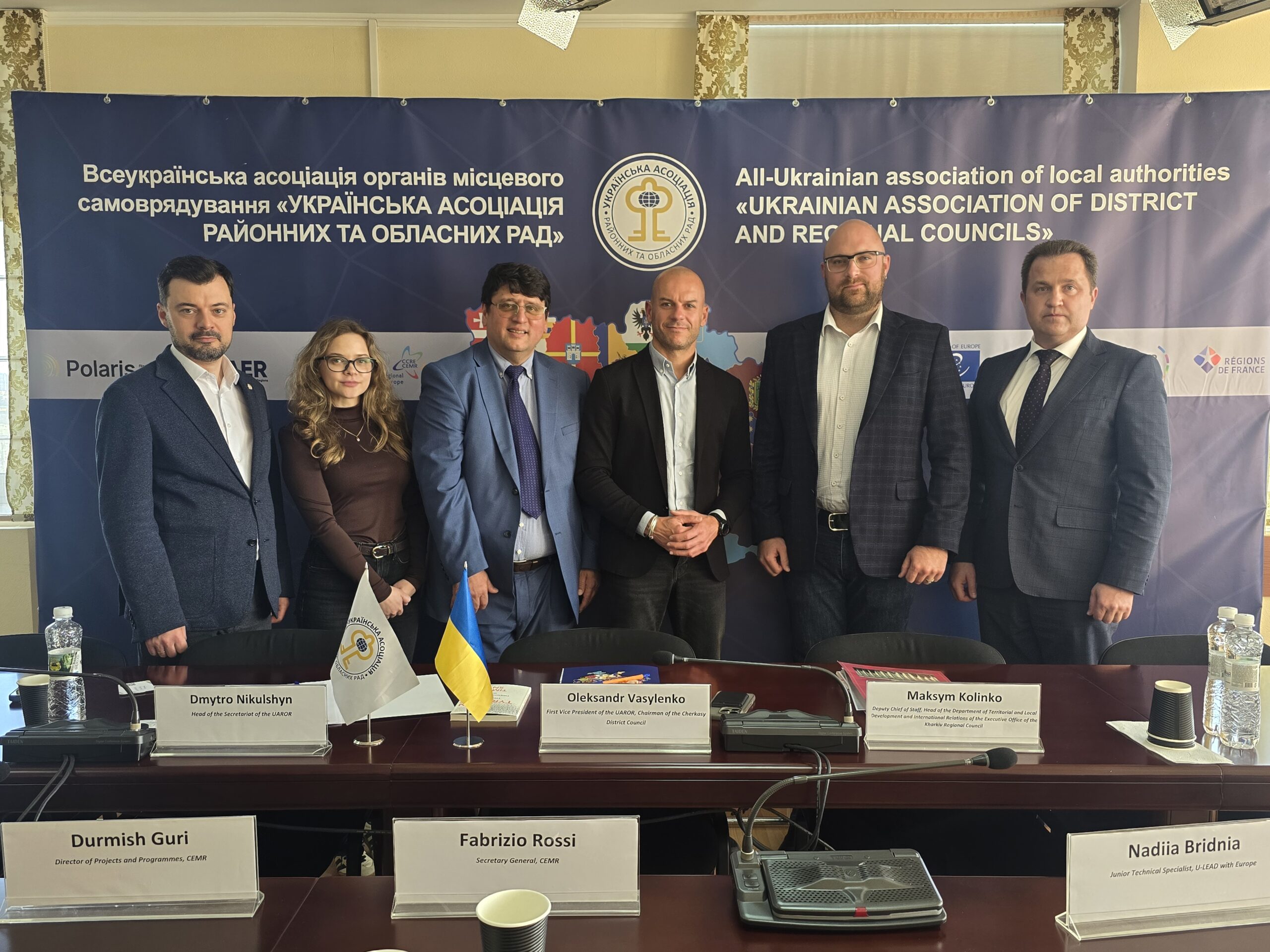
European Partnership Hub: EU-Ukraine ‘one-stop-shop’

Last week, the European Committee of the Regions (CoR) adopted in Plenary the ‘Enlargement package 2025 – Ukraine, Moldova & Georgia’


The European Committee of the Regions (CoR) has adopted an amendment explicitly recognising the European Partnership Hub (EPH) as the “one-stop-shop” for cooperation between local and regional governments in Ukraine and the EU. The Hub was launched at the 2025 Ukraine Recovery Conference, following the Joint Statement of the European Alliance of Cities and Regions for the Reconstruction of Ukraine.

Hosted by CEMR, which already drives EU–Ukraine municipal partnerships through Bridges of Trust, the Matchmaking Platform, and SUN4Ukraine, the Hub coordinates and connects initiatives within the Bridges of Trust Community. It facilitates exchanges, provides information, and organises joint meetings to align efforts, build synergies, and support municipalities with the skills needed for recovery, cooperation, and EU accession.

Six other amendments reinforcing the role of local and regional governements in the EU enlargement

The final text of the CoR also includes six amendments tabled by CoR members Māris Zusts and Gints Kaminskis and suggested by the Latvian Association of Local and Regional Governments (LALRG), in close cooperation with PLATFORMA.

The amendments aim to reinforce a central political message: EU enlargement will only succeed if it is rooted in local and regional levels, resilient to hybrid threats, and democratically endorsed by citizens. In this opinion, decentralisation, multilevel governance, gender equality, and combating foreign information manipulation are framed as essential components of sustainable enlargement.

Cooperation with local governments 

The adopted amendments further stress the need for public support through cooperation with local governments, especially in Ukraine’s post-war context, advocating for awareness campaigns and media engagement to foster acceptance of candidate countries. Democratic resilience and integrity are further prioritised, particularly through strengthened anti-corruption measures at all government levels. Transparency in public procurement is highlighted, especially regarding reconstruction efforts.

Concerning Moldova, the amendments commend reform progress but express concerns over foreign interference (FIMI) during the 2025 elections, advocating for resilience measures and support for independent media.

The amendments also support local governments in Georgia amidst democratic backsliding, emphasising ongoing cooperation to maintain dialogue and democratic governance as the country navigates its EU accession path.

Looking ahead

These amendments place local and regional governments at the heart of EU enlargement, recognising that lasting impact, resilient democracies, and strong communities depend on their active role. 

The next step is for the European Parliament, Council, and Commission to take these recommendations into account for their respective work on enlargement.
CEMR together with PLATFORMA and their partners will continue to advocate, coordinate initiatives, and foster exchanges, to strenghten the role of local and regional governments.  

The European Partnership Hub is supported by the European Union and its member states through U-LEAD with Europe.

For more information, contact:

Housing policy paper

Housing policy paper - News 2026

A local housing plan to strengthen the role of cities, towns and regions in addressing Europe’s housing challenges


Europe’s housing crisis has reached unprecedented levels, with direct consequences for citizens living in towns, cities and regions across the continent. The European Commission’s EU Affordable Housing Plan is a meaningful step forward, but it will only deliver if the full potential of local and regional governments is unlocked.

CEMR’s new position paper, “A local plan for housing”, sets out proposals to the EU Affordable Housing Plan, arguing that Europe’s ambitions will only translate into real results if towns, cities and regions are fully empowered to act.

To make this happen, CEMR identifies four priorities that must be unlocked so local and regional governments can deliver on the ground:

1. Mobilise investment where it matters most

Inadequate and unpredictable funding is one of the main barriers to expanding affordable and sustainable housing for towns, cities, and regions. Local and regional governments need long‑term investment frameworks. CEMR calls for:

  • Simpler and wider access to EU and national funding, including cohesion policy and EU budget 2028-2034 instruments, so municipalities of all sizes can plan and deliver.
  • Reforms to fiscal rules and modernisation of State aid, treating affordable and energy‑efficient housing as long‑term investment rather than ordinary expenditure.
  • Support to strengthen construction capacity and innovation, from skills to circular, climate‑resilient building and renovation.

2. Enable faster and more coherent planning to accelerate delivery

Fragmented, complex procedures delay urgently needed homes across Member States. CEMR urges EU and national authorities to:

  • Streamline planning and environmental assessments, reducing duplication while upholding strong sustainability standards.
  • Enable place‑based approaches, giving towns, cities and regions the flexibility to access land, regenerate brownfields and plan integrated, inclusive neighbourhoods.
  • Advance the single market for construction, harmonising technical standards to reduce delays, boost innovation and lower costs.

3. Improve efficiency through digital permitting

Digital permitting can bring faster renovation and new construction, but many local and regional governments lack resources to implement it. CEMR calls for:

  • Dedicated funding, training and technical assistance are needed for interoperable local–national–EU permitting systems.
  • Clearer guidance for applicants and developers will improve submission quality.

4. Activate Europe’s full potential through a real multilevel partnership

The EU Affordable Housing Plan will only succeed through genuine cooperation across levels of government. CEMR asks for:

  • Structured multilevel governance, with local and regional governments fully involved in design, implementation and monitoring.
  • Stronger municipal autonomy and legal clarity, ensuring responsibilities are matched with financing.
  • Adequated resources for the European Housing Alliance with structured participation of local and regional governments, which also serves to cooperate beyond the EU to address shared housing challenges.

Europe’s housing challenge demands swift and coordinated action. The EU Affordable Housing Plan sets an important framework, but its success will depend on how well it empowers the governments closest to citizens. By unlocking investment, planning flexibility, digital efficiency and genuine multilevel governance, Europe can move from ambition to delivery.

CEMR’s “Local Plan for Housing” offers a clear pathway: start locally, invest wisely and collaborate across levels of government. Only by working through cities, towns and regions can Europe ensure that affordable, sustainable and inclusive homes become a reality for all.

For more information, contact:

Job vacancy – Communications officer

Young people - News

CEMR is looking for a Communications Officer (maternity leave cover)


The Council of European Municipalities and Regions (CEMR) is looking for a Communications Officer to join its Brussels-based Secretariat for a six-month maternity leave cover from June to December 2026.

About the role

We are seeking a Communication Officer with a strong journalistic background and proven experience in EU-related communication. The successful candidate will be responsible for translating complex policy topics into engaging and accessible stories across multiple formats.

Working within a team of five communication professionals and in close cooperation with the Policy Team and member associations, the Communication Officer will:

  • Produce high-quality editorial content, including press articles, interviews, newsletters and storytelling pieces
  • Develop multimedia products such as videos, podcasts and infographics
  • Contribute to communication campaigns, including pan-European initiatives such as the EU budget campaign and CEMR’s 75th anniversary
  • Support media relations and event communications
  • Strengthen CEMR’s digital presence and social media outreach

This position offers a unique opportunity to help amplify the voice of local and regional governments at the European level during a particularly dynamic period for the organisation.

Profile

Candidates should have:

  • A relevant degree (preferably in journalism or communications)
  • 2–5 years of experience in a similar role
  • Excellent drafting and storytelling skills
  • Strong knowledge of the EU political landscape
  • Experience in digital communication and multimedia content creation
  • Excellent English (French is a strong asset)

Our offer

CEMR offers a six-month fixed-term contract with a competitive salary package (45,000–60,000 EUR gross per year depending on experience), alongside additional benefits including teleworking policy and allowance, lunch vouchers, eco-vouchers, medical insurance and public transport coverage.

How to apply

Interested candidates should send a CV and cover letter by 20 March 2026 to:

application@ccre-cemr.org
Subject line: “Communications Officer – Maternity Leave Cover”

Read more here

CEMR is an equal opportunities employer committed to diversity and inclusion.

For more information, contact:

Declaration on four years of war in Ukraine

Mayors in Ukraine - News 2023

CEMR issues declaration marking four years of war and reaffirming unwavering support for Ukraine


Four years after Russia’s full-scale invasion of Ukraine, local and regional elected representatives from the Council of European Municipalities and Regions (CEMR) once again reaffirm their unwavering support for Ukraine and its people.

On this fourth anniversary of Russia’s aggression, CEMR has issued a formal declaration strongly condemning the war, which continues to claim countless victims, and reiterating the commitment of European local and regional governments to stand alongside Ukraine in its struggle for freedom, reconstruction and European integration.

Call against attacks on Ukrainian mayors

Local and regional elected representatives remain on the frontlines of the war, ensuring the continuity of essential services under extraordinary and often dangerous conditions. Yet they continue to be directly targeted.

CEMR denounces the abduction of Ukrainian mayors and supports the call of the Association of Ukrainian Cities demanding the immediate release of those still detained:

  • Oleksandr Babych – Hola Prystan City Mayor
  • Ihor Kolykhaiev – Kherson City Mayor
  • Anatolii Siryi – Starosta of Novi Borovychi Starosta District, Snovsk City Municipality

CEMR also condemns the arbitrary imprisonment, torture and murder of Ukrainian people in Russian captivity, including:

  • Yevhenii Matvieiev – Mayor of Dniprorudne
  • Oleksii Vynnychenko – Starosta of the Hrebenykivka Starosta District of Boromlia Village Municipality

Commitment to peace, reconstruction and EU integration

CEMR calls for the immediate end to the war, and for decisive actions to enable the establishment of a just and lasting peace in Europe and the reconstruction of Ukraine. Achieving this requires full engagement of the European Union and its Member States at every stage of the process. European local and regional governments stand ready to contribute actively to recovery, democratic resilience, and long-term stability.

In its declaration, CEMR reaffirms its dedication to:

  • Supporting Ukraine’s reconstruction through partnerships, exchanges and decentralised cooperation between towns, cities and regions.
  • Accompanying Ukraine on its path to full EU membership, strengthening democratic governance and multilevel cooperation across Europe.
  • Sustaining and expanding cooperation through key initiatives, including:
    • Bridges of Trust Community, bringing together local and regional representatives engaged in cooperation to foster trust, resilience, sustainable development and democratic governance.

A call for sustained European engagement

As the war enters its fifth year, sustained political, financial and institutional support remains essential. The reconstruction of Ukraine and the achievement of a just and lasting peace demand continued solidarity, coordinated action and long-term commitment.

CEMR stands firm in defending European values of democracy, peace and the rule of law. European local and regional governments remain committed to accompanying Ukraine to full EU membership, contributing to a stronger, more resilient and more secure Europe.

Read the full CEMR declaration:

CEMR’s recommendations: five essential conditions for the fair and effective integration of Ukraine into the EU

For more information, contact:

“Cities are laboratories for solutions”

ODELL - News 2026

Pol Morillas (CIDOB), MEP Hanna Jalloul and local leaders reflect on the current geopolitics and its effects in Europe, global disorder, and why local leaders matter more than ever


At a time when global politics is increasingly shaped by power rivalries and zero-sum logic, cities and regions may appear peripheral to the big geopolitical chessboard. But according to Pol Morillas, Director of CIDOB (Barcelona Centre for International Affairs), this perception is deeply misleading.

Speaking at a UCLG gathering of the European section, alongside MEP Hanna Jalloul, Vice-Chair of the European Parliament’s Foreign Affairs Committee, and representatives from municipalities and regions across Europe, Morillas offered a sharp diagnosis of the global moment, and a compelling argument for why local and regional leaders are essential actors in Europe’s response to it.

“We are entering a world we were not built for”

Morillas describes 2026 as the year when “brutal geopolitics” has fully taken shape. 

Pol Morillas - CIDOB

“We are not living in the world the European Union wanted”, he explained. “The open markets, rules-based globalisation, and cooperative multilateralism that Europe championed are giving way to power politics, transactional alliances, and the return of the state as the dominant actor”. 

*Pol Morillas, Director of CIDOB (Barcelona Centre for International Affairs)

This shift goes beyond any single election or leader. While the return of Donald Trump to the White House has accelerated trends, Morillas sees a broader transformation driven by major powers — including China and India — embracing national interest and zero-sum competition. 

In this emerging order, actors are reacting differently. Some are accommodating. Some are resisting, particularly youth movements across the globe. Others are disoriented. 

“And the European Union”, Morillas noted, “is navigating this disorientation”. 

Europe’s three strategic choices

According to Morillas, Europe is currently debating three broad strategies:

  1. Keep the United States engaged, even if it requires tactical appeasement, especially in areas like security and intelligence where Europe lacks full autonomy.
  2. Build new alliances with middle powers such as Japan, India, and Mercosur countries to preserve elements of a rules-based order.
  3. Pursue greater autonomy, particularly in areas like technology and geo-economics — though, as Morillas cautioned, “there is often more talk of autonomy than real action”.

These strategies coexist, sometimes uneasily, as Europe attempts to redefine itself in a harsher global landscape.

But this is only part of the story.

New diplomatic opportunities for cities and regions as “laboratories for finding solutions”

While geopolitics grabs headlines, Morillas argues that some of the most urgent crises are concentrated in cities and regions and that is precisely where their diplomatic relevance lies. “The role of cities and regions will be most important when they are laboratories for finding solutions to crises that are most held in cities and regions”, he said.

He pointed specifically to:

  • Housing
  • Cost of living
  • Energy
  • Youth mobilisation and the response to young people’s demands

“These areas are far away from brutal geopolitics and do not have defence as their main component”, Morillas explained. “They are low-hanging fruits for cities and regions to play an interesting diplomatic role”.

In other words, while states compete over security and strategic dominance, local governments are managing the everyday pressures that shape citizens’ trust in democracy. Their ability to innovate and respond effectively becomes a form of diplomacy in itself.

Youth mobilisation and democratic response

Morillas also underlined a growing global trend: youth resistance to national political systems perceived as unresponsive.

“We are seeing increasing numbers of young people resisting national politics and proposing alternative models of understanding society”, he said.

For cities and regions, this presents both a challenge and an opportunity. Local governments are often the first institutional level confronted with youth demands — from climate action to housing affordability. The quality of their response will shape democratic resilience in Europe.

A multipolar world, including the local level

The global order’s fragmentation is also reshaping inter-city cooperation. The CIDOB director pointed to new forums emerging beyond traditional Western-led networks, including initiatives linked to BRICS+.

“This multipolar world also takes place within regions”, he observed. “European cities and regions need to be aware of these new forums”.

Global alignment is no longer only a matter for foreign ministries. It is increasingly reflected in how cities cooperate, partner, and position themselves internationally.

From consultation to co-decision in Europe

Perhaps most significantly, Morillas sees cities and regions gaining weight within the European architecture itself. “It is not only a question of member states”, he argued. “Cities can play an important role in the European architecture — sometimes only as being consulted but increasingly having something to say about the future of European integration”.

From housing initiatives to urban energy transitions, European policy debates are increasingly touching areas where cities have primary competence.

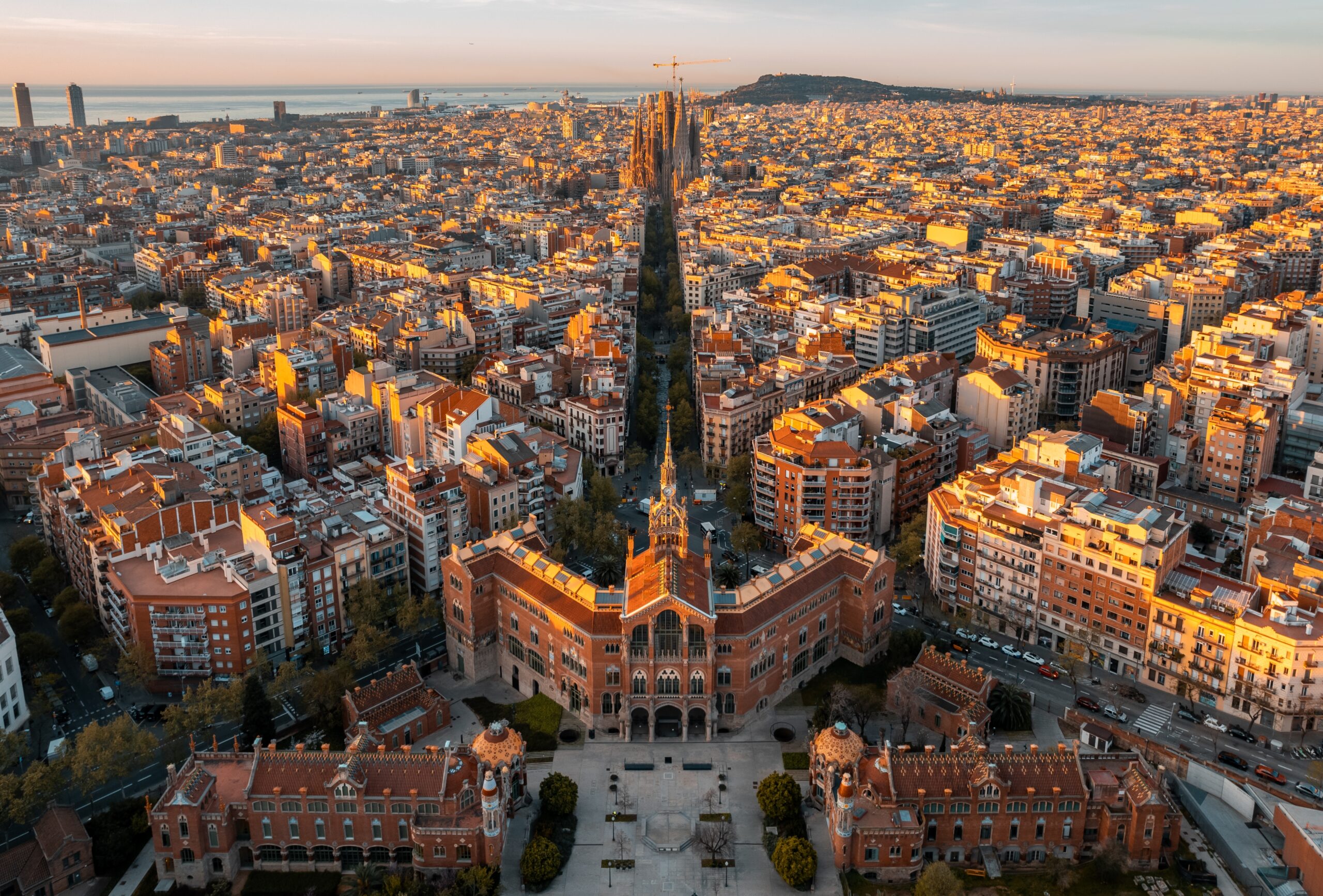
To advance this agenda, CIDOB has launched the “Local Europe” initiative with the support of Barcelona City Council, aiming to reinforce what Morillas calls “the Europe of cities”.

The underlying message is clear: the future of European integration will not be decided solely in national capitals.

How should local leaders look at the world?

How, then, should local and regional leaders look at the world — and how are they perceived within it? 

The discussion made clear that towns, cities and regions are no longer peripheral actors but central pillars of Europe’s global credibility.

GUNNARSSON Carola

As Carola Gunnarsson, CEMR spokesperson for international affairs and local councillor of Sala, Sweden, underlined also during this session, “municipalities and regions are not merely implementers of European policy. We are co-creators of Europe’s credibility”. 

*Carola Gunnarsson, CEMR spokesperson for international affairs and Lord Mayor of Sala, at the Leaders’ Summit in 2025

In a geopolitical environment marked by ideological confrontation and democratic strain, consistency between local governance and global ambition becomes decisive. “If we would like Europe to be a strong global actor, we must be consistent both internationally and locally”, she stressed.

Echoing this call for coherence, MEP Hanna Jalloul, Vice-Chair of the European Parliament’s Foreign Affairs Committee, underlined the direct impact of EU decisions on citizens’ daily lives.

*MEP Hanna Jalloul, Vice-Chair of the European Parliament’s Foreign Affairs Committee

Yet, she questioned the persistent democratic disconnect: “Why have we reached only 50% participation in European elections?” According to Jalloul, “many citizens don’t fully realise how economic and agricultural decisions taken here directly affect them.”

*MEP Hanna Jalloul, Vice-Chair of the European Parliament’s Foreign Affairs Committee, European Parliament photo

Beyond internal policy, she stressed the importance of consistency in Europe’s external action. “We speak of peace, but our multilateral system — which we’ve defended since 1945 — must be consistent.” In a challenging geopolitical environment, she argued, the European Union must align its commercial priorities and strategic autonomy with its foundational values.

When democratic disconnect reaches the local level

This disconnect between European decision-making and citizens’ perception, participants warned, does not remain abstract. When people feel that decisions are distant, unclear or inconsistent with proclaimed values, frustration grows — and it often manifests first at the local level.

As highlighted by Eider Enunciaga, spokesperson for local democracy at CEMR and representative of Bilbao City Council, local leaders are increasingly experiencing hostility and intimidation — both offline and online. “The future of our democracies in Europe is at stake here,” he stressed, noting that geopolitical tensions, disinformation and polarisation are directly affecting municipalities and regions.

*Eider Enunciaga, spokesperson for local democracy at CEMR and representative of Bilbao City Council, at the CEMR event on the launch of the European Observatory

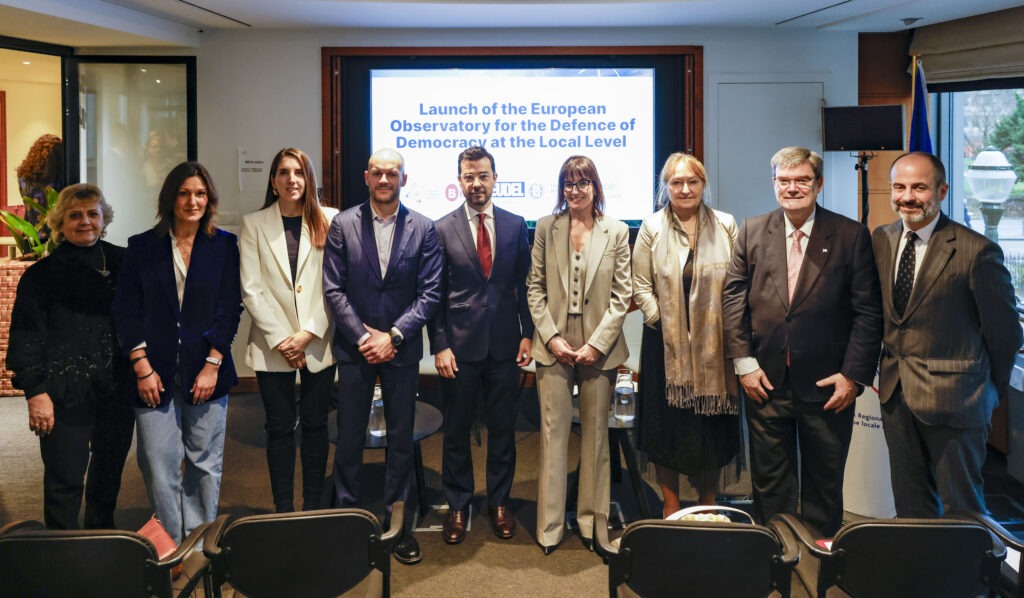
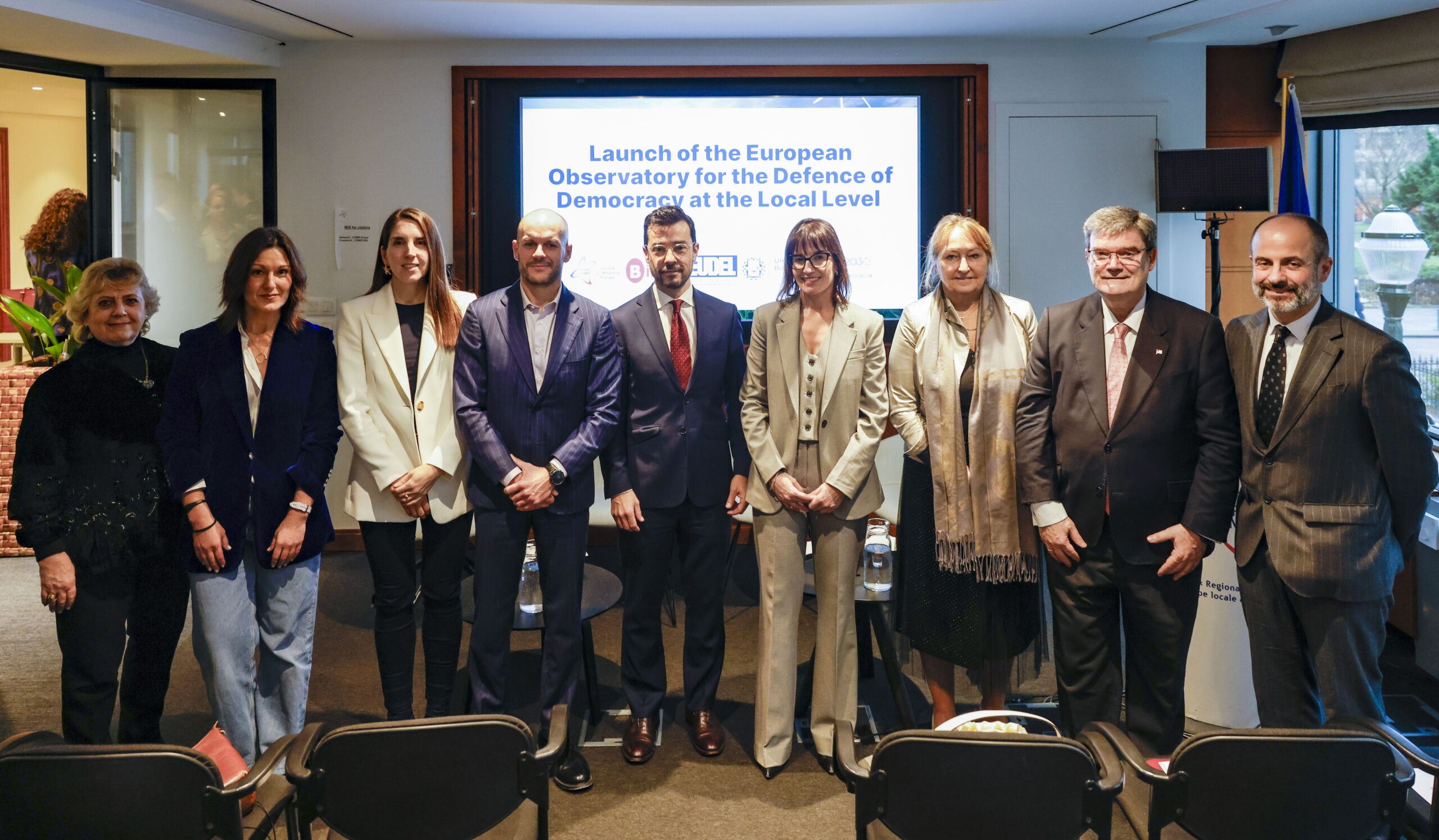
In response to this growing pressure, CEMR, together with the City of Bilbao, Bocconi University and the Basque Association of Municipalities, has launched the European Observatory for Democracy at the Local Level. The initiative aims to gather data on threats against local representatives, identify emerging trends and better understand the drivers behind attacks on democratic institutions.

“By strengthening democracy at the local level, we are also strengthening the European project,” Enunciaga concluded.

For more information, contact: