Guide on intersectionality

Intersectionality - News 2023

From toddlers to adults: municipalities embrace intersectionality at all ages


Intersectionality and diversity are at the heart of gender equality. As identities and lived experiences of people are not merely additive but intersecting and complex, it is necessary to include these dimensions in public policies to build a more equal society. In France and Italy, two municipalities are already working on it. From a multi-format help desk to representative toys, they show us that intersectionality is a concrete and transversal matter.

Creating an anti-discrimination help desk in Bologna

The municipality of Bologna is committed and active in its pursuit of equality and justice for all, both within its own administration as well as in service of its residents.

The city created a multi-annual positive action plan to implement its equal opportunities objectives and to address inequalities linked to gender, disability, age and sexual orientation. The plan includes measures to ensure accessible documents and websites, to provide training courses, and to organise exchanges of experience.
Since 2021, Bologna has been part of a campaign promoted by Period Think Tank – Data to Count —  to allow open and public access to data measuring the impact of public policies on gender dimensions.

Bologna, in cooperation with the Regional network against discrimination in the Emilia Romagna Region, offers residents an anti-discrimination help desk service. Its purpose is to welcome, listen, guide and support victims, direct and indirect witnesses of discrimination on a racial, ethnic, or religious basis.

The help desk offers three formats to make reports and obtain advice: a permanent office is open in the Intercultural Centre Zonarelli; a telephone number is serviced during weekdays and a WhatsApp number is available to leave vocal messages at any time; finally, an online form can be filled out to make reports.

Promoting understanding and acceptance through play in Saint-Médard-en-Jalles

As part of their commitment to the European Charter for Equality, the French municipality of Saint-Médard-en-Jalles has drafted a 2022-2024 Equality action plan. The plan includes an objective to raise awareness among staff working with children, youth, and adults about non-stereotyped education.

In addition to providing trainings to staff and encouraging them to reflect on inequalities within the municipal structure itself, they take action to present models of girls, boys, women, and men that go outside the stereotyped roles children are so frequently presented with.

For example, in the structures welcoming young children, the municipality is rethinking the types of toys that are purchased to include dolls with varying skin tones, characters with disabilities, and games representing people from all walks of life.

Additional resources

2023 International Women’s Rights Day series: “Five new Charter articles illustrated through local actions”

This article is part of a series published by CEMR to celebrate 2023 International Women’s Rights Day. This series informs on impactful initiatives carried out by local and regional governments to promote gender justice.

These projects embody the updated European Charter for Equality of Women and Men in Local Life as they show how five of its nine new articles can be put into practice. Together, they represent an inspiring step towards a more gender-equal Europe.

The updated Charter is currently available in EnglishFrench and easy-to-read English versions.
Any questions regarding the update or the actions highlighted in this series can be directed to contact@ccre-cemr.org or the relevant national coordinator for the Charter in your country.


Read the study here

For more information, contact:

War on Ukraine first declaration

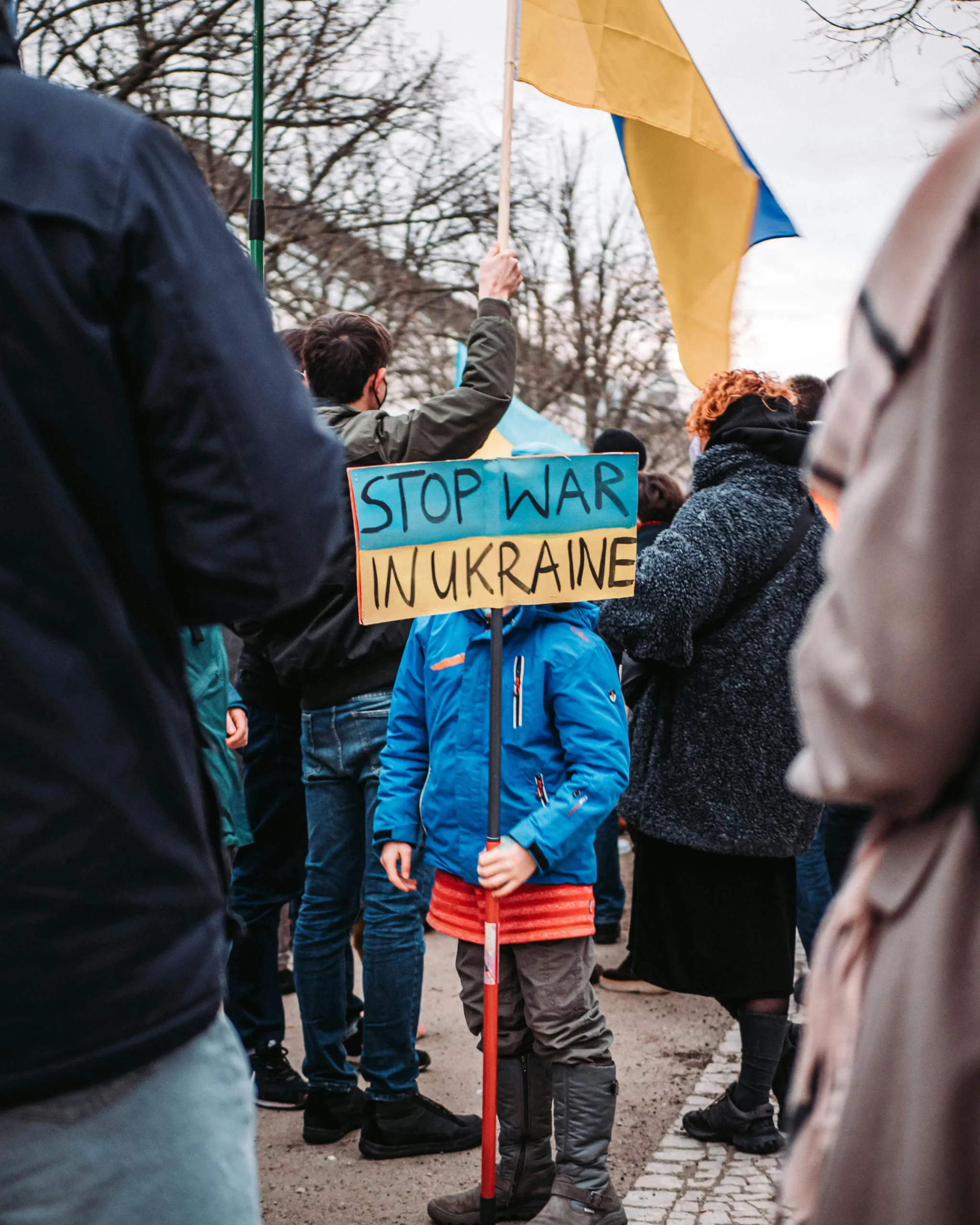
European local and regional leaders reaffirm solidarity with Ukraine and call for peace, justice, and reconstruction.


On the first anniversary of Russia’s full-scale invasion of Ukraine, local and regional leaders across Europe renew their strongest support for Ukraine, its people, and its democratic institutions. 

Condemning Aggression 
The war has brought devastation to civilians, elected representatives, and essential infrastructure. The abduction of Ukrainian mayors and the ongoing detention of five of them highlight the assault on democracy and the rule of law. These acts are condemned in the strongest terms, with urgent calls for the immediate release of the detained leaders. 

Solidarity and Support 

Local and regional governments across Europe stand firmly by Ukraine. Partnerships such as the Bridges of Trust project, the Eastern Partnership programme, and the European Alliance of Cities and Regions for the Reconstruction of Ukraine are mobilising resources, expertise, and cooperation. These initiatives are not only helping communities recover but also preparing Ukraine for its future as a full member of the European Union. 

Shared Values 
This declaration is a reminder that Europe’s foundations rest on peace, democracy, and respect for international law. As the war continues, European leaders join the international community in reaffirming Ukraine’s sovereignty and territorial integrity, and in urging the Russian Federation to end its illegal war. 

A year into this unjustified conflict, the commitment of Europe’s municipalities, cities, and regions is unwavering: to stand with Ukraine, to defend shared values, and to contribute to rebuilding a peaceful, democratic future. 

Read the declaration here 

For more information, contact: 

Support for Istanbul Mayor

Istanbul Mayor - News 2022

CEMR President voices strong support for Istanbul Mayor Ekrem İmamoğlu


The President of the Council of European Municipalities and Regions (CEMR), Gunn Marit Helgesen, expresses strong support for Ekrem İmamoğlu, Mayor of Istanbul, sentenced to two years and seven months in prison.

“The Council of European Municipalities and Regions (CEMR) is deeply concerned to learn that a Turkish court has sentenced the Mayor Ekrem İmamoğlu of Istanbul to more than two and half years in prison on charges of insulting members of Turkey’s Supreme Electoral Council as widely reported in the international press.

We condemn in the strongest possible terms this conviction handed down to our colleague and furthermore, we denounce the political ban that may lead to his removal from office. Mayor Imamoglu is an elected official whose actions do not warrant this repressive and disproportionate verdict.

CEMR has been following closely events in Turkey the past years and finds the unacceptable treatment of local elected politicians highly disturbing. These events have no place in a democratic society, and we would urge the Turkish judicial system to reverse this unjust decision.

CEMR supports democratically elected politicians whose legitimate mandate stems from their election by their citizens. We stand firmly in solidarity with local leaders in Turkey and across the world in their fight for freedom of speech and local democracy.”

Read the declaration here

For more information, contact:

Bringing Europe closer to its citizens 

EU Cohesion Policy - News

How ITI and CLLD strengthen local democracy, multi-level governance, and place-based development in EU cohesion policy 


The European Union’s Cohesion Policy is one of its most important instruments for promoting economic, social, and territorial cohesion across its member states. With nearly €392 billion allocated for 2021–2027, it tackles inequalities between regions while supporting a greener, more competitive, and more inclusive Europe. Central to this effort are Integrated Territorial Investments (ITI) and Community-Led Local Development (CLLD), two tools designed to put territorial needs and local actors at the heart of EU funding. 

Why integrated tools matter 

The foundations for a place-based approach were laid in the 2009 Barca Report, which argued that EU policy should focus on unlocking the potential of specific territories while addressing persistent exclusion. ITI and CLLD, introduced in 2014, operationalise this vision by giving local and regional governments a stronger role in programming, governance, and project implementation. 

These tools provide flexibility, enable cooperation across levels of government, and ensure that EU funds target the real needs of communities. For municipalities, regions, and their associations, they are among the most valued features of cohesion policy. 

ITI: Integrating strategies across territories 

ITI allows funding from several EU programmes to be combined in support of integrated strategies. It has been especially used for urban development, where at least 8% of ERDF funding is earmarked for sustainable urban projects. While designed to cover any functional area, urban, rural, or mixed, ITI is most common in metropolitan settings, where challenges like mobility, housing, and regeneration demand integrated solutions. 

CLLD: Communities leading the way 

CLLD builds on the LEADER approach to rural development, empowering local action groups of citizens, NGOs, and businesses to design and implement strategies. While most common in rural areas, it has the potential to strengthen participation and ownership in cities, too. CLLD fosters trust, encourages bottom-up innovation, and helps address the needs of vulnerable groups such as youth, migrants, or elderly people. 

What worked well 

CEMR’s analysis highlights several clear benefits: 

  • Flexibility and relevance – ITI and CLLD adapt EU funding to local needs. 
  • Capacity-building – local authorities gain expertise in managing EU programmes. 
  • Stronger governance – fostering trust and cooperation between local, regional, and national levels. 
  • Visibility of EU action – projects close to citizens showcase the value of EU funds. 
  • Community cohesion – encouraging cooperation among local actors and building metropolitan or regional identity. 

Persistent challenges 

Despite their value, integrated tools face obstacles: 

  • Administrative burden remains high, with complex procedures and slow fund absorption. 
  • Limited flexibility – strategies must still align with national operational programmes, sometimes restricting genuine local priorities. 
  • Time pressures – integrated projects require trust and participation, often at odds with the EU’s strict N+3 spending rule. 
  • Uneven use of PO5 (“Europe closer to citizens”) – some member states underfund this priority despite its direct link to ITI and CLLD. 
  • Urban uptake of CLLD – adapting the rural-focused model to cities remains difficult. 

CEMR recommendations 

Looking ahead, municipalities and regions urge the EU to: 

  • Maintain and strengthen integrated tools in cohesion policy. 
  • Simplify procedures at both EU and national levels, avoiding “gold-plating.” 
  • Clarify guidance on multi-funding, project selection, and the use of PO5. 
  • Exempt ITI/CLLD projects from the N+3 rule to allow more time for participatory approaches. 
  • Reintegrate the EAFRD into the Common Provision Regulation to ease multi-fund projects. 
  • Ensure meaningful local involvement in programming, implementation, and evaluation. 

Conclusion 

ITI and CLLD have proven their worth as vehicles for place-based development, democratic participation, and closer cooperation between Europe and its citizens. While challenges remain, strengthening these tools is essential for making the EU’s cohesion policy more visible, more inclusive, and more responsive to local realities. 

Read the study here 

For more information, contact: 

How to unlock EU funds

EU financing opportunities - News

A guide to help local and regional governments navigate 2021–2027 funding opportunities and prepare successful proposals 


Accessing European Union funding can be complex, especially for municipalities and regions unfamiliar with project management procedures. To address this challenge, the Council of European Municipalities and Regions (CEMR) has developed a guide within its new External Funded Activities (EFA) Platform. The guide provides practical support for members, including information on funding opportunities, thematic priorities, and tips for writing strong proposals. 

The current Multiannual Financial Framework (MFF) 2021–2027, boosted by Next Generation EU, represents the EU’s largest-ever budget, totalling €2 trillion. More than half is dedicated to research, innovation, digitalisation, and climate action, while one-third supports cohesion policy. For local and regional governments (LRGs), this translates into significant opportunities to finance projects across diverse fields. 

The guide outlines how to navigate the Funding and Tenders Portal, the central entry point for EU calls. It explains how applicants can: 

  • Search funding opportunities and partners; 
  • Check eligibility; 
  • Submit proposals online; 
  • Manage reporting and compliance requirements. 

It also provides advice on preparing successful project proposals. Key recommendations include aligning projects with EU policy goals, ensuring sustainability and impact, and selecting experienced, committed partners. Strong project teams, clear narratives, and realistic budgets are critical for success. 

Finally, the guide emphasises capacity-building. CEMR encourages municipalities to build internal expertise, engage with partners early, and take advantage of available training and support services. 

By simplifying complex procedures, the CEMR guide aims to empower local and regional authorities to fully tap into EU funds and deliver projects that advance Europe’s priorities, from green transition to digital innovation. 

Read the study here 

For more information, contact: 

Annual report on SDGs goes digital

PLATFORMA - banner 3

Our annual report on the SDGs goes digital at the UN High-Level Political Forum on Sustainable Development (HLPF)


Available for the first time in an online format, PLATFORMA and CEMR have just published their fifth annual study on the localisation of the Sustainable Development Goals (SDGs). Released on the occasion of the UN High-Level Political Forum on Sustainable Development (HLPF) in New York, discover this innovative publication today on local-sdgs.eu

This study gathers the most recent information on how and to what extent associations and networks of local and regional governments have been involved in the localisation of the SDGs, both in Europe and with their global peers, and in particular during the COVID-19 pandemic. This year’s survey therefore, included questions on the SDGs’ implementation since 2015 and the impact of the COVID-19 crisis. In the last two sections, there were also additional questions regarding Voluntary Subnational Reviews (VSR) and decentralised cooperation.

It gathers 63 answers from 28 European countries, 37 associations of local and regional governments and 18 municipalities and regions.

Main recommendations

Six main recommendations came out of this study, targeting EU institutions, national governments and local and regional governments and their national associations:

  1. The European Commission should report regularly on any progress made in achieving the Sustainable Development Goals (SDGs) at the EU level and indicate how the different levels of governance have contributed to this process.
  2. We encourage associations of local and regional governments to actively take part in the Voluntary Subnational Reviews (VSR) process.
  3. Local and regional governments (LRGs) are calling for the firm recognition and inclusion by national governments of the role of LRGs and their associations in the monitoring and reporting of progress in the implementation of SDGs at the national level.
  4. European states and the EU need to strengthen their dialogue with the subnational levels and include them in any relevant high-level delegation meetings.
  5. Strengthen international cooperation to achieve the 2030 Agenda at the local and regional levels
  6. There is still a need to localise and territorialise the SDGs, through the deployment of appropriate funds and resources

This study will be presented by a PLATFORMA-CEMR delegation at different events during the second week of the High-Level Political Forum on Sustainable Development (HLPF) taking place in New York between 5 and 15 July 2022.

This delegation is composed of:

  • Fabrizio Rossi, CEMR Secretary General
  • José Hila, Mayor of Palma de Mallorca (Spain, FEMP)
  • Hannah-Lea Braun, Member of Maichingen Council (Sindelfingen, Germany) and the CEMR Young Elected Officials Committee
  • Luis Salaya, Mayor of Cáceres (Spain, FEMP)
  • Valérie Dumontet, Vice-President of Aude Region, (France, Cités Unies France)
  • Pilar Díaz, Mayor of Espluges de Llobregat, Deputy to the Presidency, Delegate for International Relations at the Diputació de Barcelona (Spain, Barcelona Provincial Council – DIBA)
  • Jan van Zanen, Mayor of The Hague (Netherlands, VNG International)

Directors, advisers and technicians from CEMR, the City of Paris, DIBA, FEMP, the Norwegian Association of Local and Regional Authorities (KS), UCLG and VNG International are also attending HLPF this year.

More

For more information, contact:

EU directive on gender and domestic violence 

Gender Violence - News 2023

CEMR urges multi-level coordination, victim support, and recognition of women politicians’ safety 


Violence against women and domestic violence remain among the most widespread violations of fundamental rights in Europe. In response to the European Commission’s proposed Directive on combating violence against women and domestic violence, the Council of European Municipalities and Regions (CEMR) has published a position paper calling for a unified and multi-level approach to ensure effective implementation across the EU. 

CEMR welcomes key elements of the Directive, including provisions on safeguarding victims, training professionals, tackling harmful gender stereotypes, and addressing sexual harassment at work. However, the organisation stresses that the Directive must go further to recognise the central role of local and regional governments (LRGs), who are on the frontline of prevention, victim support, and access to justice. 

Among its recommendations, CEMR calls for: 

  • Formal consultation with LRGs in policy design and coordination, ensuring that Article 39 on multi-level response explicitly requires their involvement. 
  • Targeted EU funding for local authorities through programmes such as CERV, ERDF and ESF+, to strengthen prevention, awareness-raising and victim services. 
  • Better data collection, disaggregated by sex, age and region (NUTS 2, NUTS 3, and local level), to tailor policies effectively. 
  • Improved victim support systems, combining both “one-stop” online access and physical centres, with minimum geographic coverage standards. 

The paper also highlights violence against women in politics, noting that harassment and threats against elected representatives undermine democracy itself. CEMR urges the addition of a specific clause under Article 13 on aggravating circumstances for violence against women in public office. 

Finally, CEMR emphasises the importance of prevention, beginning with early education to challenge gender stereotypes, and extending to workplaces where women in public-facing professions are disproportionately exposed to third-party violence. The organisation recommends a dedicated article on cooperation between LRGs and social partners to strengthen workplace protections. 

By adopting a truly coordinated, multi-level approach, the Directive could transform Europe’s fragmented response into a coherent framework that empowers governments at every level to protect women’s rights and safety. 

Read the policy paper here 

For more information, contact: 

CEMR report of 2021 

Meet Local Leaders - News

Report on the publications, knowledge-sharing, advocacy and communications in 2021 


The Council of European Municipalities and Regions (CEMR) is pleased to present its 2021 Activity Report, which provides an overview of the organisation’s main actions and achievements over the year. Guided by the 2021–2030 multiannual strategy and the 2021–2022 work programme, CEMR focused its work on four objectives: 

  1. Policies and advocacy 
  1. Knowledge sharing and capacity-building 
  1. Pan-European campaigns and visibility 
  1. Internal organisation and sustainability 

All actions were aligned with the aim of advancing the Sustainable Development Goals (SDGs) across Europe’s territories. 

Shaping European and Global Agendas 

Throughout 2021, CEMR actively influenced European initiatives and alerted members to upcoming developments affecting local and regional governments. Activities included: 

  • Monitoring EU initiatives on recovery, resilience, and international cooperation. 
  • Engaging in structured dialogues on cohesion policy, rural development, disability rights, and urban development. 
  • Providing input that shaped OECD analyses, Council Conclusions, and the European long-term vision for rural areas. 
  • Publishing position papers and resolutions on gender equality, migration, the Fit for 55 energy package, water, and digitalisation. 

At the international level, CEMR deepened cooperation with UCLG, the Global Taskforce, OECD, and the Congress of Local and Regional Authorities. 

Building Knowledge and Capacity 

To strengthen understanding of EU policies and empower members to act, CEMR: 

  • Produced publications and webinars, including a new edition of the TERRI Report on decentralisation reforms. 
  • Organised workshops on member participation in national and European processes. 
  • Delivered capacity-building through externally funded projects in areas such as EU funding, climate adaptation, gender equality, migration, and SDG implementation. 

Raising Visibility and Engaging Citizens 

2021 was also a year of celebrations: 

  • 70th anniversary of CEMR and the 15th anniversary of the Equality Charter brought together 500 participants online. 
  • Pan-European campaigns were launched for Europe Day, SDG Day, and equality, highlighting the voices of local leaders and women in politics. 
  • CEMR ensured visibility for its spokespersons through social media, interviews, videos, and participation in international events. 

In numbers: 

  • Over 120 articles published in English and French. 
  • More than 650 tweets reaching 1 million views. 
  • 14 newsletters delivered to the network. 

Strengthening Internal Organisation 

CEMR took concrete steps to become a more sustainable, inclusive, and resilient organisation: 

  • Two online Policy Committee meetings gathered 170 elected representatives to adopt policy positions and validate the strategy. 
  • A new Secretary General selection process was launched. 
  • Internal processes were modernised with digital templates, e-signatures, and reduced paper use. 
  • Staff received training on project management, budget monitoring, public speaking, and team collaboration. 

Milestones and Campaign Highlights 

  • Advocated for local governments to be included in post-COVID recovery plans (#CohesionAlliance). 
  • Shared local leaders’ visions for the Conference on the Future of Europe
  • Continued the #Power2Her and #LocalEquality campaigns on gender equality. 
  • Helped secure recognition of the multilevel cooperative model in the Glasgow COP26 agreement

2021 was a year of adaptation, resilience, and influence for CEMR. Despite the challenges of the pandemic, the network succeeded in shaping European debates, amplifying the voice of local and regional governments, and strengthening internal capacities. With a stronger foundation and renewed strategy, CEMR continues its mission to empower Europe’s municipalities and regions to lead sustainable change. 

Read the study here

For more information, contact:

Recovery & Resilience Facility funds 

RRF Consultation - News

Local and regional governments warn of weak involvement, risks of fund misallocation, and limited ownership of recovery plans 


The Recovery and Resilience Facility (RRF) is the EU’s largest ever economic support plan, launched in response to the COVID-19 crisis. While national governments designed National Recovery and Resilience Plans (NRRPs) to guide investments and reforms until 2026, a new consultation by the Committee of the Regions (CoR) and the Council of European Municipalities and Regions (CEMR) highlights a persistent problem: local and regional authorities (LRAs) remain sidelined in the process. 

Weak involvement in preparation and governance 

The survey, conducted in early 2022 among 26 associations across 19 EU member states, shows that most LRAs had little to no influence on defining objectives, reforms, or investments. Compared with 2021, dialogue with national governments slightly improved, but respondents stress that these consultations had minimal impact on final plans. Governance of the process remains largely top-down. 

Mixed views on the plans’ content 

Respondents were broadly positive about the NRRP’s contribution to the green (37% earmark) and digital transitions (20% earmark). However, they expressed doubts about the plans’ ability to advance territorial cohesion, one of the RRF’s six pillars. The interplay between NRRPs and other EU funds such as the ERDF or Cohesion Fund also remains unclear and inconsistent, raising fears of overlaps and inefficient spending. 

Implementation: low ownership, high risks 

When it comes to implementation, optimism is scarce. Only a handful of LRAs reported having a meaningful role in monitoring, adapting, or co-managing projects. Ownership is strikingly low, despite LRAs’ frontline role in pandemic response and recovery. The main barriers identified were a lack of political will at the national level and tight or unsuitable formats and timelines, rather than a lack of local capacity. 

These shortcomings translate into serious risks: 

  • Failure to meet milestones and targets 
  • Misallocation of funds 
  • Increased territorial disparities 
  • Public distrust in the EU and national institutions 

Calls for stronger EU-level monitoring 

To improve outcomes, respondents strongly supported enhanced dialogue between the EU and local/regional representatives and the creation of an early warning mechanism to flag delays or problems in implementation. 

Conclusion 

Two years after the pandemic outbreak, Europe’s recovery is underway, but its governance remains overly centralised. The CoR-CEMR consultation warns that without meaningful involvement of local and regional governments, the RRF risks missing its objectives, weakening both recovery efforts and citizens’ trust in the European project. 

Read the study here 

For more information, contact: 

Investing in Europe’s future 

Investing in Europe - News

A new EU growth model must empower local services, boost resilience and deliver sustainable investments 


The war in Ukraine and the aftermath of the COVID-19 crisis have placed Europe at a critical crossroads. These overlapping challenges are testing the strength of our democracies, economies and social fabric and call for a bold rethinking of Europe’s economic governance. 

In response, the SGIs Network, bringing together key public service stakeholders, has issued a joint declaration ahead of the Tripartite Social Summit on 23 March 2022. The message is clear: to manage the transition and strengthen the EU’s resilience, Europe must urgently shift towards a more forward-looking, inclusive and investment-oriented growth model. 

A new economic framework 
The current EU fiscal rules are no longer fit for purpose in the face of permacrisis. The declaration calls for a reformed fiscal architecture that reconciles debt sustainability with long-term, growth-enhancing investments. This includes distinguishing productive investments, such as in green infrastructure, digitalisation, healthcare and education, from unproductive spending. 

Empowering local action 
Local and regional governments are essential to achieving a green, digital and fair transition. The declaration stresses the need for their full involvement in implementing the National Recovery and Resilience Plans (NRRPs) and accessing the Next Generation EU funds. Without this multilevel approach, the EU risks missing the full potential of its recovery strategy. 

From temporary response to permanent capacity 
As the NGEU package and current EU budget cycle expire in 2026–2027, the declaration urges leaders to prepare for a longer-term fiscal and investment strategy. A permanent common fiscal capacity will be vital to address future shared challenges, from climate change to geopolitical instability, and avoid deepening inequalities between territories. 

The call from the SGIs Network is not just for more funding, but for better governance and greater solidarity. It is a reminder that investing in public services, social cohesion and local resilience is not a cost. It is the foundation of a stronger, united Europe. 

Read the declaration here 

For more information, contact: