The country profiles offer a short overview of national models of (decentralised) development cooperation frameworks in selected EU Member States. The aim is to provide insights into specific mechanisms and modalities of analysed national frameworks and identify enabling factors as well as challenges related to practical implementation, focusing on the role and opportunities for local and regional governments and their associations.
Based on the study, the Belgian framework for Decentralised Development Cooperation (DDC) is characterised by:
1) Municipal associations are central to DDC in Belgium. Brulocalis, Association of Flemish Cities and Municipalities (VVSG), and the Union of Cities and Municipalities of Wallonia (UVCW) act as key intermediaries in coordinating funded programmes and serving as the primary source of support and guidance for municipalities.
2) Focus on long-term cooperation with selected partners. Sustained partnerships help to ensure the effectiveness and added value of cooperation. There is a prioritisation of the least developed countries and fragile contexts.
3) Awareness-raising of Belgian citizens about international solidarity. Belgian actors, in partnership with NGOs, actively contribute to informing citizens about development cooperation-related topics through awareness-raising and education activities at home.
This article is part of a series of 7 Country Profiles examining DDC frameworks across Europe. The fifth edition, focusing on France, will be published in July. Stay tuned!
Read the Country Profile of Belgium, available in four languages:
You can find the rest of Mindcraft’s publications here.
CEMR encourages Belgian authorities to strengthen the role of Local and Regional Governments in development policy, not only as implementers, but also as strategic partners helping shape a more resilient, inclusive and effective development agenda.
This publication is produced within the Bridging and Mapping Knowledge Gaps in Decentralised Cooperation (Mindcraft), funded by the German Federal Ministry for Economic Cooperation and Development (BMZ) and supported by the Deutsche Gesellschaft für Internationale Zusammenarbeit (GIZ).
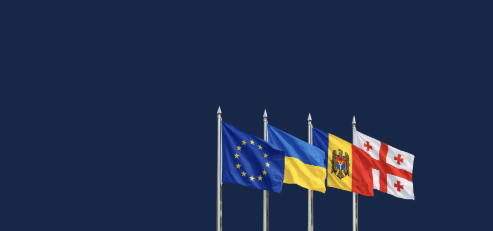
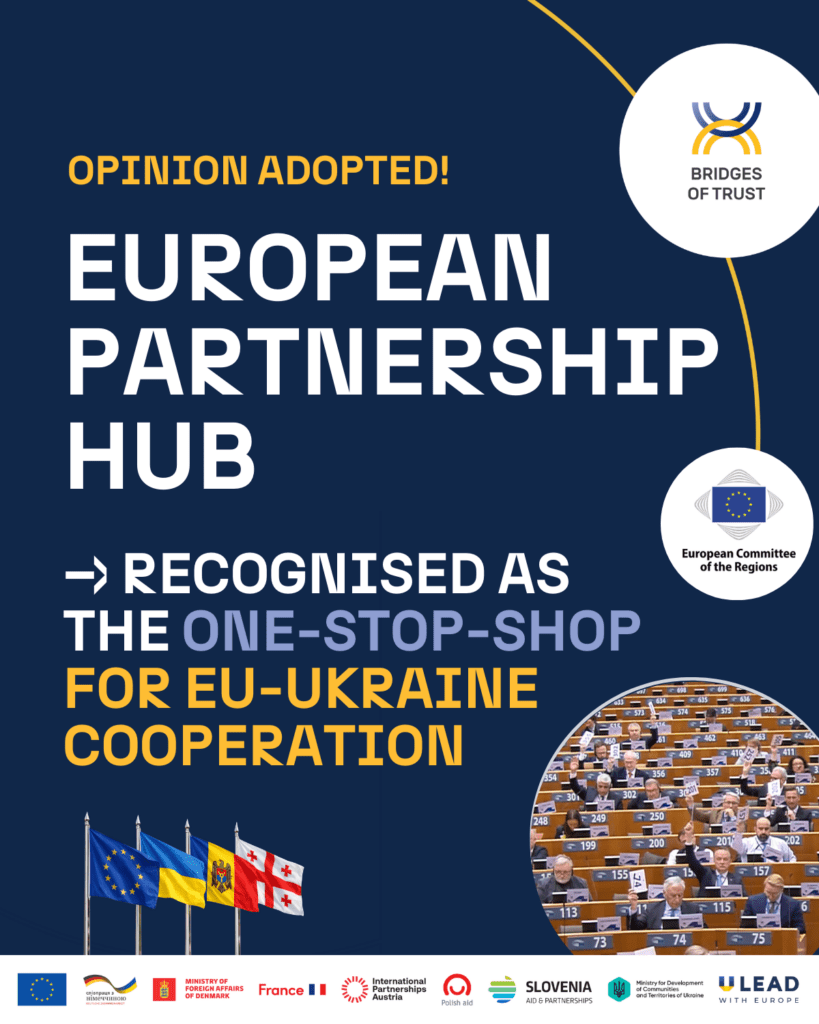
Last week, the European Committee of the Regions (CoR) adopted in Plenary the ‘Enlargement package 2025 – Ukraine, Moldova & Georgia’
The European Committee of the Regions (CoR) has adopted an amendment explicitly recognising the European Partnership Hub (EPH) as the “one-stop-shop” for cooperation between local and regional governments in Ukraine and the EU. The Hub was launched at the 2025 Ukraine Recovery Conference, following the Joint Statement of the European Alliance of Cities and Regions for the Reconstruction of Ukraine.
Hosted by CEMR, which already drives EU–Ukraine municipal partnerships through Bridges of Trust, the Matchmaking Platform, and SUN4Ukraine, the Hub coordinates and connects initiatives within the Bridges of Trust Community. It facilitates exchanges, provides information, and organises joint meetings to align efforts, build synergies, and support municipalities with the skills needed for recovery, cooperation, and EU accession.
Six other amendments reinforcing the role of local and regional governements in the EU enlargement
The final text of the CoR also includes six amendments tabled by CoR members Māris Zusts and Gints Kaminskis and suggested by the Latvian Association of Local and Regional Governments (LALRG), in close cooperation with PLATFORMA.
The amendments aim to reinforce a central political message: EU enlargement will only succeed if it is rooted in local and regional levels, resilient to hybrid threats, and democratically endorsed by citizens. In this opinion, decentralisation, multilevel governance, gender equality, and combating foreign information manipulation are framed as essential components of sustainable enlargement.
Cooperation with local governments
The adopted amendments further stress the need for public support through cooperation with local governments, especially in Ukraine’s post-war context, advocating for awareness campaigns and media engagement to foster acceptance of candidate countries. Democratic resilience and integrity are further prioritised, particularly through strengthened anti-corruption measures at all government levels. Transparency in public procurement is highlighted, especially regarding reconstruction efforts.
Concerning Moldova, the amendments commend reform progress but express concerns over foreign interference (FIMI) during the 2025 elections, advocating for resilience measures and support for independent media.
The amendments also support local governments in Georgia amidst democratic backsliding, emphasising ongoing cooperation to maintain dialogue and democratic governance as the country navigates its EU accession path.
Looking ahead
These amendments place local and regional governments at the heart of EU enlargement, recognising that lasting impact, resilient democracies, and strong communities depend on their active role.
The next step is for the European Parliament, Council, and Commission to take these recommendations into account for their respective work on enlargement. CEMR together with PLATFORMA and their partners will continue to advocate, coordinate initiatives, and foster exchanges, to strenghten the role of local and regional governments.
The European Partnership Hub is supported by the European Union and its member states through U-LEAD with Europe.
As the European Union prepares its next Multiannual Financial Framework (MFF) for 2028–2034, the Global Europe instrument will define the EU’s external action for the years ahead — encompassing development cooperation, humanitarian aid, enlargement support and Global Gateway. Discover PLATFORMA detailed policy position outlining how this strategic instrument should be shaped to foster sustainable global partnerships and advance inclusive governance.
At a time marked by intersecting global crises — from climate breakdown and shrinking development funds to geopolitical instability — the role of local and regional governments (LRGs) is more critical than ever. PLATFORMA’s paper is thus anchored in the belief that effective global action starts from the ground up.
Local and regional governments as co-decision-makers, implementers and partners
PLATFORMA’s position starts from a stark reality: despite their proximity to citizens and deep knowledge of local contexts, LRGs remain under-recognised in EU external action frameworks. The coalition calls for the Global Europe instrument to move beyond symbolic references to “local authorities” and embed mechanisms that genuinely empower LRGs as co-decision-makers, implementers and partners in EU external policies.
Key recommendations
The Policy Paper makes 9 key recommendations to EU decision makers:
Strengthen multilevel governance in Global Europe and place local and regional governments in the driving seat of territorial development
Pair flexibility and simplification with ambitious official development assistance targets, and enhance accountability and transparency mechanisms
Unlock Global Gateway’s potential through the involvement of local and regional governments
Foster EU delegations’ engagement with local and regional governments
Recognise and empower local and regional governments as unique and effective development partners in fragile contexts
Advance the localisation of the Sustainable Development Goals to achieve decarbonised societies and climate justice
Involve citizens through Global Citizenship Education as a key component of decentralised development cooperation
Foster inclusive and participatory local governance: empower youth, women, and disadvantaged and underrepresented groups
Strengthen local governance through the EU Eastern neighbourhood and enlargement strategy
Through these recommendations, PLATFORMA aims to improve the current proposal for the Global Europe instrument, so that it fully recognises, acknowledges, and supports the contribution of local and regional governments to EU external action, notably through decentralised cooperation as a development aid modality.
PLATFORMA also calls on the European Commission to issue an updated Communication on the structured involvement of local and regional governments and their associations in the new (geo)strategic approach to EU external action.
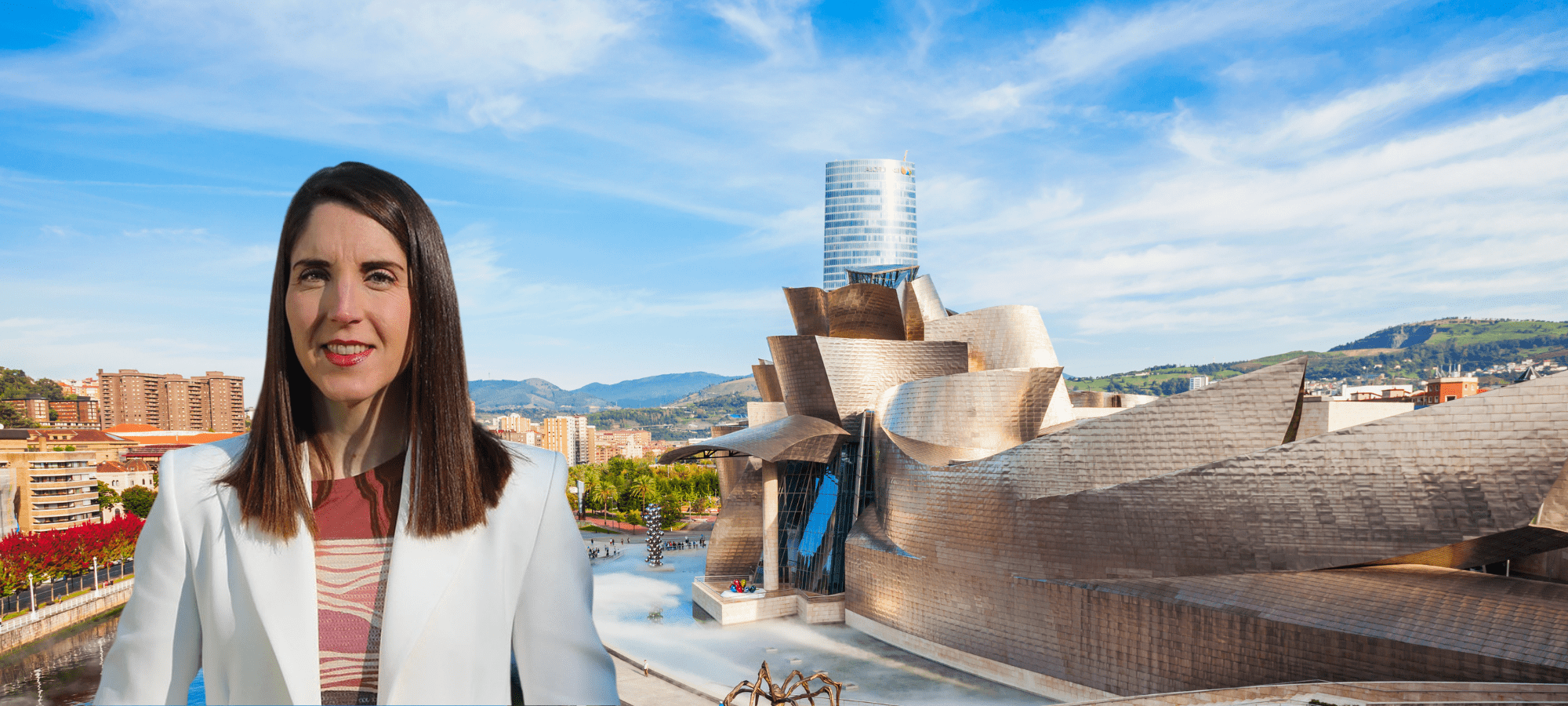
Meet the Local Hero: Eider Inuntziaga, building trust from the streets of Bilbao
When Eider Inuntziaga talks about local government, one word comes up again and again: closeness.
Since 2023, she has served as a city councillor in Bilbao, after years of political engagement within the Basque Nationalist Party. It is her first public mandate, and the experience has changed how she sees political life.
Before, she observed politics from the inside. Now, she experiences it daily — in the street, in neighbourhood conversations, and in the direct reactions of citizens to local decisions. The distance between elected representatives and residents is minimal, which makes local politics both uniquely meaningful and uniquely exposed. She also brings this experience to the European level as one of the Council of European Municipalities and Regions’ spokespersons on Local Democracy.
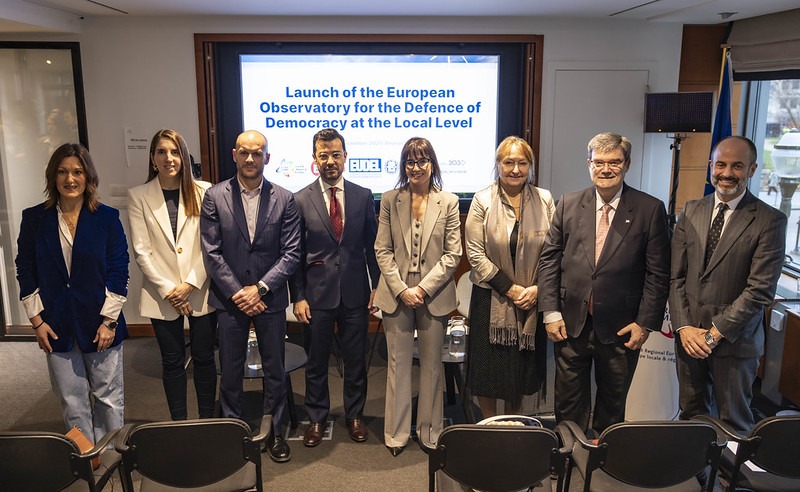
Across Europe, these challenges are increasingly visible. To better understand and address them, CEMR and its partners, including the City of Bilbao, have launched the European Observatory for the Defence of Democracy at the Local Level — an initiative that collects data, documents threats and harassment against local elected representatives, and helps develop practical tools and responses to better protect those serving their communities.
As she puts it, “local governments are the closest level of administration; we are the face of democracy.”
That proximity builds trust, but it also concentrates frustration. When people are unhappy, local leaders are often the first — and easiest — target.
Social media: useful, but risky
That visibility now extends far beyond the street.
Inuntziaga describes her relationship with social media as “conflicted.” While it can help connect people and share information, she also sees clear downsides.
“Social media can connect people and stories, and it can be useful—up to a point. But it also creates noise, polarisation, and sometimes hate. It can be dangerous.”
For local politicians, the effects are concrete. “It affects integrity, it affects how we speak, and it can silence people. It can make people leave the work they’re doing—or become afraid of what’s happening.”
She keeps her presence limited, using Facebook and LinkedIn, and mixing personal and political communication carefully.
Participation beyond election day
Despite these challenges, Inuntziaga remains firmly optimistic about the role local governments can play in strengthening democracy.
Her approach is simple: stay close, listen carefully and involve citizens as much as possible. For her, elections are only the starting point. Day-to-day participation matters just as much. In Bilbao, this philosophy has taken concrete form through participatory initiatives that invite residents to help shape the city’s direction.
One example is “Bilbao City of Values,” a process through which citizens collectively identified a shared set of principles to guide public life. The idea is to create a common framework that strengthens belonging and counters misinformation. The goal, she explains, is not only better policies, but stronger relationships between institutions and the people they serve.
Learning from Bilbao’s past
Bilbao’s history has also shaped how she thinks about governance.
The city has experienced profound transformation over the past decades — from industrial decline and unemployment to renewal driven by long-term planning and cooperation between public institutions, private actors and civil society. For Inuntziaga, this experience shows that change does not happen overnight and that stability requires patience.
She often points to three elements behind Bilbao’s recovery: cooperation, shared values and long-term vision. Quick fixes rarely work. Instead, consistent decisions taken with the future in mind gradually rebuild trust.
“Decisions must be made with the long term in mind,” she says, describing democracy and stability as mutually reinforcing.
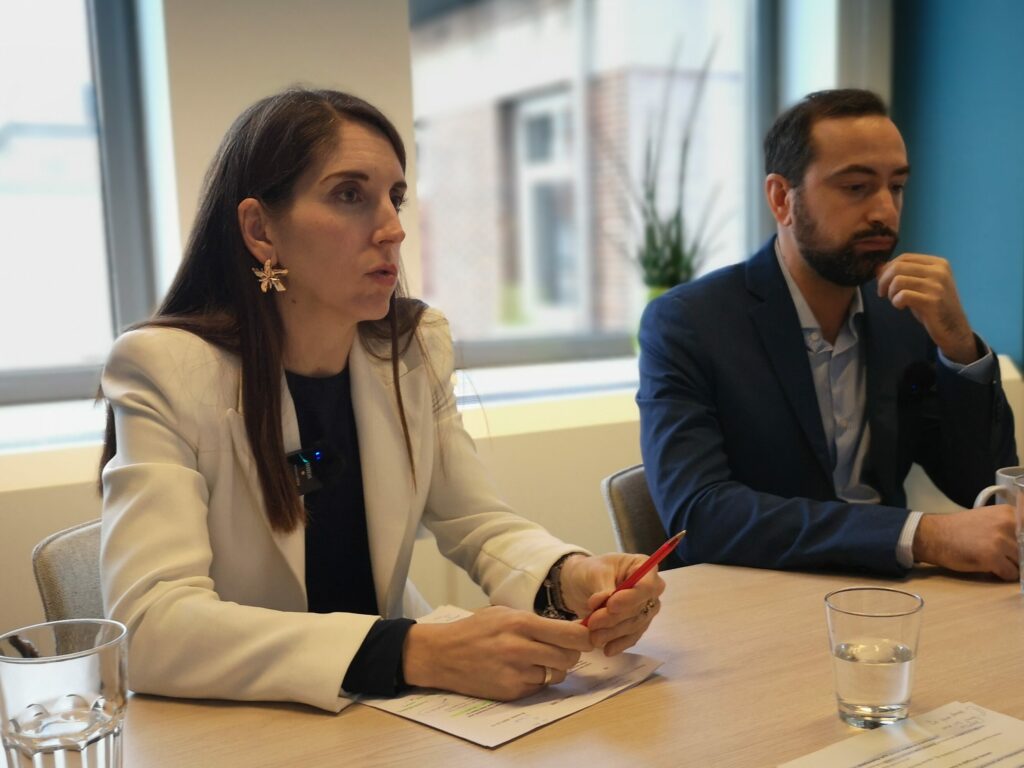
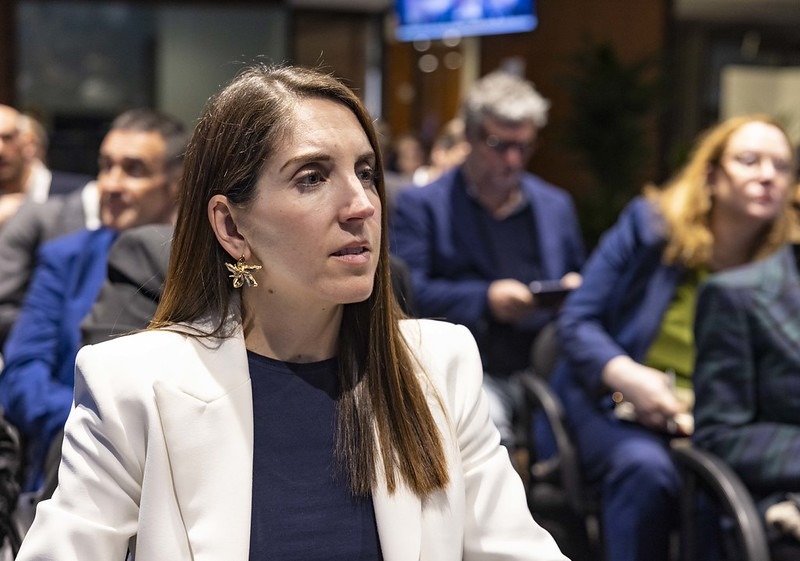
Eider Inuntziaga during the launch of the European Observatory for the Defence of Democracy at the Local Level.
Rooted locally, thinking European
Although her work is grounded in municipal politics, Inuntziaga keeps a strong European outlook. She follows debates beyond Spain closely and draws inspiration from leaders such as Kaja Kallas, whom she admires for her perspective on Europe’s role in a changing world.
Still, her focus remains firmly local. For her, cities are where democracy is tested every day — where policies meet real life, and where trust is either built or lost through everyday interactions.
It is not the most visible level of politics — but, in many ways, it is the one where democracy is felt most directly.
To hear more from Eider Inuntziaga, you can listen to the full episode of Call Simone, also with Gianmarco Daniele of Bocconi University, . They discuss how growing harassment and disinformation are affecting local leaders across Europe, and how the launch of the European Observatory for the Defence of Democracy at the Local Level can better track threats and protect local democracy.
As the EU prepares its next long-term budget, the Multiannual Financial Framework (MFF) 2028–2034, CEMR calls for a clear message to EU institutions and Member States: Europe’s future strength depends on empowering its towns, cities and regions.
CEMR’s new position paper, A stronger Europe is built locally, sets out how the next EU budget can effectively support territorial cohesion, competitiveness, democracy, and resilience. In the paper, CEMR warns that while the Commission’s proposal slightly increases overall resources, it reorients priorities toward defence, security, and industrial competitiveness—often at the expense of cohesion and local development, the very pillars that bring the EU closest to its citizens.
Multilevel governance must be non-negotiable
The paper highlights a major risk of recentralisation: by granting Member States and the European Commission broader discretion in defining funding priorities, the proposal could marginalise local governments, particularly in countries with weaker multilevel governance structures.
CEMR urges the EU to reinforce partnership mechanisms across all programmes—especially within the National and Regional Partnership Plans (NRPP), the European Semester, the European Competitiveness Fund (ECF) and the Global Gateway. Stable, well-resourced local and regional governments platforms are essential to tailor EU investments to realities on the ground.
Cohesion at the heart of Europe’s transformation
CEMR stresses that cohesion is a treaty-based objective and must remain central. The paper calls for:
Mandatory regional and territorial chapters in all Partnership Plans
Increased budget allocation for the single integrated funding instrument proposed by the EU Commission, “The Fund”
A mandatory 30% earmark for sustainable territorial development, including 15% for urban development
A safeguarding mechanism to protect local governments’ access to funds when national governments fail to meet conditionalities
Strengthening ESF+ (European Social Fund) for cohesion, youth and inclusion
Without these guarantees, Europe’s green, digital, and social transitions risk leaving entire territories behind.
Competitiveness and connectivity must acknowledge territorial reality
While competitiveness is a top EU priority, CEMR notes that the Commission’s budget proposal overlooks the territorial dimension. Cohesion and competitiveness are two sides of the same coin, and local and regional governments’ role in driving local and regional economic development should be recognised.
CEMR paper also calls for biodiversity and nature restoration to become explicit priorities in the European Competitiveness Fund (ECF) and urges simpler access to ECF, Horizon Europe, and the Connecting Europe Facility (CEF)—especially for smaller municipalities. It also stresses the need to include urban mobility as a strategic CEF priority.
Democracy and enlargement: supporting the foundations of Europe
With rising polarisation, disinformation, and harassment of local politicians, the position paper urges the EU to strengthen local democracy, support civic participation, and fund democratic resilience—including Global Citizenship Education and support for local media.
On enlargement, CEMR calls for local and regional governments to play a central role in the accession process of candidate countries, backed by stronger capacity-building and dedicated resources.
Local and regional governments are at the heart of Europe’s digital transformation. As the public authorities closest to citizens, they deliver services such as healthcare, education, transport, social support and broadband deployment, all increasingly shaped by EU digital legislation. Their role is essential to ensure that digitalisation remains inclusive, sustainable and accessible to everyone. Yet many local and regional governments still face major obstacles: unequal access to digital infrastructure, insufficient financial and human resources, cybersecurity risks, and widening gaps in digital skills.
Across Europe, disparities in connectivity and digital access disproportionately affect rural and remote areas, low-income households and vulnerable groups. These inequalities threaten territorial cohesion and limit citizens’ ability to participate fully in digital society. To make digital public services truly accessible, digital solutions must follow inclusive design principles and remain complemented by in-person service options for those who cannot or prefer not to use digital channels.
Cybersecurity has become an increasing concern as local authorities manage sensitive public data and critical infrastructure, often without sufficient expertise or funding to meet growing EU requirements such as those under the NIS2 Directive. Smaller municipalities, in particular, lack the resources to implement robust cybersecurity measures, respond to incidents or comply with complex regulatory frameworks. Reinforced cooperation, simplification of rules and sustainable financial support are essential to strengthen local resilience.
Skills development remains another pressing challenge. To implement new EU digital policies, including those related to artificial intelligence, interoperability and data governance, local administrations need staff trained to oversee digital systems, maintain human oversight, and ensure ethical, transparent and fair use of technologies. At the same time, strengthening digital literacy among citizens through lifelong learning and community-based initiatives helps build trust, inclusion and participation. Cooperation between municipalities and across regions also accelerates innovation and avoids fragmentation by enabling the exchange of best practices and common solutions.
A Call for Stronger EU Support
To ensure a fair, secure and inclusive digital transition, CEMR calls on European institutions to reinforce investment in digital infrastructure, especially in underserved regions; provide technical and financial support for accessible digital public services; maintain non-digital access to essential services during the transition; facilitate public-private partnerships to expand connectivity; and offer tailored guidance, capacity-building and long-term funding to help local and regional governments strengthen their cybersecurity and digital skills. Europe’s digital future depends on empowering the actors closest to citizens: its municipalities, cities and regions!
According to CEMR’s latest study,nearly half of LRGs report moderate to significant impacts from misinformation, particularly in areas such aspublic health, personal attacks on officials, and election interference. During the pandemic, for example, false claims about vaccines and public measures severely undermined public trust.
The personal toll is also growing. One in four local representatives has faced online abuse or intimidation, and over half report being targeted by false claims about their integrity or conduct. These are not abstract challenges, but rather, they erode both individual safety and democratic trust.
The evidence of CEMR’s study highlighted how misinformation and disinformation spike during crises, for example, around COVID-19, climate policies like low-emission zones, or housing and migration debates. During moments when emotions run high and public debate intensifies, local and regional governments often find themselves on the frontline of these tensions, but many lack the capacity or tools to respond effectively. CEMR’s findings show that 58% of municipalities still lack a formal strategy to counter misinformation and disinformation, and only a quarter are in the process of developing one. Most rely on reactive measures, 58% monitoring social media to spot emerging issues, around a third run awareness campaigns, and a smaller share (4%) collaborate with fact-checkers or pursue legal action (21%). These are useful but insufficient without proactive planning.
For CEMR, building resilience requires three key actions:
Strengthen local capacity and trust. Training staff, protecting targeted officials, and using participatory democracy tools such as citizens’ assemblies can help communities become less vulnerable to false narratives.
Improve coordination and tools. Shared monitoring systems, partnerships, and national or EU knowledge-sharing platforms can help municipalities act faster and avoid duplication.
Create an enabling framework. National and EU support, through measures like the Digital Services Act, AI Act, and national counter-disinformation laws, can provide resources, clarity, and legal backing.
Ultimately, misinformation may be a global issue, but its impact is most visible locally. Empowering local governments with the right capacity, coordination, and frameworks is key to protecting communities, safeguarding democracy, and rebuilding public trust.
The country profiles offer a short overview of national models of (decentralised) development cooperation frameworks in selected EU Member States. The aim is to provide insights into specific mechanisms and modalities of analysed national frameworks and identify enabling factors as well as challenges related to practical implementation, focusing on the role and opportunities for local and regional governments and their associations.
Based on the study, the German framework for DDC is characterised by:
1. German federal states and municipalities maintain lasting partnerships with their counterparts abroad, generating sustainable impact. Recent German-Ukrainian solidarity partnerships underline DDC’s role in development policy and open paths for trilateral and multilateral cooperation.
2. Service Agency Community in One World – SKEW of Engagement Global is the main advisory and grant-providing platform for German LRGs in DDC, supporting project planning, implementation, and international exchange.
3. The variety of funding programmes (mainly financed by the Ministry for Economic Cooperation and Development – BMZ, managed via Service Agency Community in One World – SKEW and Deutsche Gesellschaft für Internaztionale Zusammenarbeit – GIZ), designed for specific purposes, enable project-based, thematiccooperation and long-term partnerships.
This article is part of a series of 7 Country Profiles examining decentralised development cooperation frameworks across Europe. The thirs edition, focusing on Spain, will be published in December. Stay tuned!
Read the Country Profile, available in four languages:
CEMR encourages German authorities to strengthen the role of LRGs in development policy, not only as implementers, but also as strategic partners helping shape a more resilient, inclusive and effective development agenda.
This publication is produced within the Bridging and Mapping Knowledge Gaps in Decentralised Cooperation (Mindcraft), funded by the German Federal Ministry for Economic Cooperation and Development (BMZ) and supported by the Deutsche Gesellschaft für Internationale Zusammenarbeit (GIZ).
Town twinning in Europe: unlocking opportunities with AgoraEU
Since 1951, CEMR has championed town twinning as a driver of peace, democracy, and European identity. With the European Commission’s new AgoraEU programme proposed in the long-term budget, CEMR reflects on its legacy and introduces tools to further strengthen twinning, ensuring it continues to connect citizens across Europe.
Over seven decades later, town twinning remains one of Europe’s most powerful instruments for European integration and local governments diplomacy. In its long-term EU budget proposal presented last July, the European Commission (EC) included the AgoraEU programme, a promising opportunity to support and revitalise town twinning efforts. Yet, if twinning is to remain a vital bridge between Europe and its citizens, further steps must be taken to reinforce its role in today’s evolving political and social landscape.
Where does town twinning come from? Why does it still matter today? And how can the AgoraEU programme help strengthen its role in the Europe of today and tomorrow?
A legacy of connection and peace
In the mid-1990s, in cooperation with the EC, CEMR played a central role in coordinating the town twinning programme. Working closely with national associations of local and regional governments, CEMR promoted twinning, inspired thousands of initiatives and co-managed the “Star of Europe awards” with the EC to recognise outstanding partnerships. These efforts empowered thousands of small and medium-sized municipalities—particularly in rural and border regions—to build lasting bonds across borders, turning twinning into a grassroots driver of European integration. The 2002 Antwerp Congress further reinforced twinning as a vital tool for peace, democracy, and sustainable development.
A means to foster a shared European identity
Twinning has been evolving to better respond to the needs of cities, towns and municipalities facing multiple challenges in their territories. While cultural exchange and mutual understanding remain at its heart, today’s partnerships also address issues such as climate action, migration, social inclusion, digitalisation, and youth engagement. According to CEMR’s 2023 Twinning Report, municipalities of all sizes continue to value twinning highly, but smaller towns in particular face barriers in accessing funding and navigating sometimes complex EU procedures.
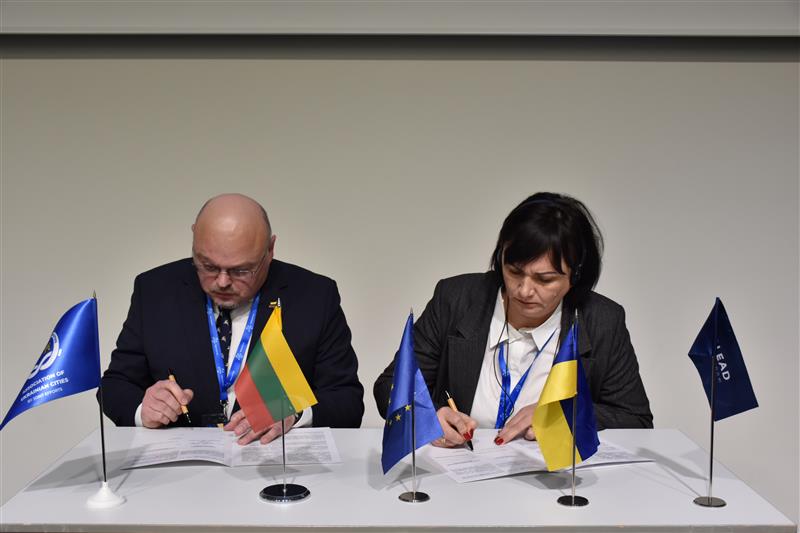
Pakruojis and Inhulka Municipalities signing Memorandum of Understanding during the Bridges of Trust Annual Gathering 2024
Far from being outdated, twinning continues to play a vital role alongside other Europe’s mobility programmes, fostering connections that celebrate both cultural diversity and the continent’s shared heritage. For many citizens, especially teenagers, senior citizens, and residents of deprived or rural areas, town twinning remains one of the few ways to directly experience Europe. It offers a deep entry point into European construction and debates, helping to reduce the growing distance between citizens and the European Union (EU), while fostering a shared European identity and a spirit of living together.
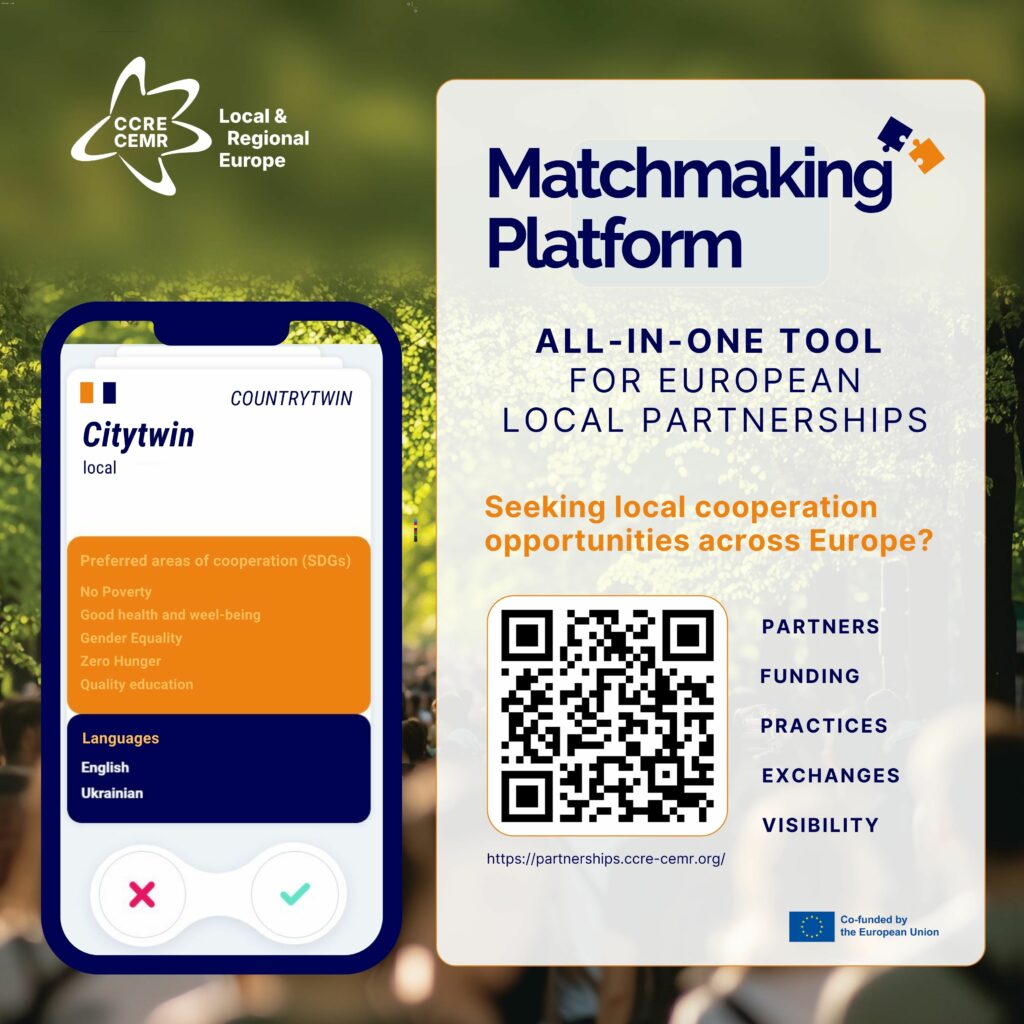
The Matchmaking Platform: an innovative tool to tackle today’s challenges
Many towns, cities, and regions face challenges in twinning, including finding suitable partners, limited opportunities for joint projects, difficulties accessing funding, and gaps in knowledge or capacity. Visibility and recognition of local initiatives can also be limited. To bridge these gaps, CEMR has launched a digital Matchmaking Platform, enabling subnational governments to:
Find peers and partners across Europe
Start joint projects with international visibility
Access funding and support opportunities more easily
This tool represents a modern continuation of CEMR’s long-standing role as a facilitator of exchange and cooperation between subnational governments in Europe and beyond.
A roadmap for 2028–2035
Looking ahead, CEMR calls for the revitalisation of twinning, especially for small and medium-sized municipalities by:
Simplifying access to EU twinning by cutting barriers and targeting support to underserved areas.
Strengthening national associations as local champions—reviving CEMR’s model of national correspondents to inspire and guide projects.
Creating a small-grants facility for new or renewed twinning between small towns, rural areas, and cross-border or enlargement partners.
Relaunching the “Star of Europe Awards” to celebrate excellence and raise the profile of high-impact twinning.
Promoting twinning as a strategic tool to deliver EU priorities locally: democratic trust, youth participation, gender equality, climate, energy, and migrant inclusion.
AgoraEU: a timely opportunity
The European Commission’s €3.6 billion AgoraEU programme (2028–2034) shows a renewed commitment to citizen engagement. CEMR urges at least a doubling of EU support for town twinning and calls for simplified access to funding and streamlined administrative procedures, including application processes and reporting.
This support is urgently needed. Town twinning projects face growing financial pressures at the local level. Municipalities continue to invest heavily in keeping partnerships alive, yet many risk being unable to sustain them without stronger European backing. Twinning is not just a tradition, it is a living, evolving practice that connects citizens, strengthens democracy, and builds resilience across Europe.
The European Parliament and the Council will now examine the proposal. CEMR calls on both institutions to ensure that town twinning receives the recognition and resources it deserves, as one of the EU’s most effective tools to bring Europe closer to its citizens.
More than 30 local and regional European leaders are heading to New York to advocate for their vital role in achieving the Sustainable Development Goals (SDGs) at the High-Level Political Forum on Sustainable Development (HLPF). Among them is Clifford Galea Vella Maslennikov, President of the Tramuntana Region (Malta) and a member of the CEMR-PLATFORMA Young Elected Officials Committee. He also signs the foreword of this year’s study on SDG localisation.
Galea Vella Maslennikov sends a strong and hopeful message:
“I firmly believe that localising the SDGs through inclusive processes that engage all levels of government, and all sectors of society […] is in fact the key to building a more inclusive, just, and sustainable future for all.”
This year’s report includes contributions from 31 associationsof local and regional governments and puts forward nine key recommendations to the United Nations, the European Union, and EU Member States.
Local governments in dialogue with Member States
In recent years, the United Nations has increasingly acknowledged the essential role of local action in advancing global sustainability, including through various HLPF initiatives. However, the degree of involvement of local and regional governments – and their associations – in national SDG reporting processes still varies significantly from one country to another.
This year, Malta is one of 37 countries presenting a Voluntary National Review (VNR) at the HLPF. Three other countries with membership within CEMR – Bulgaria, Finland, and Germany – will also present their VNRs. Our latest study provides insights into how these four nations have involved local authorities in shaping their national SDG reports.
It also gives details about the progress made in achieving the five SDGs under review this year: SDG 3 (Good health and well-being), SDG 5 (Gender equality), SDG 8 (Decent work and economic growth), SDG 14 (Life below water), and DSG 17 (Partnerships for the Goals).
Over 30 local and regional leaders representing Europe
Next week, PLATFORMA and CEMR, in collaboration with the Global Task Force of Local and Regional Governments (GTF), will represent European cities and regions at the HLPF, under the auspices of the UN.
Their participation aims to fast-track the localisation of the SDGs and ensure that local voices are not only heard, but also acted upon.
Here are some of the events they will attend:
15 July, Local and Regional Governments’ Networking Hub, with the launch of the GTF Annual Report “Towards the Localization of the SDGs”, by the GTF and UCLG
16 July, 8th Local and Regional Governments Forum on the 2030 Agenda, by UCLG, GTF, UN-DESA, the Executive Office of the UN Secretary-General, UN Habitat, UNDP, Local2030
17 July, EU delegation – local leaders breakfast meeting, by CEMR and PLATFORMA
17 July, HLPF Official Session on Localisation: “Transformation from the ground up: Acting at local level”, by UN
18 July, VNR Lab on Local and Regional Governments engagement in VNR/VLR processes, by UN-DESA, UN-Habitat, and UCLG