
Europe’s democratic future 

European Parliament - News

The 2019 European elections highlight progress in participation, diversity, and gender balance, but also the need for stronger local involvement in shaping EU policies 


The European elections of May 2019 marked a turning point for democracy in the European Union. With more than 400 million citizens called to vote, turnout reached 51%, the highest since 1979, signalling renewed interest in EU politics. Yet, the debate within the Council of European Municipalities and Regions (CEMR) underlined that more must be done to sustain citizen engagement and strengthen local governments’ role in shaping European policies. 

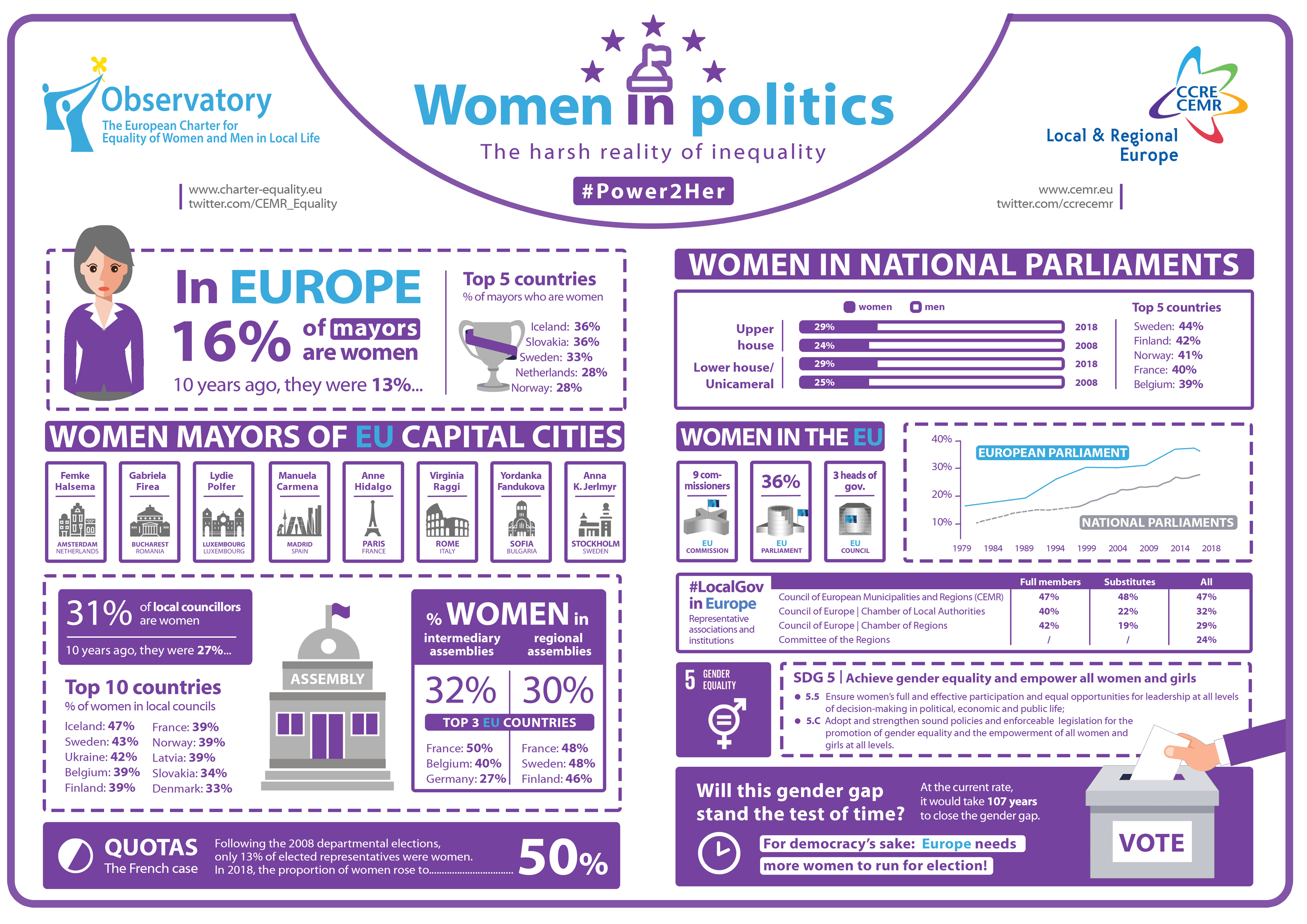
The new European Parliament is more diverse than ever, reflecting a broader range of political views. This diversity will influence the Union’s legislative agenda and policy outcomes. Progress has also been made on gender equality, with women now making up 40% of Members of the European Parliament, up from 36% in the previous mandate. 

Still, challenges remain. Increasing citizens’ interest in Europe requires targeted outreach, particularly towards young people, through communication channels they use and trust. Local and regional governments are key to bridging the gap between European institutions and citizens’ daily lives. Strengthening their role in the EU’s decision-making process is essential for the effective preparation, financing, and implementation of policies. 

Looking ahead, the new Parliament is expected to continue work on the Multi-Annual Financial Framework (MFF) and embed the Sustainable Development Goals into EU legislation. A gender-balanced approach in filling top positions within both the Parliament and the European Commission is also vital to ensuring fair and inclusive representation. 

The 2019 elections opened a new chapter for the European Union. Higher participation, improved gender balance, and a more diverse Parliament are encouraging signs, but further efforts are needed to build trust, foster inclusion, and give local governments a stronger voice. By working together, the EU and its citizens can ensure that Europe’s democratic future is both representative and resilient. 

Read the position paper here 

For more information, contact: 

Achieve “active subsidiarity”  

European Union - EU Enlargement News

Improving EU policymaking through stronger dialogue with Europe’s local and regional governments 


With the European Union facing increasingly complex challenges, from demographic shifts to digitalisation and climate resilience, ensuring that policies are designed and delivered as close to citizens as possible is more relevant than ever. In this context, the Council of European Municipalities and Regions (CEMR) has released a position paper advocating for a more structured, inclusive, and effective approach to subsidiarity and proportionality in EU decision-making. 

The paper responds to the European Commission’s 2018 Communication on subsidiarity and proportionality, which calls for a stronger application of these core principles in the legislative process. CEMR welcomes this shift and provides five concrete proposals to embed local and regional governments more deeply into the EU policy cycle. 

Towards active subsidiarity: five key proposals 

CEMR argues that local and regional governments (LRGs) are not merely stakeholders but essential partners in the design, implementation and evaluation of EU legislation. To improve policy outcomes, the position paper puts forward five central proposals: 

  1. Structured Dialogue: Introduce formal mechanisms to ensure that local and regional governments and their associations are regularly consulted at all stages of policy development, mirroring the success of the Social Dialogue model. 
  1. Effective Engagement: Tailor consultation tools to better capture the input of LRGs and provide feedback on how their responses are considered, moving beyond one-size-fits-all approaches. 
  1. Weighted Input: Recognise the democratic legitimacy of local authorities by assigning greater weight to their input in EU consultations and encourage deliberative dialogue through local stakeholder meetings. 
  1. Use of Local Data: Draw on the unique evidence and experience of LRGs earlier in the legislative cycle, especially through inception impact assessments and a reformed REFIT platform. 
  1. Access to Policymaking: Develop systems allowing LRGs to help shape legislation from the ground up and promote models of multilevel governance like those trialled through the Urban Agenda for the EU. 

A call for genuine partnership 

CEMR highlights that better regulation and stronger subsidiarity are not only technical improvements but democratic imperatives. By embedding multilevel governance and recognising the expertise of towns, cities and regions, the EU can build policies that are more effective, more efficient, and more trusted by citizens. 

This paper adds to CEMR’s broader push for a European governance model based on real partnership with local and regional governments. With the next European Commission mandate on the horizon, the time is ripe to make “active subsidiarity” a reality. 

Read the position paper here 

For more information, contact:  

Water framework and floods directive 

Floods - News

Balancing high environmental goals with realistic implementation, funding, and stronger local involvement 


The Water Framework Directive (WFD), in force since 2000, is one of the EU’s most ambitious environmental laws, aiming for good status of all EU waters by 2027. While progress has been made, challenges such as climate change, pollution, and increasing pressure on water resources demand a renewed and practical approach. In its response to the EU’s fitness check, the Council of European Municipalities and Regions (CEMR) underline the importance of keeping high ambition while ensuring realistic implementation for local and regional governments (LRGs). 

Key Messages 

  1. Maintain ambition, improve delivery 
    The WFD has led to clear improvements in Europe’s waters and should be continued. While full achievement by 2027 may not be possible everywhere, the Directive remains a vital tool. Environmental goals must be preserved, supported by realistic intermediate targets and achievable management cycles. 
  1. Adjust without lowering ambition 
    LRGs stress the need to adapt the WFD to 21st-century challenges such as land-use changes, climate impacts, and new pollutants. The Directive should move towards a more realistic framework, reflecting natural and historical influences on water quality. 
  1. Better harmonisation with other EU policies 
    Water protection cannot be addressed in isolation. The WFD must align with related legislation, including the Drinking Water Directive, Urban Wastewater Treatment Directive, and rules on water reuse. Agriculture, industry, and transport have major impacts on water quality, requiring stronger links with the Common Agricultural Policy, REACH, and strategies to reduce nitrates, pesticides, and pharmaceuticals in water. 
  1. Stronger local involvement and governance 
    Municipalities, as the level of government closest to citizens and water bodies, must be more involved in water governance. LRGs are best placed to enforce measures, raise awareness, and apply flexible, site-specific solutions. This aligns with SDG 6.5 on integrated water resources management. 
  1. Simplification and funding 
    Implementation of the WFD is often too complex and administratively burdensome for municipalities and water operators. Reporting requirements should be simplified, and EU or national funding must accompany new obligations to ensure effective delivery. 
  1. Polluter Pays Principle 
    A stronger source-control approach is needed. Responsibility for water quality should not fall solely on municipal treatment plants but be shared across all polluters. Applying the “polluter pays” principle will create transparency, fairness, and stronger engagement from all stakeholders. 
  1. More flexible derogations 
    The current rules on exemptions are too rigid, often blocking socially important projects like new wastewater treatment plants. CEMR calls for clearer and more balanced derogation rules, allowing essential societal developments while safeguarding water protection. 

 
CEMR’s position is clear: the WFD has proven its value and must remain ambitious, but reforms are needed to reflect new challenges, reduce administrative burdens, and empower local governments. By ensuring flexibility, proper funding, and shared responsibility, Europe can better safeguard its waters while supporting sustainable development at local and regional levels. 

Read the position paper here 

For more information, contact: 

National associations in Europe

Discover how national associations unite and represent Europe’s 100,000 towns and regions 


Europe is home to approximately 100,000 municipalities, provinces and regions, each embedded in its national political system yet also interconnected across borders. But who represents them? Who ensures their voices are heard by national and European institutions? 

To answer these questions, the Council of European Municipalities and Regions (CEMR) has published a new study delving into the vital but often overlooked world of national associations of local and regional governments. 

Since its creation in 1951, CEMR has championed local democracy, subsidiarity and citizen participation. At the heart of this mission are its member associations, 60 in total from 41 European countries, who work every day to represent the interests of towns and regions. 

Based on a survey conducted among 58 member associations, the publication sheds light on the structure, function and political weight of these associations, also known as LRGAs (Local and Regional Government Associations). 

Organised into five chapters, the report explores: 

  1. Who they represent – the types and numbers of municipalities and regions linked to each association. 
  1. How they are structured – their legal status, governance, staffing and membership models (voluntary or mandatory). 
  1. What they do – including advocacy with national authorities, knowledge sharing, training for elected officials, and support for policy implementation. 
  1. Their legislative influence – assessing how and when they are consulted in national law-making. 
  1. Their European and international role – detailing their involvement in CEMR, the EU institutions and global agendas such as the UN’s Sustainable Development Goals. 

The second part of the study offers a country-by-country overview of all member associations, providing a practical “identity card” for each organisation. 

This study offers a rare and valuable insight into the backbone of local democracy in Europe: the national associations that bring together municipalities and regions, giving them a common voice. Though often under-recognised, these associations play a vital role in shaping effective governance, ensuring policies are informed by local realities and that decisions taken at higher levels reflect citizens’ everyday needs. 

Strengthening the structure, recognition and influence of these associations is more than a technical issue, it’s a democratic imperative. From local services to national reforms and European cooperation, their contribution is essential for building resilient, inclusive and well-governed communities across the continent. 

Read the study here 

For more information, contact: 

The future of public services 

People Europe - News

Simpler EU rules needed to empower local service delivery 


Local and regional governments are central to ensuring quality public services across Europe, from transport to childcare and broadband. Yet complex EU rules on competition and procurement are increasingly challenging their ability to deliver these services effectively. 

That’s the core message of the Council of European Municipalities and Regions (CEMR)’s position paper, Strong Public Services through Local Governments

As Europe reflects on its future, CEMR urges policymakers to recognise local governments not as a problem, but as part of the solution. From climate action to social cohesion, local services are key to implementing EU goals on the ground. However, this contribution risks being undermined by overregulation and limited local autonomy. 

“European rules should enable, not obstruct, local governments in meeting community needs,” the paper argues. 

CEMR highlights the need to: 

  • Respect subsidiarity and local self-government; 
  • Simplify procurement and state aid procedures; 
  • Allow local authorities to support their economies through ‘buy local’ criteria; 
  • Improve legal clarity for public-public cooperation; 
  • Reform litigation-heavy procurement processes. 

Despite burdensome procedures, cross-border procurement remains rare, pointing to a mismatch between regulatory effort and actual impact. A more flexible, proportionate system would support innovation and help local governments better serve their communities. 

Read the position paper here 

For more information, contact: 

European elections manifesto of 2019 

EU Elections - News

Stronger EU policies require the full involvement of local and regional governments to ensure democracy, sustainability, and citizen engagement 


The 2019 European Parliament elections took place at a decisive moment for the Union, marked by global challenges, climate imperatives, and demands for greater transparency. Local and regional leaders stressed that Europe’s future depends on building closer ties between EU institutions and citizens, while ensuring that local governments are recognised as central actors in European governance. 

Local Governments at the Heart of Europe 
Europe’s 130,000 municipalities and regions are indispensable to democracy and public life. They provide services, drive innovation, and implement EU policies on the ground. To meet citizens’ expectations, the EU must adopt governance models that fully recognise the role of local authorities in decision-making, as outlined in Article 4 of the Treaty on the European Union. 

Key Priorities for the Future 
The challenges Europe faces, climate change, sustainable growth, social inclusion, and democratic participation, require a strong partnership across all levels of government. Local and regional leaders have called for: 

  • Strengthened cohesion policy as a central EU priority to reduce inequalities and foster sustainable development. 
  • Citizen-centred democracy, including local dialogues between communities and EU institutions and greater transparency in decision-making. 
  • Education for Europe, such as promoting the EU Charter of Fundamental Rights in schools and ensuring every pupil has the chance to visit EU institutions. 
  • Climate and global commitments, with local governments mobilising to achieve the Paris Agreement and the 2030 Agenda for Sustainable Development. 
  • Inclusive governance, with clearer recognition of the representative role of local associations and easier cooperation across borders, including with UK local governments post-Brexit. 

A stronger European Union can only be built in partnership with its cities, municipalities, and regions. By embedding local governments into EU governance, supporting their projects, and fostering open dialogue with citizens, Europe can remain democratic, resilient, and united in the face of today’s challenges. 

Read the position paper here 

For more information, contact: 

Financing climate action in Africa

Africa - News Section

New guide helps African cities unlock funding to implement their sustainable energy and climate plans 


As cities across Sub-Saharan Africa face mounting climate threats, they are also increasingly expected to lead the response. Rapid urbanisation, vulnerability to extreme weather, and growing emissions underscore the urgent need for robust local climate action. Yet financing remains a critical hurdle. 

To address this, a new publication supported by the Covenant of Mayors in Sub-Saharan Africa (CoM SSA) offers a practical overview of climate finance options available to local governments. It focuses on helping cities develop and implement their Sustainable Energy Access and Climate Action Plans (SEACAPs), a cornerstone of the CoM SSA initiative. 

While numerous funding mechanisms and instruments exist, from global climate funds to development grants and blended finance models, many remain inaccessible to local authorities. Complex application processes, lack of technical capacity, and a mismatch between financing requirements and city realities are key barriers. 

The publication identifies actionable pathways forward. Among them: 

  • Clearer guidance on eligibility and technical criteria for accessing major funding streams. 
  • Support for project preparation, including technical assistance and capacity building. 
  • The need for intermediary institutions, such as subnational development banks, to channel finance to the local level. 
  • Improved national frameworks to enable direct municipal access to funds and attract private sector investment. 
  • Community-based and innovative financing models, such as cooperatives, crowdfunding, and microfinance, to mobilise local capital. 

The guide also encourages governments and donors to strengthen partnerships with local authorities, recognising their key role in meeting national and global climate goals. 

Ultimately, the success of SEACAP implementation depends not only on access to finance but also on inclusive planning, local ownership, and sustained political will. Empowering cities with the tools and resources to act will be essential for climate resilience and sustainable development across the region. 

Read the study here 

For more information, contact: 

Talanoa for climate action 

Covenant of Mayors in Africa - News

Inclusive dialogues in Africa driving cooperation to strengthen and raise ambition of national climate commitments 


Urban areas contribute up to 70% of global greenhouse gas emissions and are highly vulnerable to climate impacts. Cities in Africa, already hotspots of climate risk, are therefore central to achieving the goals of the Paris Agreement. Recognising this, the Cities and Regions Talanoa Dialogues have emerged as an innovative approach to align national, subnational, and international actors in raising climate ambition. 

The concept of Talanoa, originating in Pacific Island traditions, emphasises open, inclusive, and participatory dialogue. First introduced in the UNFCCC process at COP23, it provides a safe space for stakeholders to reflect, share experiences, and identify pathways forward. ICLEI, together with the Global Covenant of Mayors and UN-Habitat, launched the Cities and Regions Talanoa Dialogues in 2018 to bring this ethos into climate policy discussions. 

By the end of 2018, more than 60 dialogues in 40 countries were held, including eight in seven African countries, convening local leaders, youth organisations, investors, and development agencies. These dialogues addressed three guiding questions: 

  1. Where are we? – assessing current national and local commitments. 
  1. Where do we want to go? – linking climate action to SDGs and urban development policies. 
  1. How do we get there? – identifying joint models for financing, governance, and implementation. 

In Africa, the Talanoa ethos resonated strongly. Participants pointed out similar local traditions of collective storytelling and decision-making, such as oxungt in Namibia. This cultural grounding reinforced the importance of making global frameworks relevant to local realities. 

Key lesson: for NDCs to be both credible and ambitious, regular multi-level engagement is essential. National governments must work hand in hand with municipalities, regional authorities, and civil society to mobilise the technical, financial, and policy resources required for implementation. 

The Talanoa Dialogues in Africa have shown that inclusive storytelling is not just a cultural tradition, it is a practical pathway to more ambitious climate action. 

Read the study here 

For more information, contact: 

Cohesion policy at risk 

Cohesion Policy Alliance - News 2021

CEMR outlines 10 key messages on the future of cohesion policy and calls for stronger territorial and partnership approaches 


The Council of European Municipalities and Regions (CEMR) has set out ten key messages on the European Commission’s proposals for the future of cohesion policy. While welcoming steps towards simplification, CEMR warns against funding cuts, weakened territorial approaches and the exclusion of rural development from cohesion policy. 

Protecting territorial and partnership principles 

CEMR stresses that the Partnership Principle must be enforced across all regulations, ensuring that local and regional governments have a meaningful role in designing and implementing programmes. Equally, the territorial approach should not be sidelined but mainstreamed across all policy objectives of cohesion policy, including ESF+ and CAP rural development. 

Ensuring flexibility and capacity 

The proposals must safeguard the possibility of multi-fund approaches such as Community Led Local Development (CLLD) and Integrated Territorial Investments (ITI). Local and regional governments also need more flexibility to set investment priorities according to local needs, backed by sufficient resources for capacity building and technical assistance. 

Avoiding harmful reductions 

CEMR warns that cohesion policy risks losing its integrated character if funding is fragmented or reduced. Particular concern is raised over cuts to European Territorial Cooperation (INTERREG), which plays a vital role in fostering cross-border, transnational and interregional cooperation. 

Conclusion 

CEMR calls on EU institutions to ensure that the next Multiannual Financial Framework preserves cohesion policy as a strong, place-based instrument, rooted in partnership and territorial development, capable of addressing Europe’s diverse challenges. 

Read the position paper here 

For more information, contact: 

Towns leading global change  

Sustainable Development Goals - News

How Europe’s towns and regions are turning global sustainability goals into everyday reality 


Since the adoption of the 2030 Agenda for Sustainable Development, it has become increasingly clear that towns and regions are at the forefront of making the global goals a reality. Local and regional governments are responsible for many of the services that directly affect citizens’ lives, education, housing, transport, waste management, and health. Their actions, often taken without reference to international frameworks, already contribute to creating more sustainable communities. 

The Council of European Municipalities and Regions (CEMR) and PLATFORMA highlight the central role of local governments not just as service providers but also as policy shapers, awareness raisers, and partnership builders. By engaging citizens and other stakeholders, municipalities are uniquely placed to embed sustainability principles in everyday governance. 

To support and strengthen this work, four clear recommendations emerge: 

  1. Increase participation – raise awareness among citizens and encourage greater involvement in sustainability initiatives. 
  1. Ensure coherence – integrate local governments into national strategies to avoid fragmented approaches. 
  1. Build capacity – provide technical tools and knowledge so municipalities can implement goals effectively. 
  1. Support partnerships – back international cooperation and exchange between towns and regions to reinforce solidarity. 

Progress is visible, but challenges remain: insufficient resources, difficulties in collecting local data, and the need for stronger national frameworks. Despite these obstacles, municipalities are proving to be powerful drivers of sustainable change. From inclusive policies to decentralised cooperation, they are demonstrating that building a sustainable future must begin at the local level. 

The global goals are not about imposing new tasks on towns and regions, but about offering a common framework and shared language. Europe’s municipalities are showing that sustainability is not abstract: it is local, practical, and essential for the well-being of communities today and tomorrow. 

Read the study here 

For more information, contact: