
Local voices at the UN for sustainable development

PLATFORMA - banner 2

Local and regional leaders at the United Nations: getting local SDG actions onto the fast track


More than 30 local and regional European leaders are heading to New York to advocate for their vital role in achieving the Sustainable Development Goals (SDGs) at the High-Level Political Forum on Sustainable Development (HLPF). Among them is Clifford Galea Vella Maslennikov, President of the Tramuntana Region (Malta) and a member of the CEMR-PLATFORMA Young Elected Officials Committee. He also signs the foreword of this year’s study on SDG localisation.

Galea Vella Maslennikov sends a strong and hopeful message:

“I firmly believe that localising the SDGs through inclusive processes that engage all levels of government, and all sectors of society […] is in fact the key to building a more inclusive, just, and sustainable future for all.”

This year’s report includes contributions from 31 associations of local and regional governments and puts forward nine key recommendations to the United Nations, the European Union, and EU Member States.

Local governments in dialogue with Member States

In recent years, the United Nations has increasingly acknowledged the essential role of local action in advancing global sustainability, including through various HLPF initiatives. However, the degree of involvement of local and regional governments – and their associations – in national SDG reporting processes still varies significantly from one country to another.

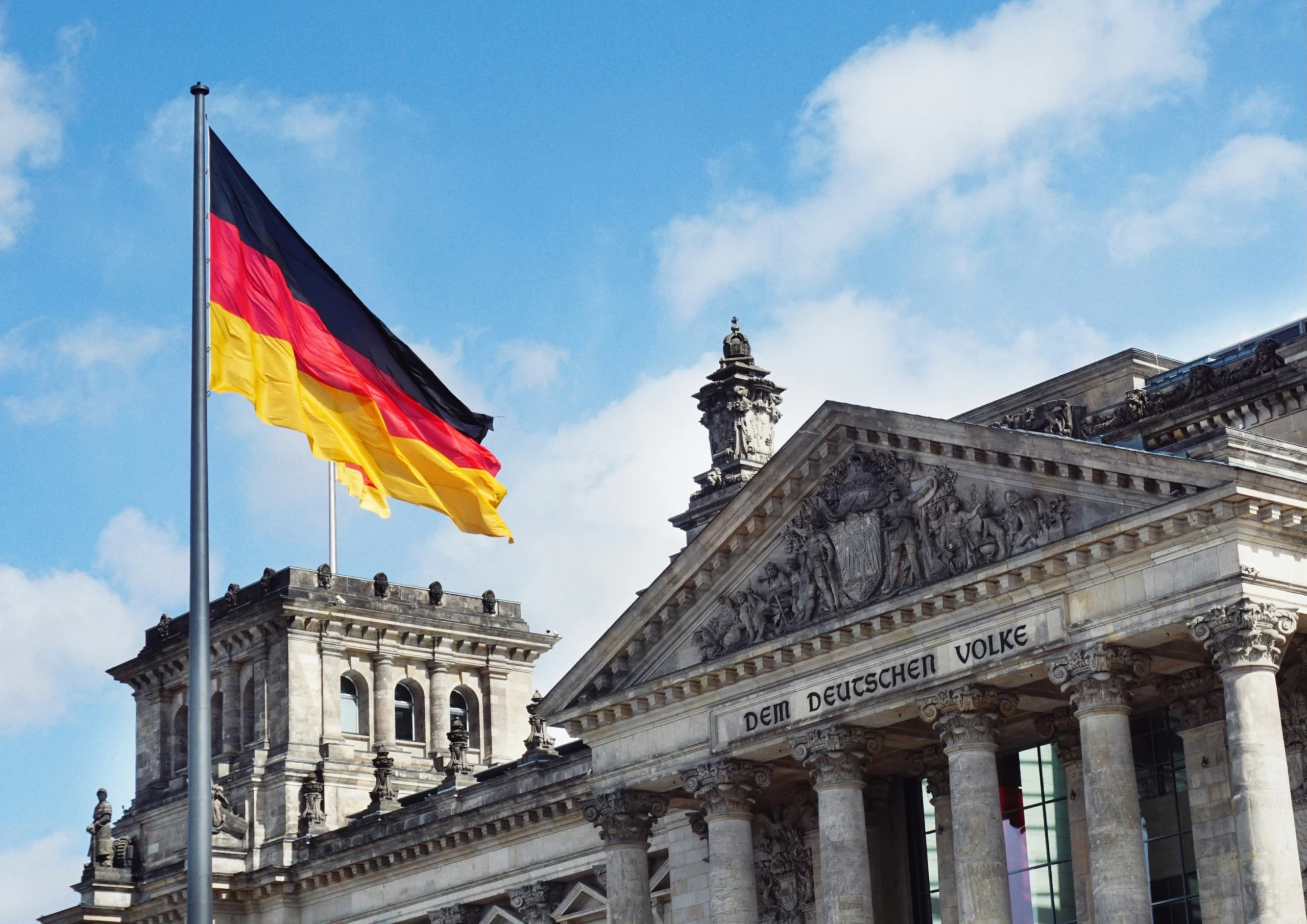
This year, Malta is one of 37 countries presenting a Voluntary National Review (VNR) at the HLPF. Three other countries with membership within CEMR – BulgariaFinland, and Germany – will also present their VNRs. Our latest study provides insights into how these four nations have involved local authorities in shaping their national SDG reports.

It also gives details about the progress made in achieving the five SDGs under review this year: SDG 3 (Good health and well-being), SDG 5 (Gender equality), SDG 8 (Decent work and economic growth), SDG 14 (Life below water), and DSG 17 (Partnerships for the Goals).  

Over 30 local and regional leaders representing Europe

Next week, PLATFORMA and CEMR, in collaboration with the Global Task Force of Local and Regional Governments (GTF), will represent European cities and regions at the HLPF, under the auspices of the UN.

Their participation aims to fast-track the localisation of the SDGs and ensure that local voices are not only heard, but also acted upon.

Here are some of the events they will attend:

  • 15 July, Local and Regional Governments’ Networking Hub, with the launch of the GTF Annual Report “Towards the Localization of the SDGs”, by the GTF and UCLG
  • 16 July, 8th Local and Regional Governments Forum on the 2030 Agenda, by UCLG, GTF, UN-DESA, the Executive Office of the UN Secretary-General, UN Habitat, UNDP, Local2030
  • 17 July, EU delegation – local leaders breakfast meeting, by CEMR and PLATFORMA
  • 17 July, HLPF Official Session on Localisation: “Transformation from the ground up: Acting at local level”, by UN
  • 18 July, VNR Lab on Local and Regional Governments engagement in VNR/VLR processes, by UN-DESA, UN-Habitat, and UCLG

For more information, contact:

Concerns over local democracy in Türkiye

Democracy in Turkyie - News 2025

CEMR issues a statement condemning escalating pressure against democratically elected mayors in Türkiye 


The Council of European Municipalities and Regions (CEMR) has issued a statement expressing its deep concern over the intensifying political pressure on local democracy in Türkiye, following the detention of Zeydan Karalar, Mayor of Adana and Deputy-President of the Union of Municipalities of Türkiye (UMT), CEMR’s member organisation. 

In recent months, an increasing number of opposition-affiliated mayors and staff members of the municipalities have been suspended, prosecuted, or detained in ways that obstruct their ability to carry out their democratic mandates. 

The detention of Mayor Karalar follows the earlier arrest of Ekrem İmamoğlu, former President of UMT. These successive events “risk undermining the principles of local democracy and have potentially far-reaching consequences for stability, democratic resilience, and social cohesion across our continent”. “The legitimacy of democratic governances relies on strong, autonomous local governments, and respect for political pluralism”, defend the signatories.  

CEMR calls on the European and international communities to keep the principles of democracy, the rule of law, and local self-government at the core of their engagement with Türkiye. 

“We respectfully urge the prompt release of all detained Mayors and officials and the full restoration of their rights to perform their democratic functions without fear or interference”, the signatories declare. “Democracy and local self-government cannot and will not be compromised”, they conclude. 

Signatories of this statement include: 

  • Vince Maple, Councillor of Medway, Chair of CEMR Financial Management Committee 
  • Philippe Laurent, Mayor of Sceaux, CEMR Co-President 
  • Christoph Schnaudigel, President of the County of Karlsruhe, CEMR Co-President 
  • Gunn Marit Helgesen, Member of Telemark County Council, CEMR President 
  • Jan van Zanen, Mayor of The Hague, CEMR Executive President 
  • Anders Knape, Councillor of Karlstad, CEMR Executive President 
  • Aleksandra Dulkiewicz, Mayor of Gdansk, CEMR Executive President 

Related content: 

Country profile #1 – Poland

Poland services - News 2022

Country Profile on decentralised development cooperation: the case of Poland 


The country profiles offer a short overview of national models of (decentralised) development cooperation frameworks in selected EU Member States. The aim is to provide insights into specific mechanisms and modalities of analysed national frameworks and identify enabling factors as well as challenges related to practical implementation, focusing on the role and opportunities for local and regional governments and their associations.  
 
Based on the study, Poland’s approach to DDC is characterised by: 
 
 1. Focusing on cooperation with Eastern European countries – with Ukraine, Georgia, and Moldova. Polish local governments actively support partners through strategy development, peer learning, and implementation support. 
 
2. Highlighting the vital role of direct local-level partnerships in times of crisis, including twinning and hands-on collaboration despite the ongoing war. 
 
3. Polish municipalities have developed strong expertise in accessing EU funds and designing effective local strategies, which they can use in their partnerships. 
 
This article is part of a series of 7 Country Profiles examining decentralised development cooperation frameworks across Europe. The second edition, focusing on Germany, will be published in September. Stay tuned! 
 
Read the Country Profile, available in four languages:

CEMR encourages Polish authorities to strengthen the role of LRGs in development policy, not only as implementers, but also as strategic partners helping shape a more resilient, inclusive and effective development agenda. 

This publication is produced within the Bridging and Mapping Knowledge Gaps in Decentralised Cooperation (Mindcraft), funded by the German Federal Ministry for Economic Cooperation and Development (BMZ) and supported by the Deutsche Gesellschaft für Internationale Zusammenarbeit (GIZ).

* The content of this publication is the responsibility of its author(s) and does not reflect the views of the German Federal Ministry for Economic Cooperation and Development (BMZ).

For more information, contact: 

Position paper on migration 

Migration - News Section

CEMR calls for a human‑centred and inclusive EU migration agenda by empowering local actors 


As Europe continues to navigate complex migration dynamics, the Council of European Municipalities and Regions (CEMR) stresses that migration is lived and managed locally. Cities, towns and regions are the first to welcome newcomers, support vulnerable groups, and build long‑term inclusion. Yet, most of the time, they remain under‑recognised and under‑resourced in EU migration governance. 

With its new position paper, CEMR urges EU institutions and national governments to place local and regional governments (LRGs) at the heart of migration policy. This means shifting from an emergency mindset to a sustainable, human‑centred, and territorially grounded approach. 

CEMR’s key asks 

1. Empower LRGs 

Reinforce their formal role in migration governance, supported by structured multilevel cooperation, predictable funding, and targeted capacity‑building. 

2. Adopt a human‑centred EU migration policy 

Ensure that all asylum and migration measures respect fundamental rights, legal clarity, and the real capacities of municipalities. 

3. Include LRGs in the implementation of the EU Migration and Asylum Pact 

Systematically involve cities and regions in reception, integration, and emergency responses, backed by clear procedures and real-time information. 

4. Sustain coordinated support for Ukrainians under Temporary Protection 

Move from emergency assistance toward long‑term integration, with a focus on housing, employment, and access to essential services. 

5. Strengthen labour‑market inclusion 

Improve skills recognition, reduce administrative burdens, and promote local partnerships with businesses to ease migrants’ path to employment. 

6. Secure long‑term EU funding for inclusion 

Protect and expand AMIF and ESF+ resources in the next Multiannual Financial Framework to enable municipalities to continue innovative integration work. 

By recognising the essential role of local actors, Europe can build a migration agenda that is both effective and true to its values—supportive, inclusive, and grounded in the realities of people and places. CEMR stands ready to work with EU and national leaders to make this shift a reality. 

For more information, please contact:

Better regulation position paper

CEMR calls for stronger governance, placing local and regional governments at the heart of Europe’s competitiveness


Europe cannot deliver competitiveness with legislation alone. It will only succeed if policies work on the ground.

And that depends on local and regional governments.

Across the European Union, towns, cities and regions implement more than 70% of EU legislation. They finance public investment, deliver essential services, and turn European priorities — from the Green Deal to digital transformation — into concrete results for citizens and businesses.

Yet too often, local and regional governments are brought into the process too late, faced with fragmented rules, overlapping obligations and growing administrative burdens — clear signs of the limits of the current system. Complex legislative packages, inconsistent timelines and layers of guidance have made implementation harder, slower and more expensive, forcing authorities to spend valuable time navigating procedures instead of delivering solutions. At a moment when Europe is striving to boost productivity, resilience and strategic autonomy, this is a luxury the EU cannot afford.

In this position paper, the Council of European Municipalities and Regions (CEMR) calls for a fundamental shift in how EU policies are designed and implemented: from top-down regulation to genuine multilevel governance.

To make this shift a reality, CEMR calls for:

  • Systematic involvement of local and regional governments throughout the entire EU policy cycle — from design to implementation and evaluation.
  • Structured consultation mechanisms, ensuring meaningful and timely participation of subnational authorities.
  • Territorial and governance impact assessments to ensure policies are realistic and implementable across diverse local contexts.
  • Stronger political recognition of local and regional governments as equal partners in EU decision-making.
  • EU legislation and funding frameworks that reflect territorial realities, avoiding one-size-fits-all approaches.
  • A governance model that prioritises implementability, ensuring policies can be effectively delivered on the ground.

Competitiveness goes beyond regulatory simplification. It requires public policies that are relevant to businesses and communities that they serve and capable of being effectively implemented.

CEMR and its members stand ready to contribute their expertise, data and on-the-ground experience. The time has come to move beyond ad hoc consultation and embed local and regional governments where they belong: at the decision-making table.

Because Europe’s competitiveness will be won — or lost — locally.

Discover CEMR’s full recommendations for a stronger multilevel governance framework in the position paper.

For more information, contact:

On the EU Water Resilience Strategy

Head Banner - SUN4UKRAINE

CEMR priorities on the European Commission Water Resilience Strategy


The European Commission has just published its Water Resilience Strategy, a much-needed step toward safeguarding one of our most vital common goods.

At CEMR, we welcome the Strategy’s alignment with many of our long-standing priorities:
✅ Recognition of water as a public good
✅ Acknowledgement of the role of multi-level governance, cross-border cooperation and stakeholder engagement
✅ Emphasis on nature-based solutions, including the new Sponge Facility
✅ Improved tools for data access, drought management, and awareness-raising

We also welcome the reinforcement of the Polluter Pays Principle, especially for persistent pollutants like PFAS. However, we are particularly concerned by the provision for an updated study on the costs and potential impacts of the Extended Producer Responsibility (EPR) scheme under the Urban Wastewater Treatment Directive.

As addressed in our recent joint letter to President von der Leyen decision risks delaying the deployment of quaternary treatment technologies essential to remove micropollutants and could hinder the timely implementation of the recast Directive.

We strongly believe that local and regional governments are best placed to address water challenges — but to do so effectively, they must be empowered with the tools, flexibility, and funding they need.

The Strategy would benefit from:
🔹 Clear and firm commitment to dedicated funding for water management in the next MFF
🔹 Better access to emergency EU funds for municipalities and regions affected by extreme events
🔹 Stronger legal safeguards and technical support for public sector water services
🔹 Concrete support for urban-rural cooperation in integrated water management

Read our full position paper

These issues will be front and centre at the CEMR Leaders’ Summit in Oslo, 23–24 June, under the theme: “Local Solutions for Equitable and Sustainable Resource Management.”

Let’s ensure Europe’s water resilience starts where it matters most — in our cities and regions.

CEMR inputs for EU agenda for cities

Matchmaking Platform - Launch

Towards an inclusive EU Agenda for cities of all sizes 


As the European Union prepares to shape its next urban strategy, CEMR has published a new input paper calling for a truly inclusive EU Agenda for Cities — one that recognises the vital role of Local and Regional Governments (LRGs) in shaping Europe’s future. 

LRGs are the first responders to many of Europe’s most pressing challenges. From tackling the energy crisis to investing in sustainable mobility and managing public services, cities and regions are not just implementing EU policies — they are innovating, adapting, and delivering results on the ground. Their proximity to citizens places them in a unique position to foster trust, ensure inclusive governance, and respond effectively to the evolving needs of their local communities. 

Yet too often, EU policies are developed without fully engaging the very authorities responsible for delivering them. Over 70% of EU legislation is implemented at the local and regional level. Despite this, subnational governments still lack a formal role in shaping that legislation. 

CEMR’s paper sets out a vision for a new EU Agenda for Cities that is not only inclusive of every territory — from smaller municipalities to major metropolitan areas — but also equipped with the governance mechanisms, funding tools, and institutional recognition to deliver real impact. 

Key proposals include: 

  • Establishing a permanent, structured process for multi-level governance consultations for any new EU regulation proposal that could have an impact on LRGs. 
  • Using the “reforms” component of the next EU structural investment policy to ensure LRGs have the capacities (financial, technical, human) to implement EU regulations. 
  • Streamlining and simplifying access to EU funding, and including a 15% earmark for sustainable territorial development in the next EU budget period, CEMR also calls for greater alignment between EU funding opportunities and local realities, simplifying access and strengthening the administrative capacity of subnational governments. As the paper makes clear, the time has come to transition from fragmented engagement to a systemic approach that incorporates local and regional voices at every stage of the EU policy cycle — from design to implementation. 

The new EU Agenda for Cities presents an opportunity to bridge the gap between ambition and implementation. With the right tools and governance in place, LRGs can power Europe’s green and digital transitions, drive economic resilience, and make the promise of inclusive, sustainable communities a reality for all. 

CEMR will present these ideas at the Cities Forum in Krákow, taking place from 17 to 19 June 2025. Our Secretary General, Fabrizio Rossi, will join the discussion on the Agenda with the Executive Vice-President of the European Commission, Raffaele Fitto. 

Read the full input paper here

For more information, contact:

For more information, contact:

Op-Ed on local democracy in Türkiye

Turkiye democracy - News 2025

Op-Ed on the local democracy in Türkiye co-signed by presidents of the Congress, CoR, ALDA and CEMR


The recent arrests and dismissals of democratically elected mayors in Türkiye, and their replacement by appointed trustees, mark a dangerous turning point for local democracy, not only in Türkiye but for Europe as a whole. At its core, democracy is not just about casting ballots; it is about ensuring that those elected by the people can govern freely, without fear of persecution. The replacement of elected mayors through judicial intervention, without full transparency and due process, raises serious questions about democratic standards and political freedom. 

This is not an isolated event. It is part of a worrying trend of democratic backsliding that threatens the fundamental values upon which modern Europe has been built. From the ashes of World War II, Europe emerged with a commitment to decentralization, democracy, and human rights. The European Charter of Local Self-Government, adopted in 1985, was a direct response to past authoritarianism, ensuring that local governments have the autonomy to serve their communities without undue interference from central authorities. This principle of local self-government is a safeguard against the concentration of power and a guarantee that democracy remains rooted in the daily lives of citizens.  

Yet today, these hard-won principles are being undermined. The detention of local leaders in Türkiye is a blatant violation of the commitments the country made as a member of the Council of Europe. It is a direct assault on the principles enshrined in the Charter and an ominous signal to other governments that such actions might be tolerated.  

Local democracy is the first line of defense for our freedoms. When it is attacked, it is not just a city or a region that suffers—it is the very foundation of democracy. As local elected representatives, mayors are the bridge between national governments and citizens, the leaders who turn democratic principles into tangible actions—whether in public services, social cohesion, or crisis response.  

Ignoring the crackdown on local leaders in Türkiye is not just a failure to support our colleagues—it is a failure to defend democracy itself. If Europe allows the erosion of local democracy anywhere on the continent, it sets a dangerous precedent that could spread.  

EU institutions, together with Member states of the European Union and of the Council of Europe, must take a clear and firm stance. The defense of democracy must not be selective or conditional on political expediency. The right of people to choose their leaders—and for those leaders to govern without fear—must be upheld at all costs.  

Democracy in Europe was never guaranteed; it was built through struggle and commitment. In the face of new threats, we must show the same commitment. The free election of representatives is not a privilege; it is the foundation of a just and stable society. If we fail to defend it today, we risk losing it tomorrow. 

Signatories: 

  • President of the Congress of Local and Regional Authorities of the Council of Europe, Marc Cools 
  • President of the Committee of the Regions, Katta Tüttő 
  • President of ALDA: Nataša Vučković
  • President of CEMR: Gunn Marit Helgesen

*****

This opinion article was published on EU Observer on 15 April 2025. You can read it here

Related content:

For more information or media inquiries, please contact:

Renewables with communities first 

Energy - News Section

A European consensus sets guiding principles to accelerate renewable energy and grid deployment while ensuring fairness, transparency, biodiversity protection, and local benefits 


Europe is at a turning point. To reach climate neutrality by 2050, the EU must drastically expand renewable energy and electricity grids. This challenge is also an opportunity: renewables are cheaper than fossil fuels, can reduce biodiversity risks, and bring local economic benefits. Yet progress remains too slow, hampered by lengthy permits, weak community dialogue, and a lack of perceived value for citizens. 

To overcome these barriers, European stakeholders have united behind a set of baseline principles for fast and fair deployment of renewables and grids. These principles underline that projects must be shaped with communities, not imposed on them. Early engagement with mayors and citizens, transparent communication, and mechanisms for feedback are central to building trust. 

Equally important is ensuring that local communities share in the value of new projects. This means creating jobs, offering benefit-sharing schemes such as funds or co-ownership, and guaranteeing that revenues are used transparently for local improvements, from transport to housing. The principles also commit to nature-positive deployment, applying strategies to avoid or minimise harm and, where possible, enhance biodiversity. 

Finally, the consensus highlights the need to empower community-led initiatives, giving citizens and municipalities fair access to the energy market and the grid. By creating space for local ownership, Europe can ensure that the energy transition is not only fast but also fair. 

Together, these principles form a European consensus: a shared roadmap to accelerate the transition while protecting ecosystems and ensuring citizens see real, tangible benefits. 

Read the position paper here 

For more information, contact: 

Final call for the EU budget

MFF - Position paper News 2025

Local and regional governments’ final call to EU institutions for a real involvement in the design of the EU budget 


The future of the EU budget is at a crossroads. As the European Commission launches consultations on the post-2027 Multiannual Financial Framework (MFF), local and regional governments across Europe, represented by CEMR, are calling for a fundamental change: an EU budget that is inclusive, decentralised, and truly aligned with the needs of cities, municipalities, and regions.  

This requires that future national plans and investment priorities in each Member State are not imposed from the top-down, but shaped through meaningful consultations with local and regional governments, just as the Partnership Principle ensures in Cohesion Policy. Only in this way can EU investments be fit for purpose and truly serve the people it is intended to benefit. 

CEMR’s newly released position paper on the post-2027 MFF sets out a clear vision for a reformed EU budget that strengthens multi-level governance and empowers local and regional governments as essential partners for effective spending of the EU budget on the ground. With growing social and economic inequalities, the need to accelerate climate adaptation, and increasing geopolitical instability, Europe cannot afford to sideline local and regional governments—the very actors that implement over 70% of EU policies on the ground. 

National plans must include mandatory consultations to local and regional governments 

The roadmap on the next MFF confirmed the European Commission’s ambition to establish single national plans for reforms and investments based on priorities defined at European level. The European Commission mentions the Recovery and Resilience Facility (RRF) as a good example of an instrument linking investments and reforms and points out that two thirds of the EU budget (Cohesion Policy funds and the Common Agricultural Policy) could in the future be implemented according to the RRF approach. In this context, CEMR issues a final warning to the European Commission: the RRF model failed to ensure effective multi-level governance. CEMR found that, since consultation with local and regional governments was not mandatory, it simply did not occur in most of the Member States.  

The European Commission must ensure that national plans and the definition of investment priorities in each Member State are developed through meaningful consultations with local and regional governments, similar to the Partnership Principle in Cohesion Policy. This is the only way to guarantee that EU investments are fit for purpose and meet the real needs of the population.  

The EU is more than its institutions and the 27 states—it belongs to its people, municipalities, cities, and regions. Decisions based solely on macroeconomic trends risk disconnecting it from citizens” — Gunn Marit Helgesen, CEMR President. 

CEMR key priorities for the post-2027 EU budget 

CEMR’s position paper, backed by national associations of local and regional governments across Europe, contains concrete proposals to reform the post-2027 EU budget and enhance its effectiveness: 

  • Empowering municipalities, cities and regions not only as implementers but also as planners 
    The Partnership Principle should be made mandatory across all EU-funded programmes to ensure that the funds effectively reflect the actual needs of local and regional governments. 
  • Decentralising the Cohesion Policy 
    Strengthening the capacity of local and regional governments to manage EU funds will ensure that investments address real local needs and promote balanced territorial development. 
  • Diversifying EU instruments as part of the ambitious policy agenda for cities 
    From shared management funds to increased direct funding, it would allow EU investment to reach local and regional authorities of all sizes, from all types of territories, both urban and rural.   
  • Simplifying and easing EU funding mechanisms  
    to reduce administrative burdens for both Managing Authorities and beneficiaries. CEMR proposals for simplification include: a single set of rules for beneficiaries across the different funds; flexibility in thematic concentration to allow place-based definition of priorities, hence accelerating funds disbursement; and a labelling of auditing processes as compliant with EU rules to avoid multiplication of auditing.
  • Enhancing synergies among EU funds. 
    The next MFF must improve coordination between different EU funding instruments to maximise impact at the territorial level. 

Take part in the public consultation 

Local and regional governments must not be sidelined in shaping the post-2027 EU budget. The European Commission’s consultation must not be reduced to a bureaucratic exercise or a mere checkbox. Consultations alone are not enough. The next EU budget regulations must include a mandatory requirement to involve local and regional governments in defining the investments that will meet the real needs of the population. 

Use this public consultation —open until May 7 2025— to demand a real seat at the table and a budget that truly serves our communities. A stronger, more inclusive Europe starts from the ground up. Speak up before it’s too late. 

Read the full CEMR position paper here

Contribute to the public consultation on the future EU budget here: https://ec.europa.eu/commission/presscorner/detail/en/ip_25_486 

For more information, contact: