European social partners with Ukraine 

Ukraine people - News

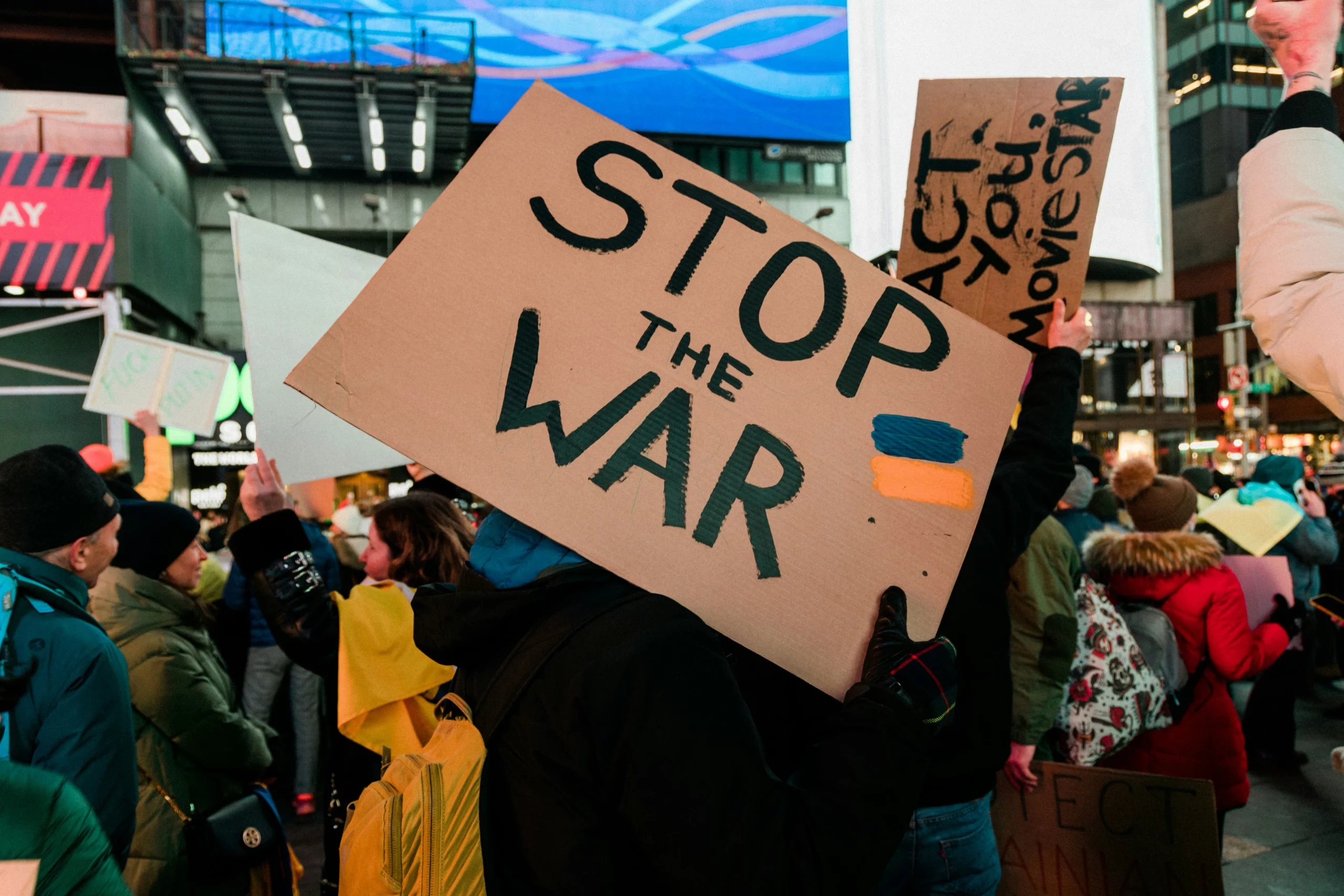
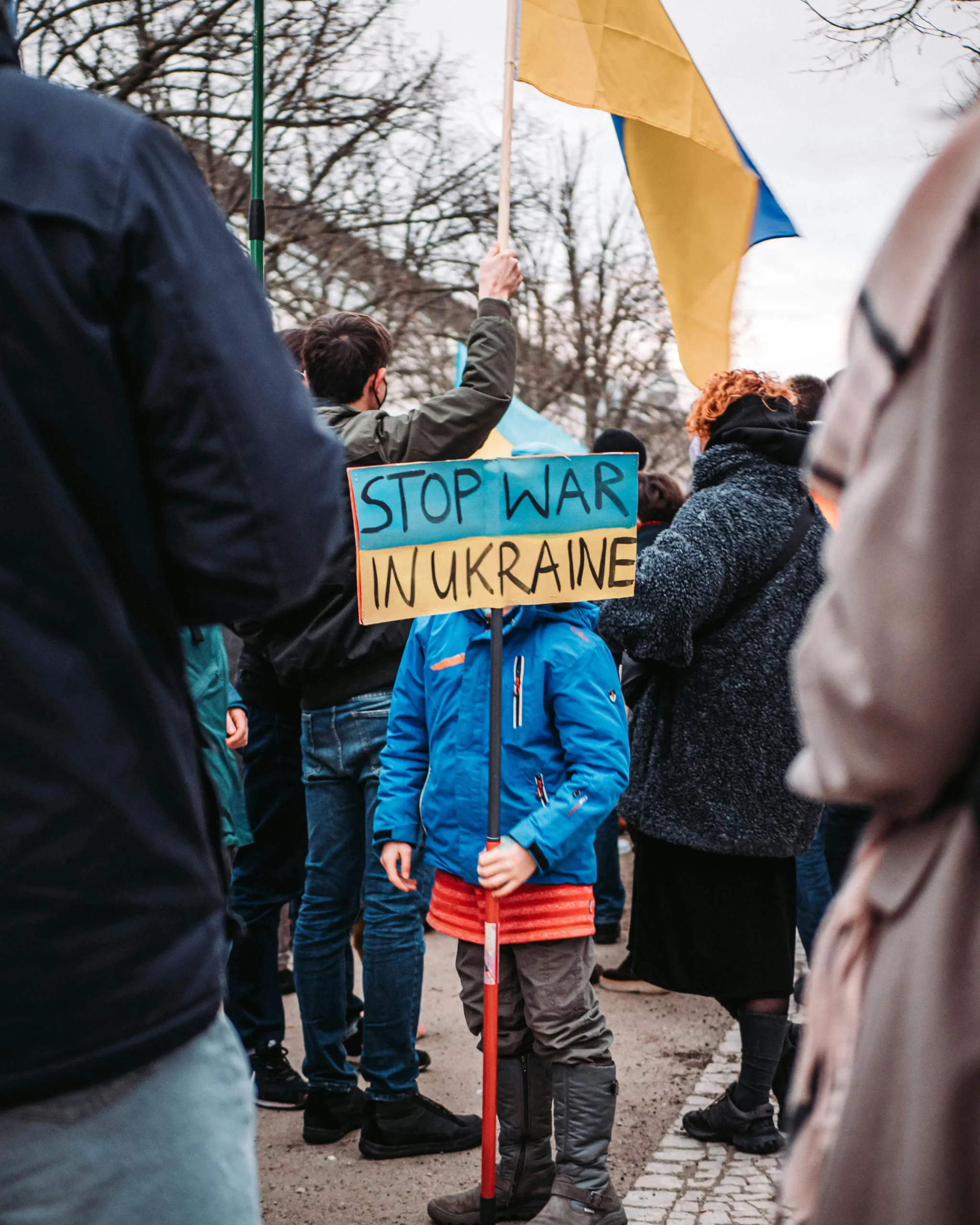
Social partners offer solidarity and support in response to the Russian invasion


The European social partners for local and regional governments, CEMR and EPSU, have jointly expressed their strong condemnation of Russia’s invasion of Ukraine, calling it a grave violation of international law and a direct threat to democracy and peace in Europe. 

In a statement released through the European Social Dialogue Committee, the two organisations extended full support to the Ukrainian people, especially to workers in cities, municipalities, and local public services, who continue to serve their communities under attack. 

“Our thoughts are with first responders, emergency services workers and municipal staff who are ensuring the delivery of basic services, despite the ongoing destruction,” the statement reads. 

CEMR and EPSU pledged to mobilise both material assistance and technical expertise to support their peers in Ukraine and urged the EU and international community to provide shelter and asylum for those fleeing the war. 

As municipalities across Europe begin to welcome displaced persons, the statement also highlights the importance of supporting local migration services and coordinating with national governments to ensure dignified reception and integration. 

Read the declaration here 

For more information, contact: 

G7

Twinning REALISE - News 2024

Urban alliance formed to support German G7 Presidency


The Association of German Cities (DST, a CEMR member), ICLEI and the Global Parliament of Mayors have launched an urban alliance to accompany the German G7 Presidency. The alliance will support the G7 Presidency programme and provide urban perspectives throughout.

The German G7 Presidency began at the beginning of 2022 and will culminate with the G7 summit on 26-28 June in Schloss Elmau (Bavaria). For more information on the urban alliance, please consult the press releases of ICLEI (in English) and DST (in German).

Local support to Ukraine 

Mayors in Ukraine - News 2023

European local and regional governments denounce Russia’s aggression and pledge solidarity with Ukrainian communities 


European local and regional governments have expressed their strongest condemnation of Russia’s repeated attacks and violations of Ukraine’s sovereignty and territorial integrity. They reject any attempt to dismantle a free and democratic state in Europe, stressing that these acts threaten peace and democracy across the continent. 

Solidarity with Ukrainian Communities 
Mayors, councils, and regional leaders stand firmly with their peers in Ukraine, municipalities, hromadas, districts, and their associations, who remain on the frontline providing essential services to citizens under the constant threat of bombings and destruction of infrastructure. 

Commitment to Support 
Local and regional governments across Europe, representing 60 national associations in 40 countries, commit to offering Ukrainian communities the materials, expertise, and assistance needed to face the ongoing crisis. They also prepare to respond to the humanitarian consequences, including the likely arrival of refugees, in close coordination with national governments. 

City Diplomacy for Peace 
Rooted in a tradition of local democracy and city diplomacy since 1951, European municipalities reaffirm their belief in peace and cooperation. They call on Russia to cease its aggression, withdraw from Ukraine, including Donbas and Crimea, and respect international law. 

Looking Ahead 
Despite the violence, local leaders remain convinced that diplomacy between cities can once again be a powerful force for unity, peace, and rebuilding across Europe. 

Read the declaration here 

For more information, contact: 

#DemocracyUnderPressure

Belarus - News 2022

CEMR joins 2022 campaign for democracy in Belarus


The Council of European Municipalities and Regions (CEMR) joins this year’s campaign on #DemocracyUnderPressure in Belarus initiated by the Young European Federalists (JEF). During last year’s campaign, many European cities lit up their town halls in white-red-white, the colours of the flag of free Belarus. The following statement has been adopted by CEMR.

We support the Belarusian people’s wishes for a peaceful democratic transition in the country at all levels – including making local governance systems more democratic. This process follows the Presidential elections of August 2020, which were neither free nor fair.

CEMR recallslast year’s statement and urges the EU institutions and national governments to strengthen assistance to Belarusian civil society, including to organisations promoting local democracy and municipal autonomy, which are a genuine training ground for democratic citizenship and the rule of law.

We express our solidarity towards border cities and regions in Latvia, Lithuania and Poland and we welcome the European Commission’s proposition on the temporary legal and practical measures to address the emergency situation at the EU’s external border with Belarus.

We ask our members, like last year, to illuminate their public buildings in the colour of the Belarusian flag on 25 March unofficial day of freedom in Belarus, celebrated annually by the democratic opposition.

Rights and values

Democracy - News Section

Discover the “rights and values” programme for the period 2021-2027


The presidency of the Council and the European Parliament reached a provisional political agreement on the rights and values programme for the period 2021-2027.

Funding through this programme aims at protecting rights and values enshrined in the EU treaties in order to sustain open, democratic and inclusive societies. It will have a substantial overall budget of maximum €1.55 billion.

The programme will have a budget of €641.7 million, with an additional allocation of maximum €912 million and it sets out four specific objectives:

  • to promote equality and rights, including gender equality, anti-discrimination and the rights of children
  • to promote citizens engagement and participation in the democratic life of the EU and to raise awareness of the common European history
  • to fight violence, notably against children and women
  • to protect and promote EU values

The newly introduced objective to protect and promote EU values will receive a substantial allocation of € 689.5 million. An amount of € 91.2 million will be left unattributed so as to be able to tackle any emerging needs and future challenges.

To achieve this, the programme will support civil society organisations and other stakeholders active at local, regional, national and transnational level, and encourage civic and democratic participation.

The provisional political agreement reached today will have to be approved by the European Parliament and the Council. The necessary steps will be undertaken at the beginning of next year.

Twinning funds

Twinning - News

Get funded for town twinning and networks of towns


Do you want to set up a town twinning or a network of towns? The EU’s CERV programme (Citizens, Equality, Rights and Values) can provide up to 30,000 euros for town twinnings and financing with no upper bound for networks of towns.

You have until 24 March 2022, 17:00 CET, to send your request for funding. The results will be shared between June and July 2022 after evaluation of the proposals.

An information session will be held on 8 February between 10:00 and 12:00 (in English). The session aims to explain the content and conditions of the call for proposals, as well as giving participants space to ask questions. You can else get directly in touch with your national CERV contact point.

Empowering local Europe 

European Town - News

CEMR unveils its vision for stronger, inclusive and sustainable territories across Europe


The Council of European Municipalities and Regions (CEMR) has launched its political manifesto calling for a more inclusive, resilient, and citizen-driven European Union. With over 41 national associations of local and regional governments behind it, the manifesto sets out a roadmap to bring Europe closer to its citizens, starting from the ground up. 

At its heart are six concrete proposals to reinvigorate European democracy: from establishing permanent citizen panels and annual Europe Day debates in schools, to relaunching town twinning and creating an Erasmus-style programme for civil servants. 

CEMR also stresses that a strong Europe must leave no one and no place behind. It calls for renewed efforts to tackle territorial disparities, address depopulation, and ensure that public services, from education to health, are accessible to all citizens, no matter where they live. 

The manifesto also focuses on key priorities for the coming decade, including: 

  • Citizen participation through inclusive local democracy; 
  • Empowered local climate action, as cities and regions lead Europe’s green transition; 
  • Fair and coordinated migration policies, with strong local support for integration; 
  • Digital transformation that bridges the urban–rural divide; 
  • New forms of town-to-town partnerships, especially beyond the EU’s borders; 
  • And financial means to invest in sustainable local infrastructure and innovation. 

CEMR’s proposals emphasise the urgent need for deeper recognition of local and regional governments in European decision-making. This includes a stronger role for the Committee of the Regions, the creation of a local chamber, and systematic consultation of representative associations like CEMR when shaping EU legislation and strategies. 

By calling for a Europe that is democratic, sustainable, and close to its people, the manifesto is a bold invitation to reimagine the Union from the local level up, with municipalities and regions playing a central role in shaping the continent’s future. 

Read the position paper here 

For more information, contact: 

Future of Europe

Democracy - News

Local and EU leaders’ debate: time to strengthen European democracy from the bottom-up!


With the Conference on the Future of Europe, citizens across the continent have a unique opportunity to organise local events and make their voice heard to shape the direction of our Union. But how can we foster citizens’ participation? And what visions do we have for municipalities and regions in the future of Europe?

Last week, ahead of our Policy Committee meeting, local and regional leaders, senior EU official and representatives of civil society took part in a debate to discuss precisely these questions.

Dubravka Šuica, Vice-President of the European Commission in charge of Democracy and Demography, emphasised that European democracy must not be a top-down process. “Once a mayor, always a mayor,” she said. “As a former mayor, I know all politics is local.”

Mayors and regional leaders must make their voices heard at the Conference. The Croatian commissioner said it was impossible to know what the Conference’s outcome would be but that it was important to already look for ways to embed citizens’ participation in decision-making.

Taking local action to involve citizens

Involving ordinary citizens in European debates and decisions is not always easy however. Developments in Brussels and Strasbourg too often seems remote and abstract. That is why the French city of Rennes has invited local citizens to participate through municipal projects.

Flavie Boukhenoufa, Deputy Mayor of Rennes, presented Labo Europe, an organisation helping citizen get involved in and better understand the EU. This year the “Lab” launched a campaign to develop a European Citizens’ Initiative (ECI) for Rennes. Citizens are able to send in their ideas and participate in online debates to create the city’s proposal for a European action.

The final choice will be presented on Europe Day on 9 May. “We aim to speak not with experts but with citizens, even those who have no knowledge about the EU”, said Boukhenoufa. Get inspired by checking out this video and website on Rennes’ citizen initiative

People across Europe can provide their input to the Conference by organising local events and registering these with the official online platformServane Metzger, part of the Cabinet of the French Secretary of State for European Affairs, highlighted the importance of these local events in terms of engaging people and reflecting the sensibilities of different regions.

Metzger raised the possibility of maintaining the platform into the future: “The platform is an extremely powerful tool to map events. It’s really easy to see events that are nearby, that way we reach local people, not only EU specialists.”

What future for Europe?

The health of European democracy is also affected by the state of national and local democracy.  Mayor of Gdansk and CEMR Executive President Aleksandra Dulkiewicz stressed that we cannot take democracy for granted and urged protecting the next European elections from digital threats and outside interference.

Vibrant local democracy can also be a bulwark against negative developments at national level. Dulkiewicz called on the Conference to support NGOs and local and regional governments to counter rising authoritarianism. “These two pillars should be strengthened because threats to democracy, rule of law, human rights and transparency in one EU country can affect the whole community”, she said.

Jordanka Fandakova, the Mayor of Sofia and CEMR Executive President, highlighted the importance of the digital divide, with rural areas in particular often lacking connectivity. She called for making equal Internet access a priority. “Digital strategies should not only be focused on big cities, but also take into consideration the needs of small towns and communities”, she said.

No one can say what will result from the Conference. Eva Maydell, a Bulgarian MEP and President of the European Movement International (EMI), argued that pandemic showed the power of European solidarity, but also the need to strengthen our continent’s autonomy. She stressed that the EU can only maintain trust if the Conference delivers results: “Like every political project, the EU is based on a story and its ability to meet the promises it makes to its citizens.”

CEMR and CoR investigation

Take our survey on recovery plansThis article will soon be translated into French.


A year ago, CEMR and the Committee of the Regions joined forces to run a survey to determine the extent to which municipalities, regions and their associations have been involved in preparing national post-COVID Recovery and Resilience Plans. Each national plan must be approved by Brussels in order to access EU recovery funds. The results showed that, with a few exceptions, the disappointing extent to which local governments were able to shape their national recovery plans.

rnCEMR and the Committee of the Regions are now running a second survey to determine municipalities, regions and their associations’ involvement in the implementation of the recovery plans. The survey can already be completed in English and other languages will become available by 1 February. Completion should only take 5-10 minutes. The deadline for response is 1 March 2022.

TERRI – mapping territorial reforms

Terri - News 2022

Discover “TERRI”: a new online tool mapping territorial reforms and powers in Europe


How is Europe’s complex patchwork of local and regional governments evolving? How have the responsibilities of municipalities, counties and regions changed in recent years, marked by environmental and health crises? What examples of successful territorial reforms can inspire others?

To answer these questions, we present to you a new digital report entitled, ‘Territorial Governance, Powers and Reforms in Europe’, or TERRI Report for short. This online tool highlights territorial reforms and decentralisation trends over the past decade in 40 countries. It also analyses the changing nature of relationships between central and subnational governments.

In light of the pandemic, this edition zooms in on local health responsibilities in different countries and evaluates the impact of COVID-19 on local health systems. TERRI visualises trends with numerous charts. In just a few clicks, you have access to individual country profiles, an interactive map and recommendations to policymakers for undertaking successful territorial reforms. There is also a unique tool for side-by-side comparisons of different countries’ systems of local government.

The TERRI Report is based on research by the Council of European Municipalities and Regions (CEMR), gathering data from its member associations on the state of local and regional governments across Europe.

The trends reshaping local Europe

While the situation in different European nations is necessarily diverse, the TERRI Report has identified several common trends.

Europe today is made up of 114,534 towns and cities, 1058 provinces and counties, and 353 regions. There have been reforms reducing the number of municipalities or regions in several countries. These typically aimed to consolidate the territories concerned into larger entities. Portugal, Albania, Estonia, Latvia, Ukraine and Turkey for example, all saw drastic reductions in the number of municipalities, while Norway and France considerably reduced the number of regions.

National associations of local and regional governments emerge as central players in both territorial reforms and healthcare systems. As regards healthcare, associations play a key role through activities such as sharing expert information and best practices amongst their members and in negotiating healthcare roles and budgets with national governments.

In many countries, there has been a decentralisation of healthcare responsibilities. This typically takes the form of increased healthcare responsibilities for subnational governments and/or more healthcare coordination between levels of government.

These are just a few of the changes that are affecting local life in our municipalities and regions. To find out more, explore the TERRI Report at: terri.cemr.eu

For more information, contact: