
Educating for global citizenship 

Education - News section

How local and regional governments raise awareness for sustainable development through Development Education


In the face of global challenges like climate change, migration, and rising inequalities, citizen engagement is no longer a luxury, it’s a necessity. Local and regional governments (LRGs), being the level of governance closest to the people, are uniquely positioned to connect global issues with daily realities. Through Development Education and Awareness Raising (DEAR), LRGs play a transformative role in fostering active, informed and responsible citizenship. 

DEAR is not just about delivering information, it’s about sparking engagement, critical thinking, and collective action. This article presents the key findings and recommendations from PLATFORMA’s Success Stories Collection, showcasing how LRGs and their associations help citizens understand global interdependencies and become agents of change. 

PLATFORMA, a pan-European coalition of LRGs active in development cooperation, advocates for the strategic role of LRGs in informing, mobilising, and engaging communities for global sustainable development. The collection highlights real-life examples of how LRGs across Europe use DEAR to bring the 2030 Agenda closer to citizens. 

Why LRGs Matter for DEAR 
LRGs are trusted institutions with a public mandate. By collaborating with schools, civil society organisations (CSOs), and cultural actors, they can: 

  • Simplify complex global agendas like the Sustainable Development Goals (SDGs) without diluting their message, 
  • Restore trust in public institutions, 
  • Build social cohesion, 
  • Reach under-resourced municipalities through national associations of LRGs (LRGAs). 

What is DEAR? 
Development Education and Awareness Raising (DEAR) strategies seek to transform community behaviour and attitudes toward global challenges. Rooted in concepts like Global Citizenship Education (GCE), DEAR blends learning with action. Its two main approaches are: 

  • Global-Learning: Focused on knowledge-building and participatory education. 
  • Campaigning-Advocacy: Aimed at policy and behaviour change through public mobilisation. 

Showcasing DEAR in Action 
The publication features 19 case studies, divided into two parts: 

  • Part 1: Ten Campaigning-Advocacy projects targeting policy or institutional changes. 
  • Part 2: Nine Global-Learning projects focused on pedagogical empowerment and community knowledge-building. 
    A third section delves into the financial tools and methodologies that support DEAR implementation. 

The DEAR experience proves that raising citizens’ awareness is not a one-off campaign, it’s a continuous process of reflection, transformation, and action. PLATFORMA outlines seven clear recommendations for local and regional governments to enhance their DEAR impact: 

  1. Promote whole-of-society partnerships: Create inclusive spaces and initiatives like the European Days of Local Solidarity to unite communities around shared challenges. 
  1. Commit to long-term planning: Change takes time; DEAR strategies must evolve and stay relevant. 
  1. Foster mutual learning and participation: Engage citizens in workshops, forums, and school programmes, learning is most effective when it is shared. 
  1. Defend the unique role of LRGs: Encourage inclusion of LRGs in EU DEAR calls and empower their associations to support smaller municipalities. 
  1. Prioritise youth engagement: Let young people lead and amplify messages through social media and peer-to-peer initiatives. 
  1. Use public and digital spaces creatively: Awareness campaigns in urban areas and online tools ensure a wide reach and participation. 
  1. Evaluate meaningfully: Include both qualitative and quantitative indicators, participatory feedback, and mid-term evaluations to track behaviour change. 

As we face increasingly complex global challenges, LRGs and their associations are vital in shaping how communities think, act, and respond. By embedding DEAR into their governance and outreach strategies, local institutions become not only service providers but educators and catalysts of global change. 

Read the study here 

For more information, contact: 

Cohesion Alliance

Cohesion Alliance - News 2020

#CohesionAlliance mobilises to back the European Parliament in the final stretch to secure a strong and participated cohesion policy 2021-2027


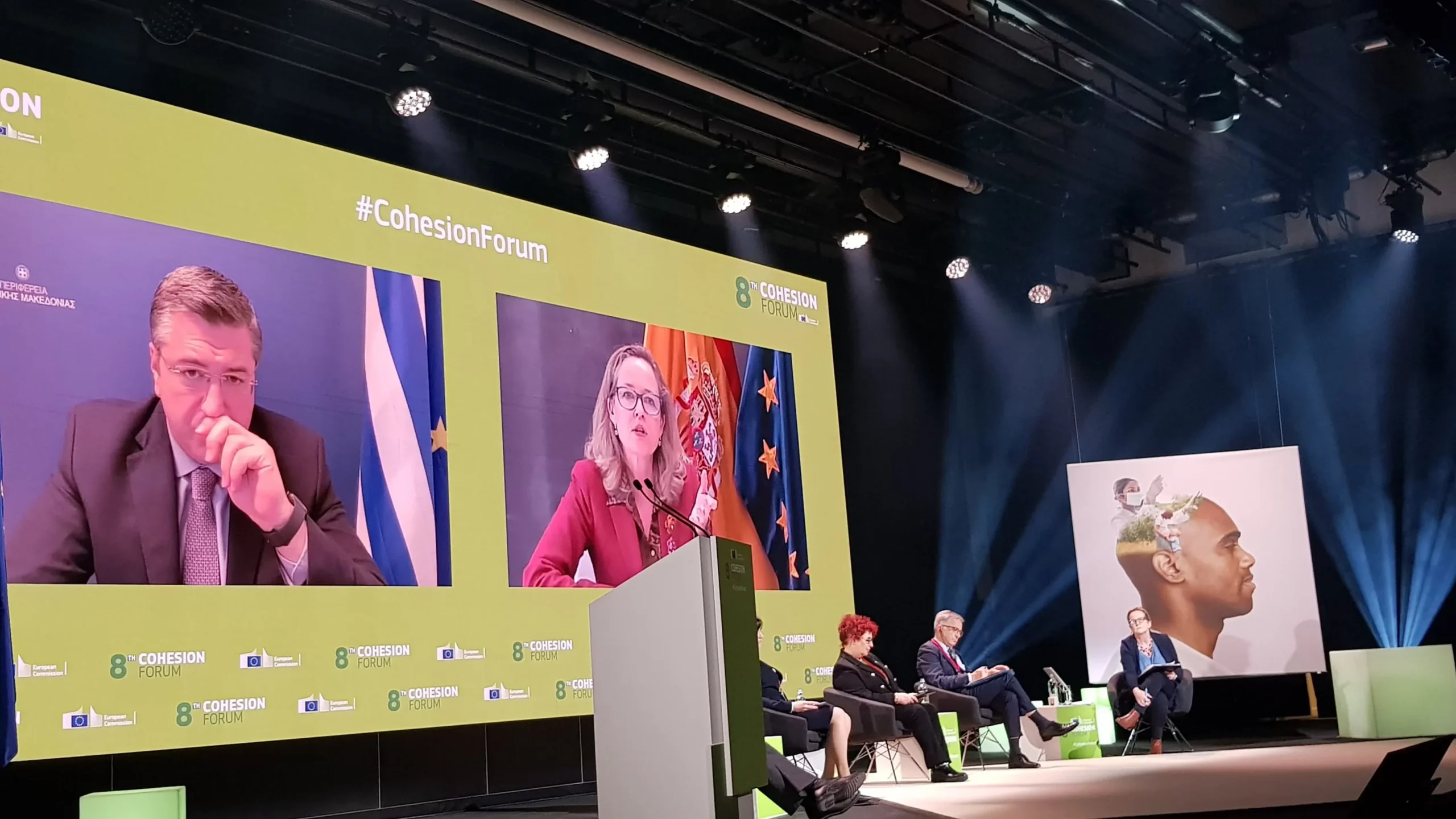
The #CohesionAlliance partner organisations met online to discuss the current state of the trilogue negotiations of the cohesion policy package with representatives from the European Parliament, the European Commission and the German Council Presidency. The partner organisations representing cities, regions and regional assemblies voiced their concern about macroeconomic conditionality, the risk of centralisation and the full implementation of cohesion and REACT EU programmes over the upcoming years.

The negotiations between European Parliament and Council on the rules for cohesion policy 2021-27 are entering the final phase. Cities, townsand regions and the European Parliament have converged on key demands and successfully advocated for strong cohesion policy beyond 2020. 

Concluding the negotiations on all cohesion policy programmes is more urgent than ever. It’s less than one months until Christmas, so national governments should stop playing games and listen to its cities and regions. A delay in the negotiations on the cohesion policy regulation risks a postponement of the start of programmes. This would have a direct impact on our citizens, who urgently rely on the EU support. These funds are essential for local and regional authorities to take action against the impact of the Covid-19 pandemic and accelerate a sustainable and socially-fair recovery“, said Isabelle Boudineau, Chair of the Commission for Territorial Cohesion Policy and EU Budget (COTER) of the European Committee of the Regions.

Younous Omarjee, MEP, Chair of the REGI committee: “The European Union is going through an economic and social crisis on an unprecedented scale. The conditions for recovery in 2021 are unknown. More than ever, cohesion policy must be powerful, because today what is threatening is the distortion of economies and divergence. The logic of cohesion and solidarity must take precedence over that of competition. The principles of cohesion must be at the heart of the recovery, and we must plead for a recovery that is sustainable, but also fair and equitable.”

During the debate with Marc Lemaitre, Director-General DG REGIO, European Commission, and Heinz Hetmeier, Deputy Director-General for European Economic Policy, EU Structural and State Aid Policy, and Twinning at the German Federal Ministry for Economic Affairs and Energy, the #CohesionAlliance partners voiced their concern about some remaining key issues in this last phase of the negotiations. In particular, towns, cities and regions worry that macroeconomic conditionality introduces significant uncertainty on future investment once the Growth and Stability Pact comes back into force. Furthermore, a narrow definition of the scope of the European Regional Development Fund (ERDF) would make key investment ineligible and an ill-conceived flexibility would allow for centralisation and weakening of key tools such as the European Social Fund. 

At the same time, managing authorities will face significant implementation challenges as the new programmes 2021-2027 will run in parallel with the current prolonged programmes 2014-2020. The #CohesionAlliance partners therefore call on the European Parliament and the Council to simplify the new regulations as much as possible as well to speed up their adoption. 

Further interventions from the conference (alphabetical order): 

Magnus Berntsson, President of the Assembly of European Regions (AER): “In this crisis, it is time to practice the leadership that our citizens expect from the EU and national governments. Time to promote new jobs, competitiveness, sustainable and inclusive growth to drive the recovery. To achieve this, funding must reach our regions, villages and cities immediately. And they must have a say in how best to use the funds.”

Wim Dries, Mayor of Genk and member of the Policy Committee of Council of European Municipalities and Regions (CEMR): “Even when all Member States will agree in the Council, Europe’s next long-term budget and Recovery Plan will still have to go through parliaments to become fully adopted and operational. The resulting delay will clash with our urgent needs, in terms of public services delivery and finances. National associations of local and regional governments can help convey the urgency of swift local action to our parliaments.”

Karl-Heinz Lambertz, President of the Association of European Border Regions (AEBR): “The difficulties for recovery in regions with different pre-existing handicaps such as border regions, peripheral, sparsely populated, mountainous, etc., should be considered when planning the allocation of new or extended EU programmes. Territorial cooperation programmes and a new generation of integrated territorial instruments should receive the necessary inputs to accelerate the economic recovery of all territories of the EU and, thus, serve as laboratories for a strengthened European integration. The participation of local and regional authorities and stakeholders in the design and management of these programmes will mean a better identification of the needs to address and the best way to proceed, adding a great value to their implementation while guaranteeing high-quality delivery.

Ricardo Rio, Mayor of Braga and member of the Executive Committee of EUROCITIES: “We can maximise the impact of future investments, if we target the local needs in times of crisis. For this to happen, cities must have a seat at the table when the decisions about programming priorities are taken. When we work closely together across levels of government, we can ensure that cohesion policy is invested where it makes a positive difference to the quality of life locally.

Ana Martinez Vidal, Vice-President of the Conference of Peripheral Maritime Regions (CPMR) and Regional Minister of the Region of Murcia: “As Cohesion Alliance Partners, we should keep our efforts to voice the view of the local and regional authorities. A sustainable economic recovery will only be achieved if local and regional authorities have a central role in designing and delivering the investments under the Recovery and Resilience Facility. The Partnership principle and multilevel governance become more important than ever.”

Empowering Europe’s rural future

Cohesion Policy Alliance - News 2020

CEMR urges inclusive, place-based vision for rural territories 


As the European Union shapes its long-term vision for rural areas, the Council of European Municipalities and Regions (CEMR) calls for a fresh, inclusive approach that recognises rural territories as vibrant, diverse, and essential to Europe’s sustainable future. 

In a context shaped by post-COVID realities, demographic shifts, and the need for climate resilience, CEMR stresses that rural areas must no longer be seen as peripheral or left behind. Over 50% of Europeans live in rural or peri-urban territories, yet these areas still face gaps in investment, connectivity, and access to services. 

CEMR’s position lays out a clear path forward: 

  • Shift the narrative: Rural areas are not just agricultural zones in decline, but places of opportunity, well-being, and innovation. A positive and modern image must be promoted across all levels of government. 
  • Invest in connections: Better transport links, broadband access, and energy infrastructure are key to rural inclusion. Public investment must step in where market failures persist. 
  • Strengthen local governance: Municipalities and regions are best placed to tailor solutions to their rural communities. They must be true partners in designing and delivering EU and national policies. 
  • Support rural services and quality of life: Equal access to health, education, culture, and mobility is crucial to prevent depopulation and ensure territorial cohesion. 
  • Target EU funding more effectively: Cohesion Policy, CAP, Horizon Europe, and recovery instruments must better support rural-specific needs, with simplified access for small municipalities. 
  • Foster youth engagement and gender equity: Making rural areas attractive for young people, women, and families will require tailored policies and investment in social infrastructure. 

CEMR calls on the EU, Member States, and institutions like the OECD and Council of Europe to take these principles seriously and to build rural policies that are integrated, inclusive, and future-focused. From tourism and energy to local governance and public services, rural areas must be seen as full contributors to Europe’s social and territorial fabric. 

Read the position paper here 

For more information, contact: 

Local action for climate at COP26

Climate Change - News Section

Municipalities and regions are essential to implementing the Paris Agreement and achieving the SDGs 


As the world prepares for COP26, the urgency of implementing the Paris Agreement is clearer than ever. Delays are no longer acceptable: ambitious climate action must be delivered across all levels of governance, with municipalities and regions at the forefront. Local leadership, appropriate regulatory frameworks, and decentralised solutions will be crucial to achieving carbon neutrality and advancing the Sustainable Development Goals (SDGs). 

Tackling climate change requires ambitious leadership, and local governments are uniquely positioned to deliver practical results. Cities and regions across Europe are already setting climate targets and developing local solutions to global challenges. Their involvement in international processes, such as through the Local Governments and Municipal Authorities (LGMA) constituency, ensures that local voices shape global action. 

Effective climate policies also depend on appropriate regulatory and financial support. EU and national frameworks must acknowledge the diversity of local realities, enabling tailored solutions. Adequate funding, capacity-building, and investment are necessary to empower municipalities and regions to meet their commitments. Initiatives like the European Green Deal and a just transition should ensure no community is left behind. 

Finally, the localisation of the SDGs is inseparable from the climate agenda. With 65% of SDG targets linked to local action, decentralised approaches and multi-level governance are vital. Embedding the 2030 Agenda into territorial strategies will ensure that global commitments translate into tangible improvements in communities. 

The path to COP26 underscores a simple truth: global goals can only be achieved through local action. By supporting municipalities and regions with resources, recognition, and a genuine role in decision-making, the EU and international community can ensure that the Paris Agreement and SDGs are implemented effectively, delivering a sustainable and resilient future for all. 

Read the position paper here 

For more information, contact: 

Social rights, local action 

Social Rights Labour - News

What are the priorities for implementing the European Pillar of Social Rights with a strong local and regional involvement? 


The Council of European Municipalities and Regions (CEMR) welcomes the European Pillar of Social Rights as a step toward strengthening fairness and equality in Europe. While supporting its ambition, CEMR stresses that the measures linked to the Pillar’s 20 principles should remain non-binding, respecting the diversity of national, regional and local competences. For local and regional governments, the Pillar should serve as a reference framework to inspire reforms, rather than impose uniform rules. 

CEMR identifies key challenges where Europe must act: rising inequality, persistent poverty, gender gaps, and labour market transitions accelerated by digitalisation and COVID-19. Municipalities and regions, as major providers of education, housing, health, social inclusion and employment services, are at the heart of delivering social rights. 

CEMR’s policy priorities include: 

  • Skills and education: investment in training, apprenticeships and digital access to avoid a “lost generation” of young people. 
  • Demographic change: integrating women, older workers, migrants, and disadvantaged groups into the labour market. 
  • Gender equality: boosting women’s participation and addressing work-life balance challenges, especially in the pandemic’s aftermath. 

At the same time, CEMR warns against excessive bureaucracy or additional reporting obligations for local authorities, calling instead for best practice exchange, benchmarks, and adequate funding. 

For the European Pillar of Social Rights to succeed, it must respect subsidiarity, strengthen social dialogue, and involve local and regional governments as essential actors. Municipalities, cities, and regions are indispensable in turning principles into concrete progress, provided they are given the flexibility, resources and recognition needed to deliver. 

Read the position paper here 

For more information, contact: 

New EU strategy to climate change 

Climate - News Section

CEMR’s Response to the EU Adaptation Strategy Review 


The Council of European Municipalities and Regions (CEMR) strongly supports the development of a revised EU Strategy on Adaptation to Climate Change, calling for a clear EU Action Plan that empowers local and regional governments (LRGs) to lead on the ground. 

Climate change is already a reality for Europe’s cities and regions, with impacts ranging from floods and heatwaves to droughts, wildfires and biodiversity loss. As the first responders to these challenges, LRGs are on the front line and play a vital role in ensuring climate-resilient communities. 

In its official response to the 2020 EU consultation, CEMR stresses that: 

  • Adaptation is as urgent as mitigation. While reducing emissions remains essential, Europe must also adapt to unavoidable impacts already underway. 
  • Localised responses are essential. Climate impacts vary significantly across territories. An effective adaptation strategy must reflect local vulnerabilities, risks and capacities
  • Integration is key. Adaptation should be embedded into land use planning, infrastructure, housing, water and environmental management, combining it with mitigation whenever possible. 
  • Transformation requires support. LRGs need financial tools, enabling policies, capacity-building, data access and stronger multilevel governance to deliver meaningful change. 
  • Nature-based solutions are critical. Investments in green infrastructure, biodiversity and water retention areas help cities adapt sustainably and cost-effectively. 

CEMR also urges the Commission to ensure that adaptation becomes a mainstream requirement in planning and investment decisions. Risk and climate vulnerability assessments should guide long-term urban development, infrastructure planning and emergency preparedness. 

Moreover, LRGs are not only ready to act locally but also to support international efforts, particularly in cooperation with developing countries, contributing to the goals of the Paris Agreement

As part of the European Green Deal, the new strategy should enable and accelerate local action, ensuring that no city or region is left behind in preparing for climate risks. 

Read the position paper here 

For more information, contact: 

Localising the 2030 Agenda 

Agenda 2030 - News

How local and regional governments and their associations are driving sustainable development 


The 2030 Agenda for Sustainable Development, adopted by all UN Member States in 2015, laid out an ambitious global roadmap for peace, prosperity, people, and the planet. Its 17 Sustainable Development Goals (SDGs) are universal in nature but require deeply localised responses to be effectively achieved. 

Local and regional governments (LRGs), and the associations that represent them are at the frontline of this challenge. They have the democratic mandate, institutional legitimacy, and daily proximity to citizens to implement sustainable solutions tailored to local realities. This article explores the critical role these governments and their national associations play in bringing the 2030 Agenda to life across Europe and beyond. 

The Role of LRGs and Their Associations 
Local and regional governments are uniquely positioned to translate global goals into tangible public policies and services. Whether it’s improving access to education, ensuring clean water, fostering inclusive economies, or promoting environmental protection, the SDGs intersect directly with their mandates. 

However, the successful localisation of the SDGs requires not only local action but also strong national coordination and multilevel governance. That’s where national associations of LRGs come in. They serve as intermediaries between municipal and national levels, raising awareness, building capacity, and advocating for policy coherence and the resources necessary for implementation. 

A Framework for Transformation 
For LRGs, the 2030 Agenda is more than a checklist, it’s a strategic and transformative framework that enables long-term thinking, breaks down silos across departments, and connects various stakeholders. When well-integrated, the SDGs improve how public services are delivered and empower communities to engage meaningfully in decision-making processes. 

A New Decade of Action and Challenge 
Despite early progress, the world is not yet on track to meet the SDGs by 2030. The COVID-19 pandemic has added new complexity, strained local budgets and exacerbated inequalities. Yet the pandemic also highlighted the vital role of LRGs in crisis response, ensuring healthcare access, food security, education continuity, and social protection. 

The recovery period offers a chance to “build back better” by placing the SDGs at the core of reconstruction efforts. The UN Secretary General has emphasised the 2030 Agenda as a guiding principle for a resilient, inclusive, and green recovery. In this context, national associations of LRGs become even more essential to facilitate dialogue, share knowledge, and advocate for the tools local governments need to succeed. 

The decade ahead will be decisive. The COVID-19 crisis may have disrupted momentum, but it has not undermined the fundamental relevance of the 2030 Agenda. On the contrary, it has reaffirmed the importance of public services, local resilience, and inclusive governance, values that are deeply embedded in the SDGs. 

Local and regional governments, supported by their associations, are essential actors in this journey. They are adapting, experimenting, and collaborating to deliver sustainable results, even amid uncertainty. Their work shows that global agendas only become real when rooted in local action. 

Going forward, stronger partnerships across sectors and governance levels are needed to ensure no place and no person is left behind. Multi-level and multi-sector cooperation will be vital to address the growing challenges ahead and to seize the opportunities that lie in sustainable, equitable recovery. 

In short, if the SDGs are to be met, they must be localised and that starts with empowering the actors who are closest to the people. 

Read the study here 

For more information, contact: 

Agenda 2030 study for local and regional governments

COVID 19 finances - News

Just out: New study reveals how municipalities, regions and their associations are embracing the SDGs


Caught in the COVID-19 storm, Europe’s local and regional governments and their associations are at risk of losing the progress made in the last few years to achieve the Sustainable Development Goals. Although they are increasingly familiar with the Global Goals, they need further support to bring international ambitions to territorial realities.

This is what emerges from a new study led by the Council of European Municipalities and Regions (CEMR) and PLATFORMA entitled “The 2030 Agenda through the eyes of local and regional governments’ associations”.

In times of COVID-19: the SDGs at a make-or-break moment

The outbreak of the COVID-19 pandemic in Europe and around the world has brought about unprecedented challenges for local and regional governments. In several countries, the pandemic has markedly deepened inequalities and has slowed down efforts to raise awareness and promote the work of the 2030 Agenda at local and regional level.

The current crisis and the uncertain future are a call for action. Every player around the globe has to act now,” said Tine Soens, Member of the City Council of Kortrijk (Belgium), CEMR and PLATFORMA Spokesperson on 2030 Agenda. “Local and regional leaders should not be afraid to take the leap! Our generation of politicians, civil servants and citizens is the generation that has to turn the tide.

The study at a glance

Based on a survey of 34 associations from 28 European countries, the study shows that one third use the SDGs as an important reference in their own development strategies, compared to only one fifth last year. What’s more, four out of five associations are aware of the SDGs.  The trend is clear: year after year, local and regional governments and their associations are increasingly making the efforts necessary to materialise the global agenda at local level.

But have the SDGs also gained traction among central governments? Our study shows that close to 80% of associations indicated that there is an official national strategy to implement the SDGs. For those who indicated that a national strategy has been set up, 59% specified that there is a clear mention of the need to support local and regional action in SDG implementation.

Nevertheless, there is still considerable room for improvement to bring about closer ties between all levels of government and to achieve global progress on sustainable development. To step up our efforts, the study offers a checklist for associations “Know where your members stand in the localisation of the SDGs”, a set of simple steps to contribute to Voluntary National Reporting and several key recommendations.

What’s more, this 40-page publication is packed full of illustrative examples from the ground. Finally, it identifies persisting challenges and new opportunities that municipalities, regions and their associations have been encountering when working with the SDGs. These come at a timely moment as the pandemic continues to spread around the world.

Background information

This new study is based on a joint survey conducted by CEMR and PLATFORMA, designed in collaboration with United Cities and Local Governments (UCLG). It is a follow up to the 2019 study “How local & regional government associations bring the SDGs to life” and the 2018 study “Sustainable Development Goals – How Europe’s towns and regions are taking the lead”.

The study was launched on 15 July 2020 at the occasion of the workshop Localising the Sustainable Development Goals (watch the recording) organised by PLATFORMA during the United Nations’ 2020 High Level Political Forum  on Sustainable Development (HLPF).

PLATFORMA and CEMR are actively taking part in many of this virtual event’s sessions and webinars together with their partners and members.

Please click on this link if you want to get printed copies of our study (Europe only).

For more information, contact:

Lessons from the COVID19 Pandemic

COVID recovery - News

Local and regional governments need stronger support, recognition, and autonomy in times of crisis


As Europe continues to grapple with the long-term consequences of the COVID-19 crisis, the Council of European Municipalities and Regions (CEMR) highlights the vital role of local and regional governments during the pandemic and the urgent need for stronger multilevel governance and financial resilience.

From the earliest days of the pandemic, local and regional authorities were at the frontline: managing public health measures, ensuring social services, maintaining education and local transport, and supporting vulnerable groups. They also had to cope with increased expenditure while facing plummeting revenues, a phenomenon CEMR described as the “scissor effect.” Despite their efforts, many municipalities and regions received little compensation or recognition for their critical role.

In light of these challenges, CEMR has outlined ten key recommendations to ensure more effective responses in future crises and support long-term resilience:

  1. Recognition of essential services
    Local and regional governments must be acknowledged as essential actors in crisis management. Their competences, funding, and resources must be guaranteed and reinforced, with better alignment of policies across government levels.
  2. Equal access to EU recovery tools
    Municipalities and regions should be directly involved in shaping and implementing national recovery plans, particularly in the context of the Recovery and Resilience Facility. This means ensuring equal access to EU funds, simplification of procedures, and stronger monitoring mechanisms.
  3. Flexible financial frameworks
    The EU fiscal rules need to evolve. CEMR calls for more flexibility for local and regional governments in borrowing and investment, especially for long-term sustainable projects. Debt incurred for these purposes should be excluded from deficit calculations under the Stability and Growth Pact.
  4. Stronger digital transition
    The pandemic highlighted the digital divide across Europe. More investment is needed to strengthen local digital infrastructure and capacity, especially in rural and underserved areas. Local and regional authorities must play a central role in the EU’s digital transition.
  5. Health, care, and social services
    Municipalities and regions are often responsible for delivering or coordinating health and care services. They must be involved in national health policy planning, with proper resources and long-term investment to ensure quality and accessibility.
  6. Support for local economies
    Cities and regions played a key role in supporting local businesses and workers during the crisis. The EU and Member States must ensure that economic recovery policies reach the local level and that municipalities can take proactive measures to protect local economies.
  7. Strengthening social cohesion
    COVID-19 amplified existing inequalities. Local authorities are best placed to address social exclusion, support vulnerable groups, and reinforce community resilience, but need adequate funding and policy support.
  8. Better governance
    The pandemic exposed the weaknesses of top-down crisis responses. Multilevel governance, subsidiarity, and the partnership principle must be strengthened to ensure effective cooperation and faster, more tailored solutions.
  9. Green recovery
    Recovery funds and policies must prioritise sustainability. Local governments are already implementing the Green Deal at ground level, through sustainable mobility, energy-efficient buildings, and green public spaces. Their role must be formally supported in EU policy and funding instruments.
  10. Crisis preparedness
    Europe must develop better tools for future emergencies. This includes building the capacity of local administrations, sharing best practices, and ensuring municipalities have access to critical resources when crises hit.

Conclusion
The COVID-19 pandemic has been a stress test for European governance and local governments passed it with resilience and determination. Now, CEMR urges EU institutions and Member States to turn these lessons into action. By strengthening the role, autonomy, and resources of local and regional authorities, Europe can better prepare for the next crisis and deliver a fair, green, and inclusive recovery for all.

Read the position paper here 

For more information, contact: 

Evaluation of Covenant of Mayors in Africa

African Cities - News

Evaluating the Covenant of Mayors in Sub-Saharan Africa: added value, progress, and lessons for the future 


Since its launch in 2015, the Covenant of Mayors in Sub-Saharan Africa (CoM SSA) has become a major initiative supporting African cities in their response to climate change and in improving access to clean energy. Funded by the European Union and co-financed by Germany and Spain, CoM SSA is part of the Global Covenant of Mayors for Climate and Energy. Today, more than 200 cities across 36 Sub-Saharan countries have signed up, committing to long-term climate and energy action through Sustainable Energy Access and Climate Action Plans (SEACAPs). 

Programme Achievements 
The final evaluation highlights both the relevance and scale of the initiative. With Africa’s rapid urbanisation, CoM SSA’s focus on local governments is crucial. The programme has successfully engaged hundreds of municipalities, surpassing its target of 200 signatories, and has provided significant capacity building through technical assistance and workshops. Cities especially valued peer exchanges, which created strong networks for sharing experiences and best practices. 

Pilot projects showed mixed results: while some cities advanced quickly with draft SEACAPs, others faced delays due to political instability, lack of technical expertise, or limited direct involvement of city administrations. Still, the overall added value of the initiative is clear: it created political ownership, improved local technical skills, and promoted sustainable energy and climate planning at the local level. 

Key Lessons and Recommendations 
The evaluation also draws important lessons for the future. Greater alignment between local SEACAPs and national climate strategies is needed to ensure impact. Capacity building remains a priority, requiring more technical staff on the ground and support from local organisations to guarantee continuity. Better coordination with other international programmes is recommended to avoid duplication of efforts. Finally, fostering multilingual platforms for experience-sharing among cities will strengthen the CoM SSA community and enhance learning across regions. 

The Covenant of Mayors in Sub-Saharan Africa has proven its relevance and value by mobilising hundreds of cities and building local capacity for climate action. While challenges remain, the initiative has laid a strong foundation for Phase III, where scaling up, deepening vertical integration with national governments, and securing sustainable financing will be key. CoM SSA is now well-positioned to continue empowering African municipalities as central actors in the global fight against climate change. 

Read the study here 

For more information, contact: